Constantia Paint Failure Assessment & Repairs
Peeling & Bubbling Paint in Constantia – Causes & Repairs
Why does paint peel, bubble or blister? Find out what should be inspected before repainting damaged plaster, damp walls and failing exterior finishes.
Our completed 2026 Silverhurst and Mellow Wood Estate projects demonstrate why concealed substrate defects, cracks, failed seals and moisture conditions need different preparation and repair methods.
27 years of painting experience • Full-time employed painters • Written diagnostic quotations • Original Constantia project evidence
Paint Problems We Investigate
- Peeling and flaking exterior paint.
- Bubbling or blistering wall coatings.
- Chalking and powdery old paint.
- Failed adhesion to previous plaster or skim coats.
- Recurring coating failure near windows.
- Damp-related paint deterioration.
- Cracked parapets and exposed wall tops.
- Boundary walls affected by soil or irrigation.
- Failed sealants and movement joints.
- Written preparation and coating recommendations.
Why We Investigate Paint Failure Before Repainting
A new finishing coat cannot reliably repair a defective substrate, stop uncontrolled moisture or restore adhesion to unstable previous paint. First, the reason for the visible failure needs to be assessed.
Silverhurst Estate, 2026
Removal of failed exterior coatings revealed concealed moisture-sensitive Cretestone, prompting a revised technical assessment.
Mellow Wood Estate, 2026
Different cracks, failed joints, exposed horizontal masonry and boundary-wall moisture required separate treatment considerations.
27 Years' Experience
Practical experience assessing paint adhesion, plaster deterioration, cracking and different coating systems.
Written Diagnostic Reports
Our quotations identify visible defects, preparation requirements, proposed materials and relevant limitations.
Moisture Observations
Protimeter readings may assist an inspection, but are interpreted alongside the substrate and surrounding building details.
Preparation Before Finishing
Unstable coatings, loose plaster, contamination, failed seals and suitable cracks are addressed according to the agreed scope.
Supplier-Aligned Specifications
Primers and finishes are chosen for the actual prepared surfaces, with technical supplier input where appropriate.
Full-Time Employed Painters
Our painting work is performed by directly employed teams rather than subcontracted painting crews.
Working-Foreman Supervision
Preparation, workmanship, project organisation and protection of nearby finishes receive direct supervision.
Honest Repair Limitations
Paint cannot replace missing damp-proof barriers or correct structural movement, active leaks and defective drainage.
Our project photographs document genuine completed work. They are not evidence that every peeling or bubbling paint problem has the same cause or can be resolved with the same product.
Why Is Paint Peeling or Bubbling on My Constantia Walls?
Peeling and bubbling paint in Constantia can have several causes. A wall may have unsound previous coatings, unsuitable plaster, moisture entering from outside, salt contamination or movement-related cracks.
These problems can produce similar visible symptoms. The fact that paint is bubbling does not, by itself, identify the underlying cause.
Before repainting, the useful questions are:
- Where is the coating failing?
- Is the plaster or previous paint still sound?
- Is moisture entering from another surface?
- Are there cracks, defective seals or water-entry points nearby?
- Does the same area fail after each repaint?
- What preparation and compatible products are needed?
- Will any underlying problem remain outside the painting scope?
Painters Cape Town brings 27 years of painting experience, full-time employed painters and written diagnostic quotations to this assessment.
Our completed 2026 projects at Silverhurst Estate and Mellow Wood Estate demonstrate why correct preparation begins beneath the visible paint surface.
WHAT Is the Difference Between Peeling, Bubbling, Blistering and Chalking?
Peeling or Flaking Paint
Peeling occurs when paint separates from the underlying surface or an earlier coating layer.
Possible reasons include poor adhesion, contamination, moisture, unsuitable previous preparation or an unsound substrate.
Bubbling and Blistering Paint
Bubbles or blisters form when the coating lifts away from the surface beneath it.
Moisture can contribute, but other causes may include trapped air, incompatible coatings, application conditions or loss of adhesion. The cause cannot be established from the appearance of a blister alone.
Chalking Paint
Chalking occurs when a powdery residue develops on the coating surface.
Exterior exposure can contribute to normal weathering, but severe chalking may affect the adhesion of a new coating if the surface is not properly prepared.
Cracking and Flaking Coatings
Cracking within the paint film may indicate ageing, incompatible layers, excessive coating build or movement of the substrate.
Cracks in the underlying plaster must be assessed separately from cracks limited to the decorative paint film.
Efflorescence and Salt Deposits
White powdery deposits on masonry may result from soluble salts transported by moisture.
Where moisture continues moving through the wall, the salts may reappear and contribute to further surface deterioration.
WHY Can Expensive Paint Still Fail?
A premium finishing product depends on a sound, suitably prepared surface.
New paint may fail prematurely if applied over:
- Loose or peeling existing coatings.
- Chalky layers that have not been suitably prepared.
- Unsuitable previous plaster or skim coats.
- Contamination, oil, dirt or biological growth.
- Unstable repairs or loose filler.
- Excessively damp or otherwise unsuitable substrates.
- Incompatible primers or earlier coating systems.
- Continuing movement or water-entry defects.
Applying two new coats does not repair the weakness beneath them. The new finish may simply detach together with the unsound old layer.
Real Constantia Paint Failure Example 1 — Silverhurst Estate, May 2026
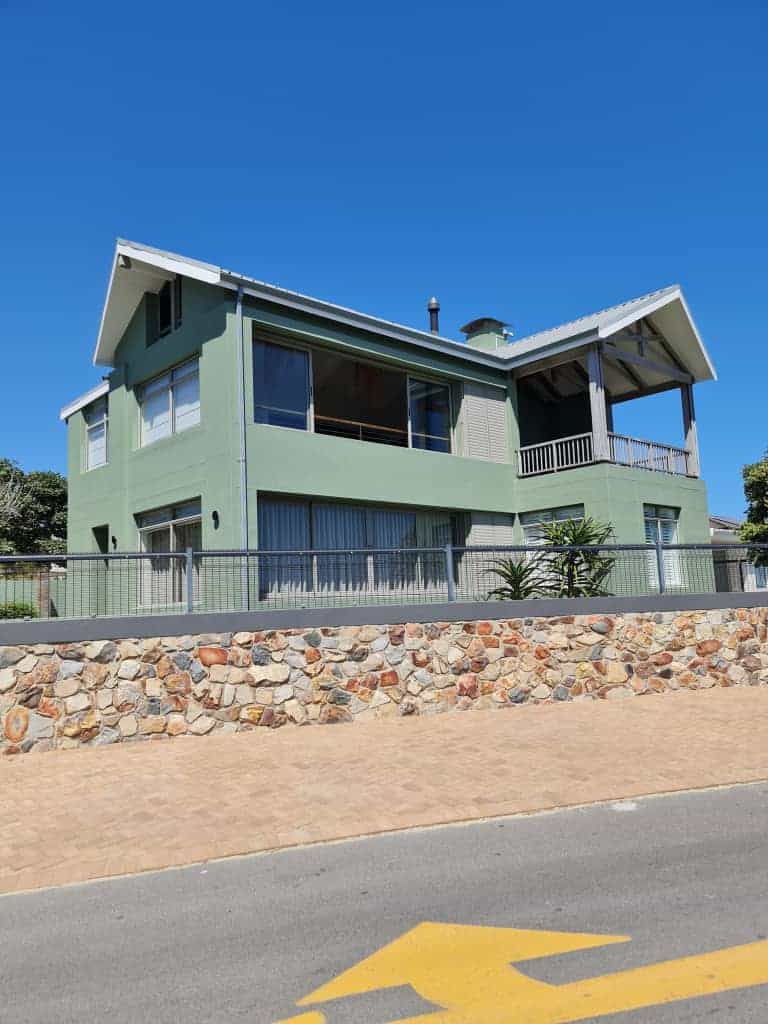
Real Constantia Paint Failure Example 2 — Mellow Wood Estate, March 2026

WHY Do These Two Constantia Examples Matter?
The visible symptoms may appear similar, but the underlying preparation requirements are not necessarily the same.
| Investigation | Silverhurst | Mellow Wood |
|---|---|---|
| Important evidence | Concealed moisture-sensitive Cretestone skim | Different cracks, joints and moisture-exposed surfaces |
| Recorded readings | 12.7%–18.1% | 11.3%–25.4%, highest on boundary walls |
| Preparation lesson | Investigate the substrate beneath failed paint | Match repairs to different surfaces and exposure |
| What not to assume | All peeling paint can be repaired with a standard primer | All damp-affected walls can be treated with one coating system |
Both projects reinforce the same professional principle: diagnosis and suitable preparation come before decorative finishing.
HOW Do We Use Protimeter Moisture Readings?
Where appropriate, we use a Protimeter DigitalMini BLD 5775N to record comparative observations at affected surfaces.
The instrument-reported percentage readings on masonry should not be confused with a laboratory measurement of the actual water content of that wall.
A higher reading may justify further inspection, but it does not independently prove rising damp, identify an exterior leak or establish which coating must be used.
Readings are considered with the material, the position of damage, surrounding construction, possible water-entry routes and the history of the failure.
WHEN Should You Investigate Peeling Paint Instead of Simply Repainting?
Further investigation is particularly important when:
- The same area has failed after more than one repaint.
- Bubbles appear after rain.
- Paint peels below windowsills or parapets.
- Interior paint deteriorates beside an exterior wall.
- Loose coatings expose crumbling or unsuitable plaster.
- Paint detaches in large sheets.
- Salt deposits repeatedly return.
- Boundary-wall paint fails close to soil or irrigation.
- Cracks reopen through previous repairs.
- A strong or unusual pattern of condensation or mould accompanies the damage.
There is no reason to assume every paint defect is caused by damp. Poor adhesion, unsuitable old coatings and application problems must also be considered.
HOW Should Peeling and Bubbling Paint Be Repaired?
There is no universal repair system appropriate to every failure.
The general process may involve:
- Inspect the damaged area: identify the visible failure and nearby construction details.
- Consider the cause: assess adhesion, substrate stability, moisture symptoms, cracks, seals and other relevant conditions.
- Address underlying defects: identify necessary repairs to accessible water-entry routes or other conditions within the agreed scope.
- Remove unstable materials: prepare loose previous paint or unsound plaster where appropriate.
- Carry out suitable repairs: specify compatible plaster preparation, crack treatment or flexible joint repairs.
- Select suitable primers: choose primers or bonding preparation according to the cleaned, prepared substrate.
- Use compatible finishes: specify appropriate interior or exterior products for the actual conditions.
- Allow required drying: follow the selected products’ application and curing requirements.
- Inspect the finished work: review the agreed surfaces and explain any remaining building or moisture limitations.
Repairing the paint film without addressing the underlying defect may result in the same failure recurring.
WHICH Primer or Paint Should Be Used After a Coating Failure?
Product selection depends on the existing paint, material beneath it, moisture condition, surface preparation and manufacturer’s instructions.
Bonding Preparation on Suitable Powdery Surfaces
Where a prepared substrate is chalky or friable but otherwise suitable, an appropriate bonding product may be considered under the approved coating system.
A bonding product cannot automatically make severely loose or unsuitable plaster sound.
Specialist Damp-Related Coatings
Products such as Dulux Pre-Paint Dampshield may be considered for suitable vertical cement plaster or concrete surfaces where the manufacturer’s specification supports the application.
They do not repair missing damp-proof courses, active plumbing leaks or defective building drainage.
Waterproofing of Exposed Horizontal Masonry
Suitable parapets, copings and windowsills may require a separate waterproofing treatment, including an appropriately specified Dulux Rainshield system.
The preparation and product requirements are different from ordinary vertical wall painting.
Breathable or Vapour-Permeable Finishes
Where boundary walls remain exposed to moisture from below or behind, a suitable vapour-permeable decorative finish may be considered.
The actual product properties must be verified. A textured coating is not automatically breathable simply because it has texture.
Exterior Protective Coatings
Sound main-building walls may be suitable for products such as Dulux WallClad or other compatible specified exterior systems, depending on exposure, substrate and preparation.
A more expensive finish cannot compensate for defective plaster or unsound paint beneath it.
WHAT IF the Paint Is Peeling Below a Window?
Damage beneath a window may be associated with failed perimeter sealing, cracked windowsills, rainwater entry or problems with the surrounding plaster.
Inspection should consider both the visibly damaged wall and the exterior window junction.
Painting only the damaged patch may leave a water-entry defect untreated.
Our Waterproofing Constantia page explains suitable treatment of windowsills, parapets and external seals.
WHAT IF Paint Keeps Peeling from a Boundary Wall?
Garden and perimeter walls can be affected by irrigation, soil contact, wet backfill, salt movement, damaged copings and missing damp-proof separation.
Waterproofing an accessible wall top may address rainwater entering there, but cannot permanently control moisture travelling through the wall from soil or the rear face.
A decorative coating should not be represented as a permanent cure for an uncontrolled building moisture source.
See our Boundary Wall Painting Constantia page for specific preparation and guarantee limitations.
WHAT IF the Paint Is Bubbling on an Interior Wall?
Interior paint failure can result from condensation, exterior rainwater entry, plumbing defects, unsuitable previous preparation or a combination of conditions.
For example, an interior stain below a window may require the exterior window junction to be checked, while mould on a cold wall may warrant assessment of ventilation and condensation.
Where active plumbing leaks, extensive hidden mould or significant construction defects are suspected, the relevant specialist should assess the problem before repainting.
Our Interior Painters Constantia page explains preparation and finishing requirements for suitable residential interiors.
WHY Can Paint Fail Again After a Previous Repair?
A repair may fail when the original problem continues or the new finish was applied over an unsuitable surface.
Possible reasons include:
- An active moisture source was not addressed.
- Old paint or plaster remained unstable.
- Previous fillers were unsuitable for movement.
- Salt contamination continued.
- Primers or finishing products were incompatible.
- Application occurred under unsuitable conditions.
- The surface was not appropriately dry or cured.
- New cracks or defects developed after the work.
The appropriate remedy depends on the evidence found during reassessment. Automatically applying another finishing coat may repeat the problem.
HOW Does Paint Failure Affect the Cost of Repainting?
A wall with sound existing paint does not require the same preparation as one with extensive peeling, blistering, loose plaster and failed seals.
More serious deterioration may require additional labour for washing, scraping, removal of unstable material, plaster repairs, waterproofing, joint sealing, primers and drying.
Different repair materials and coating systems can also affect material consumption and price.
This is why an accurate quotation cannot be based only on square metres or the number of bedrooms.
Our House Painting Costs Constantia guide explains how preparation, materials and labour influence the final quotation.
WHAT Should a Painting Quotation Explain When Paint Has Failed?
A useful quotation should distinguish the visible finish from the preparation necessary beneath it.
- Which damaged areas are included.
- The observed peeling, bubbling, chalking or plaster defects.
- Moisture observations where relevant.
- Further investigation or repairs required outside the painting scope.
- Removal of loose and incompatible coatings.
- Suitable plaster and crack repairs.
- External sealing and waterproofing where included.
- Named primer and finishing systems.
- Surface drying and application requirements.
- Relevant workmanship guarantees and exclusions.
- The process for agreeing unforeseen additional repairs.
Compare quotations based on these items rather than assuming all contractors are including equivalent preparation.
For more information, see our Detailed Painting Quotations & Specifications guide.
Peeling and Bubbling Paint Repairs Across Constantia
We assess suitable painting-related coating failures at homes and estate properties throughout Constantia, including Alphen, Nova Constantia, Bel Ombre, Constantia Heights and Deurdrif.
For different crack types and unstable plaster, see Wall Preparation & Crack Repairs Constantia.
For damp-related substrate assessment, see Damp Proofing Constantia.
For the complete local contractor service, visit Painters Constantia.
Request a Constantia Paint Failure Inspection
If paint is peeling, bubbling or repeatedly failing at your Constantia property, contact Painters Cape Town for an inspection.
Our written quotations identify visible defects, relevant preparation, suitable products and any important limitations that may remain after painting.
Helpful Constantia Paint Failure Guides & Projects
Explore real completed painting projects and learn how damaged plaster, moisture, cracks and failing previous coatings should be assessed before repainting.
Silverhurst Estate Paint Failure
Our genuine 2026 Constantia project where preparation exposed a hidden moisture-sensitive Cretestone skim beneath failed coatings.
Mellow Wood Estate Preparation
Original Constantia evidence of different cracks, failed joint seals, horizontal waterproofing and moisture-exposed boundary walls.
Wall Preparation & Crack Repairs
Why unstable plaster, recurring cracking, movement joints and failed previous repairs need appropriate preparation.
Waterproofing Constantia
Understand water-entry concerns involving parapets, windowsills, wall tops and failed exterior seals.
Damp Proofing Constantia
Learn about moisture-affected plaster, diagnostic observations and the limitations of surface-applied damp treatments.
Boundary Wall Painting
Why irrigation, wet soil, damaged copings and rear-face moisture can contribute to recurring perimeter-wall paint failure.
House Painting Costs Constantia
Understand why extensive preparation, specialist repairs and different coating systems change the cost of a repaint.
Peeling & Bubbling Paint Constantia FAQs
Why does exterior paint peel or bubble in Constantia?
Possible causes include moisture, unsuitable underlying plaster, poor adhesion, unstable previous coatings, contamination and incompatible paint systems. An inspection is needed to identify relevant conditions.
Does bubbling paint always mean the wall has damp?
No. Moisture is one possible cause, but bubbling can also be associated with adhesion, substrate and application problems. Visible paint damage alone does not establish the cause.
What caused the unusual preparation problem at Silverhurst Estate?
Removing failed exterior coatings revealed a concealed moisture-sensitive Cretestone skim. Dulux technical specialists were asked to inspect the exposed substrate before remedial preparation continued.
What paint and moisture problems were recorded at Mellow Wood Estate?
The project involved different plaster cracks, failed joints, older horizontal waterproofing and moisture-affected boundary walls. The highest Protimeter readings occurred on boundary-wall areas.
Can peeling paint be fixed by applying another two coats?
Not reliably if the existing coating or plaster is unstable. Suitable cleaning, removal, repairs, priming and correction of relevant defects may be necessary before repainting.
Do moisture-meter readings identify the cause of paint failure?
No. Protimeter readings help compare inspected areas but do not independently establish rising damp, identify a leak or determine which paint system is appropriate.
Why does paint keep peeling below windowsills?
Possible causes include failed window seals, cracked sills, rainwater entry, damaged plaster and unsuitable previous coatings. The exterior building details should be considered together with the visible damage.
Can paint permanently stop bubbling on a boundary wall?
Not where uncontrolled ground, irrigation or rear-face moisture continues. Decorative paint cannot create a missing damp-proof course or replace defective drainage and structural waterproofing.
Which paint should be used after peeling coatings are removed?
The appropriate primer and finishing system depends on the prepared substrate, previous coatings, moisture conditions and manufacturer requirements. No single product is suitable for every failure.
How much does repairing peeling or bubbling paint cost?
The cost depends on the affected areas, removal of failed coatings, plaster repairs, moisture-related work, primers, finishing products, access and labour. We inspect before providing a written quotation.

Copyright 2026 , all rights reserved.