Painters Franschhoek

Professional Painters in Franschhoek for Luxury Homes, Wine Estates and Hospitality Properties

Preparation-first interior, exterior, roof and damp-related painting for private homes, Franschhoek Rural properties, village homes, estates, guesthouses, restaurants, boutique hotels and wine-farm buildings.

27 years of painting-contractor experience, two documented 2026 Franschhoek projects, written diagnostic reports, full-time employed painters, daily foreman supervision and direct contractor accountability.

Why Choose Painters Cape Town in Franschhoek?

  • 27 years of painting-contractor experience.
  • Documented June 2026 projects in Franschhoek Rural and L’Ermitage Estate.
  • Dulux-recorded Protimeter readings, named defects, repairs and coating systems.
  • Written diagnostic report and clear written scope with every quotation.
  • Full-time employed painters—never subcontractors.
  • A working foreman present on site daily.
  • Public Liability Insurance through OUTsurance.
  • Direct contractor accountability—we are not a lead-generation company.

Verified Franschhoek Experience, Preparation-First Painting and Direct Accountability

Our Franschhoek service is supported by 27 years of painting-contractor experience and two genuine local project records. We diagnose coating failure, document remedial work and complete each project with our own employed painting teams.

Documented Local Projects

This page documents a Franschhoek Rural exterior project and a L’Ermitage Estate interior project, with dates, moisture readings, defects, repairs, products, limitations and original photographs.

Written Diagnostic Report

Every quotation records visible defects, likely moisture routes, preparation requirements, proposed coating systems, access considerations and important limitations.

Full-Time Employed Painters

We do not use subcontracted painting teams. Our full-time employed painters complete the work under the daily supervision of a working foreman.

Hospitality and Estate Ready

Guesthouse, restaurant, boutique-hotel, wine-estate and managed-property work can be phased around bookings, service, events, access rules, gardens and guest-facing areas.

Direct and Insured Contractor

Painters Cape Town is not a lead-generation company. Clients deal directly with the contractor responsible for inspection, preparation, painting and handover. Public Liability Insurance is provided through OUTsurance.

Clear Specifications and Warranties

Preparation, repairs, primers, products, finishing systems and exclusions are recorded in writing. Supplier or manufacturer specifications and warranties apply only where formally issued and followed.

Realistic coating-life guidance: where damp, cracks, rust, chalking, weak previous coatings, mould, timber deterioration and water-entry defects are correctly resolved, properly prepared exterior paintwork can often retain its integrity for approximately 8–10 years. A qualifying 7–8 year supplier or manufacturer warranty may apply only when formally issued and remains subject to its written terms and exclusions.

Professional Painters in Franschhoek, Cape Winelands

Painters Cape Town provides professional painting services in Franschhoek for luxury homes, heritage-style homes, guesthouses, restaurants, boutique hotels, wine estate buildings, village properties, valley homes, roofs, timber windows, timber doors, timber shutters, boundary walls, garden walls, commercial hospitality buildings, managed residential properties and premium Cape Winelands properties.

Franschhoek combines high-value residential properties with a concentrated hospitality and wine-estate economy. A project may involve a private valley home, a heritage-style village property, a guesthouse, a restaurant, a boutique hotel, a tasting room or a visitor-facing wine-estate building. The expected finish is refined, but the durability of that finish still depends on diagnosing damp, unstable coatings, cracks, open joints, roofline defects, timber weathering and rust before repainting.

Our 27 years of painting-contractor experience is supported on this page by two documented June 2026 projects. The first was a complete exterior project at a private double-storey home in Franschhoek Rural, completed to a written Dulux specification after moisture readings of 15.1% to 23.5%. The second was a full interior project at L’Ermitage Estate, where readings reached 48.3% and the moisture source was traced to a leaking swimming pool on the deck above.

Every quotation includes a written diagnostic report and a clear written scope. Painters Cape Town is the contractor responsible for the inspection, preparation, employed painting team, daily supervision and handover; we are not a lead-generation company. Our painters are employed full time, not subcontracted, and a working foreman is present on site daily.

For the regional overview, visit Cape Winelands Painters. You can also view the Painters Cape Town home page, our complete painting services and all painting service areas.

Why Painting in Franschhoek Requires Local Experience

Franschhoek painting combines demanding valley weather, older and heritage-style surfaces, premium private homes and occupied guest-facing properties. Strong summer UV affects exposed walls and timber, winter rain tests rooflines and seals, shaded elevations can dry slowly, and established gardens or irrigation can keep boundary and retaining walls damp. On hospitality and wine-estate properties, the work must also be phased around guests, service times, events, deliveries, harvest activity and public access.

Luxury Homes and Premium Finishes

Luxury homes in Franschhoek often include high-quality floors, joinery, glazing, paving, gardens, timber, stone, railings, outdoor entertainment areas and premium finishes. A successful repaint starts with protection. Floors, timber, furniture, glazing, paving, gardens, signage and surrounding finishes must be protected before preparation and painting begin.

Premium homes also show poor workmanship quickly. Patchy wall preparation, uneven sheen, weak cutting-in, careless masking, poorly prepared timber and visible rust repairs are much more noticeable on a luxury property than on a basic repaint. The finish must be refined, but the preparation must also be technically correct.

Guesthouses, Restaurants and Boutique Hotels

Franschhoek hospitality painting must be planned around guests, bookings, restaurant service, dining areas, staff movement, events, check-ins, entrances, signage and parking. The site must remain neat and controlled because the property may continue operating while work is underway.

For hospitality properties, the paint finish matters, but the way the project is managed matters just as much. Guest rooms, reception areas, dining rooms, public entrances, signage, corridors, bathrooms, kitchens, parking areas and exterior façades must be protected and sequenced carefully.

Wine Estates and Visitor-Facing Buildings

Wine estate buildings, tasting rooms, visitor areas, farmhouses, cellars and hospitality spaces need careful preparation and scheduling. Work may need to be planned around visitors, harvest periods, functions, dining, tasting room activity, staff access, parking and public-facing areas.

Wine estate painting can include old plaster, timber, rooflines, gutters, boundary walls, signage, courtyards, gardens, tasting rooms, accommodation, restaurants, outbuildings and working farm structures. The coating system must suit the building, but the project must also fit around estate operations.

Heritage-Style Homes, Old Plaster and Timber

Franschhoek village properties and older homes often have old plaster, previous coatings, timber windows, timber doors, shutters, fascias, pergolas and period-style details. These surfaces should not be coated blindly. Old plaster may need adhesion checks, damp diagnosis and suitable coating choices, while timber needs cleaning, sanding, repair, priming and the correct coating system.

Where older or heritage-style walls need a more sympathetic approach, the goal is to protect the building and preserve its character. The wrong coating over moisture-sensitive old plaster can trap damp and create blistering, peeling or early failure.

Franschhoek Property Types and Painting Conditions

Franschhoek has a premium, hospitality-rich and heritage-style property mix. Each type needs a different painting plan.

  • Luxury homes and premium residential properties with refined finishes, quality timber, glazing, paving, gardens and visible façades.
  • Guesthouses, restaurants and boutique hotels needing refined finishes, low-disruption scheduling and clean public-facing site management.
  • Wine estate buildings and tasting rooms including visitor buildings, farmhouses, cellars, restaurants and hospitality spaces.
  • Heritage-style village homes with older plaster, timber windows, timber doors, shutters, previous coatings and moisture-sensitive surfaces.
  • Village properties and valley homes affected by UV, winter rain, shaded walls, garden moisture and roofline defects.
  • La Roche Estate and managed properties requiring access planning, colour consistency, resident notices and estate or managing-agent communication where applicable.
  • Commercial hospitality buildings including shops, offices, restaurants, guest accommodation and visitor-facing business properties.
  • Roofs and roofline areas where gutters, flashings, ridge caps, parapets and blocked drainage cause staining and paint failure.
  • Boundary walls, retaining walls and garden walls affected by irrigation, planted beds, soil moisture and poor drainage.
  • Timber and metalwork including fascias, windows, doors, shutters, pergolas, gates, garage doors, fencing, railings and burglar bars.

Franschhoek Village, Franschhoek Rural, Estates and Wine-Farm Properties

We are often asked about painting in and around Franschhoek village, the Franschhoek valley, La Roche Estate, Simondium where relevant, Franschhoek guesthouses, Franschhoek restaurants, boutique hotels, wine estates, luxury homes and heritage-style village properties.

Franschhoek Village Painting

Franschhoek village properties often need careful attention to presentation, timber, old plaster, guest-facing frontage, signage, boundary walls, gardens and public-facing finishes. These buildings can be highly visible, so surface preparation and neat detail work matter.

Village painting may include old plaster walls, timber shutters, timber doors, restaurants, small guesthouses, shopfronts, signage, paved entrances, courtyards, gardens and boundary walls. A clean, refined finish supports both property value and public presentation.

Franschhoek Rural Homes and Valley Properties

Franschhoek Rural includes private homes and valley properties where broad sun-exposed elevations, winter rain, established gardens, irrigation, roofline details, plaster cracks, horizontal wall surfaces and exterior timber can all influence coating performance. These properties may also require careful access planning and protection of paving, glazing, landscaped areas and outdoor living spaces.

Our documented June 2026 exterior project at a private double-storey home in Franschhoek Rural provides first-hand evidence of this work. Dulux recorded Protimeter readings from 15.1% to 23.5%, and the specification addressed moisture-related coating failure, widespread cracks, failed perimeter seals, open or failed joints, exposed horizontal surfaces and weathered exterior woodwork before repainting.

La Roche Estate Painting

La Roche Estate and similar managed Franschhoek properties may require access planning, estate colour expectations, finish consistency, landscaping protection, resident notices and communication with owners, trustees, estate managers or managing agents where applicable.

Estate work should be structured before painters arrive. Access control, contractor sign-in, parking, approved colours, neighbour sensitivity, garden protection, paving protection, glazing, garages, rooflines and exterior finishes should be planned in the written scope.

Wine Estate Painting

Franschhoek wine estate painting often includes visitor-facing buildings, tasting rooms, restaurants, cellars, farmhouses, outbuildings, boundary walls, rooflines, timber and premium finishes. These projects must be planned around visitors, functions, staff movement, harvest activity and public-facing areas where relevant.

Wine estate buildings need coatings suited to the surface and the use of the building. A tasting room, visitor centre or guest cottage has a different presentation requirement from a practical outbuilding, cellar wall, farm structure or workshop.

Luxury Home Painting

Luxury homes in the Franschhoek valley need careful preparation, premium finish protection and consistent workmanship. The repaint must look refined, but it must also deal properly with damp, timber weathering, roofline issues, UV chalking, old plaster and rust-prone metalwork.

Premium homes often include large glazed openings, timber, paving, landscaped gardens, boundary walls, pergolas, outdoor entertainment areas and detailed trims. These finishes must be protected and worked around carefully.

Recently Completed Painting Projects in Franschhoek

These two documented Franschhoek projects, both completed in June 2026, show how our preparation-first process is applied to different paint-failure conditions. The first was a complete exterior repaint of a private double-storey home in Franschhoek Rural, where Dulux moisture readings, widespread plaster cracks, alkali-related discolouration, peeling coatings, failed perimeter sealants, unsealed expansion joints, vulnerable horizontal surfaces and weathered exterior woodwork had to be addressed before painting. The second was a full interior repaint of a double-storey home in L’Ermitage Estate, where a leaking swimming pool on the deck above had saturated the main-bedroom wall, contributed to damp in the adjacent bathroom and exposed far more coating failure once preparation started.

Both projects began with a physical inspection and written scope rather than a quotation based only on wall area. Moisture was measured with a Protimeter, likely entry points were investigated, active causes were corrected before painting, and separate preparation systems were used for plaster, damp-affected masonry, cracks, cornices, ceilings and painted woodwork. The dates, readings, diagnoses, repair methods and named products below come from our original project records and provide first-hand evidence of completed painting work in Franschhoek.

Franschhoek Rural Private Home Exterior Damp, Crack-Repair and Painting Project

Project dates: 15 June to 25 June 2026.

Property and scope: Complete exterior preparation and painting of a private double-storey home in the area known as Franschhoek Rural. The work covered the plastered walls of the main building, wooden fascia boards on the façade, Nutec soffits, peeling coatings, damp-affected wall areas, cracked plaster, expansion joints, windowsills, parapet surfaces, exterior wall fittings and failed sealant around windows and doors. This property did not have boundary walls within the painting scope.

Why a Dulux Specification Was Requested

The owner requested a quotation because extensive cracks, discoloured paint, peeling coatings and visible damp symptoms had developed across the exterior walls. During the site inspection, the scale and distribution of the moisture-related discolouration indicated that a normal wash-and-repaint quotation would not be responsible. A Dulux technical representative was therefore brought in to inspect the surfaces, take moisture readings and prepare a comprehensive written specification for the remedial preparation and coating system.

Dulux used a Protimeter to test the walls. Recorded readings ranged from 15.1% to 23.5%. The specification connected the visible coating failure with moisture entry through cracks, failing window and door sealants, unsealed or failed joints and inadequately protected horizontal surfaces. The project was then prepared and painted in accordance with the Dulux specification rather than treating the discolouration and peeling as cosmetic defects.

What the Exterior Inspection Found

  • Extensive paint discolouration and damp symptoms were visible on the plastered walls of the main building.
  • Protimeter moisture readings varied between 15.1% and 23.5%.
  • Peeling paint and locally unsound coatings were present on exterior plaster.
  • Branching, hairline and wider plaster cracks occurred across multiple wall elevations.
  • Windowsills and parapet surfaces had visible cracks and did not have an adequate waterproofing-related coating across the horizontal surfaces.
  • Existing silicone sealant around windows and doors was failing.
  • Expansion joints and gaps around exterior wall fittings created additional moisture-entry points.
  • Peeling paint was visible on parts of the wooden fascia boards and soffit-related areas.

The blotchy colour loss was consistent with alkali attack, also called alkali or pH burn. When moisture moves through cement-based plaster, high alkalinity can attack the paint binder and organic colourants. The visible result can include colour loss, blotchy discolouration, powdering, efflorescence, loss of adhesion and peeling. Repainting over the discoloured surface would not have corrected the cracks, failed seals and exposed horizontal details allowing water into the wall system.

Cleaning, Damp Treatment and Waterproofing-Related Preparation

Preparation began with high-pressure washing to remove loose paint, grime, mould and dust. Paint that remained loose after washing was scraped away manually. Powdery or affected areas received Dulux Bonding Liquid where specified so the following preparation coats were not applied over a weak surface.

Damp-affected areas showing moisture-related discolouration received two coats of Dulux Dampshield. The coats were applied as the specified moisture-barrier preparation before exterior finishing coats. This was not used as a substitute for repairing water-entry points: the cracks, failed sealants, joints and horizontal surfaces contributing to moisture ingress were dealt with as part of the same preparation sequence.

Two coats of Dulux Rainshield were applied to the windowsills and other specified vulnerable horizontal surfaces. Small cracks on these ledges could admit water into the plaster below, which helped explain why damp symptoms were concentrated beneath windows and joints. Exterior light brackets and other wall fittings were sealed with Soudal single-pack polyurethane sealant, and failed window, door and expansion-joint seals were replaced or completed with the same flexible jointing system where specified.

Documented Crack-Repair Method

Cracks were classified and repaired according to their width rather than being covered with one general filler. Hairline cracks up to approximately 1 mm received alkali-resistant sealer. Dulux Rainshield was then brushed into the crack with a stiff brush to fill and bridge the prepared line. Where multiple fine or spider-web cracks affected a wider wall area, alkali-resistant plaster primer was followed by two Rainshield coats across the affected surface.

Plaster cracks from approximately 1 mm to 5 mm were opened to a V-joint and brushed clean with a wire brush. Cracks less than approximately 10 mm deep were repaired with a masonry patching-plaster and Permobond repair system. The cured repairs were sanded with P80 abrasive to a smooth finish and cleaned of dust. Two Rainshield bands were then applied approximately 75 mm over the repaired area. The second coat was applied perpendicular to the first after the specified drying period to build a flexible waterproofing-related band over the repair.

Expansion Joints, Window and Door Seals

Existing expansion joints and failed perimeter joints around windows and doors were opened or cleaned as required and sealed with Soudal single-pack polyurethane sealant. A flexible polyurethane joint was used because these interfaces can move; a rigid cosmetic filler would be more likely to crack or pull away. Closing these entry points was essential before the wall coatings were applied, because new paint alone could not stop water entering through an open joint.

Exterior Woodwork and Soffit Preparation

Wooden fascia boards were sanded to remove loose paint and create a key for adhesion. Hard coating edges around peeled areas were feathered so that old paint ridges would not remain visible through the completed finish. Bare timber was spot-primed with Dulux Wood Primer, followed by a full coat of Dulux Universal Undercoat across the prepared painted woodwork. Two finishing coats of Dulux Pearlglo Waterbased were then applied. The water-based enamel was selected for better exterior UV resistance than the previous solvent-based coating.

The Nutec soffits were cleaned and prepared separately before receiving two coats of Dulux Wall & Ceiling paint. Treating plaster, timber and fibre-cement soffits as different substrates helped prevent the shortcuts that occur when one coating is used indiscriminately across every exterior surface.

Exterior Finishing System and Completed Result

After washing, scraping, damp preparation, joint sealing, waterproofing-related work, crack repairs and priming had been completed, the main building walls received two coats of Dulux WallClad. The prepared exterior woodwork received two Pearlglo Waterbased coats, while the Nutec soffits received the specified Wall & Ceiling finish.

The completed courtyard exterior shows the clean, consistent result after the underlying cracks, damp-affected coatings, failed seals, exposed horizontal surfaces and weathered woodwork had been addressed. The project demonstrates why durable exterior painting in Franschhoek depends on technical preparation, and why visible discolouration can require damp-proofing and waterproofing preparation before repainting.

Durability qualification: the written specification was designed to support a durable coating result, but the expected life of any exterior system remains dependent on repaired joints staying sound, cracks not developing through structural movement, horizontal surfaces continuing to shed water and future defects being maintained. Paint does not eliminate building movement or make an unrepaired water-entry point watertight.

Branching cracks in an exterior plaster wall before repairs and repainting at a private double-storey home in Franschhoek Rural

Exterior plaster cracks documented before opening, repairing, sealing and repainting at a private home in Franschhoek Rural.
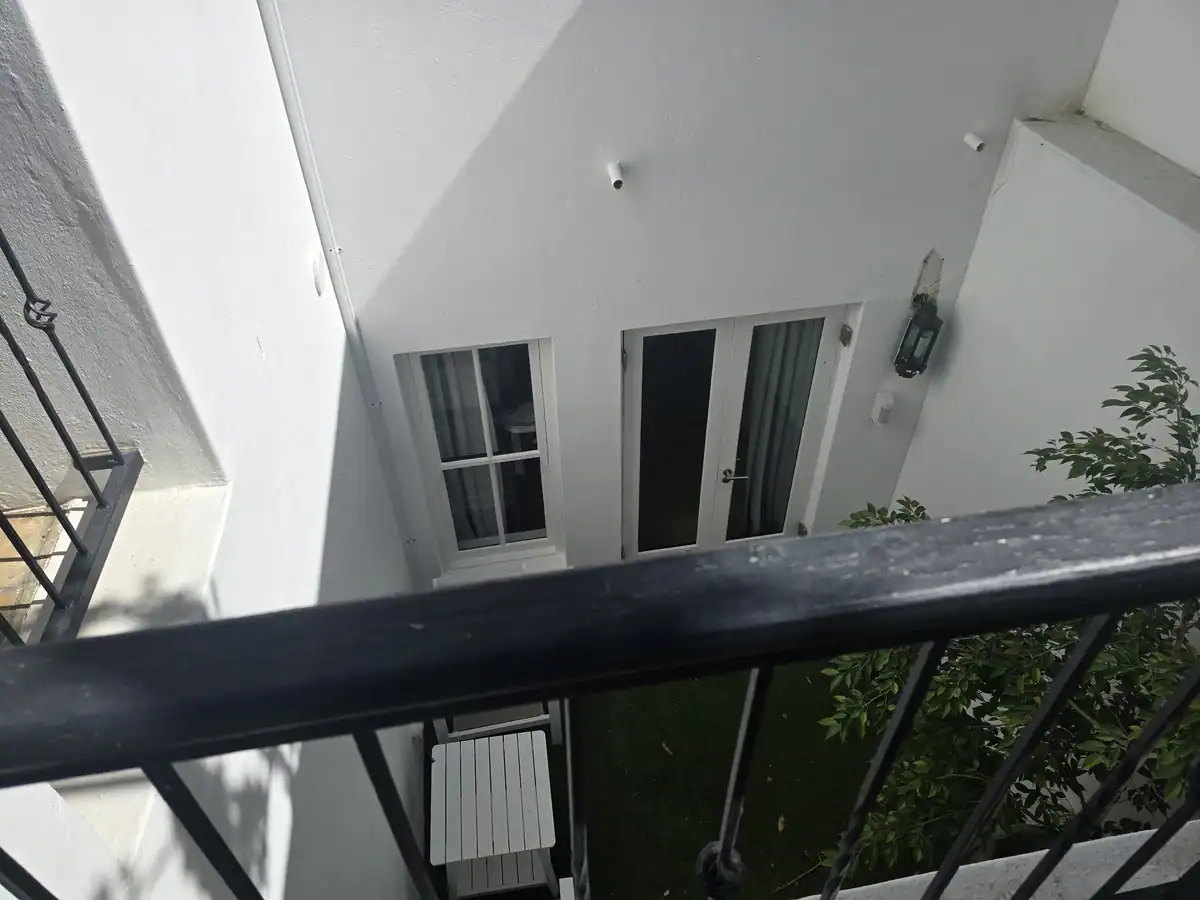
Freshly painted courtyard exterior at a private double-storey home in Franschhoek Rural after crack repairs, damp preparation and repainting

Completed courtyard exterior at a private home in Franschhoek Rural after cracks, damp-affected areas, failed sealants and weathered coatings were prepared before repainting.

Photograph context: the crack photograph and completed courtyard photograph document the same exterior project, but they are not matching views of the same wall. The first records one of the plaster-crack conditions found before repairs; the second records the completed courtyard elevation after the wider preparation and painting work.

L’Ermitage Estate Pool-Leak Damp, Cornice, Woodwork and Interior Painting Project

Project dates: 1 June to 9 June 2026.

Property and scope: Full interior preparation and painting of a relatively new double-storey home in L’Ermitage Estate, Franschhoek, completed for a repeat client before the owner moved into the property. The work included Rhinoboard ceilings, cornices, interior walls, painted doors and frames, architraves, skirtings, damp-affected bedroom and bathroom areas, mould treatment, fine and wider wall cracks, painted high-level ceiling planks and exposed roof trusses in double-volume living and kitchen areas.

What the Interior Inspection Found

The home had not yet been occupied by the new owner, but the inspection showed that a full repaint required more than filling ordinary settlement cracks and covering marks:

  • Cornices had cracked loose in second-floor areas. The upper floor covered only part of the total footprint because the remaining living and kitchen areas were double volume.
  • Air movement below the roof and movement between the ceiling and walls had opened joints beneath the second-floor cornices. First-floor cornices below the concrete slab were more stable.
  • A bathroom ceiling showed black mould staining. Limited ventilation was identified as a contributing condition, and an extractor fan was recommended as a longer-term improvement.
  • Damp symptoms were visible in the main bedroom and adjacent bathroom.
  • A paint bubble in the main bedroom initially appeared to be approximately palm-sized, but once it was opened during preparation, extensive loose paint detached and exposed a much larger damp-affected area.
  • Protimeter readings on the affected walls varied from 22% to 48.3%.
  • The moisture path was traced to a leaking swimming pool situated on the deck above the affected rooms.
  • Painted doors, frames, architraves and skirtings showed chip marks, peeling coatings and general wear.
  • Fine cracks and several larger plaster cracks were present on the interior walls.
  • Painted wooden ceiling planks and exposed trusses were generally sound, but movement had begun opening joints between some planks.

Confirming and Repairing the Moisture Source

The high readings and location of the damp prompted an exterior inspection above the affected bedroom and bathroom. The likely source was the swimming pool on the deck above. A swimming-pool specialist assessed the installation and confirmed the leak. The pool was repaired before the painting team proceeded with the damp-related preparation and finishing work.

This sequence was critical. Two coats of a moisture-barrier preparation product can protect a coating system against moisture held in a masonry substrate within its specified tolerance, but paint cannot repair a leaking pool. Correcting the active source first separated this work from a temporary cosmetic cover-up.

Protection and Damp-Affected Wall Preparation

Floors, furniture and existing finishes were protected with soft drop sheets and cloths before scraping, sanding, repairs and painting began. The large area of loose paint exposed in the main bedroom was removed until the remaining coating and plaster provided a sound basis for further preparation.

The damp-affected bedroom and adjoining areas received two coats of Dulux Dampshield over two days. This water-based moisture-barrier preparation was used after the pool leak had been repaired and while the measured masonry moisture remained within the product tolerance recorded for the specified two-coat application. Only after the source repair, removal of unsound coatings and damp preparation were completed were the finishing coats applied.

Bathroom Mould and Ventilation Limitation

The mould-stained bathroom ceiling was treated with Dulux anti-fungal solution and allowed to dry. Two coats of Dulux Universal Undercoat were then applied to help isolate the black staining before the ceiling finish. After the ceilings and cornices had been prepared, they received two coats of Dulux Wall & Ceiling paint.

Honest limitation: the treatment removed and isolated the visible mould staining, but repainting cannot correct inadequate ventilation. An extractor fan was recommended because recurring humidity can allow mould to return if moist air is not removed effectively.

Cornice Movement and Flexible Joint Repairs

The cracked second-floor cornice joints were opened and prepared. Soudal single-pack polyurethane sealant, with approximately 25% movement capability, was inserted into the gaps between the cornices and walls. A flexible sealant was chosen because normal roof and ceiling movement would place repeated stress on a rigid filler. The polyurethane was spot-coated to support adhesion of the finishing paint and reduce the risk of the sealant discolouring through the completed coating over time.

After the loose cornices, joints and ceiling surfaces had been repaired and prepared, the ceilings and cornices received two coats of Dulux Wall & Ceiling paint. The same principle used elsewhere on the project applied here: the repair material was matched to the type of movement rather than selected only to hide the visible crack on handover.

Interior Wall-Crack Preparation

Hairline cracks up to approximately 1 mm received alkali-resistant sealer, followed by Dulux Rainshield brushed into the prepared lines. Where multiple fine cracks formed a wider spider-web pattern, the affected area received alkali-resistant plaster primer followed by two Rainshield coats.

Plaster cracks from approximately 1 mm to 5 mm were opened to a V-joint and cleaned with a wire brush. Cracks less than approximately 10 mm deep were repaired with a masonry patching-plaster system, sanded with P80 abrasive and cleaned of dust. Two Rainshield bands were applied approximately 75 mm over each repaired area, with the second coat applied perpendicular to the first after the specified drying interval.

Painted Doors, Frames, Skirtings, Trusses and Wooden Ceilings

Painted skirtings, doors, frames and architraves were sanded to create a key for adhesion. Loose paint was removed and hard coating edges were feathered to avoid visible ridges. Small gaps above skirtings and open joints between painted wooden ceiling planks were filled with flexible Soudal polyurethane sealant and spot-coated where required.

Bare timber exposed by peeling paint was spot-primed with Dulux Wood Primer. The prepared painted joinery, exposed trusses and wooden ceiling planks then received a full coat of Dulux Universal Undercoat followed by two topcoats of Dulux Pearlglo Waterbased. The double-volume ceiling work required controlled high-level access as well as careful protection of the interior below.

Interior Wall Finishes and Completed Result

Once the leaking pool had been repaired, unsound paint removed, damp preparation completed and wall cracks repaired, the interior walls received two topcoats of Dulux EasyCare. The ceilings and repaired cornices received the Wall & Ceiling system, while painted doors, frames, architraves, skirtings, exposed trusses and ceiling planks received the Pearlglo Waterbased finishing system.

The project illustrates the value of investigating a small visible paint bubble. In this case, opening a palm-sized defect exposed widespread coating failure, Protimeter readings reached 48.3%, and the moisture path led to a leaking swimming pool above. The completed double-volume living area demonstrates the finish achieved across another part of the same interior after the wider damp, crack, cornice, ceiling and woodwork preparation had been completed.

Movement limitation: flexible polyurethane can accommodate more movement than a rigid filler, but no cornice or ceiling-plank repair can eliminate normal movement in the roof, ceilings or timber. Future maintenance may still be required if movement exceeds the sealant or coating system’s capability.

This documented project is a practical example of why premium interior painting in Franschhoek may require moisture diagnosis, source repairs, mould treatment, flexible joints, high-level access and separate systems for plaster, ceilings and painted woodwork.

Damp-damaged bedroom wall after loose paint was removed and the surface prepared at L’Ermitage Estate in Franschhoek

The damp-affected main-bedroom wall at L’Ermitage Estate after extensive loose paint was removed and the damaged surface prepared for remedial treatment and repainting.
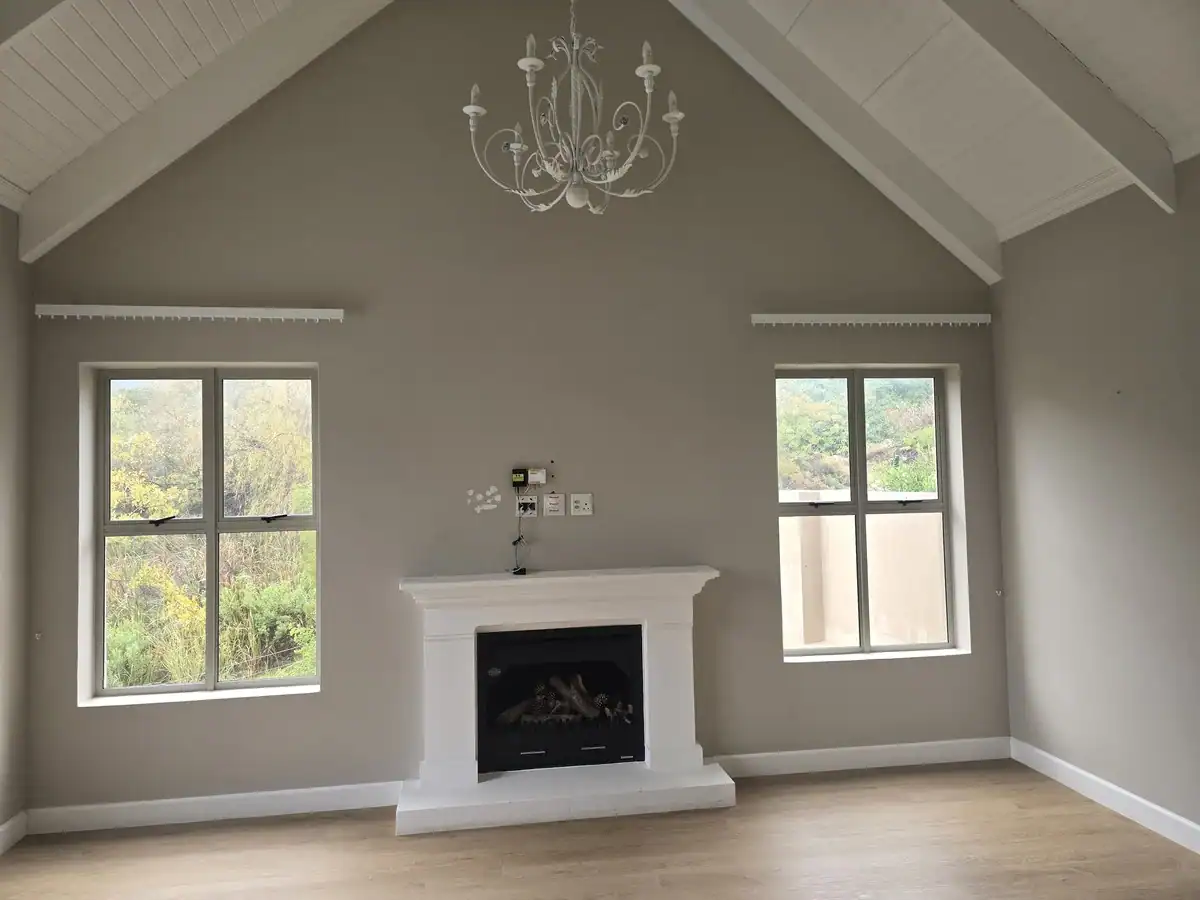
Double-volume living room with painted walls, white exposed roof trusses and fireplace after interior painting at L’Ermitage Estate in Franschhoek

The completed double-volume living area at L’Ermitage Estate after the interior walls, exposed trusses, wooden ceiling and painted woodwork were prepared and repainted.

Photograph context: these images document different rooms within the same L’Ermitage Estate project. The first shows the main-bedroom wall after loose damp-damaged paint had been removed; the second shows the completed double-volume living area. They are not presented as matching before-and-after views of one wall.

Original Painters Cape Town project photographs. See our image licensing information.

Franschhoek Guesthouse, Restaurant, Boutique Hotel and Hospitality Painting

Hospitality is central to Franschhoek. Guesthouses, restaurants, boutique hotels, wine estate accommodation and tasting room buildings need painting that protects the client experience while the work is underway.

We plan hospitality painting around bookings, check-ins, dining service, functions, events, staff movement, parking, deliveries, signage and public entrances where practical. Bedrooms, guest rooms, dining areas, reception areas, corridors, bathrooms, kitchens, exterior façades, timber, glazing and signage are protected where applicable.

For these properties, a clean site is part of the service. Daily clean-up, controlled access, neat protection, low-disruption sequencing and daily supervision by a working foreman help keep the property presentable while the painting is in progress.

Guesthouse Painting

Guesthouses need paintwork that looks refined and lasts, while the work is scheduled around guests and bookings where practical. Guest rooms, bathrooms, passages, staircases, breakfast areas, reception spaces, exterior façades, timber, signage and parking-facing areas all need protection and clean site control.

Restaurant Painting

Restaurants need low-disruption painting with entrances, signage, floors, glazing, furniture and service areas protected. Exterior façades, dining areas, kitchens, bathrooms, courtyards, timber and public-facing details must be neat, durable and properly prepared.

Boutique Hotel Painting

Boutique hotels need refined finishes, quiet site control, guest-area protection, careful sequencing and daily communication. Rooms, corridors, lobbies, bathrooms, dining areas, exterior façades, balconies, railings, timber and signage need planning before work starts.

Franschhoek Heritage-Style Homes, Older Plaster and Timber Preparation

Heritage-style homes, old plaster and timber features are a major part of Franschhoek’s local identity. A quick overcoat can damage the appearance of these buildings and can also trap moisture if the surface is not properly understood.

Old Plaster and Previous Coatings

Older plaster can carry many layers of previous paint, localised repairs, weak adhesion and moisture damage. If unstable layers are left in place, new paint bonds to old failure rather than to a stable substrate. Adhesion checks, scraping, sanding, crack repairs, damp diagnosis and correct priming are essential.

Heritage-Style Surfaces

Where old or heritage-style walls need a more sympathetic approach, coating selection matters. The goal is to protect the building and preserve its character, not seal moisture into the wall with the wrong system.

Timber Windows, Doors, Shutters, Fascias and Pergolas

Franschhoek has many visible timber features. Timber windows, doors, shutters, fascias, pergolas and trims must be cleaned, sanded, repaired where needed, primed and finished with a system suited to weathering, movement and exposure. Poor timber preparation is very visible on luxury and hospitality properties.

Painting Services in Franschhoek

Interior Painting in Franschhoek

Our Interior Painters Cape Town service covers Franschhoek luxury homes, heritage-style homes, older homes, guesthouses, restaurants, boutique hotels, wine estate buildings, farmhouses, townhouses, apartments, rental properties, body corporate units, offices, bathrooms, kitchens, living areas, bedrooms, passages, stairwells and common-area interiors.

Interior painting in Franschhoek may require premium finish protection for floors, furniture, timber, tiles, glazing, fitted cupboards, staircases, joinery, guest rooms, dining areas, reception areas and existing finishes. We use low-odour systems where suitable, durable washable coatings for high-use spaces and practical scheduling around guests, restaurant service or hotel operations where required.

Exterior Painting in Franschhoek

Our Exterior Painters Cape Town service covers Franschhoek luxury homes, older houses, heritage-style homes, estate homes, wine estate buildings, guesthouses, restaurants, boutique hotels, farmhouses, townhouses, newer developments, commercial hospitality buildings, boundary walls, retaining walls, garden walls, exterior plaster, gutters, fascia boards, timber trims, shutters, pergolas, metal gates, garage doors, fencing, railings and burglar bars.

Exterior preparation may include washing chalking residue, dust, mould, algae and environmental contamination from walls, checking old plaster and newer coatings for adhesion, repairing cracks, treating damp, preparing timber, treating rust on metalwork and applying suitable primers and coating systems for Franschhoek UV, winter rain, shaded valley damp and premium finish expectations.

Roof Painting in Franschhoek

Our Roof Painters Cape Town service covers suitable tiled roofs, cement tile roofs, concrete roofs, IBR and Chromadek roofs in Franschhoek, including roofs on homes, boutique hotels, guesthouses, restaurants, wine estate buildings, hospitality properties and commercial buildings where coating is suitable.

Before roof coating is specified, we check gutters, downpipes, flashings, ridge caps, roof-to-wall junctions, parapets, blocked gutters, roofline staining, rust and active leak indicators. Roof painting is a protective coating applied once the roof is sound. It does not fix active leaks.

Where qualifying supplier specifications are followed and roof defects are resolved first, roof coating can maintain integrity for approximately 7 to 8 years.

Damp Proofing and Waterproofing Before Repainting

Damp Proofing Cape Town is often needed before repainting Franschhoek properties because winter rain, shaded valley walls, bathrooms, kitchens, window reveals, exterior cracks, boundary walls, retaining walls, garden walls, parapets, balconies, roof terraces, irrigation moisture, roofline damp, newer plaster and older plaster can all create moisture-related paint failure.

Paint does not fix active damp. If moisture is moving through from behind a retaining wall, boundary wall, garden wall, parapet, balcony, roof junction, window reveal or damp plaster, that cause must be dealt with first.

Residential Painting in Franschhoek

Our Residential Painters Cape Town service assists Franschhoek homeowners, landlords, estate homeowners and property managers with luxury homes, newer homes, older homes, heritage-style homes, wine estate homes, townhouses, apartments, rentals, pre-sale properties and investment properties.

Residential painting in Franschhoek often places more emphasis on finish quality, joinery protection, visual consistency, gardens, timber and discreet site management than a standard repaint in a less hospitality-driven area.

Commercial Painting in Franschhoek

Our Commercial Painters Cape Town service assists Franschhoek restaurants, guesthouses, boutique hotels, wine estate visitor buildings, tasting rooms, shops, offices, hospitality properties, small business premises, commercial façades and business properties.

Commercial hospitality work needs scheduling around customers, guests, staff, service, functions, events, signage, entrances, parking, loading areas, dining areas, guest rooms and facilities manager or owner communication.

Body Corporate and Estate Painting in Franschhoek

Our Body Corporate and Estate Painting Cape Town service assists La Roche Estate where relevant, Franschhoek estate homes, wine estate homes, townhouse complexes, security estates, sectional title properties, managed buildings, perimeter walls, shared roofs, garages, stairwells, corridors and common areas.

These projects often require written scopes, access planning, estate colour guidelines, resident notices, trustee and managing-agent communication, estate manager communication, phased work, low-disruption workmanship, protection of paving, gardens, glazing, timber, balconies and shared finishes, and daily supervision by a working foreman.

Franschhoek Roofs, Boundary Walls, Retaining Walls and Winter-Rain Painting Problems

Franschhoek properties often fail at rooflines, parapets, shaded valley walls, boundary walls and timber details before the main façade fails. These areas need diagnosis before repainting.

Winter Rain and Shaded Valley Walls

Franschhoek’s valley setting means some walls stay shaded and damp for longer during winter. These areas can develop mould, algae, blistering and weak adhesion if the surface is painted before the moisture problem is addressed.

Boundary Walls, Retaining Walls and Garden Walls

Garden walls, retaining walls and boundary walls often fail because moisture enters from behind through irrigation, planted beds, soil pressure and poor drainage. Paint on the visible face cannot stop moisture pushing through from behind.

Rooflines and Parapets

Gutters, flashings, ridge caps, parapets and roof-to-wall details all matter because they often feed water into surrounding plaster. The visible paint failure may appear on a wall below, but the moisture source can sit higher up at the roofline.

Nearby Cape Winelands Areas We Also Serve

Franschhoek forms part of our wider Cape Winelands Painters service area. We also work in nearby Cape Winelands areas:

We also assist in Franschhoek village, Franschhoek valley, La Roche Estate, Simondium, Franschhoek guesthouses, Franschhoek restaurants, Franschhoek boutique hotels and surrounding Franschhoek wine estate areas. You can also browse the full Cape Town Painting Service Areas page or the main Services hub.

Common Paint Problems in Franschhoek

UV Fading and Chalking

Strong summer sun breaks older coatings down into a powdery chalk and fades colour on exposed façades. New paint cannot bond to chalk, so it must be removed or stabilised before repainting.

Winter Rain and Damp

Wet valley winters leave walls saturated and slow to dry, driving paint failure where moisture is not resolved first.

Cracking and Failed Exterior Paint

Movement cracks and tired coatings leave surfaces paint cannot grip. Cracks must be repaired and loose material removed before recoating.

Damp on Shaded Valley Walls

Shaded valley walls can stay damp for longer, undermining adhesion and feeding mould or algae growth. Damp must be addressed rather than painted over.

Mould and Algae

Shaded valley and garden-side walls can grow mould and algae in wet months. These growths must be killed and cleaned before painting.

Old Plaster and Poor Adhesion

Older Franschhoek plaster and previous paint layers can hide poor adhesion. Without proper checks and preparation, new paint can pull away with the old coating underneath.

Heritage-Style Plaster and Older Coatings

Heritage-style surfaces can blister and deteriorate if sealed under unsuitable coatings that trap moisture. These surfaces need careful preparation and suitable systems where applicable.

Timber Weathering on Fascias, Windows, Doors, Shutters and Pergolas

Timber windows, doors, shutters, fascias, pergolas and trims can grey, crack and shed old coatings. Timber needs cleaning, sanding, repair and the correct coating system to protect it.

Boundary Wall, Retaining Wall and Garden Wall Damp

Garden, boundary and retaining walls often hold moisture from irrigation, soil and planted beds. Paint on these surfaces can flake and discolour repeatedly unless the moisture source is addressed.

Roofline Staining from Gutters and Flashings

Blocked gutters, cracked ridge caps, poor flashings and roof-to-wall junctions can leave staining and persistent damp along the roofline. These defects must be corrected before repainting.

Rust on Gates, Railings, Garage Doors, Fencing and Metalwork

Gates, garage doors, railings, fencing and steelwork rust where coatings fail. Rust must be treated and the metal correctly primed before topcoats are applied.

Newer Premium Home Plaster and Developer-Grade Coating Failure

Newer luxury homes and estate homes can still carry coatings that chalk, fade or lose adhesion sooner than expected. These coatings must be checked before repainting.

Failed Waterproofing on Parapets, Balconies and Roof Terraces

Parapets, balconies and roof terrace areas are common weak points on luxury and hospitality buildings. When waterproofing breaks down, water tracks into walls and pushes paint off as bubbling and peeling.

Repeated Failure from Unresolved Damp or Roof Defects

When the same wall, timber element, parapet, balcony, boundary wall or roofline fails repeatedly, the cause is often unresolved damp, weak previous coatings, rust, failed waterproofing or a roof defect. The source must be diagnosed before repainting.

Property Protection, Access Planning and Site Management

In Franschhoek, how the painting project is managed reflects directly on the property because many buildings are luxury homes, guest-facing hospitality properties, estate homes, wine estate buildings or highly visible village properties.

  • Floors, furniture, paving, gardens, roofs, windows, glass, boundary walls, retaining walls, garages, timber, metalwork, balconies, railings, signage, guest areas and existing finishes are protected where applicable.
  • Guesthouse, restaurant and hotel work can include scheduling around bookings, service, functions, events, check-ins, dining areas, guest rooms and public-facing entrances.
  • Wine estate work can include planning around visitors, tasting rooms, harvest activity, functions, staff access and public areas.
  • Estate work can include access-control procedures, contractor sign-in, colour guidelines, resident notices and estate manager communication.
  • Body corporate work can include trustee communication, managing-agent coordination, common-area protection and phased work.
  • Daily clean-up is completed at the end of every working day.
  • All painters are full-time employed, not subcontracted.
  • A working foreman is on site daily to supervise preparation, access, scheduling, protection, communication and quality.

Our Preparation-First Painting Process in Franschhoek

  • Site visit and diagnostic assessment — we assess walls, roofs, timber, shutters, boundary walls, retaining walls, garden walls, parapets, balconies, damp, UV fading, chalking, cracks, rust, mould, algae, old plaster, newer coatings, heritage-style surfaces and access requirements.
  • Written diagnostic report — every quotation includes a written report outlining damp, rust, cracking, chalking, timber condition, adhesion problems, boundary-wall moisture, roofline defects, old plaster, heritage-style surfaces, newer coatings and coating failure.
  • Clear written scope of work — the scope defines preparation, repairs, coating systems, exclusions, access, scheduling, protection and limitations before work starts.
  • Access and protection planning — homes, estates, guesthouses, restaurants, boutique hotels, wine estate buildings, body corporates, gardens, paving, parking, entrances, signage and public-facing areas are planned where relevant.
  • Surface preparation — washing, chalk removal or stabilisation, mould and algae treatment, adhesion checks, crack repairs, damp-related work, timber preparation, rust treatment and failing-coating removal are completed where required.
  • Coating specification — suitable systems and supplier or manufacturer specifications are followed where applicable, with systems matched to old plaster, heritage-style walls, UV, winter rain, timber, metalwork, roofs, hospitality spaces and estate properties.
  • Daily foreman supervision — preparation, access, scheduling, protection, quality and communication are managed daily.
  • Daily clean-up and final inspection — the site is kept neat and the completed work is checked before handover.

Why Choose Painters Cape Town in Franschhoek?

Clients deal directly with Painters Cape Town from the initial inspection and written quotation through preparation, painting, daily supervision and final handover. We are the painting contractor responsible for the work, not a lead-generation company, and our accountability is supported by full-time employed painters, written diagnostic reports and a preparation-first process.

  • Full-time employed painters, never subcontractors.
  • Working foreman on site daily.
  • Written diagnostic report with every quotation.
  • Clear written scope of work for homeowners, guesthouse owners, boutique hotel owners, restaurateurs, estate managers, trustees, managing agents, wine estate owners and commercial clients.
  • Experience with luxury homes, heritage-style homes, old plaster, timber windows, timber shutters, guesthouses, restaurants, boutique hotels, wine estate buildings, La Roche Estate, roofs, damp, timber and rust.
  • Preparation-first approach for Franschhoek UV, winter rain, damp, old plaster, heritage-style surfaces, cracks, rust, timber, chalking, mould, algae, roofline defects, failed coatings and poor adhesion.
  • Protection for floors, furniture, paving, gardens, roofs, windows, boundary walls, retaining walls, garages, timber, metalwork, balconies, railings, glass, signage, guest areas and premium finishes.
  • Supplier and manufacturer-backed coating specifications where applicable.
  • Public Liability Insurance through OUTsurance.
  • 27 years of painting-contractor experience across Cape Town and surrounding regions.
  • Not a lead-generation painting company.
  • Direct contact, direct accountability and daily site clean-up.

Provided damp, cracking, rust, contamination, poor adhesion, mould, algae, old plaster failure, timber weathering, roofline defects, boundary-wall moisture, retaining-wall moisture and other defects are resolved first, properly prepared Franschhoek paintwork can maintain its integrity for approximately 8 to 10 years. Roof coating can maintain integrity for approximately 7 to 8 years where qualifying specifications are followed and roof defects are resolved first.

The honest limitation is simple: paint does not fix active damp, roof painting does not fix active leaks, and boundary walls, retaining walls, garden walls, parapets, balconies, roof terraces, active leaks, failed waterproofing, old plaster failure and unresolved moisture can carry limitations that must be assessed case by case.

Request a Franschhoek Painting Quote

Whether you own a luxury home in Franschhoek, a village property, a heritage-style home, a guesthouse, a restaurant, a boutique hotel, a wine estate building, a La Roche Estate property, a Simondium wine estate property, a roof, a timber-shuttered façade, a damp retaining wall or a premium hospitality property, Painters Cape Town can inspect the surfaces, identify the preparation requirements and provide a written quotation.

Call 082 374 6862 or visit the Painters Cape Town contact page to arrange a Franschhoek painting quotation.

Helpful Franschhoek Painting Guides

Why Paint Peels, Fades and Cracks

Learn how damp, cracks, UV, chalking, roofline defects, poor adhesion and weak preparation cause exterior coatings to fail.

Read the paint-failure guide

Preparing Damp Walls and Timber

See why moisture routes, shaded walls, boundary-wall damp, old plaster and weathered timber must be assessed before repainting.

Read the preparation guide

Planning a Premium Home Repaint

Learn how interiors, gardens, paving, glazing, timber, metalwork, roofs and detailed finishes should be protected and sequenced.

Read the planning guide

Painters Franschhoek FAQs

What makes painting in Franschhoek different?

Franschhoek is a luxury hospitality, wine-estate and heritage-style village market. Painting here must combine premium presentation, careful scheduling around guests, sympathetic preparation of old plaster and timber, and proper treatment of shaded valley damp, UV, roofline defects and winter-rain damage.

Do you paint luxury homes in Franschhoek?

Yes. Luxury homes are central to our Franschhoek work. We prepare premium facades, timber, old plaster, roofs and boundary walls carefully while protecting paving, gardens, glazing, joinery, floors, furniture and surrounding finishes.

Do you paint guesthouses, restaurants and boutique hotels in Franschhoek?

Yes. Hospitality painting is one of the most important parts of Franschhoek work. We plan around guests, bookings, restaurant service, functions, events, entrances, signage, guest rooms, dining areas and public-facing spaces where practical.

Do you paint wine-estate buildings in Franschhoek?

Yes. We paint wine-estate visitor buildings, tasting rooms, restaurants, cellars, farmhouses, guest accommodation and suitable outbuildings with careful preparation, scheduling and property protection.

Do you paint Franschhoek Rural, L’Ermitage Estate, La Roche Estate and village properties?

Yes. We assist with painting in Franschhoek Rural, Franschhoek village, L’Ermitage Estate, La Roche Estate, the Franschhoek valley and nearby Simondium where relevant. This page documents completed 2026 projects in Franschhoek Rural and L’Ermitage Estate.

Do you paint heritage-style homes and older plaster buildings?

Yes. Heritage-style homes and older plaster buildings need careful preparation, adhesion checks, damp diagnosis and suitable coating choices, especially where old plaster, timber and previous coatings are involved.

Do timber windows, doors, shutters and fascias need special preparation?

Yes. Timber windows, doors, shutters, fascias and pergolas must be cleaned, sanded, repaired where needed, primed and finished with a coating system suited to weathering, movement and exposure.

Do you paint roofs in Franschhoek?

Yes. We paint suitable tiled, cement-tile, concrete, IBR and Chromadek roofs on homes, guesthouses, restaurants, boutique hotels, wine-estate buildings and commercial properties after checking for roofline defects and active leaks.

Does roof painting fix active leaks?

No. Roof painting is a protective coating applied once the roof is sound. It does not fix active leaks, broken tiles, failed flashings, cracked ridge caps, blocked gutters or defective waterproofing.

Can damp proofing be needed before repainting?

Yes. Damp proofing may be needed where winter rain, shaded valley walls, retaining-wall damp, boundary-wall moisture, parapet defects, roofline leaks, bathrooms, kitchens or window reveals are affecting the coating system.

Why must Franschhoek exterior walls be washed before repainting?

Exterior walls collect dust, chalking residue, mould, algae and environmental contamination. Paint applied over that layer bonds to contamination instead of a prepared surface and can fail early.

Why do Franschhoek homes experience UV fading and chalking?

Strong summer UV breaks down exposed coatings into powdery chalk and fades colour. Chalking must be removed or stabilised before repainting so the new coating can bond properly.

Can winter rain and shaded valley walls cause damp and algae?

Yes. Franschhoek’s valley setting can leave shaded walls damp for longer during winter, encouraging mould, algae, staining, bubbling and peeling where moisture is not resolved first.

Why do boundary walls and retaining walls fail?

Boundary walls and retaining walls often fail because moisture enters from behind through irrigation, planted beds, soil pressure or poor drainage. Painting the visible face alone cannot stop moisture movement from behind.

How do you manage hospitality painting projects?

Hospitality painting can be planned around bookings, check-ins, service times, events, entrances, signage, guest rooms, dining areas, parking, staff movement and daily site clean-up where practical.

Do you use subcontractors?

No. All work is completed by our full-time employed painters, never subcontractors. A working foreman is present on site daily.

Are you a lead-generation company?

No. Painters Cape Town is not a lead-generation company. Clients deal directly with the painting contractor responsible for the quotation, preparation, painting team, supervision and completed work.

Are you insured?

Yes. Painters Cape Town is covered by Public Liability Insurance through OUTsurance.

How long should properly prepared Franschhoek paintwork last?

Where damp, cracking, rust, poor adhesion, mould, algae, chalking, timber weathering, old coating failure and roofline defects are resolved first, properly prepared paintwork can maintain integrity for approximately 8–10 years.

How do I request a Franschhoek painting quote?

Call 082 374 6862 or visit the Painters Cape Town contact page to arrange a Franschhoek painting quotation.