L’Ermitage Estate • Franschhoek
L’Ermitage Estate Interior Painting and Damp Repairs in Franschhoek
A documented June 2026 interior repaint where a seemingly small paint bubble led to moisture readings as high as 48.3% and the discovery of a leaking swimming pool on the deck above the affected rooms.
The leak was repaired before repainting proceeded. The project then included damp-related preparation, mould treatment, crack repairs, flexible cornice and timber-joint repairs, a double-volume painted ceiling with exposed trusses and complete interior finishing.
L’Ermitage Project Highlights
- Private double-storey L’Ermitage Estate home.
- Completed 1–9 June 2026.
- Full interior preparation and repainting.
- Protimeter readings: 22%–48.3%.
- Leaking swimming pool identified above affected rooms.
- Pool leak repaired before damp preparation and painting.
- Main-bedroom, en-suite and adjacent storeroom affected.
- Bathroom mould and water staining.
- Hairline and 1–5 mm plaster cracks.
- Movement-related cornice gaps.
- Double-volume painted wooden ceiling.
- Exposed roof trusses and timber joints.
- Doors, frames, skirting, architraves and cupboards.
- Working-foreman supervision.
- Original project photographs.
Real Franschhoek Evidence, Moisture Diagnosis and Preparation-First Painting
This project demonstrates why a professional repaint may begin with diagnosis rather than paint. The active moisture source was identified and repaired before the damaged wall system was prepared and refinished.
Documented Local Project
A genuine June 2026 L’Ermitage Estate interior project with original photographs, recorded defects, preparation methods and coating systems.
22%–48.3% Readings
Protimeter readings on the affected walls ranged from 22% to 48.3%, supporting the need for moisture investigation and remedial preparation.
Source Repaired First
The moisture path led to a leaking swimming pool on the deck above. The pool was repaired before damp preparation and finishing coats proceeded.
Repeat Client Project
The home was painted for a repeat client before the owner moved into the property, allowing the interior work to be planned comprehensively.
Full-Time Employed Painters
Our painters are employed by the contractor rather than subcontracted. The quotation records Paint Academy training and long-term experience with the company.
Working Foreman
Foreman Patrick supervised the project, supported by regular contractor site visits during the work.
Approved Paint-Supplier Contractor
Painters Cape Town is approved by major paint suppliers and can work to formal supplier specifications where technically appropriate.
Direct and Insured Contractor
Clients deal directly with the contractor responsible for inspection, employed painters, preparation and handover. Public Liability Insurance is through OUTsurance.
L’Ermitage Estate Interior Painting Project in Franschhoek
Painters Cape Town completed this documented L’Ermitage Estate interior painting project in Franschhoek from 1 to 9 June 2026.
The work involved a relatively new double-storey home for a repeat client before the owner moved into the property.
The original scope already included a substantial interior repaint: Rhinoboard ceilings, cornices, walls, painted doors and frames, skirtings, architraves, built-in cupboards and a striking double-volume painted wooden ceiling with exposed trusses.
What made the project particularly valuable as a case study, however, was a small bubble in the main-bedroom paintwork.
What initially looked like a local coating defect ultimately led to recorded moisture readings of 22%–48.3% and an investigation that traced the moisture to a leaking swimming pool on the deck above the affected rooms.
The active leak was repaired before the painting team proceeded with the damp-related preparation and finishing work.
This project is therefore a strong example of why professional painting in Franschhoek sometimes requires diagnosing and correcting the cause of coating failure before selecting the final paint system.
Project Summary
- Location: L’Ermitage Estate, Franschhoek.
- Property: Private double-storey home.
- Project period: 1–9 June 2026.
- Client: Repeat client.
- Scope: Complete interior preparation and repainting.
- Protimeter readings: 22%–48.3% on identified affected walls.
- Active moisture source: Leaking swimming pool on deck above affected rooms.
- Affected rooms: Main bedroom, en-suite bathroom and adjacent storeroom.
- Other defects: Wall cracks, loose cornice joints, timber movement, bathroom mould, water staining and worn painted joinery.
- Special feature: Double-volume painted wooden ceiling and exposed roof trusses.
- Foreman: Patrick.
A Small Paint Bubble Revealed a Much Larger Problem
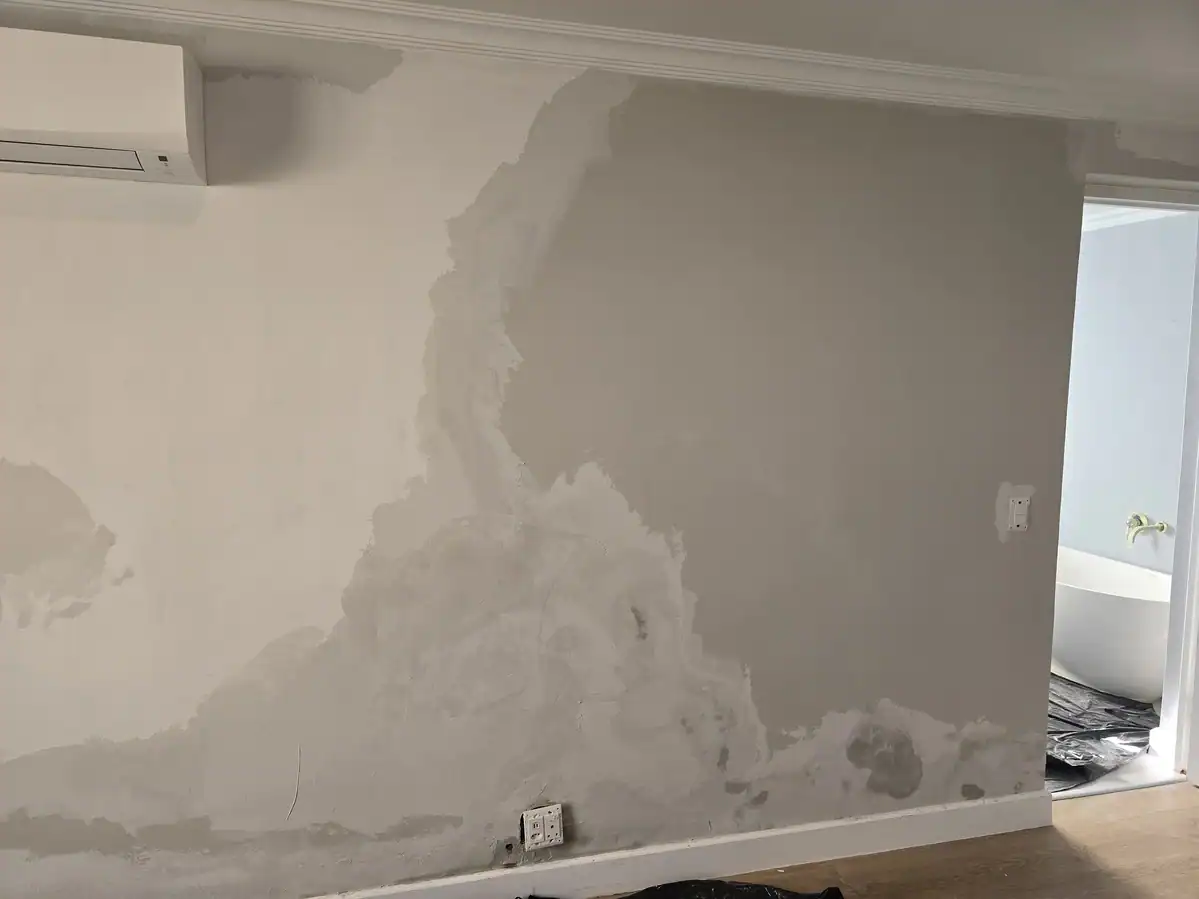
The main bedroom showed a paint bubble that initially appeared to be only approximately palm-sized.
Once preparation began and the defective coating was opened, a much larger area of loose paint detached from the wall.
The size of the exposed affected area, together with the moisture readings, showed that this was not simply a local adhesion defect that could responsibly be filled, primed and painted over.
Protimeter readings on the affected walls ranged from 22% to 48.3%.
Tracing the Moisture Source to the Swimming Pool Above
The position of the damp and the high moisture readings prompted an inspection above the affected bedroom and bathroom.
A swimming pool was situated on the deck directly above these rooms.
A swimming-pool specialist assessed the installation and confirmed that the pool was leaking.
The pool was repaired before the painting team continued with the damp-related wall preparation.
This sequence is fundamental.
A damp-resistant or moisture-barrier coating can be useful on an appropriately prepared substrate within its specified limitations, but paint cannot repair a leaking swimming pool.
Had the active leak remained unresolved, a cosmetic repaint could simply have concealed the symptom temporarily while moisture continued entering the building.
What the Interior Inspection Found
- Damp symptoms in the main bedroom and adjacent bathroom areas.
- Protimeter readings between 22% and 48.3%.
- A leaking swimming pool on the deck above the affected rooms.
- A paint bubble that exposed considerably more loose coating when opened.
- Black mould staining on a bathroom ceiling.
- A brown water stain on the en-suite bathroom ceiling.
- Hairline wall cracks.
- Plaster cracks approximately 1–5 mm wide.
- Opened timber joints.
- Gaps where exposed trusses met adjoining surfaces.
- Gaps between cornices and walls caused by ceiling movement.
- Failing sealant around baths and basins.
- Peeling and discoloured paint on selected walls.
- Chip marks and coating wear on doors, frames, skirtings and architraves.
Removing Unsound Damp-Damaged Paint
Floors, furniture and completed finishes were protected before scraping, sanding and repairs began.
Loose coating was removed from the damp-affected wall until the remaining surface provided a sound basis for further preparation.
This is important because moisture-damaged paint may lose adhesion over a much larger area than the small bubble or peeling edge visible on the surface.
A new coating applied over unsound material would remain dependent on the failing layer beneath it.
Damp-Related Wall Preparation After the Pool Repair
Only after the leaking pool had been repaired did the painting team proceed with the damp-sensitive coating preparation.
The documented system included Dulux Pre-Paint Dampshield and Dulux Dampshield on the prepared affected masonry.
The quotation specifically recorded the peak reading of 48.3% and provided for additional Dampshield preparation over the affected wall areas.
The preparation was carried out over more than one day to allow the required intervals between coats.
Dampshield was used as part of the remedial paint system. It was not presented as a substitute for repairing the pool leak.
Bathroom Mould and Ventilation
Black mould staining was recorded on a bathroom ceiling.
The affected area was treated with Dulux anti-fungal solution and allowed to dry.
The stained ceiling also received appropriate undercoating to help prevent the dark marks from bleeding through the completed finish before the ceiling coating was applied.
The ceilings and prepared cornices subsequently received the specified Dulux Wall & Ceiling finishing system.
Important limitation: painting and fungal treatment cannot correct inadequate ventilation.
An extractor fan was recommended because recurring high humidity could allow mould to return if moist air was not removed effectively.
Cornice Movement Required Flexible Repairs
The inspection found gaps between cornices and walls, particularly in areas affected by movement in the ceiling structure.
The upper floor covered only part of the home’s footprint, while other living and kitchen areas formed double-volume spaces.
Movement between ceilings, walls and roof-related elements had opened some cornice joints.
These gaps were not simply filled with ordinary rigid crack filler.
Single-pack polyurethane sealant with movement capability was specified in the relevant joints so the repair could accommodate more movement than a brittle rigid filler.
Flexible material reduces the risk of an immediate repeat crack, but no sealant can permanently eliminate normal movement in roofs, ceilings or timber structures.
Hairline and Wider Interior Wall Cracks
Hairline Cracks
Fine cracks received alkali-resistant sealing and compatible crack preparation before the finishing system.
Dulux Rainshield was worked into suitable prepared cracks as part of the documented flexible repair method.
Plaster Cracks from Approximately 1–5 mm
Suitable wider cracks were opened into a V-joint and cleaned.
Where appropriate, the crack was repaired with a masonry patching-plaster system, sanded and cleaned before flexible Rainshield protection was applied across the repaired area.
The second Rainshield application was placed perpendicular to the first.
Double-Volume Wooden Ceiling and Exposed Trusses
One of the visual features of the property was the double-volume living area with a painted wooden ceiling and exposed trusses.
Small gaps had developed between selected painted ceiling planks and at junctions where timber met surrounding surfaces.
Flexible polyurethane sealant was used in suitable movement joints rather than simply filling them with rigid material.
Where peeling coating exposed bare timber, the timber received spot priming with Dulux Wood Primer.
The prepared painted timber then received a full Dulux Universal Undercoat before two finishing coats of Dulux Pearlglo Waterbased.
Working at this height required controlled access and careful protection of the completed interior below.
Painted Doors, Frames, Skirtings and Cupboards
The interior joinery included painted doors, frames, architraves, skirtings and built-in bedroom cupboards.
Chip marks, peeling areas and coating wear were prepared before repainting.
Loose paint was removed and hard edges feathered so that ridges from the old coating would not remain visible through the final finish.
Bare timber was spot-primed using Dulux Wood Primer, followed by a full coat of Dulux Universal Undercoat.
The prepared painted woodwork then received two coats of Dulux Pearlglo Waterbased.
Interior Wall Finishing System
Once the active pool leak had been corrected, unsound coatings removed, damp-related preparation completed and cracks repaired, the interior walls received two coats of Dulux EasyCare.
Different surfaces were deliberately finished with different systems:
- Interior walls: Dulux EasyCare.
- Rhinoboard ceilings and cornices: Dulux Wall & Ceiling.
- Doors, frames, architraves and skirtings: Dulux Pearlglo Waterbased.
- Painted exposed trusses and wooden ceiling planks: Dulux Pearlglo Waterbased after suitable timber preparation.
- Damp-affected masonry: Dulux Dampshield preparation where specified.
- Movement joints: flexible polyurethane sealant.
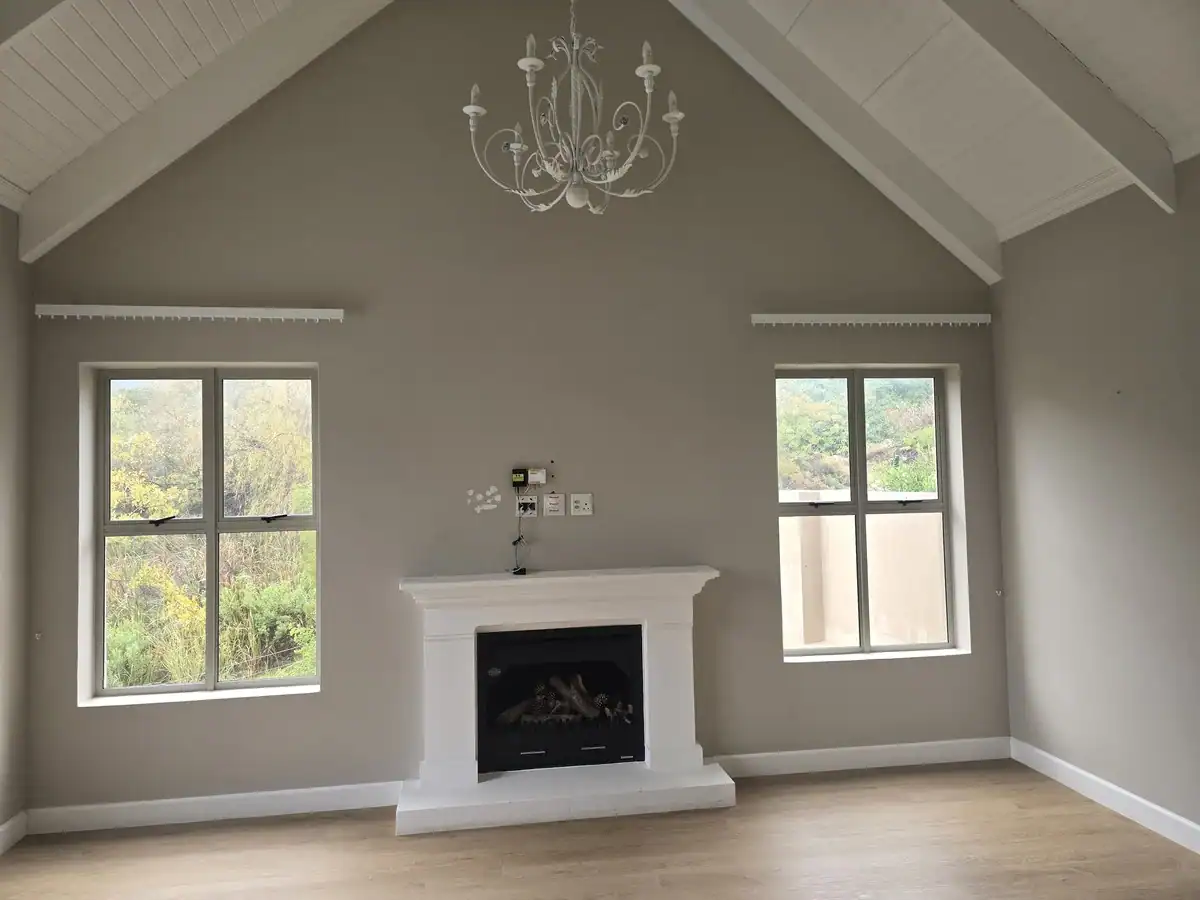
Photograph context: the damp-wall photograph and completed living-area photograph show different rooms within the same L’Ermitage Estate project. They are not presented as matching before-and-after views of one wall.
What This L’Ermitage Project Demonstrates
- A small visible paint defect can conceal much more extensive coating failure.
- Moisture readings can help determine whether further investigation is needed.
- Readings alone do not identify the source of moisture.
- The active cause should be corrected before repainting wherever practical.
- Paint cannot repair a leaking swimming pool.
- Damp-related coating systems should be used within their technical limitations.
- Mould treatment does not replace adequate ventilation.
- Movement joints require flexible rather than purely cosmetic repairs.
- Plaster walls, ceilings and painted timber require different preparation and coating systems.
- Double-volume work requires additional access and property-protection planning.
Preparation Matters More Than Simply Choosing Premium Paint
Premium finishes perform best when they are applied to a sound and appropriately prepared substrate.
In this case, simply specifying a washable premium interior paint would not have resolved the leaking pool, loose damp-damaged coating, bathroom mould, cornice movement or failed timber joints.
The final finish became the last stage of a much broader preparation process.
Supplier Approval and Warranty Specifications
Painters Cape Town is approved by major paint suppliers and can facilitate formal supplier specifications and qualifying supplier-backed warranties where appropriate.
The warranty structure differs between new construction and redecoration.
New-Build Raw Plaster
On qualifying new construction, a paint supplier can specify the complete system from the raw plaster onward — including primers, waterproofing preparation and finishing coats.
Where that full specification is followed, supplier-backed warranties of up to 10 years can be available.
Redecoration Projects
On redecoration projects, supplier-backed warranties are normally approximately 7–8 years, depending on the supplier and formal written specification.
The shorter period reflects the fact that the original primers and preparation beneath an existing coating cannot always be verified.
No separate supplier-backed warranty duration is being claimed for this L’Ermitage project unless supported by the formal project documentation.
Cape Winelands Painting Experience
This L’Ermitage Estate project forms part of our wider Cape Winelands painting experience.
Our broader wine-estate and wine-farm project history includes Cavalli Estate, Simonsig Wine Estate, Roozendal Wine Farm, Boschkloof Wines, Guardian Peak Winery & Grill, Klein Welmoed Wine & Olive Estate and Vredenheim Wine Estate.
These projects complement our work on private homes and estates by demonstrating experience around premium properties, visitor-facing environments and controlled working conditions.
Related Painting Services
- Painters Franschhoek
- Interior Painters Cape Town
- Damp Proofing Cape Town
- Residential Painters Cape Town
- Cape Winelands Painters
Request a Franschhoek Interior Painting Quote
If an interior wall is bubbling, peeling, stained or showing signs of moisture, it is worth investigating the surrounding building conditions before assuming that ordinary repainting will solve the problem.
Call 082 374 6862 or visit the Painters Cape Town contact page to arrange an inspection and written quotation.
Helpful Franschhoek Painting Guides
Why Paint Peels, Fades and Cracks
Learn why moisture, weak old coatings, cracks and poor preparation can turn a small visible defect into a much larger repainting problem.
Preparing Damp Walls and Timber
See why the source of moisture should be investigated before damp-damaged masonry, timber and coatings are repaired and repainted.
Planning a Premium Home Repaint
Learn how furniture, floors, joinery, double-volume spaces and other high-value finishes should be protected during substantial interior work.
L’Ermitage Estate Interior Painting FAQs
Where was this painting project completed?
The project was completed at a private double-storey home in L’Ermitage Estate, Franschhoek.
When was the L’Ermitage project completed?
The documented project period was 1–9 June 2026.
What moisture readings were recorded?
Protimeter readings on the identified affected walls ranged from 22% to 48.3%.
Which rooms were affected by damp?
The documented damp affected the main bedroom, en-suite bathroom and adjacent storeroom areas.
What caused the damp?
The moisture path was traced to a leaking swimming pool situated on the deck above the affected rooms.
Was the swimming-pool leak repaired before painting?
Yes. The leak was assessed and repaired before the painting team proceeded with the damp-related preparation and final wall finishes.
Can damp-proofing paint repair a leaking swimming pool?
No. Paint or a moisture-barrier coating cannot repair an active pool leak. The source of the water entry had to be corrected first.
How large was the visible paint defect initially?
The visible paint bubble in the main bedroom initially appeared approximately palm-sized, but opening the defect exposed a considerably larger area of loose moisture-damaged coating.
How was the damp-affected wall prepared?
Unsound coating was removed to a sound surface after the pool leak was repaired. The documented preparation then included Dulux Dampshield on the affected masonry before final painting.
Was mould found during the project?
Yes. Black mould staining was recorded on a bathroom ceiling and treated with the specified anti-fungal preparation before repainting.
Can repainting stop bathroom mould returning?
Not where inadequate ventilation remains the cause. An extractor fan was recommended because recurring humidity could allow mould to return.
Why were flexible repairs used around the cornices?
Movement between ceilings and walls had opened selected cornice joints. Flexible polyurethane was used because it can accommodate more movement than a rigid filler.
Did the project include a double-volume ceiling?
Yes. The interior included a painted wooden double-volume ceiling with exposed roof trusses in the living area.
How were gaps in the wooden ceiling treated?
Suitable small gaps and open joints between painted ceiling planks and truss junctions were prepared using flexible polyurethane sealant before repainting.
What coating was used on the interior walls?
After the necessary repairs and preparation, the interior walls received two topcoats of Dulux EasyCare.
What coating was used on painted timber and joinery?
Prepared doors, frames, skirtings, architraves, exposed trusses and painted wooden ceiling surfaces received suitable priming and undercoating followed by Dulux Pearlglo Waterbased.
Do you use subcontracted painters?
No. Painters Cape Town uses full-time employed painters with working-foreman supervision.
Are you approved by major paint suppliers?
Yes. Painters Cape Town is approved by major paint suppliers and can facilitate qualifying supplier specifications and warranties where appropriate.
How long can supplier-backed warranties apply?
Qualifying new-build raw-plaster systems can receive specifications of up to 10 years where the entire coating system is controlled from the first primer. Redecoration projects are normally approximately 7–8 years where formally warranted, depending on the supplier and written terms.
How do I request an interior painting quote in Franschhoek?
Call 082 374 6862 or visit the Painters Cape Town contact page to arrange an inspection and written quotation.

Copyright 2026 , all rights reserved.