Painters Stellenbosch
Professional Painters in Stellenbosch, Cape Winelands
Interior, exterior, roof and preparation-led painting for Stellenbosch family homes, premium estates, wine properties, guest accommodation and commercial buildings.
With 27 years of painting experience, full-time employed painters, daily working-foreman supervision and written diagnostic reports, Painters Cape Town provides direct contractor accountability from inspection and preparation through to final handover.
Our Stellenbosch experience includes four documented 2026 projects at De Zalze Estate, Rozendal Farm, Nuutgevonden Estate and Paradyskloof.
Stellenbosch Painting Services
- Interior and exterior house painting.
- Roof preparation and painting for suitable tiled and metal roofs.
- Damp-related preparation and waterproofing.
- Estate and premium residential painting.
- Wine-farm, guesthouse and hospitality painting.
- Boundary and garden-wall painting.
- Crack repairs and failed sealant replacement.
- Timber windows, doors, fascia boards and pergolas.
- Written diagnostic reports and clear scopes of work.
- Four documented Stellenbosch projects with real photographs and specifications.
Why Property Owners Choose Painters Cape Town in Stellenbosch
Our Stellenbosch work is supported by documented local projects, major paint-supplier approval, experienced employed painters, written diagnostic reports and a broader track record across Cape Winelands homes, estates and wine properties.
27 Years of Painting Experience
Painters Cape Town has 27 years of painting-contractor experience across residential, estate, wine-farm, roof and commercial properties in Cape Town and the Cape Winelands.
Approved by Major Paint Suppliers
We are approved by major paint suppliers and can work to formal supplier specifications where the substrate, coating condition or project requirements justify technical involvement.
Supplier-Backed Warranties
Qualifying new-build raw-plaster projects can receive supplier-backed specifications of up to 10 years when the complete system is followed from the first primer coat. Redecoration projects are typically 7–8 years, depending on the supplier and written specification.
Documented Stellenbosch Projects
Our Stellenbosch page is supported by four real 2026 projects at De Zalze Estate, Rozendal Farm, Nuutgevonden Estate and Paradyskloof, covering exterior, roof, moisture-related and preparation-intensive work.
Cape Winelands Wine-Property Experience
Our wider Cape Winelands project history includes work at Cavalli Estate, Simonsig Wine Estate, Roozendal Wine Farm, Boschkloof Wines, Guardian Peak Winery & Grill, Klein Welmoed Wine & Olive Estate and Vredenheim Wine Estate.
Full-Time Employed Painters
Our painters are employed by the company rather than supplied as subcontracted crews, giving us direct responsibility for workmanship, site conduct, preparation and quality control.
Security Screening Where Required
Where estates, wine farms or controlled properties require additional access screening, our employed painters can undergo the applicable police or security-clearance procedures.
Written Diagnostic Reports
Our quotations identify visible paint failure, damp symptoms, cracks, waterproofing requirements, timber or roof defects, preparation methods, coating systems and important limitations before work starts.
Working-Foreman Supervision
An experienced working foreman supervises preparation, painters, property protection, access, workmanship and daily site organisation throughout the project.
Direct Contractor Accountability
Painters Cape Town is not a lead-generation company. Clients deal directly with the painting contractor responsible for inspection, quotation, preparation, employed painters, supervision and handover.
Public Liability Insurance
Our work is supported by Public Liability Insurance through OUTsurance for additional reassurance when we work on private homes, estates and commercial properties.
Preparation Before Paint
Premium paint cannot compensate for unresolved damp, unstable coatings, rust, open joints, failed waterproofing or poorly prepared timber. We address the substrate before relying on the finishing coats.
Painting Contractors Stellenbosch for Homes, Estates, Wine Properties and Businesses
Painters Cape Town provides professional painting services throughout Stellenbosch for private homes, estate properties, older houses, wine farms, guest accommodation, rental properties and commercial buildings.
Stellenbosch is not one uniform painting environment. A modern home in Paradyskloof, an estate property in De Zalze, an older building near central Stellenbosch and guest accommodation on a wine farm can require very different preparation, access planning and coating systems.
That is why our quotations start with the condition of the property rather than a generic price per square metre. Existing paint, plaster, cracks, moisture symptoms, timber, metalwork, roofs, joints and exposed horizontal surfaces are assessed before the preparation and finishing system is proposed.
For regional coverage beyond Stellenbosch, visit our Cape Winelands Painters page.
Stellenbosch Painting Services
Our Stellenbosch painting work can include several different surfaces and property types within one project. The main services include:
Interior House Painting
Walls, ceilings, doors, frames, skirting, cornices and other suitable interior surfaces in private homes, apartments, rentals, guest accommodation and commercial interiors.
Our broader service is explained on the Interior Painters Cape Town page.
Exterior House Painting
Preparation and repainting of plastered façades, trims, fascias, doors, windows, selected timber, metalwork and other suitable exterior surfaces.
See our Exterior Painters Cape Town service.
Roof Painting Stellenbosch
Suitable tiled and metal roofs require substrate-specific cleaning, preparation, primers or stabilisers and compatible roof coatings.
Our dedicated local page documents both Paradyskloof and Rozendal Farm: Roof Painting Stellenbosch.
Estate Home Painting
Estate projects can involve contractor access, working hours, colour controls, landscaping protection and approval of exterior finishes.
Waterproofing Before Repainting
Cracked parapets, vulnerable windowsills, failed seals, expansion joints and exposed horizontal masonry can contribute to repeated coating failure if the underlying water-entry route is not addressed.
Our wider damp-related service is explained on Damp Proofing Cape Town. A dedicated Stellenbosch waterproofing page will form part of this local authority cluster.
Boundary and Garden Walls
Boundary walls require realistic expectations because moisture can continue entering from soil, irrigation, backfill, the reverse face or below the wall even after the accessible painted face has been prepared.
Wine-Farm and Hospitality Painting
Wine farms, cottages, guesthouses, restaurants and visitor-facing properties can require plaster, timber, roofs and exterior maintenance to be coordinated around guests and operations.
Our broader commercial service is available at Commercial Painters Cape Town.
Preparation and Paint-Failure Repairs
Peeling, bubbling, chalking, cracked plaster, failed seals and moisture symptoms need diagnosis and preparation before a decorative repaint is expected to perform normally.
4 Documented Painting Projects in Stellenbosch
Our Stellenbosch service is supported by four genuine 2026 projects covering four different property environments. These projects include original photographs, measured Protimeter readings, visible defect observations and project-specific preparation rather than generic stock examples.
De Zalze Winelands Golf Estate
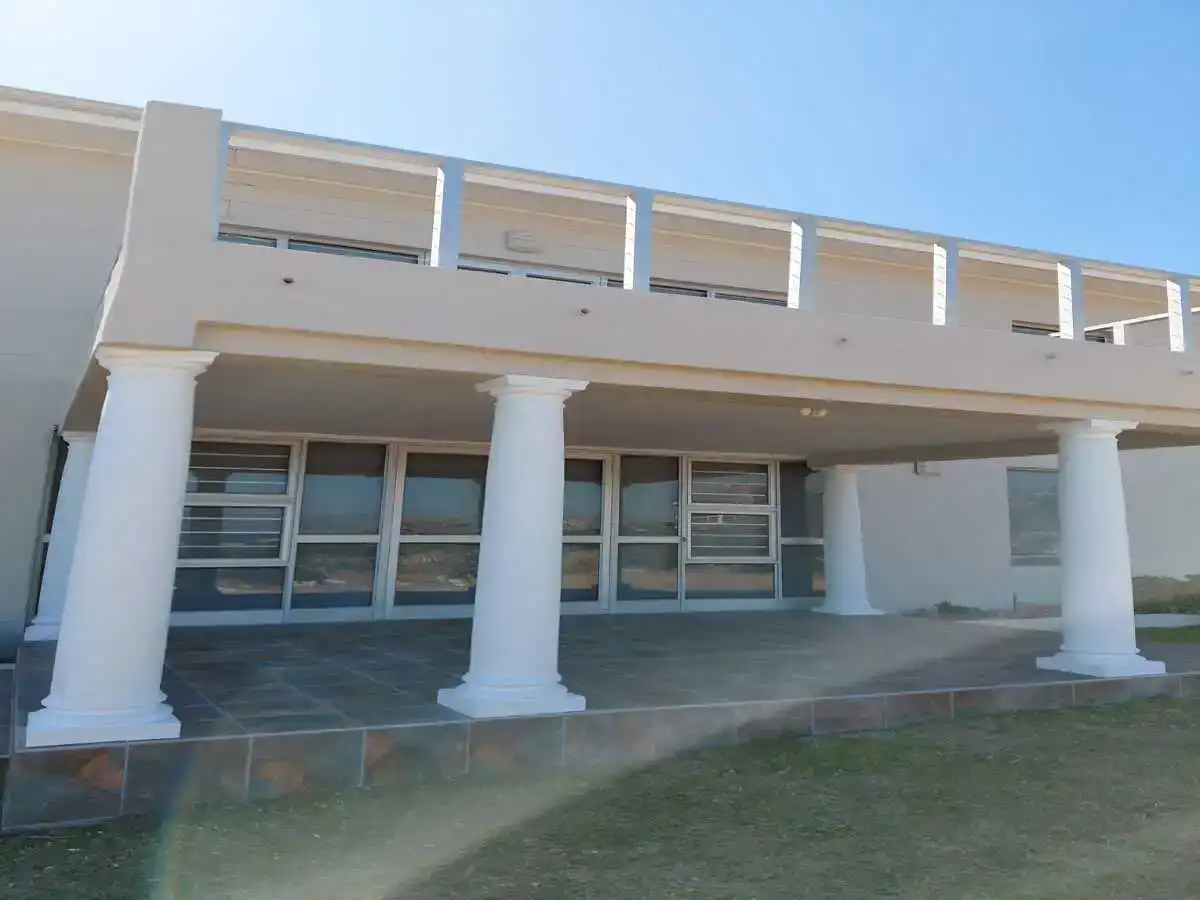
Project period: 23 February–6 March 2026
Protimeter readings: 16.3%–21.5%
Property: Private double-storey estate home
The De Zalze project involved peeling and powdery coatings, numerous cracks, failed seals, moisture-related deterioration, vulnerable windowsills and deck-wall surfaces, timber fascia boards and mould-affected Nutec soffits.
Preparation included stabilising affected surfaces, defect-specific crack repairs, flexible sealing and waterproofing of exposed horizontal masonry.
View the De Zalze Estate painting project
Rozendal Farm Stellenbosch
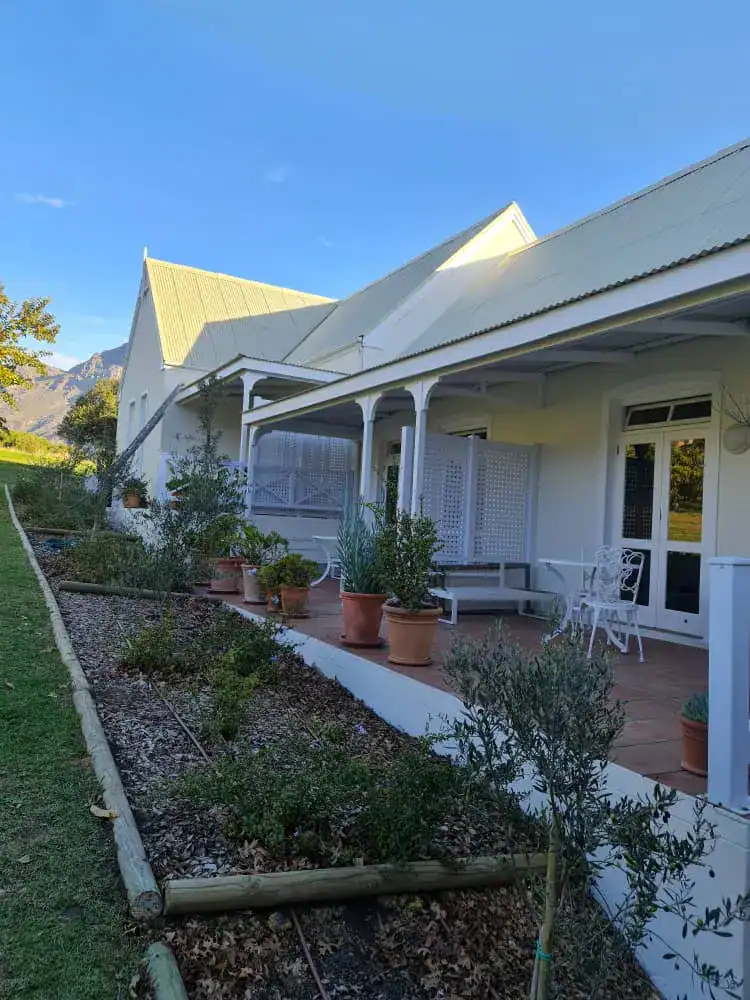
Project period: 4 May–26 June 2026
Protimeter readings: 11.3%–22.8%
Property: Wine-farm and hospitality buildings
Rozendal combined exterior plaster repairs, damp-related preparation, waterproofing, selected sash windows, fascia boards, pergola timber and corrugated roof-sheet painting.
This project is particularly valuable because it provides genuine first-hand evidence of painting in a Stellenbosch wine-farm and guest-accommodation environment rather than merely targeting those terms for SEO.
View the Rozendal Farm painting project
Nuutgevonden Estate Stellenbosch
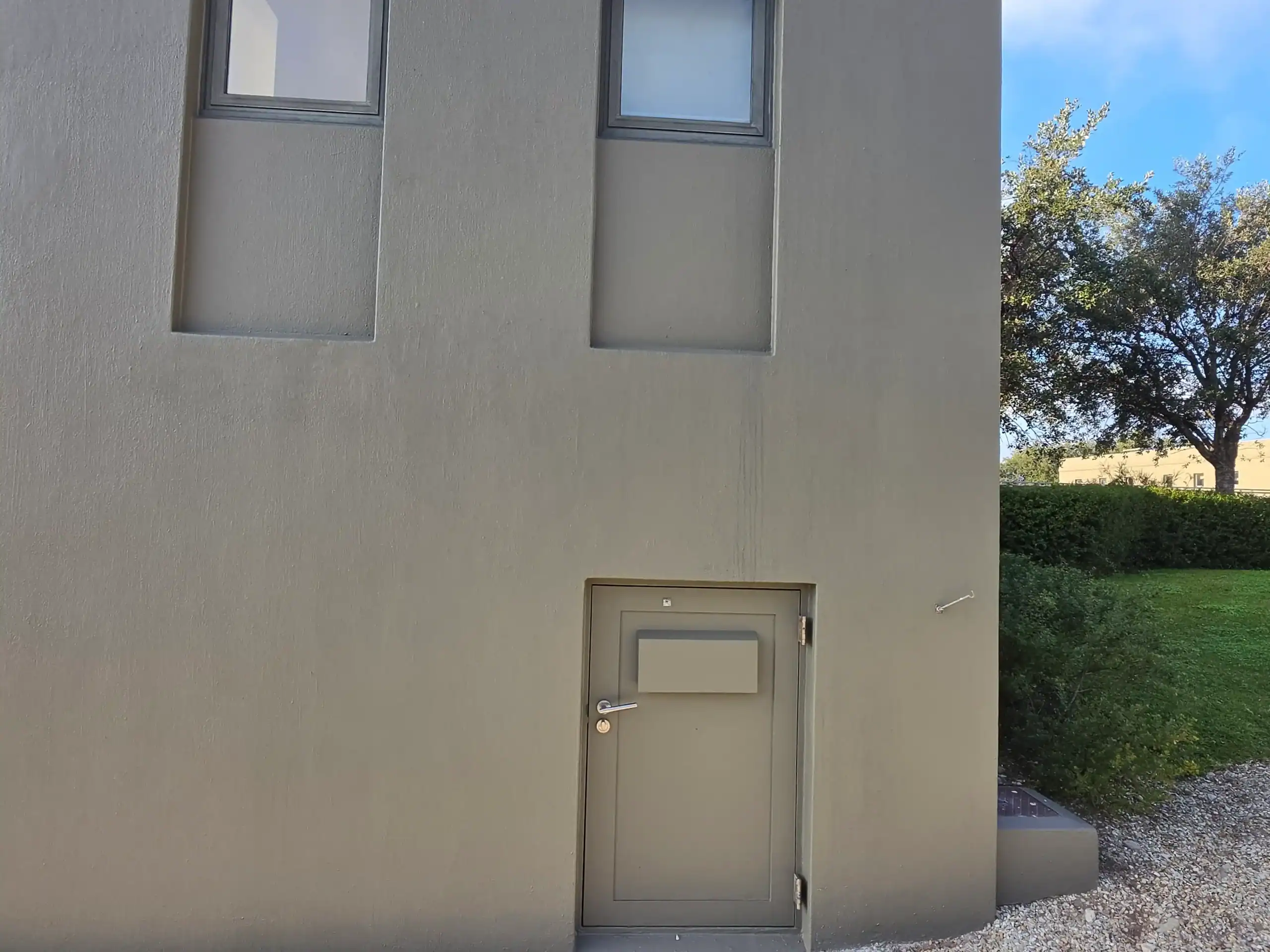
Project period: 13–23 July 2026
Protimeter readings: 8.9%–14.2%
Property: Private estate home
The Nuutgevonden project included severe chalking, peeling coatings, fine and wider cracks, movement-joint deterioration, exposed windowsills, boundary-wall copings and moisture-sensitive boundary walls.
The main building and boundary walls required different coating considerations because their exposure and moisture conditions were not the same. This is precisely why one generic specification should not automatically be applied to every surface on a property.
View the Nuutgevonden Estate painting project
Paradyskloof Roof and Exterior Painting
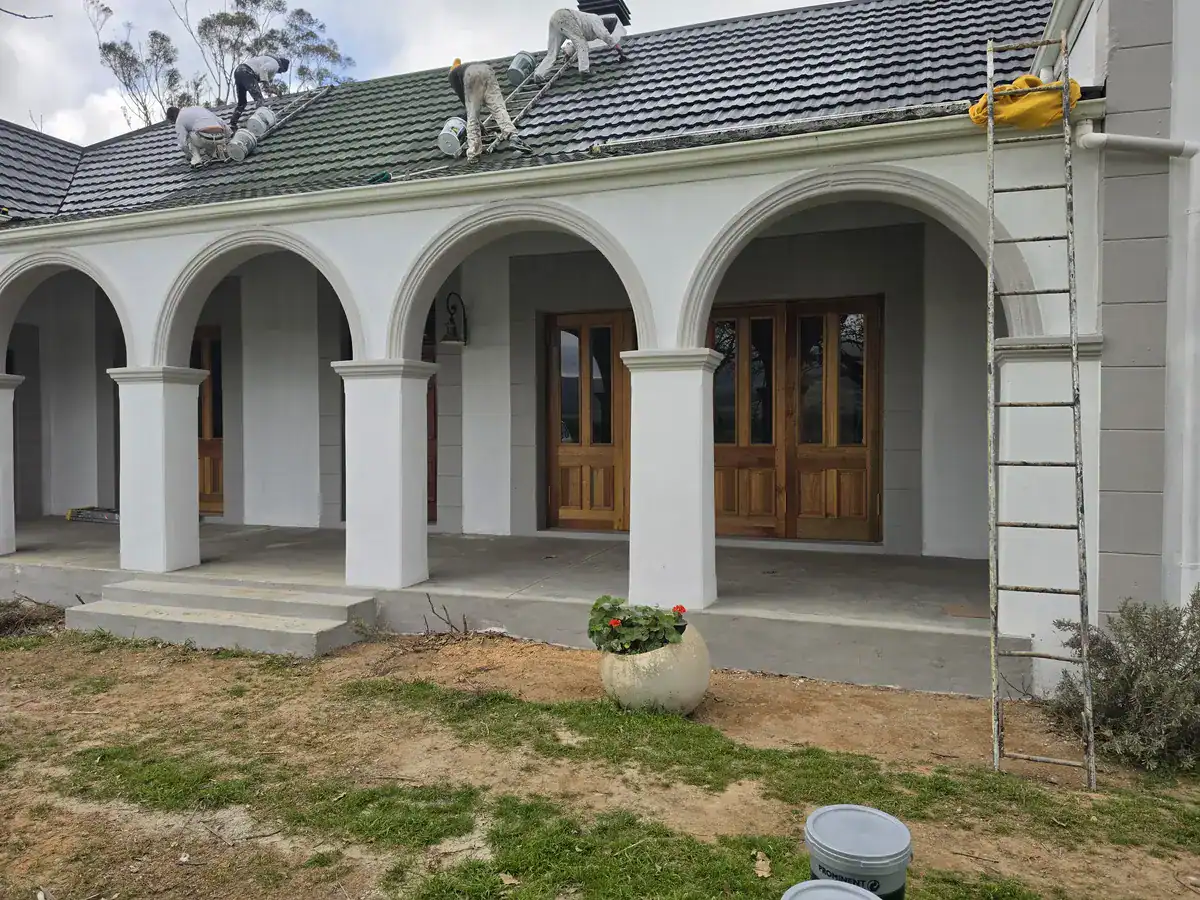
Documented project window: 17 August–2 September 2026
Protimeter readings: 10.4%–15.6%
Property: Private residential home
This project combined tiled-roof painting with exterior wall preparation, hollow-plaster replacement, crack repairs, re-waterproofing, failed-seal replacement, painted fascia restoration and varnished timber maintenance.
The roof tiles were mould affected and chalky. After cleaning and fungal treatment, Dulux Bonding Liquid was used to stabilise the prepared substrate before the specified charcoal Dulux Roofguard coats.
View the Paradyskloof roof and exterior project
What These Stellenbosch Projects Prove
The purpose of showing completed local projects is not simply to add photographs. They demonstrate how different Stellenbosch properties can require different preparation even when all of them eventually receive a decorative coating.
- De Zalze demonstrates estate painting, moisture diagnosis, cracks, failed seals, horizontal waterproofing, timber and Nutec.
- Rozendal Farm demonstrates hospitality-property painting, exterior plaster, sash windows, pergola timber and corrugated metal roof coating.
- Nuutgevonden demonstrates severe chalking, estate-home repainting and realistic boundary-wall moisture limitations.
- Paradyskloof demonstrates tiled-roof preparation, hollow plaster, waterproofing, flexible sealing, fascia painting and varnished timber.
Together, they provide evidence across moisture readings below 10% to above 22%, different roof substrates, estate requirements, exterior timber, plaster defects and moisture-sensitive masonry.
Why Painting in Stellenbosch Requires a Local Approach
Winter Rain, Summer UV and Shaded Walls
Stellenbosch experiences wet winter periods followed by warm, dry summers. Rain can expose weaknesses around cracks, windowsills, parapets, joints and other vulnerable details, while sun-exposed walls and roofs can fade or chalk over time.
Shaded elevations and landscaped garden areas can dry more slowly, particularly where vegetation, irrigation or limited airflow keeps exterior masonry damp for longer periods.
Older and Heritage-Style Properties
Older Stellenbosch buildings can contain ageing plaster, previous patch repairs, multiple generations of paint and substantial timber windows or doors.
Old does not automatically mean defective, but it does mean that adhesion, plaster condition, moisture and coating compatibility should be checked before another paint layer is added.
Estate Homes
Properties in De Zalze, Nuutgevonden, Welgevonden and other managed estates can involve contractor access procedures, approved exterior colours, working hours, vehicle controls and careful protection of paving and landscaping.
Our detailed Stellenbosch estate painting guide explains this separately so that the main contractor page does not need to repeat every estate procedure.
Wine Farms and Hospitality Properties
Wine farms and visitor-facing properties can combine accommodation, plastered buildings, timber, roofs, restaurants, courtyards and operational areas under one maintenance programme.
Rozendal Farm demonstrates why painting in this environment requires both technical preparation and practical scheduling around an operating hospitality property.
Student Rentals and University-Area Properties
Rental properties can require durable finishes and efficient scheduling between occupants. High-use passages, bedrooms, kitchens, bathrooms, doors and common areas can require a different maintenance approach from a premium owner-occupied estate home.
Preparation Comes Before the Final Paint Colour
A professional quotation should explain what will happen to the existing surface before the finishing coats are applied.
Depending on the property, our written scope can record:
- loose, peeling or poorly bonded paint;
- chalking or powdery coatings;
- hairline, map and wider plaster cracks;
- movement or expansion joints;
- hollow or detached plaster;
- moisture-related symptoms and Protimeter readings where appropriate;
- failed seals around windows and doors;
- parapet and windowsill waterproofing requirements;
- mould or algae;
- timber condition;
- rust and metal preparation;
- roof substrate and coating condition;
- boundary-wall limitations;
- primers, stabilisers and finishing systems; and
- important exclusions or maintenance limitations.
For a detailed technical explanation, see our Wall Preparation Stellenbosch guide.
When Peeling or Bubbling Paint Is a Symptom Rather Than the Cause
Applying fresh paint over a failed coating does not necessarily repair the reason that coating failed.
Moisture, failed seals, cracked horizontal surfaces, chalking, poor adhesion, unstable plaster, movement and incompatible previous coatings can all affect a repaint.
A moisture-meter reading can help describe the condition of the tested area, but the reading alone does not prove rising damp or identify where water is entering.
Our dedicated Stellenbosch Paint Failure guide uses real evidence from De Zalze, Nuutgevonden, Paradyskloof and Rozendal Farm to explore these problems in more detail.
How Much Does House Painting Cost in Stellenbosch?
There is no useful single price for painting a Stellenbosch house because two properties of similar size can require completely different preparation.
Cost can be influenced by access, building height, coating condition, cracks, damp-related preparation, waterproofing, timber, roofs, scaffolding, colour changes and the specified coating system.
Rather than duplicating an entire pricing article on this commercial page, see our House Painting Cost Stellenbosch guide, which uses real quotation examples.
Our Stellenbosch Painting Process
1. Site Inspection
We inspect the property and the surfaces included in the proposed work.
2. Diagnostic Observations
Visible coating failure, cracks, damp symptoms, roof condition, timber, sealants and waterproofing defects are recorded where relevant.
3. Written Preparation Scope
The quotation explains the preparation, primers, repairs, coating systems and important limitations relevant to the project.
4. Colour and Product Confirmation
Colours and coating systems are confirmed before the main application work proceeds. Estate or supplier approval can be incorporated where required.
5. Property Protection
Glazing, paving, floors, fittings, landscaping and adjoining finished surfaces are protected according to the work area.
6. Preparation and Remedial Work
Cleaning, removal of unstable coating, crack repairs, joint sealing, waterproofing, timber preparation and specialist priming are completed where included.
7. Coating Application
The specified coating system is applied to the prepared substrate under working-foreman supervision.
8. Final Inspection
The completed work is inspected before handover.
Why Choose Painters Cape Town for Stellenbosch?
- 27 years of painting and surface-preparation experience.
- Four documented 2026 Stellenbosch projects.
- Full-time employed painters rather than subcontracted painting crews.
- Working-foreman supervision.
- Written diagnostic observations and preparation scopes.
- Measured moisture readings where relevant.
- Supplier or manufacturer specifications where appropriate.
- Public Liability Insurance through OUTsurance.
- Direct contractor accountability rather than a lead-generation service.
- Real estate, residential, roof and wine-property experience in Stellenbosch.
Stellenbosch Areas and Property Types
Stellenbosch Central and University Areas
These areas include older homes, apartments, student accommodation, offices, restaurants, guest accommodation and mixed-use properties where access, rental wear, timber and older coatings can influence the work.
De Zalze, Nuutgevonden, Welgevonden and Estate Properties
Managed estates can combine prominent façades, landscaped gardens, rooflines, garages, boundary features and owner-association requirements. Our De Zalze and Nuutgevonden projects provide genuine completed examples.
Paradyskloof and Residential Stellenbosch
Residential homes can combine plaster façades, tiled roofs, fascia boards, waterproofing, timber and moisture-sensitive wall details within a single repainting project.
Rozendal, Jonkershoek and Wine-Farm Areas
This broader environment includes family homes, farm properties, guest accommodation and hospitality buildings. Rozendal Farm provides documented evidence of exterior, timber and roof work in this setting.
Nearby Cape Winelands Painting Areas
Our Stellenbosch work forms part of a wider Cape Winelands service network. We also provide painting services in Somerset West, Paarl and Franschhoek, with the regional hierarchy explained on our Cape Winelands Painters page.
Request a Stellenbosch Painting Quotation
If you are planning to repaint a Stellenbosch home, estate property, wine-farm building, guesthouse, rental property or commercial building, the best starting point is a physical inspection of the surfaces and a written scope.
Call 082 374 6862 or visit our contact page to arrange a Stellenbosch painting consultation.
Helpful Stellenbosch Painting Guides
These specialist guides expand on individual parts of a Stellenbosch painting project without making the main Painters Stellenbosch page responsible for every search intent.
Roof Painting Stellenbosch
See real tiled and corrugated roof projects at Paradyskloof and Rozendal Farm.
House Painting Cost Stellenbosch
See genuine quotation examples and why preparation, moisture, access and project scope affect painting cost.
Wall Preparation Stellenbosch
Learn how cracks, chalking, damp symptoms, failed coatings, plaster and sealants are considered before repainting.
Painting Homes in Stellenbosch Estates
Understand estate access, colour approvals, property protection and preparation using De Zalze and Nuutgevonden evidence.
Why Paint Fails in Stellenbosch
See real examples of peeling, bubbling, chalking, damp-related symptoms, cracked plaster and waterproofing defects.
Painters Stellenbosch FAQs
Do you have completed painting projects in Stellenbosch?
Yes. Our Stellenbosch service is supported by documented 2026 projects at De Zalze Winelands Golf Estate, Rozendal Farm, Nuutgevonden Estate and Paradyskloof.
What types of properties do you paint in Stellenbosch?
Suitable projects include private homes, estate properties, older houses, apartments, rentals, wine-farm buildings, guest accommodation and commercial properties.
Do you provide roof painting in Stellenbosch?
Yes. We have a dedicated Roof Painting Stellenbosch service page supported by documented tiled-roof work in Paradyskloof and corrugated-roof work at Rozendal Farm.
Do you paint homes in De Zalze and other Stellenbosch estates?
Yes. We have completed documented projects in De Zalze and Nuutgevonden. Estate access, approved colours, working hours and other applicable property rules should be confirmed before work begins.
Do you use subcontracted painting crews?
No. Our painting work is completed by full-time employed painters under working-foreman supervision.
Do you inspect cracks and damp before repainting?
Yes. Visible coating failure, cracks, damp symptoms, sealants, waterproofing details and other relevant defects are considered during inspection. Moisture readings may be taken where useful, but a meter reading alone does not prove rising damp or identify the moisture source.
Can paint permanently stop moisture in a boundary wall?
No. Decorative coatings cannot create a missing damp-proof barrier or permanently stop water that continues entering from soil, irrigation, backfill, behind the wall or below it.
Does roof painting repair an active roof leak?
No. Roof coating protects a suitable prepared roof surface but does not replace repairs to broken roof components, defective flashings, failed penetrations, drainage problems or active waterproofing defects.
Can supplier-backed coating warranties apply?
Where a formal supplier or manufacturer specification is issued and the complete qualifying system is followed, a written coating warranty may apply subject to the supplier's own terms, substrate requirements and exclusions.
How do I request a Stellenbosch painting quotation?
Call 082 374 6862 or use the Painters Cape Town contact page to arrange a site inspection and written quotation.

Copyright 2026 , all rights reserved.