Boundary Wall Painting Stellenbosch • Garden Walls • Copings • Damp
Boundary Wall Painting Stellenbosch for Damp, Copings & Repairs
Boundary and garden walls often behave differently from the main house because moisture can enter through cracked copings, exposed wall tops, ground contact or backfilled masonry.
Our preparation-first approach assesses peeling paint, chalking, cracks, mould, coping defects and moisture conditions before the wall is repainted.
Our documented 2026 Nuutgevonden Estate project included boundary walls, cracked copings, unprotected horizontal surfaces, moisture-related preparation and a separate boundary-wall coating system.
What We Assess on Boundary Walls
- Peeling, bubbling and loose coatings.
- Chalking or powdery paint.
- Cracked or loose wall copings.
- Unprotected horizontal wall tops.
- Hairline and wider plaster cracks.
- Mould and biological growth.
- Ground or backfill moisture exposure.
- Expansion and movement joints.
- Existing waterproofing.
- Moisture readings where appropriate.
Preparation-First Boundary Wall Painting in Stellenbosch
27 Years' Experience
Long-term painting and surface-preparation experience across homes, estates and moisture-sensitive exterior masonry.
Real Nuutgevonden Evidence
Our documented 2026 estate project included boundary walls, cracked copings, mould, cracks, unprotected wall tops and moisture-related deterioration.
Written Diagnostic Scope
The quotation records visible defects, preparation requirements, waterproofing and coating systems rather than simply specifying another coat of paint.
Moisture-Aware Preparation
Boundary walls are assessed for moisture exposure, cracks, copings and conditions that can cause recurring coating failure.
Realistic Limitations
We do not claim that decorative coatings can permanently stop ongoing moisture entering from the ground or backfilled side of a wall.
Full-Time Employed Painters
Our painting teams are employed by us and work under working-foreman supervision rather than being subcontracted.
Supplier-Specification Systems
Primers, waterproofing and finishing systems are selected according to the substrate and written project specification.
Direct Contractor
We are not a lead-generation company. Clients deal directly with the contractor responsible for inspection, quotation and the completed work.
Why Boundary Walls Often Fail Before the Main House
A boundary wall may look like a smaller version of an exterior house wall, but the moisture conditions can be very different.
The main building may have better protection from ground moisture, roof overhangs and controlled drainage. A freestanding garden or boundary wall can be exposed directly to rain from above and moisture from soil or backfilled areas from below or behind.
This means that recurring peeling, bubbling or discolouration on a boundary wall should not automatically be treated as a simple paint-quality problem.
The wall should first be inspected for cracks, failed copings, exposed horizontal tops, unstable coatings, biological growth and possible continuing moisture migration.
For our complete local painting service, visit Painters Stellenbosch.
Quick Answer: How Should a Damp Boundary Wall Be Repainted?
The correct system depends on why the existing coating failed.
A sound but weathered wall may require cleaning, minor repairs, suitable priming and new exterior topcoats.
A wall with peeling paint, chalking, cracks, mould or moisture-related deterioration requires more investigation before repainting.
Preparation may include removing loose coatings, fungal treatment, repairing cracks, stabilising powdery surfaces, waterproofing exposed copings or wall tops, treating identified damp-affected areas and selecting a compatible final coating.
Where moisture continues entering through the masonry from the ground or backfilled side, repainting can improve the exposed face but cannot permanently remove the underlying moisture source.
A Real Boundary Wall Project in Nuutgevonden Estate
Our 2026 Nuutgevonden Estate project provides direct Stellenbosch evidence of why boundary walls require their own preparation strategy.
The project included the exterior main building together with painted boundary and garden walls.
During the inspection, Protimeter readings across assessed areas ranged from 8.9% to 14.2%.
The documented boundary-wall and exterior conditions included:
- cracks on vertical and horizontal surfaces;
- cracked and loose boundary-wall copings in selected areas;
- mould on boundary walls;
- horizontal surfaces that had not been adequately waterproofed;
- failed or unsealed expansion joints;
- moisture-related coating deterioration;
- and exposed areas requiring different preparation from the main building.
This was therefore not treated as a cosmetic repaint.
View the Nuutgevonden Estate painting project
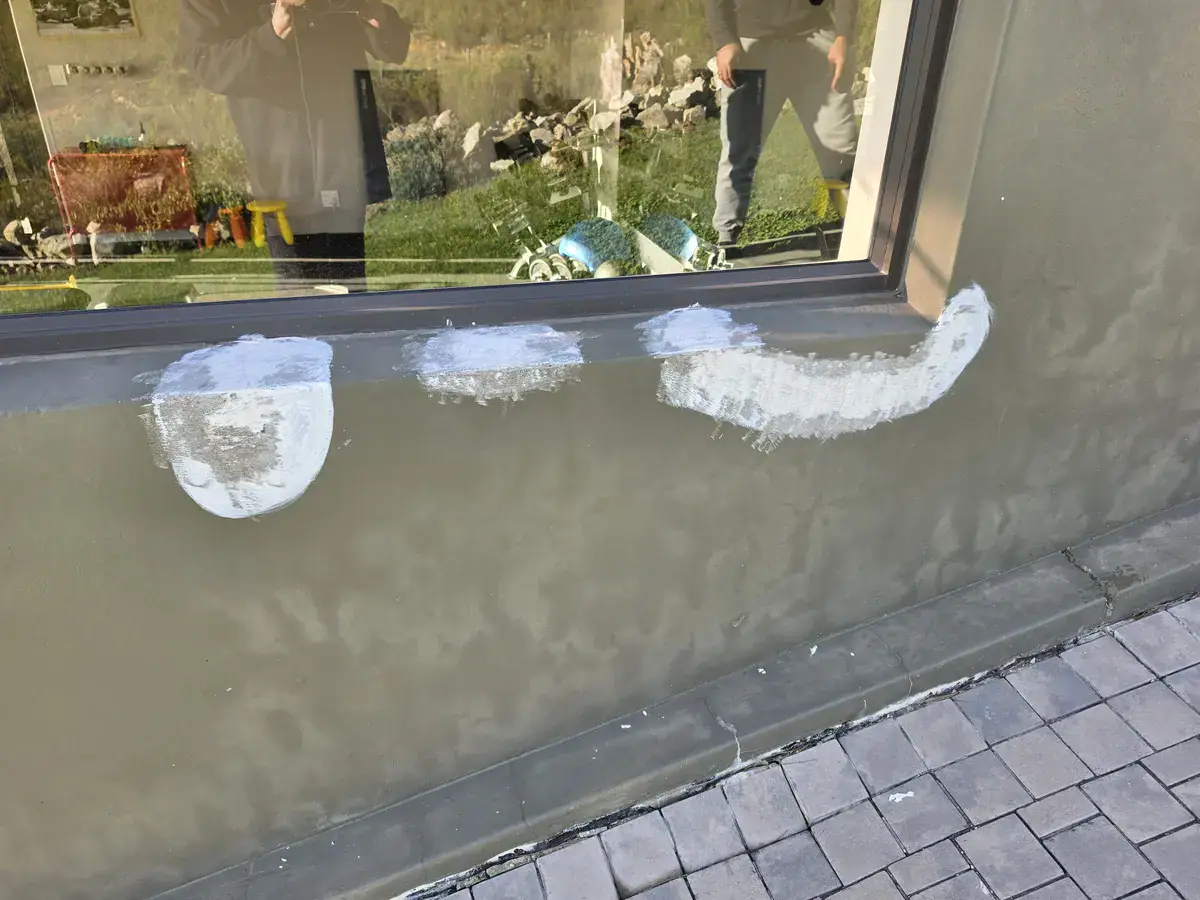
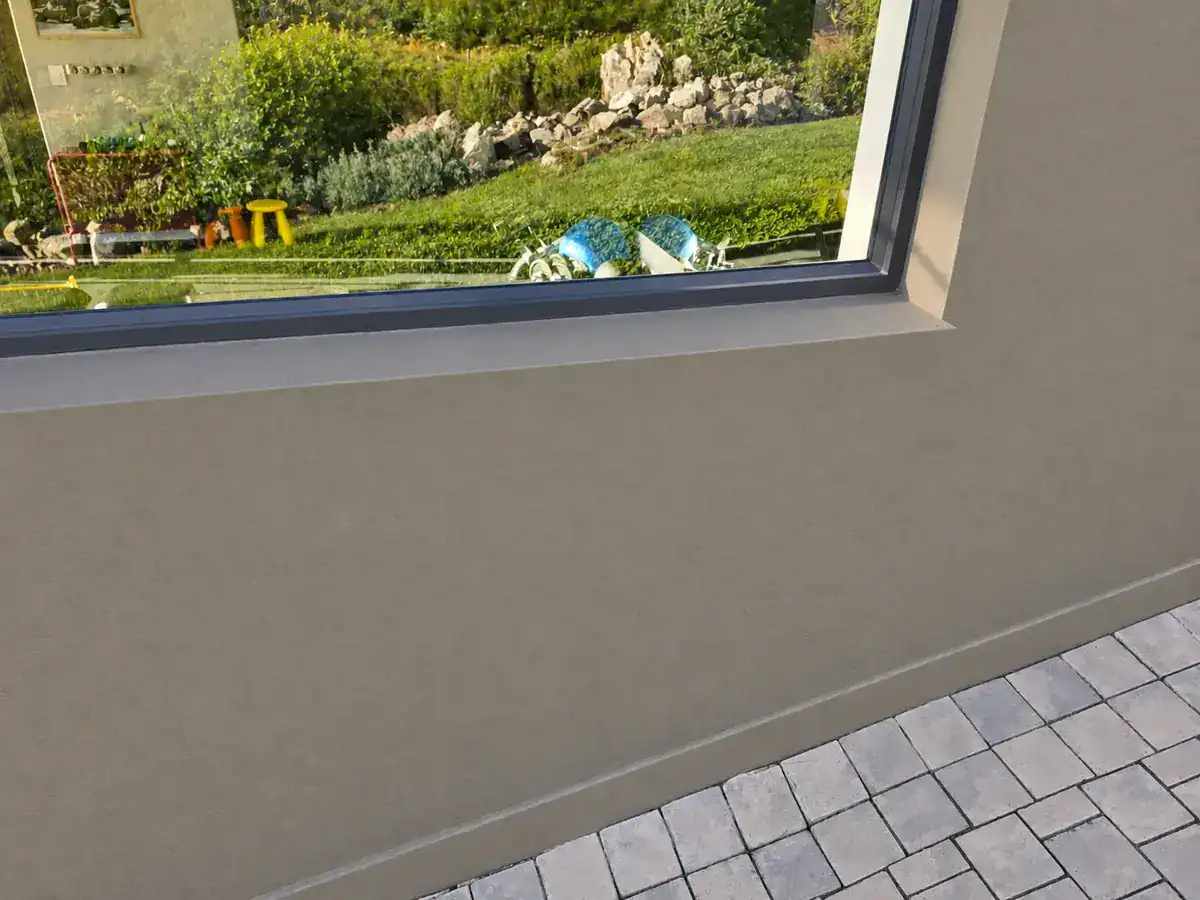
Cracked Boundary-Wall Copings Are More Than a Cosmetic Defect
The top of a boundary wall receives direct rainfall.
If a coping is cracked, loose or inadequately protected, rainwater can penetrate the masonry instead of simply running off the surface.
The resulting deterioration may appear as damp marks, bubbling, peeling or discolouration lower down the wall.
This is why coping repairs and horizontal waterproofing should be considered before the vertical faces receive their final decorative coating.
Waterproofing the Top of a Boundary Wall
At Nuutgevonden, the preparation specification included the exposed tops of boundary and garden walls together with other vulnerable horizontal masonry surfaces.
The documented system specified two coats of Dulux Rainshield on relevant horizontal areas, with the second coat applied in the opposing direction.
The objective was to create additional moisture protection at surfaces exposed directly to rainfall before the surrounding wall faces were repainted.
The same preparation-first principle is discussed in more detail on our Waterproofing Stellenbosch page.
Cracks Must Be Repaired According to Their Condition
A hairline crack and a wider plaster crack should not automatically receive the same repair.
The Stellenbosch project specifications distinguish between fine cracking, map cracking and wider plaster defects because the repair needs to suit the width and condition of the crack.
Loose material should be removed and the surrounding substrate should be sound before the repair and waterproofing system is applied.
Where a crack is caused by continuing structural movement, the source of movement must also be considered. Decorative coatings cannot permanently prevent a moving substrate from cracking again.
Mould and Biological Growth Must Be Treated Before Painting
Mould or biological growth on an exterior boundary wall is not a suitable surface for direct repainting.
The Nuutgevonden specification included fungal treatment together with surface cleaning before the final preparation and coating stages.
This helps prevent the new paint system from being applied over contamination that can interfere with adhesion and appearance.
Chalking and Powdery Paint Need Stabilisation
Exterior coatings can gradually become chalky as they weather.
If the surface remains powdery after cleaning, a new topcoat may bond to the unstable powder rather than to a sound substrate.
Where specified, chalking areas can therefore require an appropriate bonding or stabilising primer before repainting.
This is part of the same preparation-first approach used throughout our Stellenbosch exterior projects.
Why Ground and Backfill Moisture Are Different From Rainwater
Rain entering through a cracked coping or unprotected wall top can often be addressed by repairing the relevant defect and waterproofing the exposed surface.
Moisture moving through masonry from soil or backfilled areas is different.
Where there is no effective damp-proof separation between the masonry and the moisture source, water can continue migrating through the wall from behind or below.
Coating the accessible face does not create a damp-proof barrier inside the wall.
This distinction is critical because it affects both the expected performance of the coating and the warranty that can reasonably be offered.
Boundary Walls Without Effective Damp-Proof Separation
Our Stellenbosch project documentation specifically records the limitation that can apply where a boundary or garden wall has no effective damp-proof separation from ground moisture.
In these conditions, moisture may continue moving through the masonry even after the visible face has been thoroughly prepared and repainted.
A suitable breathable or remedial coating system can improve and protect the accessible surface, but it cannot permanently eliminate an ongoing moisture source behind or below the wall.
Future moisture-related discolouration, bubbling or peeling therefore cannot automatically be treated as a paint-workmanship failure where continuing moisture migration is the cause.
Backfilled and Retaining-Type Wall Areas
A similar limitation can apply where one side of a wall is exposed to backfilled soil or a higher ground level.
The Paradyskloof exterior painting project documented moisture-related discolouration on foundation-wall areas below expansion-joint and weep-hole levels where the opposite side was exposed to backfill.
Dulux Dampshield formed part of the specified preparation on the accessible side, but the written quotation clearly recognised that this could not permanently stop moisture continuing to migrate through the wall from behind.
This is why a site inspection is important before promising that a coating alone will permanently solve a recurring damp boundary wall.
Dulux Dampshield Is Part of a System — Not a Cure for Every Damp Wall
On documented Stellenbosch projects, Dulux Dampshield was specified on identified damp-affected cementitious areas where appropriate.
It formed part of the preparation system rather than being used as a substitute for fixing obvious water-entry defects.
Cracked copings, failed joints, unprotected horizontal surfaces and other identifiable defects should still be addressed separately.
Main House Walls and Boundary Walls May Need Different Coating Systems
One of the useful lessons from the Nuutgevonden project is that the main building and the boundary walls were not automatically treated as identical substrates.
The written specification separated the finishing systems because the exposure and moisture conditions differed.
The documented Nuutgevonden specification included:
- Main-building exterior walls: two coats of Dulux Weathershield.
- Boundary and garden walls: two coats of Dulux Weatherguard Ultra Smooth after the required preparation and remedial work.
This reinforces an important principle: coating selection should follow the condition and exposure of the substrate rather than simply using the same product everywhere on the property.
These product details describe the specific Nuutgevonden quotation. They are not a universal coating prescription for all Stellenbosch boundary walls, particularly where persistent ground or backfill moisture remains unresolved.
Boundary Wall Painting and Waterproofing Are Related — But Not the Same Service
Our Waterproofing Stellenbosch page focuses on water-entry points such as parapets, windowsills, cracks, failed sealants, joints and moisture-affected masonry across the wider property.
This page focuses specifically on preparing, protecting and repainting boundary and garden walls, including the special moisture limitations these walls can present.
If the main problem is peeling, bubbling or chalking and the cause is not yet understood, see our Paint Peeling & Bubbling Stellenbosch guide.
Our Boundary Wall Painting Process
- Inspect the wall: identify peeling coatings, chalking, cracks, mould, damaged plaster, coping defects and moisture symptoms.
- Assess the moisture exposure: consider whether the wall is affected primarily by rainwater, ground moisture, backfill or a combination of conditions.
- Take moisture readings where useful: compare affected sections with surrounding masonry.
- Clean the substrate: remove dirt, biological growth, loose paint and unstable surface contamination.
- Repair defects: address suitable cracks, loose plaster and coping damage included in the agreed scope.
- Waterproof vulnerable horizontal areas: protect exposed wall tops or copings where specified.
- Prepare damp or chalky areas: apply the specified remedial primer or preparation system where required.
- Apply the final coating system: use exterior coatings compatible with the prepared substrate and exposure.
- Record limitations: explain conditions such as continuing ground or backfill moisture where coating performance cannot be guaranteed against the unresolved source.
- Final inspection: inspect the completed surfaces against the written scope.
Painting Boundary Walls in Stellenbosch Estates
Estate boundary-wall projects can involve more than technical preparation.
Access arrangements, working hours, colour requirements, landscaping protection and site cleanliness may also need to be considered.
Our Nuutgevonden project provides genuine local estate evidence, while our De Zalze work documents the additional access and colour-control requirements that can apply in managed Stellenbosch estates.
The De Zalze project did not include boundary-wall painting. It is referenced here for our broader experience working in a managed Stellenbosch estate, not as a second boundary-wall case study.
See our separate Painting Homes in Stellenbosch Estates guide for more detail.
How Boundary Wall Condition Affects Painting Cost
Two boundary walls of the same length can require very different preparation.
Cost is influenced by factors such as wall height, access, existing coating condition, cracks, plaster failure, mould, coping repairs, waterproofing, damp-related preparation and the number of surfaces being painted.
A wall requiring only washing and repainting should not be priced the same as a wall with widespread peeling, loose plaster, cracked copings and recurring moisture deterioration.
For a wider explanation of how preparation affects quotations, see our House Painting Cost Stellenbosch guide.
Can Boundary Wall Painting Be Guaranteed?
The answer depends on the condition of the wall and the source of any moisture.
Where the substrate is sound, defects are correctly repaired and a qualifying supplier or manufacturer specification is formally issued and followed, supplier-backed warranties may apply subject to written terms and exclusions.
However, a coating warranty should not imply that decorative paint can permanently correct ongoing rising or lateral moisture, structural movement, backfill moisture or another unresolved building defect.
Boundary walls and moisture-related deterioration may therefore require specific written exclusions.
How Long Should Correctly Prepared Exterior Paint Last?
Where the substrate is stable, water-entry defects are addressed and the property is maintained, correctly prepared exterior paintwork can often provide approximately 8–10 years of useful service.
This should be treated as a realistic expected range rather than a blanket guarantee.
Boundary walls exposed to continuing moisture can require earlier maintenance because their conditions differ from protected walls on the main building.
Related Stellenbosch Painting Services
- Painters Stellenbosch
- Waterproofing Stellenbosch
- Exterior Painters Stellenbosch
- Paint Peeling & Bubbling Stellenbosch
- Wall Preparation Stellenbosch
- Painting Homes in Stellenbosch Estates
- House Painting Cost Stellenbosch
Request a Boundary Wall Painting Quote in Stellenbosch
If your boundary or garden walls are peeling, bubbling, chalking, cracked or repeatedly showing damp-related discolouration, the cause should be assessed before the wall is simply repainted again.
We can inspect the existing coating, wall tops, copings, cracks, plaster and moisture conditions and prepare a written scope explaining the recommended preparation, waterproofing and coating system together with any relevant moisture limitations.
Helpful Stellenbosch Painting Guides
Boundary-wall paint failure is often connected to cracked copings, continuing ground moisture, unstable coatings and failed waterproofing. These related Stellenbosch guides explain the appropriate preparation and maintenance considerations.
Painters Stellenbosch
Explore our established local painting experience, documented project work and preparation-first approach to Stellenbosch homes, estates and other properties.
Explore Painters StellenboschWaterproofing Stellenbosch
Learn about exposed wall copings, windowsills, parapets, failed sealants and other water-entry points that need attention before repainting.
Explore waterproofingPaint Peeling, Bubbling and Chalking
Understand why moisture movement, loose coatings, inadequate preparation and failed building details can cause exterior paint to deteriorate.
Explore paint-failure diagnosisWall Preparation Stellenbosch
Find out why different cracks, hollow plaster, chalking, mould and unstable substrates require appropriate preparation before coating.
Explore wall preparationPainting Homes in Stellenbosch Estates
See how our Nuutgevonden and De Zalze projects demonstrate different exterior maintenance needs and practical estate-work considerations.
Explore estate paintingExterior Painters Stellenbosch
Explore exterior painting preparation for walls, weathered coatings, cracks, moisture-sensitive details and long-term maintenance.
Explore exterior paintingBoundary Wall Painting Stellenbosch FAQs
Do you paint boundary and garden walls in Stellenbosch?
Yes. Our documented Nuutgevonden Estate project included the main building together with painted boundary and garden walls requiring moisture-related preparation, crack repairs, coping attention and waterproofing.
Why does paint peel repeatedly on boundary walls?
Possible causes include ongoing ground or backfill moisture, cracked copings, unprotected wall tops, unstable previous coatings, cracks, biological growth and inadequate surface preparation.
Can paint permanently stop rising damp in a boundary wall?
No. Where moisture continues migrating through masonry from the ground or behind the wall and there is no effective damp-proof separation, decorative coatings cannot permanently remove the underlying moisture source.
Should the top of a boundary wall be waterproofed?
Exposed horizontal wall tops and copings can allow rainwater into masonry where they are cracked or inadequately protected. On our documented Nuutgevonden project, relevant boundary-wall tops formed part of the waterproofing specification.
What problems were found on the Nuutgevonden boundary walls?
The inspection recorded cracked or loose coping areas, cracks, mould, horizontal surfaces requiring waterproofing, failed or unsealed joints and moisture-related deterioration.
What moisture readings were recorded at Nuutgevonden Estate?
Protimeter readings across assessed areas ranged from 8.9% to 14.2%.
What paint system was specified for the Nuutgevonden boundary walls?
After the specified preparation and remedial work, the boundary and garden walls were specified for two coats of Dulux Weatherguard Ultra Smooth.
What is used on damp-affected masonry?
The correct product depends on the substrate and condition. Dulux Dampshield formed part of selected documented Stellenbosch specifications for identified damp-affected cementitious areas, but it was not used as a substitute for repairing water-entry defects.
Can a backfilled wall still show damp after repainting?
Yes. Where moisture continues entering the masonry from the backfilled side, preparing and coating the accessible face cannot permanently stop that moisture source.
Can boundary wall painting carry a warranty?
Warranty conditions depend on the substrate, moisture source and written coating specification. Ongoing rising or lateral moisture, structural movement and unresolved moisture sources may be excluded or separately limited.
Do you use subcontracted painting teams?
No. Our painting work is completed by full-time employed painters with working-foreman supervision.
How do I request a boundary wall painting quotation in Stellenbosch?
Call 082 374 6862 or use the Painters Cape Town contact page to arrange an inspection and written quotation.

Copyright 2026 , all rights reserved.