Established Constantia Boundary Wall Experience
Boundary Wall Painting Constantia – Garden & Perimeter Walls
Professional inspection, preparation and repainting of suitable garden walls, boundary walls and perimeter masonry affected by weathering, cracked plaster and moisture.
Our completed-work records include boundary-wall painting at Constantia Village in 2020, 2021 and 2024. Our photographed Mellow Wood Estate project from 2026 documents moisture-related boundary-wall conditions and a separate exterior coating specification.
27 years of painting experience • Full-time employed painters • Written diagnostic quotations • Realistic moisture limitations
Constantia Boundary Wall Painting
- Recorded Constantia Village work in three separate years.
- Photographed Mellow Wood Estate 2026 project.
- Garden, residential and commercial perimeter walls.
- Peeling, bubbling and failing previous coatings.
- Moisture from irrigation, soil and backfill.
- Cracked plaster and exposed wall tops.
- Efflorescence and salt-related deterioration.
- Appropriate wall preparation and compatible coatings.
- Breathable coating considerations where suitable.
- Honest limitations for missing damp-proof barriers.
Why Boundary Walls Need Different Painting Specifications
Boundary walls can receive moisture through their tops, bases and opposite faces. A coating suitable for a dry main-building façade cannot automatically be expected to perform identically on masonry exposed to soil and irrigation.
Constantia Village Experience
Completed boundary-wall painting assignments recorded in January 2020, May 2021 and February 2024.
Mellow Wood Estate, 2026
An original estate project with recorded boundary-wall moisture observations and different main-building and boundary-wall coating systems.
27 Years' Experience
Established practical experience with painted masonry, damaged plaster, water-entry concerns and preparation.
Written Moisture Observations
Relevant visible defects and instrument readings are considered together, without claiming a moisture reading alone proves rising damp.
Compatible Coatings
Different wall conditions may require vapour-permeable finishing options or other appropriate substrate-specific systems.
Horizontal Waterproofing
Accessible coping, parapet and wall-top defects are considered where rainwater entry is relevant to the agreed scope.
Full-Time Employed Painters
Our painting work is completed by employed teams rather than subcontracted painting crews.
Working-Foreman Supervision
Preparation, property protection, site organisation and workmanship are supervised throughout the project.
Written Warranty Limitations
Continuing ground and rear-face moisture can remain outside a decorative painting guarantee, as explained in the quotation.
Our historical projects establish completed work, not endorsements by estates or commercial property owners. Paint cannot permanently compensate for missing damp-proof courses, uncontrolled water entry or structural defects.
Professional Boundary Wall Painting in Constantia
Boundary wall painting in Constantia requires careful attention to the wall’s construction, existing plaster, previous paint, water exposure and surrounding garden conditions.
Boundary and perimeter walls often behave differently from the main walls of a house. They may receive moisture from garden irrigation, wet soil, raised planting beds, rain-exposed wall tops and the opposite face of the masonry.
Painters Cape Town provides inspection-based preparation and repainting of suitable residential, estate and commercial boundary walls. Our painting work is completed by full-time employed painters with working-foreman supervision.
We have 27 years of painting experience and provide written diagnostic observations with our quotations. These observations help establish suitable preparation, coatings and the limitations that may remain after painting.
Our historical records include completed boundary-wall painting at Constantia Village in 2020, 2021 and 2024. Our completed 2026 Mellow Wood Estate project provides additional photographed evidence of boundary-wall moisture observations and substrate-specific coating decisions.
Established Boundary Wall Painting Experience in Constantia
These selected completed-work records provide genuine local evidence. They are not generic descriptions of the types of properties on which we would like to work.
Constantia Village — January 2020
Commercial boundary-wall painting.
Our historical completed-work records include an assignment dated 22 January 2020 involving boundary walls at the Constantia Village shopping-centre property.
This documents local commercial perimeter-wall painting experience rather than general work to the entire shopping centre.
Constantia Village — May 2021
Separate boundary-wall assignment.
Further completed painting work at Constantia Village is recorded on 17 May 2021.
This is a separate historical assignment, not evidence that Painters Cape Town held a continuous maintenance contract between the two dates.
Constantia Village — February 2024
Additional perimeter-wall painting.
A third completed assignment is recorded on 8 February 2024, further establishing our painting experience at the commercial property.
The historical record identifies the work category and date, without attributing unrecorded damp causes or particular coating products to the assignment.
Mellow Wood Estate — March 2026
Residential and estate boundary walls.
Our photographed 2026 exterior project included garden and boundary-wall preparation alongside main-building exterior painting, tiled-roof work and waterproofing.
The highest recorded moisture readings occurred on boundary-wall areas, and the wall condition was considered separately from the main-building specification.
These records describe completed painting assignments. The dates identify recorded jobs and are not necessarily precise completion dates. They do not imply the property owner’s endorsement, a partnership, an exclusive appointment or an ongoing maintenance contract.
WHAT Types of Boundary and Garden Walls Can Be Painted?
The painting scope depends on the construction, condition and accessibility of each wall.
- Freestanding residential boundary walls: plastered masonry exposed to garden or street-facing weather.
- Estate perimeter walls: suitable masonry requiring preparation, maintenance or repainting.
- Garden and courtyard walls: exposed plaster and masonry affected by vegetation, irrigation and varying sunlight.
- Commercial boundary walls: authorised external masonry at retail and other managed properties.
- Planter and raised-bed walls: surfaces requiring particular attention to soil and moisture exposure.
- Accessible retaining-wall faces: decorative coating may be considered only after the retaining structure and moisture limitations have been assessed.
Some walls cannot be successfully repaired through painting alone. Significant instability, structural movement, defective retaining-wall waterproofing or drainage may require specialist building work.
WHY Does Paint Keep Peeling or Bubbling on Boundary Walls?
Paint failure is often a symptom of underlying conditions rather than simply the result of using the wrong finishing colour.
1. Moisture Entering from the Ground
Moisture may move through masonry where effective damp-proof separation is absent or compromised.
Lower-wall paint failure can be consistent with ground moisture, but peeling near the base of a wall does not independently prove rising damp.
2. Soil or Water Behind the Wall
Raised garden beds, retained soil and wet backfill can expose one face of the masonry to prolonged moisture.
Repainting only the visible face cannot necessarily stop water entering from the concealed side.
3. Garden Irrigation
Sprinklers directed onto masonry and constantly wetted garden beds can contribute to repeated wetting of the wall.
Reducing unnecessary irrigation exposure may form part of sensible maintenance, but the appropriate remedy depends on the actual situation.
4. Rain Entering Through Wall Tops
Unprotected copings, cracks in horizontal masonry and deteriorated previous waterproofing can allow rainfall into the wall.
Water may then migrate through the plaster and contribute to coating failure below the entry point.
5. Unsound Plaster and Previous Paint
Loose plaster, chalky paint, poorly adhering previous layers and salt contamination can prevent a new coating from developing a sound bond.
Simply painting over unstable materials can reproduce the same failure.
6. Wall Movement
Cracks may recur where foundations, masonry or joints continue moving. Painting and ordinary filler cannot correct significant structural movement.
WHEN Should a Boundary Wall Be Inspected Before Repainting?
Useful warning signs include:
- Repeated peeling or bubbling near the bottom of the wall.
- White powdery salt deposits on plaster or brickwork.
- Cracks reopening after previous repairs.
- Loose, hollow or deteriorating plaster.
- Discolouration beside irrigated garden beds.
- Persistent damp patches after rain.
- Algae or mould growth on shaded walls.
- Defective wall-top coatings or cracked copings.
- Uneven previous repairs and unstable paint layers.
- Bulging, leaning or other signs of structural movement.
Where the wall is leaning, bulging or seriously cracked, structural assessment must take priority over decorative repainting.
HOW Do We Inspect and Prepare Boundary Walls?
Our approach begins with identifying the condition and determining which repairs fall within the proposed painting scope.
- Inspect the masonry: identify the type of wall, existing coatings, cracks, plaster deterioration and visible moisture symptoms.
- Consider surrounding conditions: assess accessible soil levels, gardens, irrigation, drainage, shade and exposed wall tops.
- Review moisture observations: record relevant evidence and use comparative moisture readings where appropriate.
- Define limitations: explain conditions that painting cannot eliminate, including inaccessible rear-face moisture and defective construction.
- Prepare the surface: include appropriate cleaning and removal of loose or unstable coatings where required.
- Carry out agreed repairs: specify suitable plaster, crack and joint preparation according to the actual defects.
- Assess rain-entry details: consider appropriate waterproofing of accessible horizontal masonry where needed.
- Select the coating: choose a compatible finishing system based on the substrate, exposure and manufacturer requirements.
- Complete and inspect: review the agreed work and explain any continuing maintenance or warranty limitations.
The exact repair sequence and materials depend on the property inspection. A universal preparation method is not appropriate for every boundary wall.
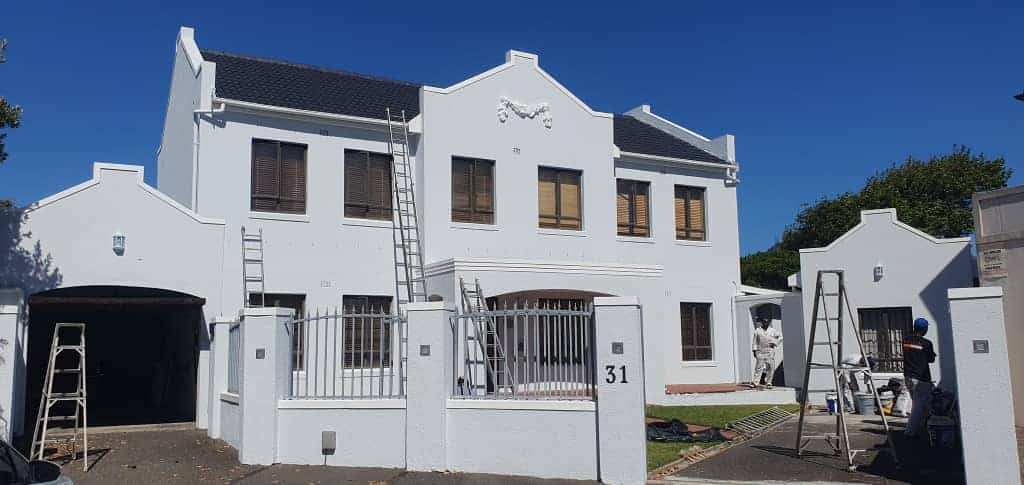
Original Constantia Moisture Evidence — Mellow Wood Estate, 2026
WHICH Coatings Are Suitable for Constantia Boundary Walls?
Coating selection depends on whether the wall is sound, how it receives water, the existing paint, plaster condition and the applicable manufacturer specification.
Vapour-Permeable or Breathable Coating Options
Where the wall remains exposed to moisture, an appropriate vapour-permeable decorative coating may be considered on suitable prepared masonry.
Such a finish may support more realistic maintenance than applying an unsuitable conventional coating, but it cannot physically remove water from the soil or install a missing damp-proof course.
The vapour-permeability properties of an individual product must be assessed from the relevant manufacturer data rather than inferred from a general product name.
Dulux Weatherguard UltraSmooth
Our documented Mellow Wood project specified Dulux Weatherguard UltraSmooth for appropriate boundary-wall surfaces.
This is a flexible exterior masonry finishing product, but its correct application depends on suitable substrate preparation and the actual conditions of use.
The product’s advertised general guarantee must not be confused with an unconditional warranty for a boundary wall receiving continuing ground or rear-face moisture.
Horizontal Waterproofing
Where rainwater enters through wall tops, parapets or copings, suitable waterproofing preparation may be required before finishing.
Dulux Rainshield is among the systems used on applicable prepared horizontal masonry in our documented projects, where permitted by the manufacturer specification.
Waterproofing the wall top cannot stop moisture that continues entering from below or behind the wall.
Ordinary Main-Building Exterior Paint
Coatings chosen for sound house walls are not necessarily suitable for boundary walls affected by prolonged ground or backfill moisture.
Our quotation should explain the differences between the main-building finish and any separate boundary-wall specification.
WHAT IF the Boundary Wall Has No Damp-Proof Course?
A damp-proof course is a construction element intended to restrict certain forms of moisture movement through masonry.
Some garden and perimeter walls may not have an effective damp-proof barrier, or they may be exposed to moisture from areas that the barrier does not protect.
Where water remains uncontrolled, ordinary decorative painting cannot permanently eliminate the problem.
Practical improvements may include reducing unnecessary irrigation, evaluating drainage, addressing accessible rain-entry points and selecting appropriate finishes.
Where a construction defect requires a physical damp-proof solution, drainage work or specialist waterproofing, that work must be assessed separately.
For a broader explanation of moisture-related wall treatment, see Damp Proofing Constantia.
WHY Does Efflorescence Return After Painting?
Efflorescence occurs when moisture carries soluble salts through masonry and leaves deposits near the surface as water evaporates.
The white powdery material may return if moisture continues moving through the wall.
Cleaning the surface and applying another coat of paint does not necessarily prevent salts from reappearing.
Appropriate treatment should consider the moisture source, contamination, plaster stability and product compatibility.
WHAT IF Previous Boundary Wall Repairs Keep Failing?
Recurring paint or plaster failure may indicate that the original cause was not corrected or that the coating was applied over an unsuitable substrate.
Potential causes include:
- Continued ground or rear-face water.
- Sprinklers repeatedly wetting the masonry.
- Unprotected wall tops.
- Salt contamination.
- Loose plaster beneath the new finish.
- Incompatible previous paint.
- Movement cracks reopening.
- Defective drainage behind a retaining wall.
Another decorative coat cannot reliably correct every one of these problems.
Where the construction or moisture source remains unresolved, the realistic objective may be suitable maintenance and a clearly explained coating limitation rather than a promise of permanent elimination.
WHEN Does a Retaining Wall Need Specialist Assessment?
Retaining walls carry structural loads from soil and may also experience water pressure where drainage is inadequate.
A visible damp patch does not automatically mean that the wall is structurally unsafe, but significant movement, leaning, bulging, widening cracks or serious drainage problems require further assessment.
A painting contractor cannot establish structural stability or correct defective retaining-wall engineering by applying paint.
Where appropriate, a qualified structural or building professional should assess the relevant defects before decorative work proceeds.
WHY Do Constantia Gardens Affect Boundary Wall Maintenance?
Established Constantia properties often have mature gardens, shaded boundaries, irrigated lawns and planting beds close to masonry.
These conditions can affect individual wall elevations differently.
For example, a sunny street-facing wall may dry relatively quickly, while a shaded garden-facing wall remains damp for longer after rain or irrigation.
That difference can influence preparation, biological growth, coating selection and maintenance frequency.
However, it would be incorrect to assume that every shaded wall is affected by rising damp, or that garden irrigation is responsible for every paint defect.
What Does Boundary Wall Painting Cost in Constantia?
A reliable quotation depends on the wall’s actual condition and the specified work.
Important cost factors include:
- Wall length, height and surface condition.
- Existing paint adhesion and amount of removal required.
- Cracked, loose or deteriorated plaster.
- Efflorescence and biological contamination.
- Moisture symptoms and necessary investigation.
- Garden access and plant protection.
- Copings, wall tops and suitable waterproofing repairs.
- Primer and coating-system selection.
- Scaffolding or other access arrangements where necessary.
- Structural or drainage work excluded from the painting scope.
- Workmanship and warranty conditions.
A dry, sound boundary wall should not be priced as though it requires the same preparation as a wall with extensive plaster failure and continuing backfill moisture.
Our detailed painting quotations guide explains why preparation, materials and exclusions matter when comparing contractors.
Boundary Wall Painting Guarantees and Limitations
Our standard boundary and perimeter-wall workmanship and materials guarantee is generally 12 months, subject to the actual written quotation and relevant exclusions.
This differs from our standard main-building painting guarantee, which is generally three years under suitable conditions.
Continuing ground moisture, missing damp-proof separation, irrigation, backfill water, structural movement and new water-entry defects may affect coating performance and fall outside the applicable guarantee.
Some manufacturer warranties also exclude boundary walls or particular continuing-moisture conditions.
A coating’s advertised product lifespan is not automatically the expected lifespan or warranty for a damaged boundary wall.
Boundary Wall Painting for Constantia Homes and Businesses
Our recorded experience includes boundary-wall work at Constantia Village and residential estate painting at Mellow Wood.
We can assess suitable perimeter-wall painting at homes, private estates and commercial properties throughout the wider Constantia area.
For retail and business-property painting, see our Commercial Painters Constantia page.
For exterior-house painting and broader services, visit Exterior Painters Constantia and our main Painters Constantia flagship page.
Request a Constantia Boundary Wall Painting Inspection
If your boundary walls have peeling paint, cracked plaster, recurring staining or moisture-related deterioration, contact Painters Cape Town for a physical inspection.
We’ll provide a written quotation describing suitable preparation, proposed coatings, agreed repairs and limitations that may remain outside the scope.
Helpful Constantia Boundary Wall Painting Guides
Explore original local painting evidence and practical guidance on damp-related wall defects, plaster preparation, waterproofing and commercial perimeter walls.
Mellow Wood Boundary Wall Project
A photographed 2026 Constantia exterior project with genuine boundary-wall moisture observations and substrate-specific coating decisions.
Commercial Painters Constantia
Historical boundary-wall painting assignments at Constantia Village, together with local retail and commercial property experience.
Damp Proofing Constantia
Understand damp-related paint failure, moisture pathways, plaster deterioration and realistic treatment limitations.
Waterproofing Constantia
Learn about repairing suitable rain-exposed wall tops, parapets, windowsills and failed exterior joints.
Plaster Repairs & Crack Treatment
Why loose plaster, movement joints and recurring cracking need assessment before protective painting.
Detailed Painting Quotations
Compare preparation, moisture observations, products, access, exclusions and written guarantee conditions.
Boundary Wall Painting Constantia FAQs
Do you have completed boundary-wall painting projects in Constantia?
Yes. Our records include boundary-wall painting assignments at Constantia Village in 2020, 2021 and 2024. Our photographed Mellow Wood Estate exterior project in March 2026 also included boundary walls.
Why does paint keep peeling from Constantia boundary walls?
Possible causes include ground moisture, irrigation, water entering from behind the wall, cracked wall tops, damaged plaster, salts and poor coating adhesion. Inspection is needed to assess the relevant conditions.
Can painting permanently stop rising damp in a boundary wall?
No. Decorative paint cannot install a missing damp-proof course or permanently stop uncontrolled water entering from the ground or the opposite face of the wall.
Can garden irrigation damage boundary-wall paint?
Yes. Repeated wetting from sprinklers or raised planting beds can contribute to moisture-related coating deterioration. Reducing unnecessary irrigation exposure may help where appropriate.
What coating was specified for Mellow Wood boundary walls?
Dulux Weatherguard UltraSmooth was specified for suitable boundary-wall surfaces at Mellow Wood Estate. Product selection for another property depends on substrate condition and the manufacturer's requirements.
Should the top of a boundary wall be waterproofed?
Accessible wall tops may need suitable waterproofing where rainwater enters through cracks or unprotected horizontal masonry. The correct repair depends on the actual wall and water-entry conditions.
Why does white efflorescence return after repainting?
Efflorescence may recur while moisture continues transporting soluble salts through masonry. Cleaning and repainting alone may not permanently correct the underlying condition.
Can you paint a retaining wall affected by backfill moisture?
Suitable accessible surfaces may be painted, but a decorative coating cannot replace missing rear-face waterproofing, drainage or structural repairs. Significant defects may require specialist assessment.
What guarantee applies to Constantia boundary-wall painting?
Our standard boundary and perimeter-wall workmanship and materials guarantee is generally 12 months, subject to the written quotation and exclusions. Continuing ground or rear-face moisture may remain outside the guarantee.
How do you prepare a boundary-wall painting quotation?
We inspect the wall and consider plaster condition, cracks, coating adhesion, moisture exposure, repairs, access and suitable products before providing a written quotation with relevant limitations.

Copyright 2026 , all rights reserved.