Documented Constantia Painting Project
Silverhurst Estate Constantia Exterior Painting Case Study
A genuine 2026 Constantia estate project where ordinary-looking exterior paint failure developed into a much more technical substrate-remediation project once preparation exposed a hidden moisture-sensitive Cretestone skim beneath the existing coating.
Recorded readings ranged from 12.7% to 18.1%. Once the concealed substrate was exposed, Dulux technical specialists were asked to inspect the system and assist with the revised remedial approach before repainting continued.
Silverhurst Project Highlights
- Private home in Silverhurst Estate, Constantia.
- Documented May 2026 project.
- Recorded readings: 12.7%–18.1%.
- Repeat Painters Cape Town client.
- Hidden exterior Cretestone discovered during preparation.
- Dulux technical inspection after the concealed substrate was exposed.
- Moisture and alkali-related coating deterioration.
- Hairline and wider plaster cracks.
- Expansion-joint and perimeter sealing.
- Windowsill and horizontal-surface waterproofing.
- Loose and hollow plaster repairs.
- Exterior timber, steelwork, gutters and soffits.
- Full-time employed painters with working-foreman supervision.
Real Silverhurst Estate Project Evidence
This case study documents what actually happened when preparation exposed a condition that could not reasonably have been identified through the intact exterior coating during the original quotation.
12.7%–18.1% Readings
Measured wall conditions were considered together with cracks, failed sealing, coating deterioration and potential water-entry details.
Hidden Defect Exposed
The exterior Cretestone layer was concealed by the existing coating and only became apparent once failed paint was removed during preparation.
Dulux Technical Input
Rather than coating over the newly exposed substrate, Dulux technical specialists were asked to inspect it before the remedial system proceeded.
Repeat Client
The homeowner had previously appointed Painters Cape Town for interior work before entrusting us with this later exterior project.
Preparation Before Finish
The repaint addressed substrate stability, cracks, waterproofing, flexible joints, timber and steel before relying on the final decorative coating.
Direct Painting Contractor
Painters Cape Town uses employed painters under working-foreman supervision and deals directly with the client from inspection through handover.
Exterior Painting at Silverhurst Estate in Constantia
This documented May 2026 project was completed at a private home in Silverhurst Estate, Constantia.
The homeowner was already known to Painters Cape Town because we had previously completed interior work at the property. The later exterior project began as a substantial maintenance repaint, but preparation revealed a concealed substrate condition that changed the technical requirements of the job.
That discovery is what makes Silverhurst one of the most useful Constantia case studies on this website.
It demonstrates a point that is often missed in generic painting advice: the surface visible during a quotation is not always the complete paint system underneath.
What Was Visible During the Initial Inspection
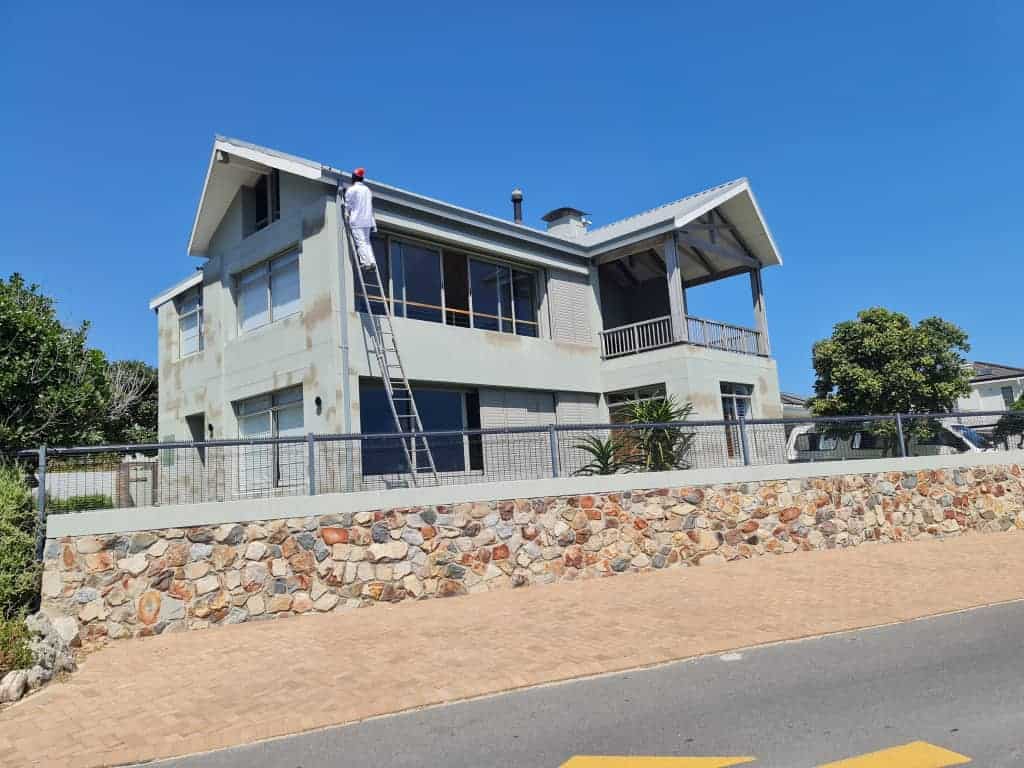
The exterior already showed clear signs that this would require more than a colour refresh.
Protimeter readings across assessed areas ranged from 12.7% to 18.1%.
Visible conditions included moisture-related discolouration, cracking on vertical and horizontal masonry, deteriorated perimeter sealing, exposed horizontal surfaces requiring waterproof protection, weathered exterior timber, deteriorating coatings on steelwork, bubbling or peeling gutter coatings and damp symptoms on concrete stoep ceilings.
There were also areas of loose or hollow plaster and masonry where continuing moisture required realistic limitations rather than promises that decorative paint could permanently solve the underlying building condition.
The Crucial Discovery Happened After Preparation Started
During the quotation stage, the existing exterior coating concealed the material immediately beneath it.
Once deteriorated paint was opened up and removed during preparation, a yellowish Cretestone skim became visible beneath sections of the exterior coating.
This was not simply another layer of paint.
The moisture-sensitive skim had been used externally beneath the coating system, creating a significantly different technical situation from ordinary painted cement plaster.
Why We Stopped and Asked Dulux to Inspect the Exposed System
Continuing with the original coating plan without considering the newly exposed material would have ignored a major change in substrate condition.
Dulux technical specialists were therefore asked to inspect the exposed system and provide technical input on the remedial approach.
This technical involvement came after preparation exposed the concealed problem. It was not something that could simply have been diagnosed visually through the intact paint when the quotation was originally prepared.
The homeowner was informed that additional remedial preparation, materials and labour would be required before work proceeded.
Why the Hidden Substrate Matters
A finishing coat can only perform as well as the layers supporting it.
If a moisture-sensitive or poorly bonded material remains beneath a strong modern coating, deterioration can continue underneath even though the new surface initially looks excellent.
The Silverhurst project therefore became an exercise in improving the supporting system rather than simply applying a more expensive topcoat.
Moisture and Alkali-Related Coating Failure
The recorded 12.7%–18.1% readings did not automatically identify one universal moisture source.
They were interpreted together with the position of cracks, failed seals, horizontal masonry, discolouration and physical coating deterioration.
Where moisture moves through cementitious masonry, alkaline compounds can migrate toward the surface and damage unsuitable or insufficiently protected paint films. This can contribute to blotchy colour loss, staining and premature deterioration.
For that reason, the project specification included moisture- and alkali-aware preparation rather than covering the symptoms with ordinary finishing paint.
Cracks Were Treated According to Their Type
Hairline Cracking
Fine cracks required flexible sealing and bridging preparation rather than ordinary rigid filler.
Wider Plaster Cracks
Wider cracks were opened where required, cleaned back to sound material and repaired with compatible masonry repair products before waterproof crack protection was applied.
Expansion Joints
Movement joints were treated differently from static plaster cracks. Deteriorated joint material was replaced with paintable flexible polyurethane where included in the project scope.
Horizontal Surfaces Needed Waterproof Protection
Windowsills, parapets, ledges and other horizontal masonry receive direct rainfall and can hold water against small defects.
The documented system therefore included Dulux Rainshield waterproof treatment on applicable prepared horizontal surfaces.
This is important because the visible paint damage can appear below the actual point where moisture originally entered.
Windows, Doors and Exterior Penetrations
Deteriorated sealant around selected windows and doors was removed where necessary and replaced with flexible polyurethane sealing.
Exterior fittings and penetrations were also considered because small openings can provide routes for rainwater to move behind the surrounding wall coating.
Loose and Hollow Plaster
Loose or hollow plaster cannot be made sound simply by applying primer over it.
Where unstable material was identified within the project scope, it was removed and repaired back to a suitable substrate before coating preparation continued.
Boundary and Foundation Walls Required Different Expectations
The main building and boundary or foundation walls do not necessarily experience moisture in the same way.
Where garden or boundary masonry receives continuing moisture from soil, irrigation, ground contact or backfilled areas, coating the accessible face cannot manufacture a missing damp-proof barrier behind the wall.
The quotation therefore recorded moisture-related limitations rather than representing decorative paint as a permanent cure for continuing water movement.
Exterior Timber Required Its Own Coating System
The project included wooden fascia boards, soffits, windows, doors, garage doors and stoep timber.
Loose coating was removed and sound paint sanded and feathered. Exposed timber received suitable timber primer, with the relevant undercoat and water-based finishing system specified according to the surface.
This timber preparation was deliberately separate from the plaster-wall coating system.
Steel Gates and Balustrading
Weathered or rust-affected exterior steelwork was mechanically prepared before bare areas received compatible rust-primer treatment and the finishing system.
Again, the principle was the same: do not ask the topcoat to compensate for untreated corrosion underneath it.
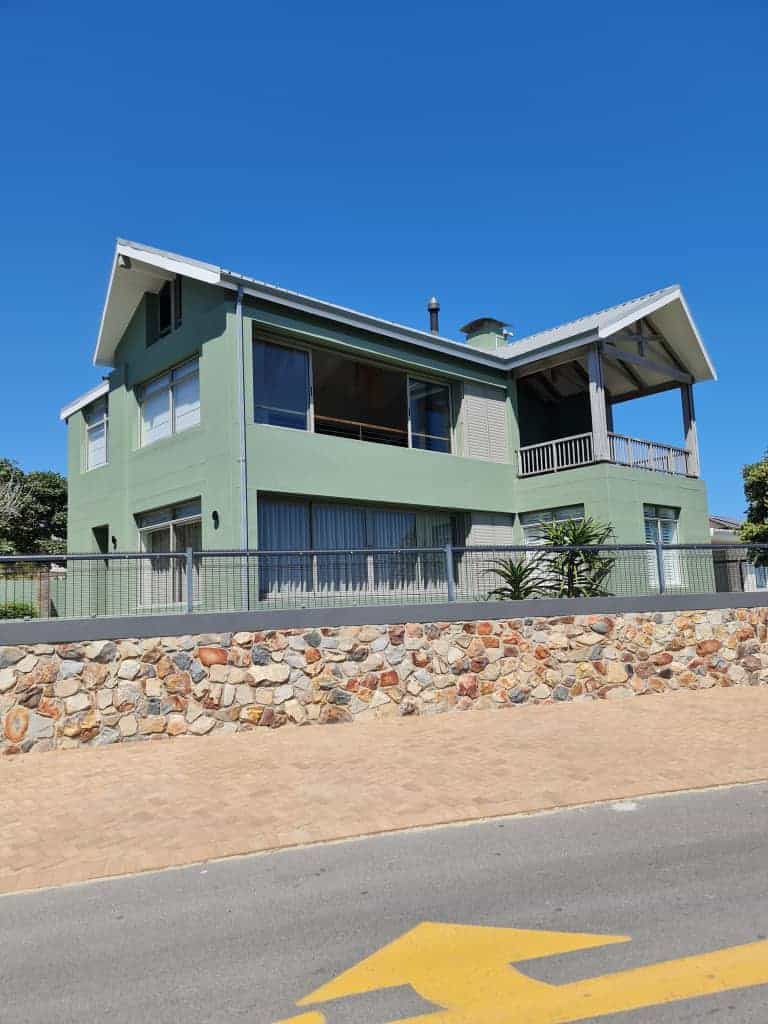
The Completed Silverhurst Exterior
Only after the substrate, moisture-sensitive areas, cracks, waterproofing, flexible joints, timber and steelwork within the agreed scope had been prepared did the final exterior finishes become the visible part of the project.
What This Silverhurst Estate Project Demonstrates
The strongest lesson from Silverhurst is not a particular paint product.
It is the importance of reacting correctly when the building tells you something different after preparation begins.
The hidden Cretestone could not reasonably have been assessed through the intact exterior coating during the initial quotation. Once it became visible, the project was reassessed, supplier technical input was obtained and the preparation approach was changed rather than simply hiding the newly exposed problem.
That is precisely why professional repainting should be based on substrate condition rather than only colour, brand or square metres.
How This Project Supports Our Constantia Painting Service
This case study provides first-hand evidence behind our main Painters Constantia page.
Related services include Exterior Painters Cape Town, Damp Proofing Cape Town, Residential Painters Cape Town and Estate Painting Cape Town.
Call 082 374 6862 or visit our contact page.
Original Painters Cape Town project photography. Image licensing information.
Helpful Painting Guides
Damp Walls and Repainting
Learn why moisture routes, cracks, waterproofing, boundary walls and timber should be assessed before repainting.
Planning a Premium Home Repaint
See why preparation, access, gardens, glazing and high-value finishes should be planned before substantial painting begins.
Why Paint Peels, Fades and Cracks
Understand how moisture, poor adhesion, cracks, chalking and insufficient preparation cause coating failure.
Silverhurst Estate Painting Project FAQs
Where was this project completed?
The project was completed at a private home in Silverhurst Estate, Constantia, Cape Town.
When was the Silverhurst project completed?
The documented project was completed during May 2026.
What moisture readings were recorded?
Recorded readings ranged from 12.7% to 18.1% across assessed areas.
What hidden problem was discovered?
Removing failed exterior coating exposed a moisture-sensitive Cretestone skim beneath parts of the exterior paint system. It had not been visible during the original visual quotation.
Why was Dulux brought into the project?
Dulux technical specialists were asked to inspect the exposed substrate after the hidden Cretestone layer was discovered so the preparation approach could be reassessed before painting continued.
Was the Cretestone visible before work started?
No. The underlying skim became evident only after loose and failed coating was removed during preparation.
What other defects were found?
The project included moisture-related discolouration, cracks, failed seals, unprotected horizontal surfaces, weathered timber, rusting steelwork, bubbling gutter coatings and damp-affected stoep ceilings.
Were cracks treated according to their size?
Yes. Hairline cracks, wider plaster cracks and movement or expansion joints received different preparation and repair methods.
Were windowsills and parapets waterproofed?
Specified vulnerable horizontal surfaces received Dulux Rainshield waterproof treatment before the final exterior coating system.
Were timber and steelwork included?
Yes. The project included timber fascia boards, soffits, windows, doors and garage-door surfaces together with steel gates and balustrading.
Were boundary walls treated differently?
Yes. Boundary walls were treated separately because continuing moisture from soil, irrigation or the reverse side cannot be permanently controlled by coating only the accessible face.
Did the project include interior painting?
Yes. Selected interior ceilings and walls also formed part of the original project scope.
Does Dulux involvement mean the entire project automatically had a manufacturer warranty?
No. Technical involvement and the use of specified products should not be interpreted as an unlimited project warranty unless a formal written supplier warranty specifically applies.
Who completed the work?
The work was completed by Painters Cape Town's employed painting team under working-foreman supervision.
Where can I read about your wider Constantia service?
Visit the Painters Constantia page for our full Constantia painting service.

Copyright 2026 , all rights reserved.