Preparation Before Painting Durbanville
Wall Preparation & Crack Repairs Durbanville
Preparation-first repairs for Durbanville walls affected by loose paint, chalking, damaged plaster, hairline cracks, wider plaster cracks, map cracking, failed joints and other defects that should be addressed before repainting.
Our documented Durbanville projects at D’Landen Estate, Vierlanden and Eversdal show why different defects require different repair methods rather than simply filling every crack and painting over it.
Preparation We Assess
- Loose and flaking paint.
- Chalky or powdery coatings.
- Hairline cracks.
- Wider plaster cracks.
- Map and spiderweb cracking.
- Damaged plaster.
- Previous patch repairs.
- Open expansion joints.
- Failed window and door sealants.
- Bare cementitious areas.
- Moisture-related coating damage.
- Primer and bonding requirements.
The Finish Is Only as Reliable as the Surface Underneath It
Our Durbanville quotations begin with the condition of the existing substrate. Cracks, powdery paint, failed joints, damaged plaster and moisture-related deterioration are recorded and prepared before the final coating system is applied.
27 Years of Experience
Twenty-seven years of painting-contractor experience preparing plaster, masonry, previously painted walls, timber, metalwork and other building surfaces.
Real Durbanville Evidence
D’Landen, Vierlanden and Eversdal provide genuine written evidence covering hairline, plaster and map cracking, failed joints and substrate preparation.
Different Cracks, Different Repairs
Hairline cracks, wider plaster defects and movement joints are not treated as if they are the same problem.
Full-Time Employed Painters
Preparation and repainting are completed by our own employed painters rather than subcontracted crews.
Working-Foreman Supervision
An experienced working foreman supervises preparation, repairs, protection and the application of the coating system.
Written Preparation Scope
The quotation records the visible defects and preparation included so clients can see what is being repaired before painting begins.
Why Wall Preparation Matters Before Painting
Paint is a finishing system. It cannot permanently hold unstable plaster, loose old paint or inappropriate crack repairs together underneath it.
A wall can look reasonably sound from a distance while still containing chalky coatings, weak previous patches, open cracks, failed sealants or damaged areas that become visible once preparation begins.
For this reason, our Durbanville quotations start with the condition of the substrate rather than simply specifying a paint colour and number of coats.
For our broader painting service, visit Painters Durbanville.
What Wall Preparation Can Include
The preparation required depends on what is actually found during inspection.
Depending on the property and accepted scope, work can include:
- high-pressure washing or controlled cleaning;
- removal of loose and flaking paint;
- sanding and feathering hard coating edges;
- removal of powdery or chalky residue;
- fungal treatment where required;
- repairing damaged plaster;
- preparing hairline cracks;
- opening and repairing wider plaster cracks;
- flexible treatment of map or spiderweb cracking;
- resealing movement and expansion joints;
- replacing failed sealant around windows and doors;
- spot priming bare repairs;
- stabilising suitable friable surfaces; and
- preparing repaired areas so they do not remain visually patchy through the finished coating.
Loose and Flaking Paint Must Be Removed
A fresh coating applied over loose old paint can only be as stable as the weak coating underneath it.
Where existing paint is flaking or poorly adhered, unstable material should be removed back to a reasonably sound edge.
Hard edges around remaining paint can then be feathered and sanded to reduce obvious ridges through the final finish.
After preparation, dust and loose residue should be removed before primers or topcoats are applied.
Chalky and Powdery Walls
Older exterior coatings can become powdery as the binder deteriorates.
If a new coating is applied directly over this loose residue, it may bond to the powder rather than to the wall underneath.
Appropriate washing and preparation are therefore important.
Where the prepared substrate remains friable or chalky, a compatible bonding or stabilising treatment may be required before repainting.
This was relevant on our Durbanville Hills boundary-wall project, where the coping remained chalky after cleaning and received Dulux Bonding Liquid before the specified crack repairs and waterproofing system were completed.
Hairline Cracks — Usually Up to About 1 mm
Hairline cracks should not automatically be treated in the same way as a wider plaster crack.
In our documented Durbanville specifications, suitable hairline cracks can receive an alkali-resistant preparation followed by a flexible coating worked into the defect.
Where many fine cracks form a broader spiderweb pattern, the preparation may need to cover the affected area rather than simply drawing a narrow line over each crack.
This is particularly relevant where the cracking is widespread across a plastered wall.
Wider Plaster Cracks — Approximately 1 to 5 mm
Wider plaster cracks normally require more substantial preparation than a surface hairline crack.
Our written Durbanville specifications commonly require suitable cracks to be opened into a V-shaped joint and cleaned before repair.
Where appropriate, the prepared crack is filled with a compatible masonry patching system.
Once cured, the repair is sanded smooth and dust is removed.
The repaired area can then receive the specified flexible protection before the decorative coating system is applied.
This process is documented in our D’Landen, Vierlanden and Eversdal specifications. :chatgpt-content-reference{index=”2″} :chatgpt-content-reference{index=”3″} :chatgpt-content-reference{index=”4″}
Map or Spiderweb Cracking
Map cracking consists of multiple fine cracks spread across a larger plastered area.
It can resemble a network or spiderweb rather than one isolated defect.
Because the cracking affects a broader area, repairing only one visible line may not address the complete affected surface.
Our Durbanville specifications include flexible treatment of map-cracked areas before the finishing coats are applied.
Expansion Joints Must Remain Flexible
An expansion or movement joint has a different purpose from a plaster crack.
It is intended to accommodate movement between parts of the building.
Filling an expansion joint with rigid plaster and then painting over it can defeat the purpose of the joint and increase the likelihood of the repair reopening.
Where deteriorated sealant is found, the failed material should be removed and the joint resealed with a compatible flexible sealant where included in the scope.
At D’Landen Estate, both existing and new expansion joints formed part of the flexible sealing specification. :chatgpt-content-reference{index=”5″}
D’Landen Estate — Repeated Cracks Across a 14-Townhouse Scheme
D’Landen provides particularly useful preparation evidence because the same types of defects occurred repeatedly across different parts of the development.
The inspection recorded:
- map or spiderweb cracking;
- cracks on vertical surfaces;
- cracks on horizontal surfaces;
- cracked windowsills;
- open expansion joints;
- failed sealant around windows and doors;
- powdery surfaces;
- moisture-related coating deterioration; and
- horizontal surfaces that had not been adequately waterproofed.
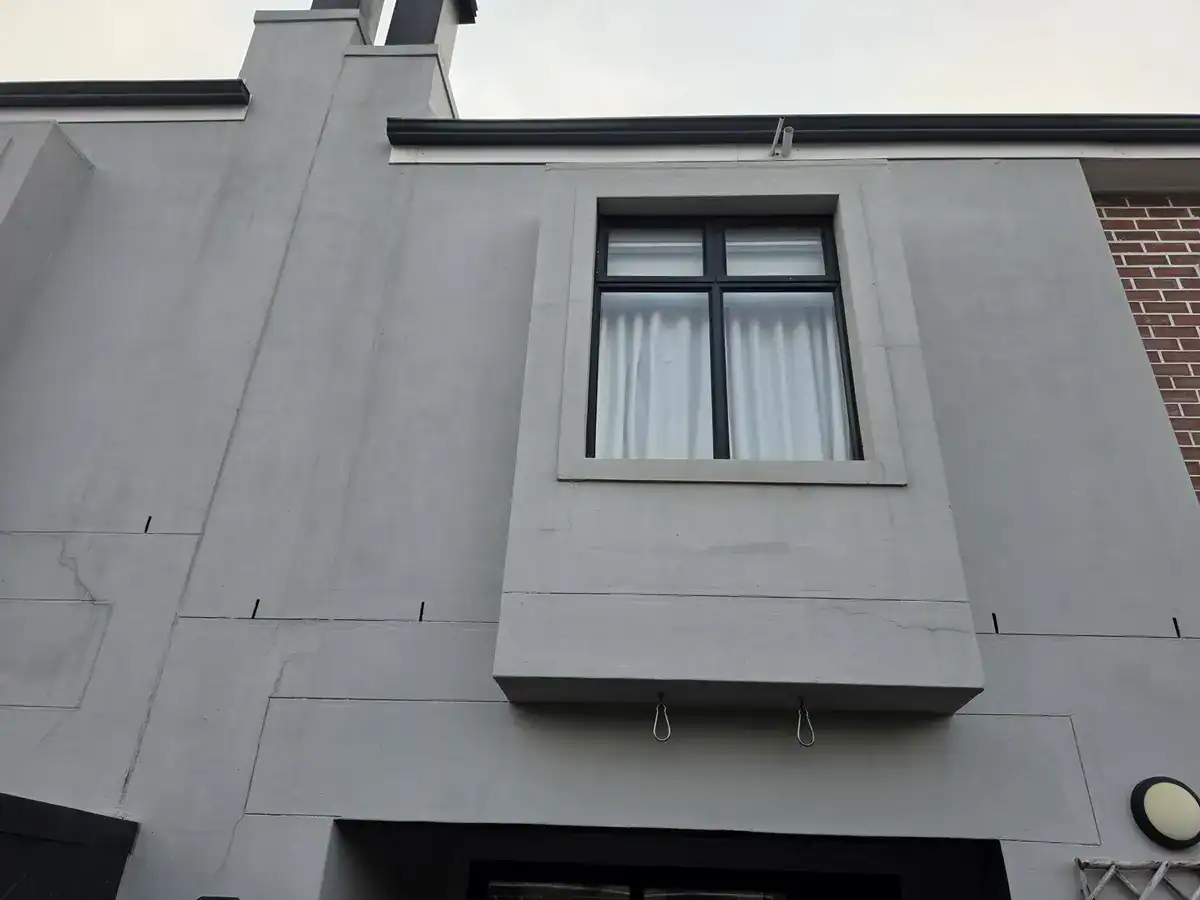
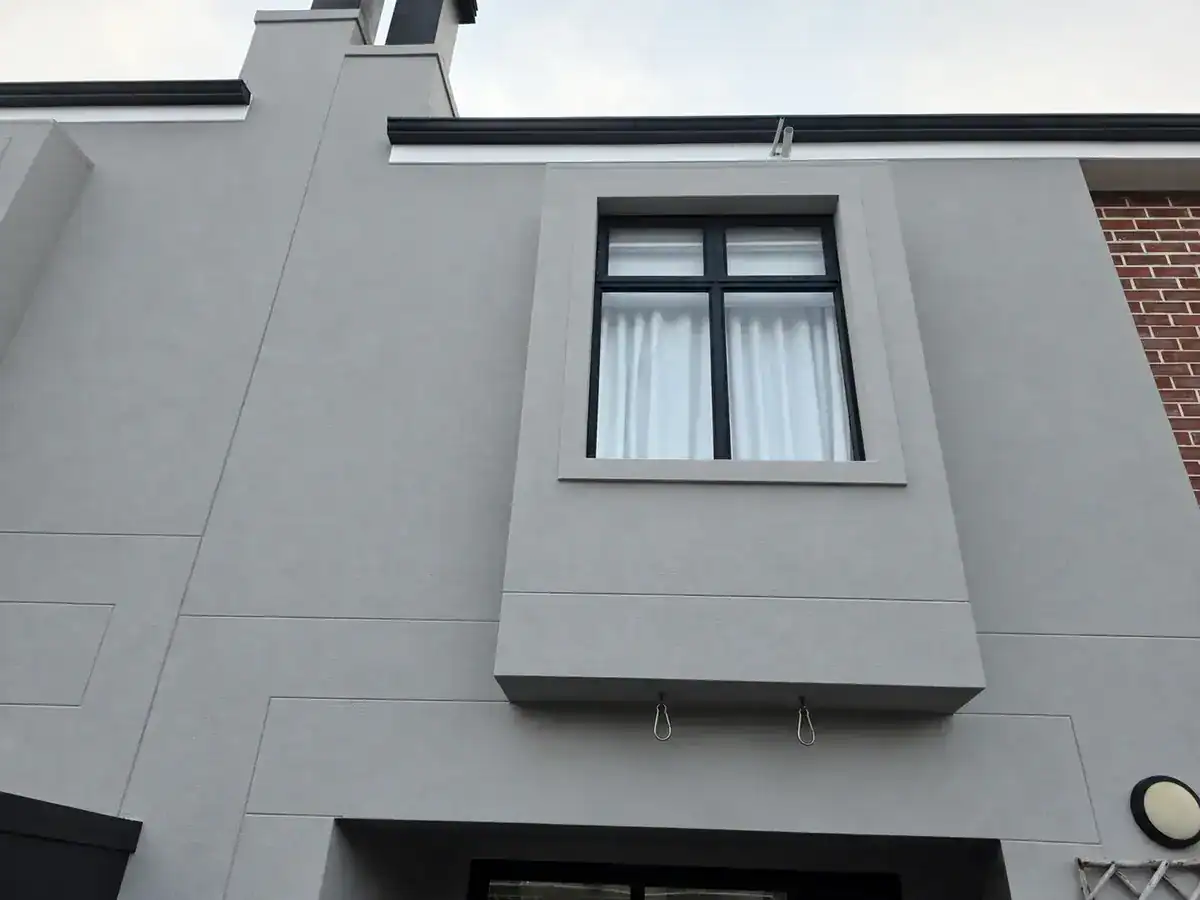
The project demonstrates why the final appearance depends heavily on the preparation stage rather than simply applying a new colour over existing defects.
View the D’Landen Estate Exterior Painting Case Study
D’Landen Expansion Joints Before and After Flexible Sealing
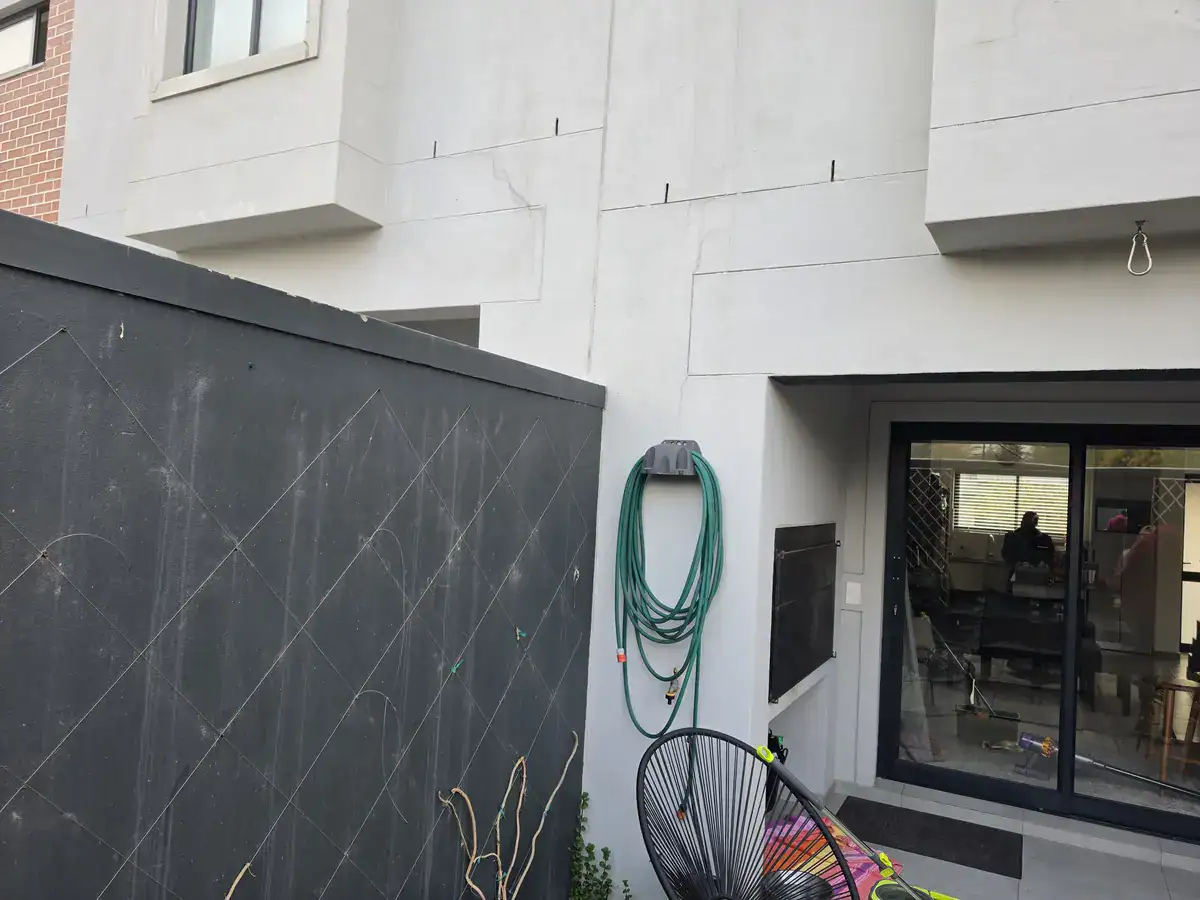
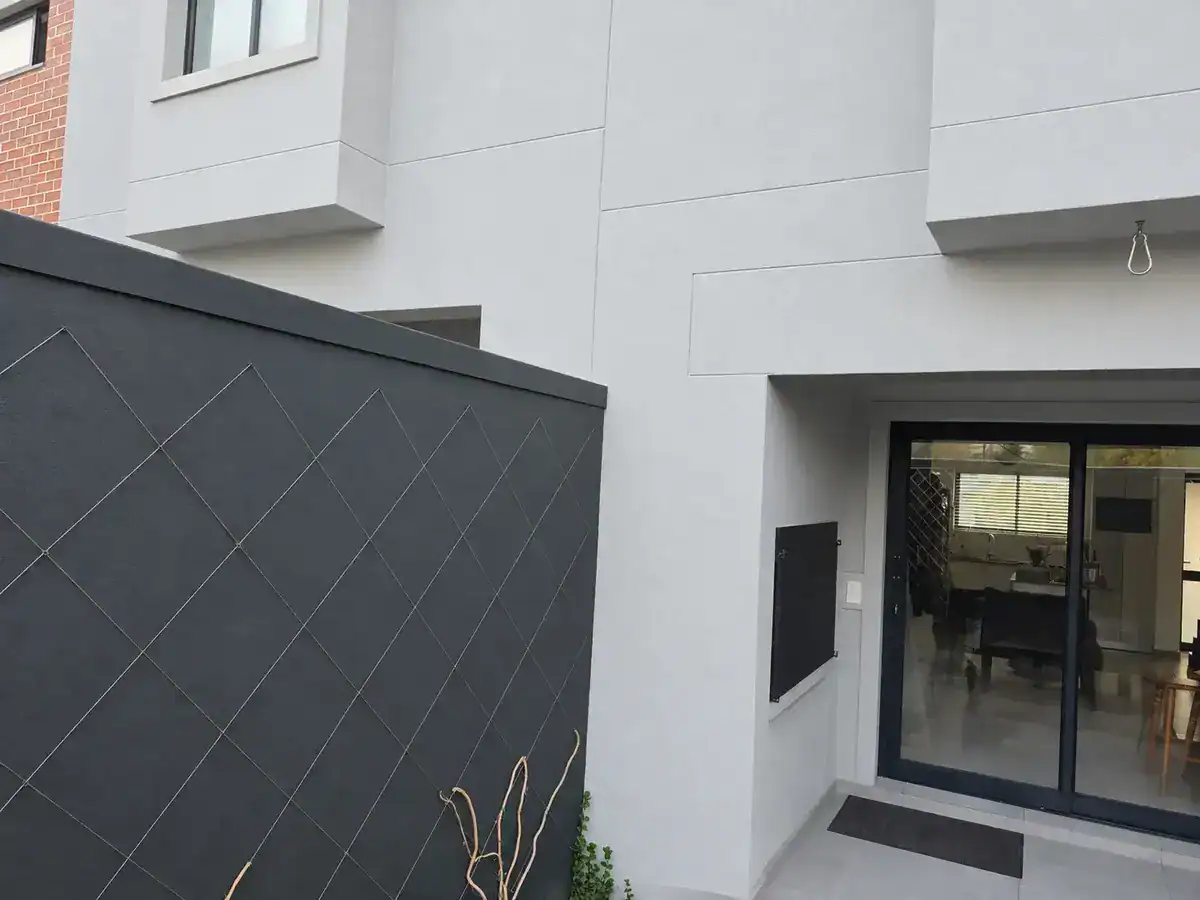
The written D’Landen specification required deteriorated sealants around windows, doors and expansion joints to be removed and resealed with flexible single-pack polyurethane sealant. :chatgpt-content-reference{index=”6″}
Vierlanden — Several Different Preparation Problems on One Property
The Vierlanden project is another good example of why wall preparation should be based on the actual defect.
The inspection recorded cracks on vertical and horizontal surfaces, failed window and door sealant, paint bubbling, unsealed expansion joints and areas affected by moisture.
Its written specification distinguished between:
- hairline cracks up to approximately 1 mm;
- wider plaster cracks of approximately 1–5 mm;
- map cracking;
- movement joints;
- failed perimeter sealant;
- damp-affected wall areas; and
- weathered timber and other substrates.
That distinction matters because a masonry crack repair, a flexible joint and a chalky coating failure do not require the same preparation.
View the Vierlanden Exterior & Roof Painting Case Study
Eversdal — Preparation Written Into a Real Quotation
Our Eversdal project further demonstrates how preparation is documented before topcoats are specified.
The quotation included damaged plaster, hairline cracks, wider plaster cracks, map cracking, deteriorated sealants, expansion joints, damp-related preparation and other exterior surface defects.
Suitable wider cracks were to be opened to a V-joint, cleaned, filled with a masonry patching system, sanded smooth and protected before repainting. :chatgpt-content-reference{index=”7″}
The accepted historical quotation total was R89,880 for the documented wider exterior maintenance scope, including labour, paint and materials.
See House Painting Costs Durbanville for the broader cost discussion.
Failed Window and Door Sealants
Cracks are not the only preparation detail capable of contributing to paint failure.
Deteriorated sealants around windows and doors can permit water to enter behind the coating system.
Where identified and included in the scope, failed material can be removed and replaced with compatible flexible sealant before repainting.
This work overlaps naturally with our Waterproofing Durbanville service because sealing defects can become moisture-entry routes.
Moisture-Damaged Plaster Needs More Than Filling
If a crack or damaged plaster area is associated with ongoing water entry, simply filling it and painting over it may not produce a reliable repair.
The possible moisture route should be considered first.
That can involve cracks, windowsills, parapets, failed sealants, flashing or other building details.
For moisture-related investigation, visit Damp Proofing Durbanville.
Primer Is Part of the Preparation System
A primer is not simply another coat added to increase the number of coats in a quotation.
Its purpose depends on the substrate.
Suitable bare repairs may need priming before topcoats. Friable or chalky surfaces may require an appropriate stabilising system. Damp-affected cementitious areas may require a different specified preparation.
The correct product should therefore follow the condition of the substrate rather than being selected as one universal primer for every surface.
Why Repaired Areas Can Still Look Patchy
Even a structurally sound plaster repair can remain visually obvious if the surface texture differs from the surrounding wall.
Strong light can emphasise different absorbency, filler edges and texture changes.
Our written specifications therefore allow for suitable preparation of repaired areas before the full finishing coats are applied.
The aim is not simply to fill a hole but to integrate the repaired area into the surrounding surface as effectively as practical.
Interior Wall Preparation
Interior preparation follows the same basic principle: the substrate underneath the decorative finish must be sound.
Interior walls may require removal of peeling coatings, sanding, crack filling, plaster repair and preparation of damp-affected areas before the final finish.
For the complete local interior service, visit Interior Painters Durbanville.
Exterior Wall Preparation
Exterior walls are exposed to sunlight, winter rain, wind, irrigation and building movement.
Preparation can therefore involve a combination of cleaning, crack repairs, flexible sealing, moisture-related treatment and waterproofing details.
For the wider service, see Exterior Painters Durbanville.
When Is a Crack Outside a Painter’s Scope?
Not every crack should automatically be treated as a normal decorative plaster defect.
Large, actively moving, recurring or structurally significant cracking may require assessment by an appropriate building professional before decorative repair is attempted.
Painting contractors can prepare normal coating and plaster defects within their scope, but paint and filler should not be represented as structural repairs.
Why We Do Not Quote Crack Repairs From a Photograph Alone
A photograph can help us understand the general problem, but it may not show crack width, movement, moisture, coating adhesion or substrate condition clearly enough for a complete specification.
A physical inspection allows us to distinguish between:
- fine surface cracking;
- wider plaster defects;
- map cracking;
- movement joints;
- failed sealants;
- damaged plaster;
- moisture-related coating failure; and
- defects that may require another specialist.
Request a Wall Preparation & Crack Repair Assessment in Durbanville
If your walls have cracks, loose paint, chalking, previous patch repairs or damaged plaster, you do not need to decide which repair system is required before contacting us.
A physical inspection allows the defects to be assessed and the appropriate preparation to be included in the written painting quotation.
Call 082 374 6862 or use our contact page to arrange an inspection.
Helpful Durbanville Preparation & Repair Guides
Explore related Durbanville services covering exterior and interior painting, waterproofing, damp-related preparation, coating failure and genuine local project evidence.
Painters Durbanville
Our main Durbanville page connects the complete local painting cluster and documented 2026 projects.
Exterior Painters Durbanville
See how crack repairs, sealing, waterproofing and substrate preparation form part of a complete exterior repaint.
Interior Painters Durbanville
Interior walls can also require peeling-paint removal, crack repairs, plaster preparation and damp-related treatment before repainting.
Damp Proofing Durbanville
Moisture-related coating failure should be investigated before damaged plaster and paint are repaired.
Waterproofing Durbanville
Cracks, parapets, windowsills, wall tops, failed seals and expansion joints can become water-entry routes.
Why Paint Fails in Durbanville
Understand how unstable coatings, moisture, cracking and inadequate preparation contribute to peeling and bubbling paint.
D’Landen Estate Exterior Project
See the documented 14-townhouse programme involving repeated cracks, open joints, failed seals and preparation before repainting.
Painting Quote Checklist Durbanville
Compare preparation, repairs, specifications, exclusions and supervision before accepting a quotation.
Wall Preparation & Crack Repairs Durbanville — FAQs
Why is wall preparation important before painting?
New paint needs a reasonably sound substrate. Loose coatings, chalking, damaged plaster, cracks and failed repairs can affect adhesion and the appearance of the finished paint system.
Do all cracks get repaired the same way?
No. Fine hairline cracks, wider plaster cracks, map cracking and movement joints have different characteristics and can require different preparation methods.
How do you treat hairline cracks?
Where suitable, hairline cracks can receive specified sealing and flexible preparation before repainting. The exact system depends on the substrate and written specification.
How are wider plaster cracks repaired?
Suitable wider cracks may be opened to a V-joint, cleaned, repaired with compatible masonry repair material, sanded smooth and protected before topcoating.
What is map or spiderweb cracking?
Map cracking consists of numerous fine cracks spread across a wider plastered area. The affected surface may require broader flexible preparation rather than treating only one isolated line.
Can expansion joints be filled with normal plaster?
Expansion joints are designed to accommodate movement and generally require a flexible sealant rather than a rigid plaster repair.
Do you remove loose paint before repainting?
Yes. Loose and flaking paint should be removed back to a sound edge so the new coating system is not relying on unstable material underneath it.
What happens if a wall is chalky?
Powdery residue should be removed as part of the preparation. Where the prepared surface remains friable, a suitable bonding or stabilising treatment may be required.
Can moisture cause cracks or paint failure?
Moisture can contribute to coating deterioration and can enter through cracks, failed seals, windowsills and other building details. Where moisture is involved, the water-entry route should also be considered.
Do you repair structural cracks?
Normal plaster and coating-related defects can form part of painting preparation, but large, actively moving or structurally significant cracking may require assessment by an appropriate building professional.
Do you have real crack-repair projects in Durbanville?
Yes. D’Landen Estate, Vierlanden and Eversdal all provide documented 2026 evidence involving hairline cracks, wider plaster cracks, map cracking, movement joints and other preparation defects.
How do I arrange a wall preparation quotation?
Call Painters Cape Town on 082 374 6862 or use our contact page to arrange a physical inspection and written quotation.

Copyright 2026 , all rights reserved.