Documented Durbanville Exterior & Roof Painting Project
Vierlanden Durbanville Exterior and Roof Painting Case Study
A real 2026 Durbanville project combining exterior and tiled-roof painting with moisture assessment, crack repairs, joint sealing, horizontal waterproofing, damp-related preparation, timber work and metal preparation.
Protimeter readings ranged from 12.5% to 16.7%, while the inspection also identified failed sealants, bubbling coatings, unsealed expansion joints and vulnerable horizontal surfaces that required attention before repainting.
Real Vierlanden Project Evidence
12.5%–16.7% Moisture Readings
Protimeter readings were recorded before preparation so that damp-related coating conditions could form part of the project specification.
Exterior + Tiled Roof
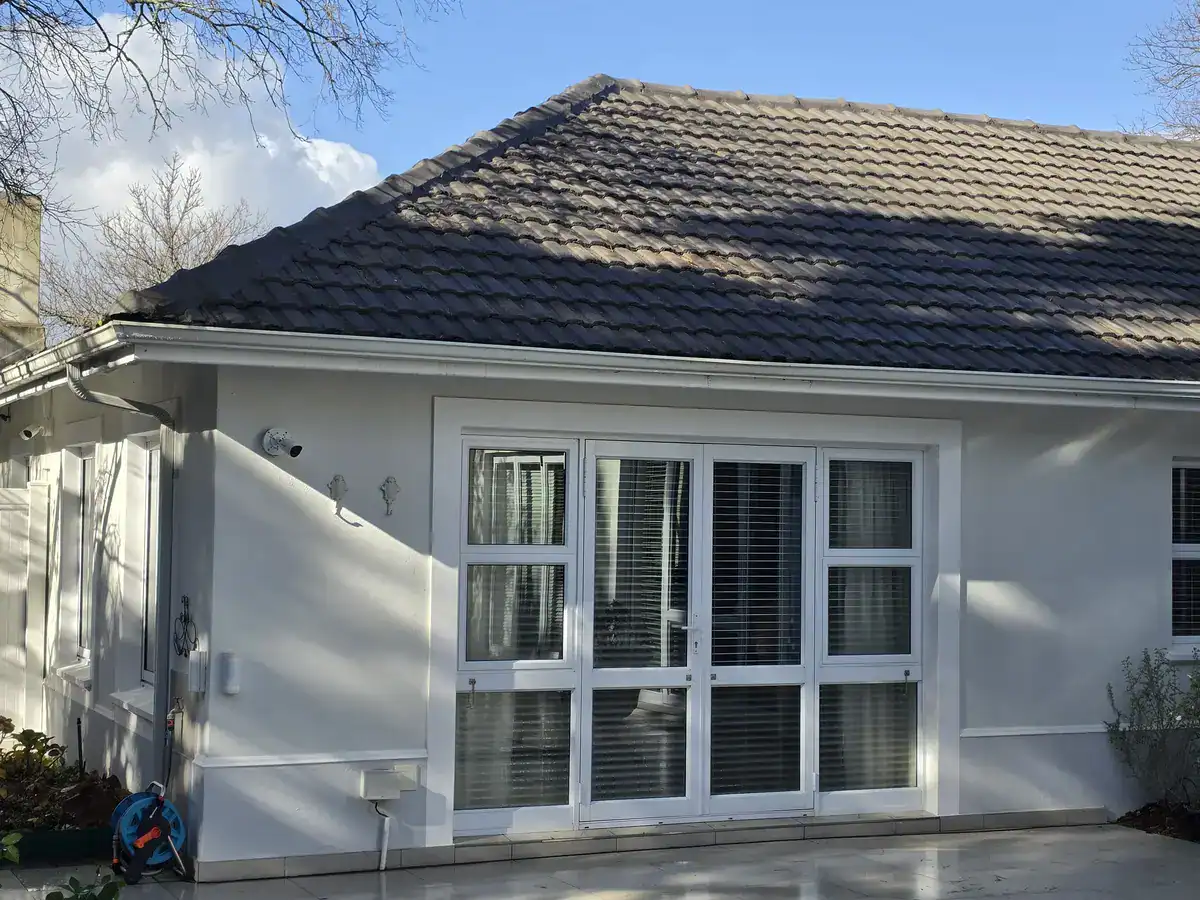
The project included the main exterior, boundary and garden walls together with preparation and painting of the tiled roof.
Waterproofing & Sealing
Horizontal surfaces, window and door sealants, expansion joints and relevant wall penetrations formed part of the preparation scope.
Multiple Substrates
Walls, roof tiles, timber fascia boards, Nutec, metalwork, garage surfaces and soffits required different preparation and coating systems.
Working Foreman Supervision
The documented project was scheduled for approximately 11 working days under working-foreman supervision with additional site visits.
Direct Painting Contractor
Painters Cape Town uses full-time employed painting teams rather than operating as a lead-generation enquiry website.
Exterior and Tiled Roof Painting in Vierlanden, Durbanville
This documented 2026 project in Vierlanden, Durbanville involved substantially more than repainting a few exterior walls.
The scope included the tiled roof, main-building exterior walls, painted boundary and garden walls, barge boards, fascia boards, wooden soffits, fittings, damp-related preparation, garage walls, garage floor and associated preparation.
The property therefore provides an excellent example of the type of multi-surface project undertaken as part of our wider Durbanville painting service.
Different substrates and different coating failures required different preparation systems. The walls, roof, timber, Nutec surfaces and metalwork could not simply be treated as one uniform painting surface.
Vierlanden Project Overview
Location: Vierlanden, Durbanville
Project type: Exterior and tiled-roof painting
Estimated project duration: 11 working days
Supervision: Working foreman with additional site visits
Protimeter readings: 12.5% minimum to 16.7% maximum
Exterior scope: Main walls, boundary and garden walls, fascia boards, barge boards, soffits, fittings and related surfaces
Additional work: Damp-related preparation, garage interior walls, garage floor, timber and metal preparation
Roof scope: Cleaning and preparation of the tiled roof followed by two coats of Dulux Roofguard
What We Found Before Painting
The inspection recorded several conditions that needed to be considered before new exterior coatings were applied.
Measured Moisture in Plastered Walls
Protimeter readings recorded during the inspection ranged from 12.5% at the lowest measured point to 16.7% at the highest.
Moisture readings were considered together with visible cracks, failed sealing and the condition of the existing coating.
A meter reading by itself does not identify the precise source of moisture, but it helps establish that affected areas should not automatically be treated as ordinary dry decorative surfaces.
Cracks on Vertical and Horizontal Surfaces
Cracks were present on vertical and horizontal surfaces, including walls, windowsills and expansion-joint areas.
These defects can provide routes for moisture into plaster and masonry, particularly when they occur on exposed surfaces receiving direct rainfall.
The specification distinguished between hairline cracking, larger plaster cracks and widespread map cracking because different crack conditions require different treatment.
Failed Sealant Around Windows and Doors
Deteriorating sealant was recorded around window and door junctions.
These junctions interrupt the continuity of the exterior wall surface. Where sealing deteriorates, water can potentially enter behind the paint film and contribute to moisture-related coating failure.
Relevant failed sealant was therefore specified for removal and replacement with flexible single-pack polyurethane sealant.
Unsealed Expansion Joints
Expansion joints also required sealing.
Because expansion joints accommodate movement, they should not simply be filled with rigid plaster and painted over like ordinary surface defects.
The documented preparation specified flexible polyurethane sealant to suitable existing and new expansion-joint areas.
Paint Bubbles and Alkali-Related Deterioration
Paint bubbling and moisture-related deterioration were present on some plastered surfaces.
The inspection also identified conditions associated with alkali attack, where moisture movement through cementitious material can contribute to deterioration of the paint binder and visible colour loss or blotching.
Suitable affected areas therefore required stabilisation and damp-related preparation before final repainting.
Horizontal Surfaces Had Not Been Waterproofed
Horizontal surfaces such as windowsills, parapet tops and the tops of boundary or garden walls receive far more direct rainfall than vertical wall faces.
Where these surfaces remain cracked or porous, moisture can enter from above and later show up as bubbling, staining or coating deterioration elsewhere.
Specified horizontal surfaces were therefore prepared and waterproofed using Dulux Rainshield.
Exterior Cleaning and Fungal Treatment
Exterior surfaces were cleaned before painting to remove loose coating, dirt, grime, chalky deposits and other contamination.
High-pressure washing was used on suitable surfaces, while controlled cleaning with the specified cleaner was available where high-pressure treatment was inappropriate.
Areas affected by fungal or biological growth were treated with the specified ProGold Fungal Wash solution before subsequent preparation.
Waterproofing Horizontal Surfaces
Prepared parapet tops, windowsills and suitable boundary or garden-wall tops were specified for two coats of Dulux Rainshield.
The coating was applied according to the documented system, including applying the second coat perpendicular to the first.
This formed part of reducing future water entry through identified exposed horizontal surfaces.
A similar moisture-control principle can be seen in our D’Landen Estate exterior painting case study, where horizontal waterproofing and joint sealing also formed part of the preparation.
Window, Door, Joint and Penetration Sealing
Existing sealant around relevant windows, doors and expansion joints was inspected.
Deteriorated sealing was specified for removal and replacement with flexible polyurethane sealant.
Relevant wall-mounted fittings were also sealed where necessary because even relatively small penetrations can provide a pathway for rainwater into an exterior wall.
Damp-Related Wall Preparation
Specified damp-affected cementitious wall surfaces received Dulux Pre-Paint Dampshield according to the project specification.
As with our documented Graanendal Estate damp and painting project, a damp-resistant coating was treated as one component of preparation rather than as a substitute for correcting active moisture entry.
Cracks, failed joints and other visible entry points still required their own remedial work.
Hairline, Plaster and Map Crack Repairs
Hairline Cracks
Hairline cracks were treated with the specified alkali-resistant preparation and flexible Rainshield system where appropriate.
Larger Plaster Cracks
Larger cracks were opened into a suitable joint, cleaned and repaired using the specified plaster repair system before sanding and recoating.
Map Cracking
Areas containing multiple fine spiderweb or map cracks received the specified flexible Rainshield treatment after appropriate preparation.
This approach differs significantly from simply covering visible cracking with a thicker finishing coat.
Preparing the Weathered Wooden Fascia Boards
Wooden fascia boards were recorded as weathered.
Loose and flaking coating was removed, surfaces were sanded to a more uniform finish and hard edges were feathered before priming.
Bare timber areas received primer and the broader prepared surface received the specified undercoat before the finishing system was applied.
Relevant cover-strip junctions were also sealed where specified.
Nutec, Steel and Metalwork Preparation
Nutec barge capping required cleaning, removal of loose material, sanding and suitable priming before repainting.
Steel and metal surfaces such as gates and fittings required removal of loose or flaking paint together with sanding and rust-primer preparation before finishing coats.
This is an important example of why one exterior property may require several completely different preparation systems.
Tiled Roof Preparation in Vierlanden
The tiled roof formed a substantial part of the project.
Before repainting, the roof surface was cleaned to remove contamination, grime and unstable material that could interfere with the adhesion of the new coating system.
Areas affected by mould or biological growth were treated using the specified fungal-wash solution.
Roof preparation is particularly important because roof coatings remain exposed to intense UV radiation, rainfall and large temperature changes.
Our broader Roof Painters Cape Town service covers suitable tiled and other compatible roof substrates where the roof condition is appropriate for coating.
Two Coats of Dulux Roofguard
After the tiled roof had been cleaned and prepared, the documented finishing system specified two coats of Dulux Roofguard.
The Roofguard system formed part of a much broader property-maintenance project rather than being undertaken in isolation.
This distinguishes the Vierlanden project from our Clara Anna Fontein Estate roof-painting project, where the previously unpainted slate substrate required full bonding preparation before its Roofguard finishing coats.
Different roof substrates and existing conditions require different preparation.
Exterior Wall Finishing Systems
Once preparation had been completed, different parts of the property received different finishing coatings according to their substrate and use.
- Main building walls: two coats Dulux Weathershield.
- Boundary and garden walls: two coats Dulux Weatherguard.
- Barge boards and soffits: two coats Dulux Roofguard.
- Wooden fascia boards: two coats Dulux PearlGlo Waterbased.
- Prepared steel and metalwork: two coats Dulux PearlGlo Waterbased after appropriate rust preparation.
- Tiled roof: two coats Dulux Roofguard.
The important point is not merely the product names. The system must correspond with the condition and type of substrate being coated.
Garage Walls and Garage Floor
The project also included interior garage walls together with the garage floor.
The prepared garage walls received the specified wall-and-ceiling coating system.
The concrete or cementitious garage floor was prepared according to supplier requirements and specified for two coats of heavy-duty polyurethane-modified poly-alkyd floor enamel.
This adds another substrate category to a project that already included plaster, roof tiles, timber, Nutec and steel.
What the Completed Vierlanden Project Demonstrates
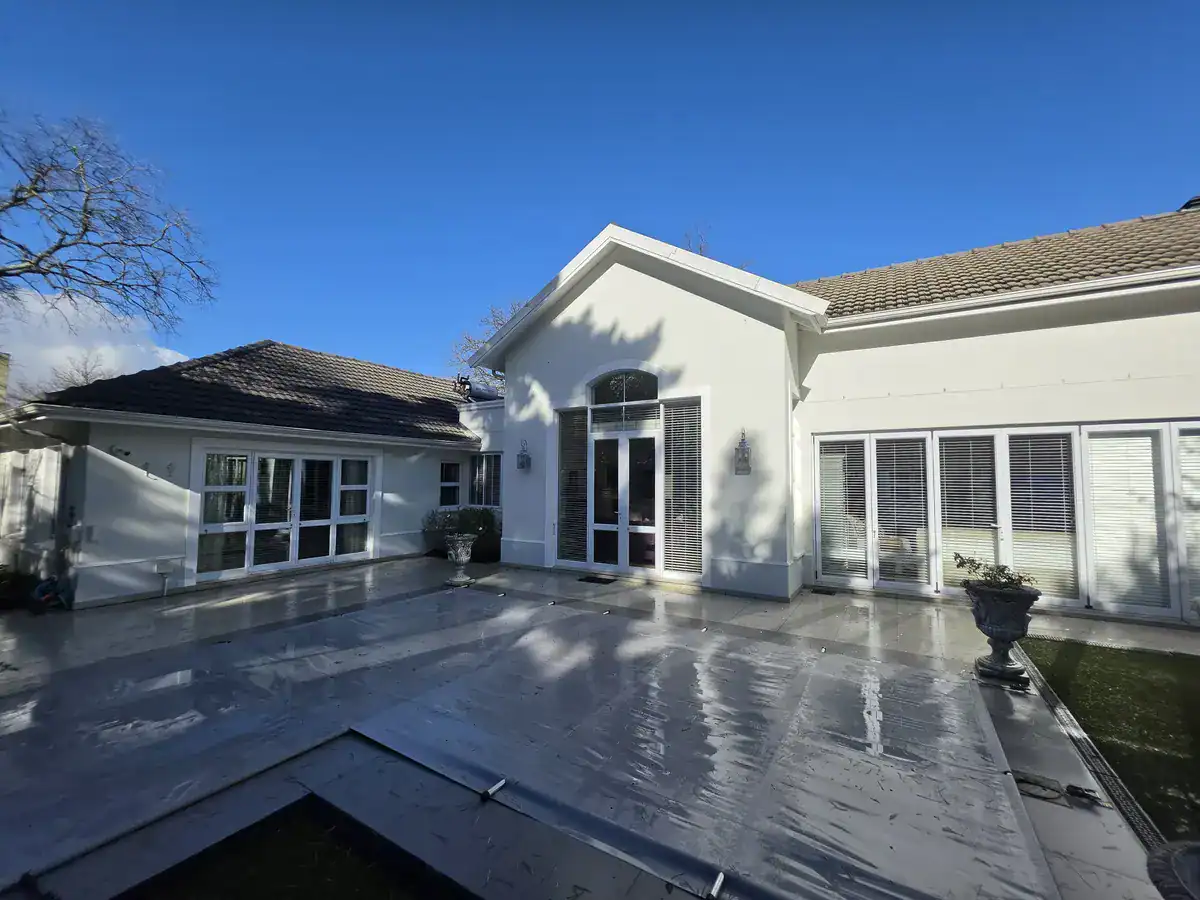
The Vierlanden property demonstrates why whole-property repainting should not be treated as one large uniform paint surface.
This single project involved:
- moisture assessment;
- damp-related preparation;
- crack repairs;
- expansion-joint sealing;
- window and door resealing;
- horizontal waterproofing;
- exterior wall painting;
- tiled-roof preparation and painting;
- weathered timber preparation;
- Nutec preparation;
- steel and metal preparation;
- garage wall painting;
- and garage-floor coating.
Using one preparation method or one universal paint product across all these surfaces would not have been appropriate.
Four Real Durbanville Projects — Four Different Challenges
The Vierlanden project completes the first four-project evidence layer supporting our main Durbanville page.
Our D’Landen Estate exterior case study focuses on high moisture readings, map cracking, failed sealing, expansion joints and waterproofing.
Our Clara Anna Fontein roof-painting project documents biological contamination, roof-valley obstruction, bonding preparation and Roofguard coating of a previously unpainted slate roof.
Our Graanendal Estate damp-repair case study shows how interior coating failure required investigation of exterior cracks, failed sealants and vulnerable windowsill surfaces.
Vierlanden adds a broad whole-property project combining exterior painting, tiled-roof painting, damp-related preparation, waterproofing, timber, metalwork and garage surfaces.
Together these projects provide genuine local evidence behind our professional painting service in Durbanville.
Exterior Painting in Durbanville
Our Exterior Painters Cape Town service covers suitable Durbanville homes, estates and residential properties.
Preparation can include pressure washing, chalk and adhesion assessment, crack repairs, moisture-related preparation, waterproofing, sealant replacement, timber preparation and rust treatment depending on the substrate and condition.
Roof Painting in Durbanville
Our Roof Painters Cape Town service covers suitable tiled and compatible roof types throughout Durbanville and the wider Cape Town service area.
Before coating, the roof condition, contamination, biological growth, visible drainage problems and relevant roof defects should be considered.
Roof painting should not be presented as a substitute for repairing an active structural leak or defective roof component.
Painting Homes in Vierlanden
Vierlanden contains established family homes and substantial residential properties with large roof areas, mature gardens, boundary walls, driveways, garages and extensive exterior surfaces.
These properties can require coordinated maintenance of walls, roofs, timber, metalwork, damp-prone surfaces and waterproofed horizontal areas rather than isolated decorative painting.
Vierlanden forms part of our wider Durbanville painting service area and the broader Cape Northern Suburbs painting service.
Relevant Painting Services and Durbanville Case Studies
- Painters Durbanville — our main Durbanville painting service page.
- Exterior Painters Cape Town — exterior preparation and repainting.
- Roof Painters Cape Town — preparation and coating of suitable roof substrates.
- Damp Proofing Cape Town — damp-related preparation and moisture-affected coating problems.
- D’Landen Estate Exterior Painting.
- Clara Anna Fontein Estate Roof Painting.
- Graanendal Estate Damp and Paint Repairs.
Need an Exterior or Roof Painting Inspection in Durbanville?
A property requiring repainting may contain several substrates and several different reasons for coating deterioration.
Our approach is to inspect the relevant surfaces, identify visible preparation requirements and provide a written quotation describing the proposed coating systems before work begins.
For a Durbanville painting inspection and written quotation, call 082 374 6862
or visit our contact page.
Helpful Painting Guides
Why Paint Peels in Cape Town
Understand why Cape Town weather causes paint to peel, fade and crack, and why preparation matters before repainting.
Exterior Paint Failure in Somerset West
Learn why coastal and Winelands homes often fail early at exterior walls, roofs and boundary walls.
Preparing Damp Walls Before Repainting
See how damp walls, timber and boundary walls should be prepared correctly before painting mature properties.
Planning a roof painting project? Our roof painting in Durbanville page explains roof assessment, surface preparation and quotation factors. It includes this Vierlanden tiled-roof project and our supplier-specified natural slate roof project at Clara Anna Fontein.
Vierlanden Durbanville Exterior and Roof Painting FAQs
What work was included in the Vierlanden project?
The documented project included exterior walls, boundary and garden walls, the tiled roof, fascia boards, barge boards, soffits, fittings, damp-related preparation, garage walls, garage floor and associated substrate preparation.
What were the moisture readings?
Protimeter readings recorded during the inspection ranged from 12.5% at the lowest measured point to 16.7% at the highest.
What exterior defects were identified?
The inspection recorded cracking on vertical and horizontal surfaces, failed window and door sealant, paint bubbles, weathered fascia boards, unwaterproofed horizontal surfaces and unsealed expansion joints.
Was the roof painted?
Yes. The project included preparation and painting of the tiled roof, with the documented finishing system specifying two coats of Dulux Roofguard.
Why were horizontal surfaces waterproofed?
Windowsills, parapet tops and wall caps receive direct rainfall. Cracking or porous surfaces can allow water to penetrate from above, so suitable prepared horizontal surfaces were included in the Rainshield waterproofing specification.
Why were expansion joints resealed?
Expansion joints accommodate building movement. Unsealed joints can also allow moisture entry, so relevant joints were specified for sealing with flexible polyurethane sealant.
Which paint was used on the main exterior walls?
The documented specification included two coats of Dulux Weathershield on the prepared main-building walls.
Which paint was used on the tiled roof?
The tiled roof was specified for two coats of Dulux Roofguard after cleaning and appropriate preparation.
Were timber and metal surfaces also painted?
Yes. Weathered wooden fascia boards, Nutec surfaces and relevant steel or metalwork received substrate-specific preparation, primers and finishing coatings.
Does roof painting repair an active roof leak?
No. Roof coatings protect suitable prepared surfaces. Broken tiles, defective flashings, failed waterproofing or other structural causes of active water entry may require separate repair.
Do you undertake similar projects elsewhere in Durbanville?
Yes. Painters Cape Town undertakes suitable exterior, roof, interior, estate and damp-related painting projects throughout Durbanville and surrounding Northern Suburbs areas.
How do I request a Durbanville painting quotation?
Call 082 374 6862 or visit the Painters Cape Town contact page.

Copyright 2026 , all rights reserved.