Upper Bishopscourt Water Entry
Real exterior findings of moisture-affected plaster, unsealed fixings, parapets and failed coatings.
Bishopscourt Damp Wall Assessment
Why is your plaster damp, stained or bubbling? The moisture source and wall condition must be assessed before the surface is repainted.
Our original 2026 Bishopscourt projects document both active exterior water entry and residual interior moisture following an earlier leak repair.
With 27 years of painting-contractor experience, we provide visible defect assessments, relevant moisture readings and written diagnostic quotations for suitable painting preparation.
Penetrating water: Rain entering cracks, parapets, fixings or failed seals.
Residual moisture: A wall still affected after a plumbing or waterproofing leak was repaired.
Ground moisture: Lower walls exposed to soil, missing damp-proof separation or backfill.
Condensation: Indoor moisture and ventilation problems requiring a different response.
Actual exterior moisture investigation
Upper Bishopscourt 2026 identified actual rainwater-entry routes behind failed coatings.
Bishopscourt Village 2026 documented an affected wall adjoining a previously repaired shower leak.
Documented Protimeter readings interpreted with physical evidence rather than treated as automatic damp diagnoses.
Practical painting preparation, substrate assessment and moisture-related coating knowledge.
Applicable primers and coating systems selected for actual substrates and project conditions.
Visible symptoms, likely concerns, proposed preparation and unresolved limitations are recorded.
Damp assessment Bishopscourt is particularly important where walls show bubbling paint, water staining, peeling coatings, salt deposits, mould, discolouration or damaged plaster.
These symptoms do not identify one universal cause. Penetrating rainwater, residual moisture after a repaired leak, ground moisture and condensation can require different responses.
Applying new paint without considering the source and substrate condition risks premature coating failure.
Painters Cape Town assesses visible damp-related defects relevant to the proposed painting work and supplies a written diagnostic quotation. Where the source is hidden or requires specialist investigation, that limitation is explained.
Rising damp is only one possible moisture mechanism. A wall can also become moisture-affected through rain entering cracks, a defective parapet, leaking plumbing, failed window seals or moisture retained after an earlier repair.
The location of the symptoms, construction details, moisture pattern, observed defects and history of the problem all matter.
A damp meter reading should not be taken as proof of rising damp or used on its own to identify the precise source.
Our original exterior restoration, completed from 9 to 25 February 2026, documented serious moisture-related coating deterioration.
The project recorded Protimeter readings ranging from 16% to 33.5% in the areas tested.
Investigation identified particular water-entry routes, including metal clamps holding irrigation conduits through roof-garden parapets and unsealed wall plugs supporting ivy wires.
Cracks, deteriorated window and door seals, movement joints and exposed horizontal masonry were also part of the documented remedial scope.
The important finding was that the observed moisture problem could be linked to real building details rather than described generically as damp plaster.
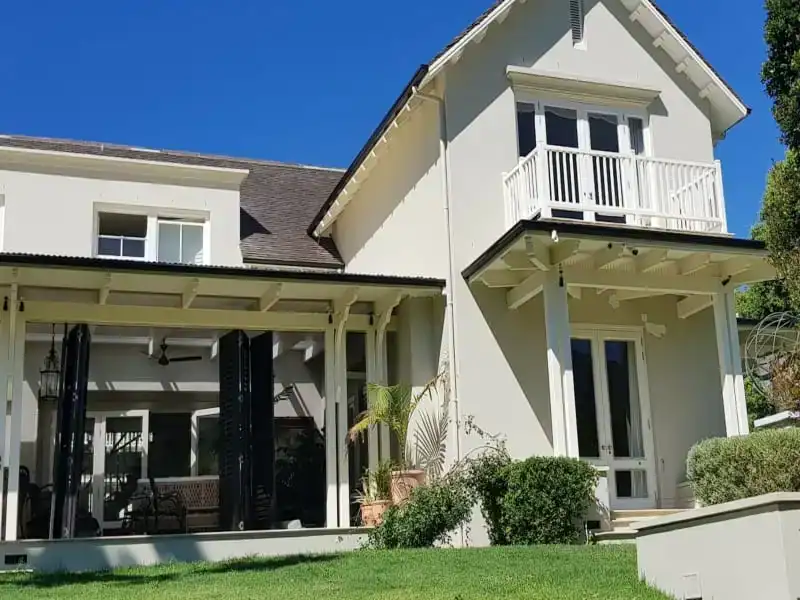
The project involved Dulux technical inspection and a supplier-prepared painting specification. Relevant water-entry defects and damaged surfaces were addressed as part of the documented preparation.
Read the original Upper Bishopscourt exterior moisture investigation.
Our completed interior repaint from 18 to 28 May 2026 demonstrates a different moisture situation.
A bedroom wall adjoining a shower remained moisture-affected even though the shower waterproofing leak had already been repaired before our painting work.
The inspection recorded Protimeter readings ranging from 5.4% to 17% across the interior areas assessed.
This illustrates a critical difference: repairing the source of a leak does not necessarily mean the adjacent plaster is immediately ready for repainting.
The substrate still needs to be assessed for residual moisture, coating condition and suitability for the proposed preparation and finishing system.
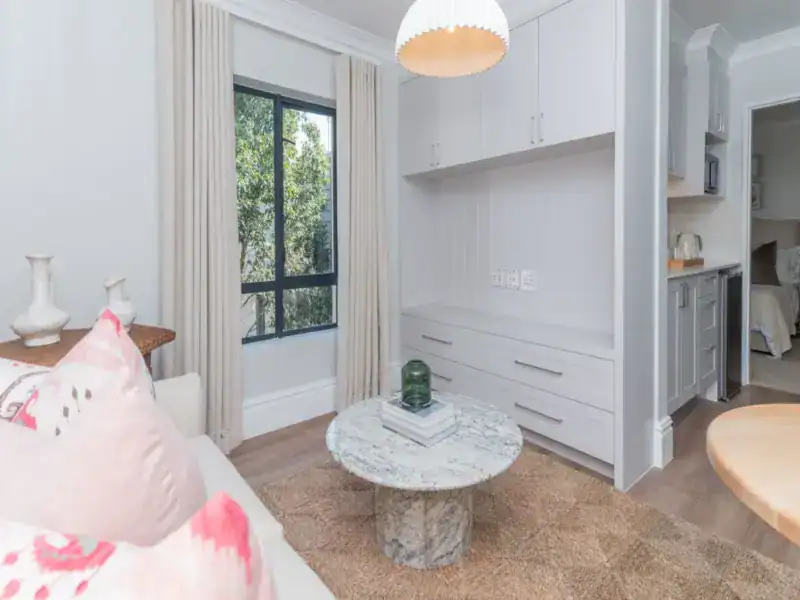
View the Bishopscourt Village interior moisture case study.
An electronic moisture meter can assist with identifying differences between tested locations and monitoring particular areas under comparable measurement conditions.
However, the meaning of a reading depends on the instrument, measurement mode, substrate and testing context.
The percentage-style values displayed by the instrument must not automatically be represented as the laboratory moisture content of the masonry.
A useful assessment combines the readings with the location of damage, construction details, water-entry evidence, surface condition and moisture history.
In some cases, further specialist investigation is necessary before the actual cause can be confirmed.
Rainwater can enter through defective parapets, cracks, window seals, open joints, roof-to-wall details and penetrations.
Where the source is accessible and within the painting-related scope, suitable repairs may precede preparation and repainting. See our Waterproofing Bishopscourt page.
A wall may retain moisture after the original plumbing or waterproofing defect has been repaired.
That does not necessarily mean a new leak remains active. The history and current condition must be considered before prescribing additional waterproofing or paint.
Lower foundation walls, freestanding boundary walls and retaining structures can receive moisture through soil contact, missing damp-proof barriers or backfill.
A coating on the visible wall face cannot permanently eliminate continuing moisture entering from below or behind. Our Bishopscourt boundary wall guide explains these limitations.
Warm humid indoor air can condense on cooler surfaces under suitable conditions. Ventilation, heating, humidity and surface temperature may need investigation rather than immediately prescribing an exterior waterproof coating.
Leaking pipes, shower waterproofing, defective flashings or other building defects can affect walls or ceilings.
Repairs to plumbing and roofing components may require their respective specialist trades before painting preparation proceeds.
Moisture and dissolved salts can affect plaster and coating adhesion, create stains or contribute to breakdown of the existing finish. Persistent biological growth and poor previous preparation may worsen the condition.
However, paint bubbling is not proof of moisture by itself. Coating incompatibility, contamination, weak old paint and application defects can also produce blisters or peeling.
For the broader failure mechanisms, visit Peeling and Bubbling Paint Bishopscourt.
The timing depends on whether the moisture source has been addressed, the current substrate condition and the selected coating specification.
A wall should not be declared ready simply because the surface looks dry or because a fixed number of days has passed.
Drying conditions can differ because of wall thickness, plaster composition, ventilation, sunlight, shade and the amount and duration of previous moisture exposure.
Where relevant, readings may be compared under suitable conditions, but they should be interpreted alongside the physical evidence and product application requirements.
We record relevant staining, bubbling, damaged plaster, salts, biological growth, cracks and coating condition.
Parapets, roof details, plumbing history, window seals, irrigation, ground contact and condensation are considered according to the building’s circumstances.
Moisture meter readings are used as supporting observations, not as a stand-alone definitive diagnosis.
Known water-entry defects may require appropriate remedial work. Concealed plumbing, structural damp-proofing, inaccessible drainage and other specialist concerns are distinguished from decorative painting.
Once the surface is appropriate for treatment, preparation may include removal of failed coatings, plaster repairs, cleaning, applicable primers and other specified remedial work.
The intended coating is chosen for the actual substrate and exposure. Continuing moisture sources and relevant warranty exclusions are explained in the written quotation.
A water-resistant coating may be appropriate for a suitable horizontal masonry detail where rainwater penetration needs to be controlled.
A moisture-affected boundary wall exposed to continuing ground moisture may require a different approach that considers vapour movement.
Applying an impermeable coating to the wrong wall can create further problems. Equally, a breathable finish does not repair a leaking roof, missing damp-proof course or defective plumbing.
The correct method follows the actual moisture source, wall construction and coating specification.
Cost depends on the nature of the problem, the surfaces affected, the preparation needed and whether the moisture source can be addressed within the agreed painting-related scope.
A previously repaired shower leak with residual moisture in one wall is very different from widespread exterior coating failure caused by several defective parapet penetrations.
The work may require different primers, plaster repairs, waterproofing materials, drying allowances, access arrangements and skilled labour.
Our written diagnostic quotation identifies these requirements and relevant exclusions rather than treating every damp wall as the same repair.
This page explains the assessment and decision-making stage before painting.
For suitable remedial waterproofing of exposed building details, see Waterproofing Bishopscourt.
For plaster preparation and cracking, see Wall Preparation and Crack Repairs Bishopscourt.
For the actual exterior or interior repaint, visit Exterior Painters Bishopscourt or Interior Painters Bishopscourt.
If your property has damp-looking plaster, recurring paint bubbles, stains or previously repaired leaks, we can assess the visible conditions relevant to painting and identify suitable preparation or further investigation.
Call 082 374 6862 or request a Bishopscourt painting inspection.
Return to our Painters Bishopscourt flagship page.
Real exterior findings of moisture-affected plaster, unsealed fixings, parapets and failed coatings.
Why a wall may remain affected after the original plumbing or shower leak has been repaired.
Remedial preparation for suitable parapets, windowsills, wall penetrations and exterior sealing defects.
How coating adhesion, moisture, previous primers and substrate condition contribute to paint failure.
No. Meter readings need to be interpreted with the substrate, location and physical evidence. They do not identify the exact moisture source by themselves.
Yes. Masonry can retain residual moisture after a water source has been corrected, as documented in our Bishopscourt Village project.
After the relevant water source has been addressed and the substrate meets the preparation and application requirements of the selected coating system.
No. Coatings cannot create a missing damp-proof course or eliminate continuing moisture entering from soil or backfill.

Copyright 2026 , all rights reserved.