Glastonbury Drive
19 November 2011
Residential interior painting.
Bishopscourt Interior Painting Specialists
Preparation-first interior painting for private homes, walls, ceilings, cornices, doors, frames, skirting and detailed painted joinery.
With 27 years of experience, full-time employed painters, working-foreman supervision and written diagnostic quotations, we plan interior repainting around the actual surfaces and occupied property.
Our May 2026 Bishopscourt Village project documents a complete occupied-home repaint, residual moisture, ceiling movement, crack repairs and woodwork preparation.
Walls and ceilings: Suitable plaster, Rhinoboard, cornices and previously painted surfaces.
Doors and trim: Painted joinery, frames, skirting and selected cupboards.
Problem surfaces: Residual moisture, historic staining, wall cracks and moving joints.
Dated residential and estate painting records across Bishopscourt, including repeated interior assignments.
Our May 2026 Bishopscourt Village project documents ceilings, walls, joints, wet-area concerns and joinery.
The documented interior project recorded Protimeter readings of 5.4%–17%, assessed with physical conditions.
Practical painting-contractor experience with older plaster, fine finishes and occupied residences.
Full-time employed painters supervised by a working foreman.
Defects, preparation, coating systems, exclusions and relevant floor and furniture protection are specified.
Interior painters Bishopscourt should offer more than a colour change. Successful repainting depends on the condition of walls, ceilings, cornices, previously painted joinery and the finishes that need protection throughout the work.
Painters Cape Town paints suitable occupied and unoccupied homes, including private residences in Upper Bishopscourt, Bishopscourt Village and other local streets. We assess visible defects, agree preparation and coating requirements, and provide a written diagnostic quotation before commencing.
For the full range of local services, see our Painters Bishopscourt flagship page.
Our historical client records document interior painting assignments across Bishopscourt over many years. The selected examples below reflect recorded work scopes; they are not substitutes for original photographic case studies.
19 November 2011
Residential interior painting.
9 May 2012
Residential interior painting.
15 May 2017
Residential interior painting.
24 June 2022
Residential interior and exterior painting.
16 November 2024
Interior painting at an estate property; no estate-wide appointment is implied.
Historical project references identify work recorded in our client history. They do not imply endorsements, published client reviews or exclusive estate appointments.
Between 18 and 28 May 2026, our employed painters completed a full interior repaint at an occupied double-storey Bishopscourt Village home.
The original inspection recorded Protimeter readings ranging from 5.4% to 17%, hairline and 1–3 mm cracks, upper-storey Rhinoboard ceiling and cornice movement, historic ceiling stains, failing bathroom sealant and worn painted joinery.
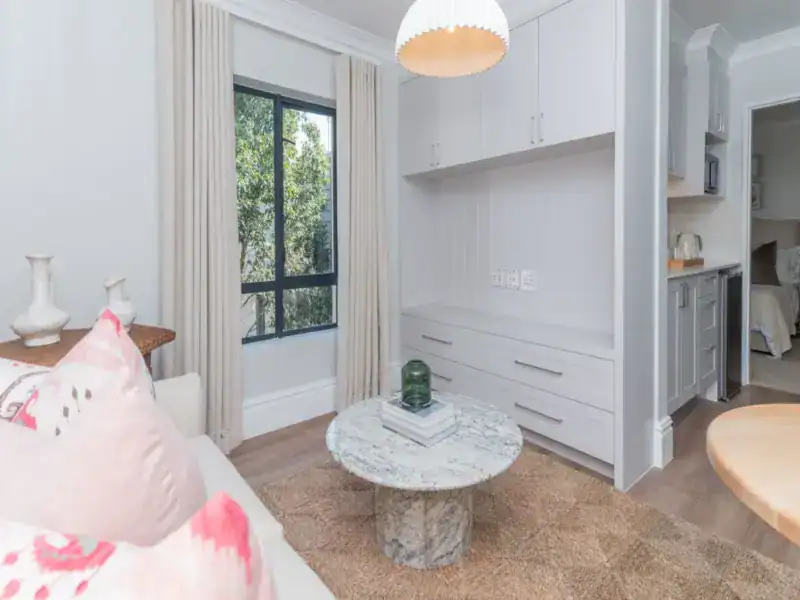
The most important finding was that a shower leak had already been addressed, yet a nearby bedroom wall remained moisture-affected. The repair of a water source and preparation of the affected plaster are two different stages.
The documented work also used flexible treatment at relevant moving cornice joints, stain-blocking preparation at an old ceiling stain and appropriate sanding, priming and finishing of painted doors, frames and skirting.
Read the complete Bishopscourt Village interior painting case study
Depending on substrate suitability and the agreed quotation, interior work can cover plastered walls, previously painted decorative features, Rhinoboard ceilings, cornices, doors, architraves, skirting and painted timber joinery.
Each surface is assessed separately. A wall affected by moisture, a moving ceiling joint, a varnished timber door and a sound previously painted plaster wall do not have identical preparation requirements.
A repaired plumbing or shower leak does not mean adjacent masonry immediately becomes dry. Moisture retained within the wall can continue affecting coatings. The source must first be addressed and the substrate assessed for suitable preparation and drying conditions.
Loose coating, dust, contamination, chalking, glossy finishes or incompatible primers can prevent a new topcoat from bonding properly. Sound preparation may require washing, scraping, sanding and compatible priming.
Old brown ceiling staining can migrate through fresh paint despite the original water source having been repaired. Once the source is no longer active and the substrate is suitable, specified stain-blocking preparation may be required before the decorative topcoat.
A gap between a ceiling and cornice may reappear if the surrounding surfaces continue to move. Filling a moving joint with rigid filler alone may produce renewed cracking. The repair method depends on the observed movement and underlying construction.
Interior repainting can often be planned independently of exterior seasonal painting, but active leaks, condensation, insufficient ventilation, unsuitable temperatures or undried repairs still affect the schedule.
Painting should be delayed on a particular defective surface when necessary for leak repair, curing, drying or specialist investigation. Sound rooms may sometimes be scheduled separately while another affected area is addressed, subject to the agreed scope.
We assess the visible coating, plaster condition, cracks, stains, wet areas, joinery and access needs. Where relevant, moisture readings are interpreted alongside the physical evidence rather than used as a stand-alone diagnosis.
Floor coverings, furniture, fixed finishes, cabinetry, glass and fittings are protected where applicable. Access and a practical room-by-room sequence can be agreed before preparation begins.
Depending on the findings, preparation can include filling local defects, removing loose coating, sanding, treatment of appropriate cracks, flexible repairs at moving joints, stain isolation and the priming of repaired or bare substrates.
Ceilings, plastered walls and painted timber may need different products. At Bishopscourt Village, the documented system used Dulux Wall & Ceiling for prepared ceilings, Dulux Luxurious Silk for applicable walls and Dulux Pearlglo Waterbased for prepared painted joinery.
These products illustrate an actual project specification. They are not a universal recommendation for every interior substrate, finish or previous coating.
Our working foreman oversees the preparation and finishing. Agreed protection and housekeeping are maintained during the work, followed by inspection against the accepted quotation before handover.
Doors, frames and skirting receive frequent handling, cleaning and impact. Chipped edges, glossy enamel, exposed timber and unstable older paint must be prepared according to their condition before finishing.
At Bishopscourt Village, damaged areas were filled where needed, loose coatings removed, edges feather-sanded and exposed timber primed before undercoating and painting. For the broader method, read our Southern Suburbs woodwork preparation guide.
Bedroom count or floor area alone cannot establish the cost of an interior repaint. Two similar houses can have different ceiling heights, cornice details, damaged plaster, old coatings, damp stains, timber joinery and furniture-protection requirements.
We calculate the actual included surfaces, preparation, access, primer and topcoat requirements, material quantities and labour allowance. The quotation also identifies exclusions and repairs requiring further specialist work.
For a fuller explanation, read our Bishopscourt premium home repaint planning guide.
With Painters Cape Town, the inspection, written scope, employed painting team, supervision and handover remain the responsibility of the actual contractor. We do not collect enquiries simply to match homeowners with unrelated painting companies.
Whether your home needs complete interior repainting, ceiling restoration, cornice preparation or a planned room-by-room refresh, we first establish the condition and work scope.
Call 082 374 6862 or request a Bishopscourt interior painting quotation.
See the real May 2026 occupied-home repaint, including moisture findings, cornice movement, wall repairs and joinery preparation.
Prepare for protection, access, room sequencing, security and a properly defined quotation.
Why sanding, primer compatibility and attention to damaged painted joinery affect the finish.
For homeowners planning a coordinated interior and exterior repaint.
Yes. Work can be sequenced room by room where practical, with protection for floors, furniture and surrounding finishes.
Some joints accommodate movement. A rigid repair may crack again if the underlying ceiling or wall continues moving.
Yes, once the water source has been addressed and the substrate has been assessed and prepared to meet coating requirements.
Yes, where specified. Painted joinery is assessed and prepared separately from plaster walls and ceilings.

Copyright 2026 , all rights reserved.