Upper Bishopscourt Boundary Wall Evidence
Real 2026 project evidence covering ground-moisture limitations, main-building and garden-wall coating distinctions.
Bishopscourt Boundary & Garden Wall Painting
Preparation-first painting for suitable perimeter walls, garden walls, plastered boundary walls and accessible retaining-wall surfaces.
Our original February 2026 Upper Bishopscourt project included boundary and garden walls with documented ground-moisture limitations and separate coating requirements.
With 27 years of painting-contractor experience, we explain the difference between waterproofing exposed wall tops and selecting suitable coatings for moisture-affected wall faces.
Check ground moisture: Some walls have no effective damp-proof separation.
Inspect wall tops: Damaged coping, caps and parapets can admit rainwater.
Assess retaining walls: Backfill, irrigation and drainage can create continuing moisture exposure.
Choose suitable coatings: Breathability and waterproofing needs are not interchangeable.
Upper Bishopscourt project included main-building, boundary, roof-garden and garden-wall surfaces.
The documented scope distinguished walls without adequate damp-proof separation from sound main-building walls.
The project used specified treatments for different masonry exposures following Dulux technical involvement.
Practical preparation-first experience with plastered walls, cracking, coatings and water-entry concerns.
Included surfaces, preparation, selected products and ongoing moisture limitations are explained.
Full-time employed painters with working-foreman supervision and clear responsibility for the agreed painting work.
Boundary wall painting Bishopscourt requires an assessment of the actual wall construction and its exposure to rainwater, soil moisture, irrigation, shade and previous coating systems.
Perimeter walls and garden walls may look like ordinary plastered building walls, yet their moisture conditions can be very different.
Some are built without effective damp-proof separation from the ground. Others are exposed to soil or backfill on one side, damaged coping on top or regular irrigation at the base.
For these reasons, a premium exterior topcoat alone cannot guarantee that every boundary wall will remain free from moisture-related deterioration.
Painters Cape Town provides inspection-led painting and suitable preparation for accessible plastered boundary, garden and retaining-wall surfaces, with realistic specifications and written limitations.
Main-building walls and freestanding perimeter walls often have different construction details, drainage and moisture exposure.
A main building may have effective damp-proofing and protected foundations, while an older boundary wall may receive moisture directly from surrounding soil.
When water migrates through masonry, paint may discolour, blister, flake or separate from the surface. Repainting without considering the moisture source may simply repeat the problem.
This does not mean every Bishopscourt boundary wall is damp. It means the construction and observed condition must be assessed before selecting a coating.
Our documented exterior restoration, completed from 9 to 25 February 2026, included main-building walls, roof-garden walls, boundary walls and garden walls.
The project identified significant differences between wall types, particularly where lower wall surfaces remained exposed to ground or backfill moisture.
Some boundary walls lacked effective damp-proof separation. The original quotation explained that decorative coating on the accessible face could not permanently eliminate continuing moisture entering from below or behind.
These limitations were expressly distinguished from the coating conditions applicable to properly prepared main-building surfaces.
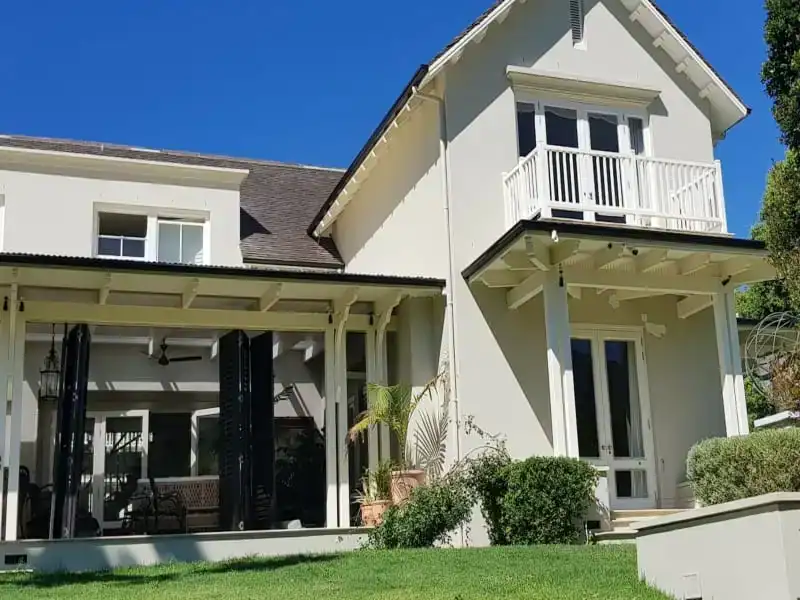
The documented project included Dulux WallClad for applicable prepared main-building walls and Dulux Weatherguard Fine Textured for specified boundary and garden walls.
Dulux Pre-Paint Dampshield also formed part of the documented preparation system on applicable moisture-affected surfaces.
These are recorded project choices, not a universal prescription for damp boundary walls. The appropriate system depends on the wall, moisture exposure, coating condition and current supplier guidance.
View the original Upper Bishopscourt exterior and boundary-wall project evidence
Where there is no effective damp-proof barrier, masonry may absorb moisture from the ground through capillary action. The symptoms can be influenced by construction details, salts, rainfall and surrounding conditions.
A moisture meter reading alone cannot establish that rising damp is the cause. Physical inspection and other evidence are necessary.
A retaining wall may be exposed to moisture and water pressure from soil behind it. Painting the accessible face cannot correct inadequate drainage or waterproofing on the concealed side.
Flat wall caps, cracked coping, unsealed tops and deteriorated horizontal surfaces can admit rainwater into masonry.
Suitable waterproof preparation of exposed horizontal masonry may help prevent water entry from above, subject to the wall’s condition and the chosen specification.
Sprinklers, wet soil, planted beds and poor drainage near a wall can increase local moisture exposure. Those conditions need assessment before specifying paint.
Old coatings, cracks, salt deposits and deteriorated plaster can affect adhesion even where the main moisture source has been partly addressed.
These systems serve different purposes and must not be treated as interchangeable.
Where moisture vapour needs to escape through masonry, a suitably vapour-permeable coating may be appropriate. Its role and limitations should be explained in the written specification.
A breathable coating does not create a missing damp-proof course, repair inadequate drainage or permanently stop continuing water entry.
Wall tops and other suitable horizontal areas may require correctly specified waterproof preparation because they receive direct rainfall and can allow moisture to penetrate from above.
The horizontal waterproofing system and vertical wall coating need to work with the actual construction rather than being selected independently.
A highly water-resistant or impermeable coating is not automatically the best choice for masonry receiving continuing moisture from behind or below.
Trapping moisture in an unsuitable wall assembly can contribute to further coating problems. The substrate and moisture behaviour must guide the recommendation.
There is no single repainting interval for every Bishopscourt boundary wall.
A sound, properly prepared wall with controlled moisture exposure may perform for many years. A wall with continuing ground moisture, damaged coping or deteriorating plaster may require attention sooner.
Visible warning signs include bubbling paint, staining, loose plaster, cracks, recurring discolouration, efflorescence and failed previous repairs.
The decision to repaint should follow inspection of those conditions rather than an arbitrary age threshold.
We assess the visible plaster, previous coatings, cracking, wall tops, ground contact, irrigation exposure, access and possible water-entry routes.
Where moisture enters through inaccessible backfill or there is no effective damp-proof separation, those limitations are recorded. Specialist drainage or structural waterproofing may be required where indicated.
Loose coatings, contamination, biological growth, salt deposits and defective plaster are treated or removed as appropriate for the substrate.
Suitable cracks and repairs are prepared according to their condition. Ongoing structural movement or unstable retaining structures require separate assessment.
Where necessary and suitable, wall caps, parapet tops and similar exposed horizontal masonry receive specified repairs and waterproof preparation.
Coatings are selected according to the prepared surface, moisture exposure, compatibility and the written specification. A single system is not automatically suitable for the main building, perimeter walls and retaining structures.
A retaining wall holds back ground and may be exposed to water pressure, drainage faults or saturated soil behind the visible surface.
If water continues entering from the concealed side, repainting the accessible face cannot guarantee permanent control of moisture-related discolouration or paint detachment.
Significant structural movement, bulging, displacement or drainage concerns require assessment by an appropriately qualified specialist. Painting is not a structural retaining-wall repair.
Bishopscourt properties can have long perimeter walls, landscaped boundaries, sloping gardens, planted areas and limited access to certain wall faces.
Where a property belongs to an estate or has applicable colour and access requirements, these should be confirmed for the specific project. We do not assume that every Bishopscourt property follows the same rules.
Our quotation can identify the included wall faces, preparation, access, surrounding garden protection and scope of finishing.
Wall length and height are only part of the calculation.
Two similar boundary walls may have very different repainting costs because one has sound plaster and effective waterproof detailing while the other has failed coatings, cracks, ground moisture and deteriorated coping.
Other considerations include access from each side, garden protection, cleaning, plaster repairs, specialist coatings and the number of coats required.
We inspect the actual wall and provide a written diagnostic quotation rather than a generic per-metre price without an established scope.
Expected coating performance and a formal workmanship or supplier guarantee are different matters.
Warranty conditions must take account of the actual wall and the work specified. Continuing ground moisture, water pressure, absence of effective damp-proof separation and unresolved structural defects may fall outside the scope of a decorative painting guarantee.
Our documented 2026 project distinguished these limitations from the main building’s coating system.
For suitable parapet waterproofing, failed seals and other water-entry preparation, see Waterproofing Bishopscourt.
For building exteriors, timber and main walls, see Exterior Painters Bishopscourt.
For a broader regional explanation, visit our Southern Suburbs boundary wall painting guide.
Return to Painters Bishopscourt for all local painting services.
If your boundary or garden walls show peeling paint, cracking, ground-moisture staining, failed coping or deteriorated plaster, an inspection can establish suitable preparation and coating options.
Call 082 374 6862 or request a Bishopscourt boundary wall painting quotation.
Real 2026 project evidence covering ground-moisture limitations, main-building and garden-wall coating distinctions.
Understand moisture exposure, preparation and appropriate expectations for perimeter-wall coatings.
When exposed wall tops, cracks and failed joints require treatment before repainting.
Preparation and coating considerations for the property's main-building exterior surfaces.
Ground moisture, salts, previous coating problems or other defects may contribute. The actual wall must be assessed before choosing a repair.
No. Some walls require a suitably breathable system. Coating choice depends on the moisture source and wall construction.
No. Decorative coating on the visible face cannot permanently eliminate continuing water pressure or inadequate drainage behind the wall.
Not necessarily. Ground moisture and missing damp-proof separation may require different written conditions and exclusions.

Copyright 2026 , all rights reserved.