Newlands Village Exterior Project
Original evidence of boundary and lower-wall moisture limitations, damaged plaster and horizontal waterproofing.
BOUNDARY WALL PAINTING NEWLANDS
Painting and preparation of suitable garden, perimeter and boundary walls affected by weathering, cracked plaster, irrigation and continuing moisture exposure.
Our original Newlands Village 2026 project documents why some walls need a different coating approach and realistic maintenance expectations from the main building.
27 years' experience - Genuine local project evidence - Employed painters - Written moisture limitations
The February 2026 exterior project recorded boundary and lower-wall moisture limitations, damaged plaster and vulnerable horizontal masonry.
Soil contact, irrigation and water entering from an inaccessible reverse face can affect coating performance despite suitable preparation.
Decorative paint cannot install a missing damp-proof course or guarantee that moisture will stop migrating through the masonry.
Exposed wall tops and parapets are assessed for suitable crack preparation and horizontal waterproofing before final painting.
Wall construction, existing coating adhesion, plaster condition and moisture exposure influence the system recommended for each property.
Our employed painters work under working-foreman supervision, with diagnostic quotations and realistic written limitations.
Painters Cape Town prepares and paints suitable boundary, garden and perimeter walls in Newlands, with special attention to existing coating condition, plaster cracks, exposed wall tops and continuing moisture.
Boundary walls may have different construction and exposure from the main house. They can receive moisture through rain, irrigation, soil contact and inaccessible backfilled surfaces.
Applying the same paint system to every wall without understanding these conditions can create unrealistic expectations.
Our written diagnostic quotation identifies suitable preparation, proposed products and the limitations of coating a wall where moisture remains active.
There is no single cause of boundary-wall paint failure.
Possible contributors include water entering through cracked horizontal surfaces, soil or garden moisture, weak existing coating, poor adhesion, salts within masonry, unstable plaster and previous incompatible repairs.
In Newlands, winter rain, established gardens and shaded elevations can contribute to prolonged wetting of certain walls, although the actual condition varies from property to property.
The building detail and source of moisture must be considered before recommending treatment.
Our original Newlands Village exterior painting project from 9 to 20 February 2026 provides genuine evidence of moisture-sensitive boundary and lower foundation walls.
The inspection recorded damaged plaster, peeling coating, cracking and moisture-related deterioration across relevant exterior surfaces, with Protimeter readings of 12% to 19%.
The original quotation specifically identified boundary walls lacking effective damp-proof separation and lower wall sections vulnerable to moisture entering from the backfilled side.
These were important limitations because no paint applied to the visible face could permanently correct the construction condition beneath or behind the wall.
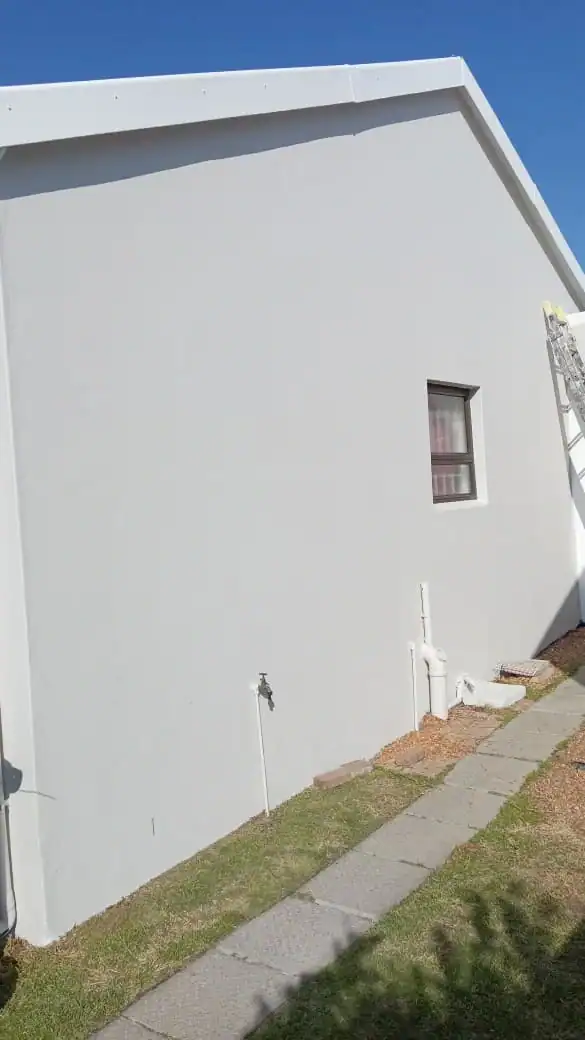
The original photograph shows completed exterior painting, not proof that ground moisture was permanently eliminated.
Read the Newlands Village Exterior Painting Case Study for the recorded defects and preparation.
A damp-proof course or another suitable barrier helps control moisture movement through masonry where correctly incorporated in the construction.
Some freestanding boundary and garden walls do not have effective damp-proof separation from the surrounding ground.
Where moisture enters from below or through the reverse face, coating the accessible painted side cannot create a barrier inside the structure.
This can result in continuing staining, salts, bubbling or peeling despite suitable preparation and the application of an appropriate decorative coating.
Walls next to raised soil, sloping gardens or retained ground can remain exposed to moisture from the concealed side.
If the reverse face cannot be accessed for appropriate structural protection or drainage work, moisture may continue moving through the wall.
A suitable maintenance coating may still be useful, but it should not be described as permanent structural damp proofing.
For the separate assessment of moisture-affected plaster, visit Damp Proofing Newlands.
Horizontal wall tops receive rainfall directly and can allow water into the masonry through cracked or failed surface protection.
In our Newlands Village project, suitable horizontal masonry required separate waterproofing preparation and the recorded two-coat Dulux Rainshield system.
The Fernwood Estate 2026 exterior project also documented relevant wall-top and parapet waterproofing, including a front boundary-wall top and garage parapet.
That Fernwood evidence supports the wall-top repair discussion; it should not be presented as proof that the project involved the same ground-moisture conditions documented at Newlands Village.
Visit Waterproofing Newlands for suitable exposed-masonry and joint repairs.
A main building with appropriate damp protection can have different moisture conditions from an adjacent garden wall in direct contact with soil.
Where the wall is moisture sensitive, the coating specification may need to consider breathability, existing coatings, substrate stability and the manufacturer’s recommendations.
A breathable or moisture-tolerant system may be a practical choice for suitable walls, but it is not an automatic solution for continuing ground moisture.
The correct product depends on the inspected surface and must be described in the written specification.
Coating a damp boundary wall with an inappropriate impermeable finish can sometimes create additional coating-performance problems when moisture continues entering from behind.
The correct treatment is not necessarily to apply a stronger waterproof membrane to every vertical wall.
The wall construction, moisture source, substrate and product limitations should determine the approach. Structural damp-proofing and drainage repairs, where required, are different from decorative painting.
Cracks, weak plaster and peeling paint should be assessed before final coating.
Hairline cracks, wider defects and movement-related joints may require different preparation. Continuing movement can cause ordinary rigid filling to reopen.
See Wall Preparation and Crack Repairs Newlands for those different repair decisions.
We review accessible masonry, existing paint, cracks, plaster condition, wall-top protection, soil contact and relevant garden or irrigation exposure.
Visible symptoms and suitable meter readings are considered with construction details. Continuing moisture from inaccessible areas is identified rather than ignored.
Loose coating, biological contamination, unstable plaster and unsuitable previous repairs receive the appropriate preparation for the affected material.
Applicable non-structural plaster defects and horizontal masonry are prepared using compatible repair and waterproofing systems.
Product choice follows the wall’s construction, preparation, expected moisture behaviour and manufacturer instructions.
Completed painting is checked against the written scope. Where the underlying moisture remains, realistic performance and maintenance limitations are explained.
Mature gardens can keep some walls shaded for much of the day. Irrigation may wet the same wall repeatedly, while nearby soil can remain moist after rainfall.
These conditions may influence the frequency of biological growth, drying times and maintenance requirements.
However, not every garden-facing wall suffers from rising damp or permanent moisture. The particular property needs an actual assessment.
If a wall continues receiving water from soil or inaccessible backfill, future discolouration, blistering and peeling may still occur even after sound preparation.
The Newlands Village project specifically documented this distinction.
For the broader causes of coating deterioration, see Peeling and Bubbling Paint Newlands.
Some Newlands residential developments have private garden and perimeter walls that may be included in an owner’s painting quotation.
Our historic estate records confirm interior, exterior and roof work at Berkeley Square, Riversong and Boshof, but do not identify the precise boundary-wall scope of every assignment.
We therefore do not claim all these historical projects included boundary-wall painting.
For private development properties, visit Painting Homes in Newlands Estates.
Cost depends on wall length, height, existing paint, plaster damage, cracking, surface contamination, access, exposed wall tops, moisture-related preparation, coating choice and labour time.
A sound boundary wall needing a maintenance repaint is different from one requiring extensive stripping, plaster repairs and waterproofing, particularly where continuing ground moisture imposes limitations.
Our quotations explain the proposed work and exclusions instead of relying on a generic square-metre rate.
Read the Detailed Painting Quotations and Specifications Guide.
For moisture-related wall preparation, see Damp Proofing Newlands.
For horizontal water-entry details, see Waterproofing Newlands. For painting the surrounding house, visit Exterior Painters Newlands.
Return to Painters Newlands for our established local painting experience and full range of services.
Painters Cape Town provides direct inspections and written preparation-first quotations for suitable boundary and garden walls, including clear limitations where continuing moisture may affect the coating.
Original local moisture evidence and suitable preparation, repair and coating decisions.
Original evidence of boundary and lower-wall moisture limitations, damaged plaster and horizontal waterproofing.
Understand the differences between moisture-affected plaster preparation and correcting the underlying source.
Learn why exposed wall tops, copings and parapets may need separate crack repairs and waterproofing.
Why recurring ground moisture, weak coating and damaged plaster can contribute to paint failure.
Technical guidance about missing damp-proof barriers, irrigation, reverse-side moisture and practical coating choices.
Private estate-home painting, applicable access requirements and exterior maintenance considerations.
Possible causes include soil moisture, irrigation, backfill, cracks, weak previous coating and inadequate preparation. The wall needs assessment before the coating is specified.
No. A coating applied to the accessible wall face cannot create a damp-proof barrier inside the masonry.
Yes. Our February 2026 Newlands Village project documented boundary and lower foundation-wall moisture limitations alongside exterior preparation.
Suitable prepared horizontal masonry may receive compatible waterproofing where included in the written scope. Continuing moisture from other sources remains a separate issue.
No. Suitability and warranty coverage depend on the actual substrate, coating system, moisture exposure and the supplier's written terms and exclusions.

Copyright 2026 , all rights reserved.