Newlands Village Exterior Project
Original evidence of cracks, failed window seals, exposed wall tops and horizontal waterproofing on an older home.
WATERPROOFING NEWLANDS
Preparation-first waterproofing of suitable exposed masonry, windowsills, parapets, wall tops, cracks and flexible joints in Newlands.
Both original 2026 Newlands exterior projects document water-entry risks, separate waterproofing treatments and the importance of fixing building details before repainting.
27 years' contractor experience - Original local evidence - Written diagnostic quotations - Full-time employed painters
Find the right repair or understand the cause.
Original evidence of cracked windowsills, exposed wall tops, failed opening seals, expansion joints and vulnerable older masonry.
A separate project documents waterproofing of suitable windowsills, a boundary-wall top and the garage parapet.
Both recorded specifications included two coats of Dulux Rainshield on applicable prepared horizontal masonry.
Failed window and door seals and relevant movement joints were addressed with suitable flexible polyurethane sealing systems.
Surface waterproofing cannot replace concealed plumbing repairs, structural waterproofing or a missing damp-proof barrier.
Written diagnostic reports, 27 years' painting-contractor experience, full-time employed painters and working-foreman supervision.
Painters Cape Town provides suitable painting-related waterproofing and preparation for exposed building surfaces in Newlands, including windowsills, parapets, wall tops, applicable cracks and accessible window, door and movement joints.
Our service focuses on identifying the relevant building detail, preparing it correctly, applying a suitable repair or waterproofing system and completing compatible painting where included in the agreed quotation.
Waterproofing is not simply covering damaged plaster with a product labelled waterproof. If rainwater enters through failed seals, cracked masonry or movement joints, those defects should be assessed before decorative finishing.
We provide a written diagnostic quotation describing suitable work and the limitations of accessible surface repairs.
Newlands experiences substantial rainfall, and some homes have shaded façades, mature trees and exposed roofline details. These conditions can increase the importance of functioning drainage, sound waterproofing and suitable drying time.
Rainfall itself does not mean every wall is defective. Problems arise when water can enter through vulnerable masonry or joints, or when repeated wetting affects old coatings and plaster.
A cracked windowsill, deteriorated window seal or damaged parapet top can admit moisture that later appears as bubbling or discolouration on the vertical wall below.
The aim is to identify the appropriate repair rather than assume all damp-looking paint requires the same coating.
Our documented Newlands Village exterior project from 9 to 20 February 2026 included an older private home with numerous plaster cracks, map cracking, failed window and door seals, open expansion joints and vulnerable horizontal masonry.
Protimeter readings ranged from 12% to 19% across relevant assessed areas. These readings were considered alongside visible damage and construction details.
The project scope included suitable windowsills, parapet tops, wall tops, flexible sealing and repairs to cracked masonry, alongside the wider exterior preparation and repainting.
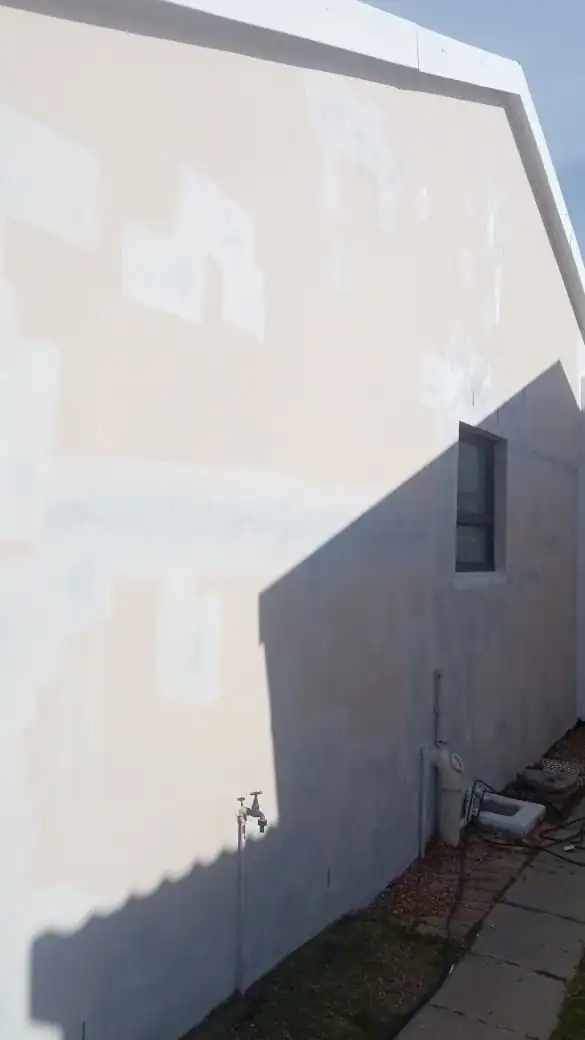
The documented specification included two coats of Dulux Rainshield on applicable prepared horizontal surfaces, with the second coat applied perpendicular to the first.
Read the Newlands Village Exterior Painting Case Study for the complete preparation evidence.
Our second original exterior project was completed at Fernwood Estate from 4 to 11 May 2026.
The original quotation recorded cracked windowsill details, a vulnerable garage parapet, deterioration around openings, expansion-joint problems and damage to the front boundary-wall top.
Protimeter readings ranged from 8% to 22% across relevant inspected areas.
This comparatively modern home required targeted repairs because newer plaster and decorative bands can still develop cracks and water-entry vulnerabilities.
Applicable prepared windowsills, the boundary-wall top and garage parapet received the specified two-coat Rainshield system. Deteriorated perimeter sealing was removed where required and suitable joints resealed with flexible single-pack polyurethane.
Read the Fernwood Estate Exterior Painting Project for the original work scope.
Windowsills are horizontal or sloped building details that receive direct rainfall. Where cracks, coating defects or failed perimeter seals exist, water may enter the adjoining plaster.
The appropriate preparation depends on the substrate and condition. Relevant work may involve removing unsound material, treating cracks, repairing the seal around the opening and applying a compatible waterproofing system to the prepared sill.
Waterproofing the sill alone may not resolve a defect elsewhere in the window installation. The accessible details must be inspected together.
Exposed parapets and wall tops receive rainfall directly and may allow water into the masonry beneath if cracks or protective systems fail.
Both 2026 Newlands projects included horizontal waterproofing to specified areas. At Fernwood Estate, this included the garage parapet; at Newlands Village, the scope covered applicable parapets and other exposed wall tops.
Before waterproofing, it may be necessary to address loose paint, plaster damage, cracking and the condition of the underlying surface.
Not every existing parapet can be permanently repaired with a surface coating. Significant structural or drainage problems may require separate work.
Flexible sealants can deteriorate as they age or move. Once cracked, detached or split, they may allow water behind plaster or exterior paint.
Both original Newlands quotations recorded deteriorated window and door sealing. Suitable joints were prepared and resealed using the specified flexible single-pack polyurethane system.
A properly selected repair must consider adhesion, joint width, movement, surface preparation and product compatibility.
Designed expansion or movement joints are intended to accommodate movement between building elements.
Ordinary rigid plaster filler can crack again where movement continues. Applicable movement joints should therefore receive suitable flexible sealing rather than being treated as static surface cracks.
The wider differences between plaster cracks and movement joints are explained in Wall Preparation and Crack Repairs Newlands.
Waterproofing addresses appropriate water-entry details, such as exposed horizontal surfaces, cracks and accessible joints.
Damp-related wall preparation deals with the condition of masonry or coating already affected by moisture. It may require further investigation, removal of failed paint, substrate preparation and a suitable coating system after relevant water sources have been considered.
A wall may need both types of work, but neither should automatically be prescribed without inspecting the actual problem.
For the separate service, see Damp Proofing Newlands.
Our Newlands Village project explicitly documented boundary and lower foundation walls affected by continuing moisture from soil or backfill.
Waterproofing the accessible painted face cannot create a missing damp-proof course or stop water entering from an inaccessible reverse side of the wall.
These limitations should be explained in the written quotation so owners understand the distinction between surface preparation and permanent correction of the underlying moisture source.
Read the Southern Suburbs Boundary Wall Painting Guide.
We assess accessible windowsills, parapets, wall tops, failed seals, cracks, exposed joints and surrounding masonry relevant to the proposed repair.
Physical defects and suitable moisture readings are considered together. A meter reading alone does not identify where water entered.
Loose coating, damaged previous repairs and deteriorated sealants are prepared according to the surface and agreed scope.
Compatible non-structural crack repairs and suitable flexible joint systems are selected for the actual defects.
Prepared surfaces receive the specified waterproofing system under appropriate drying and curing conditions, where the substrate and product guidance permit.
Relevant adjoining painting is completed using suitable primers and coatings, with the work reviewed against the written specification.
Active roof leaks, failed structural waterproofing systems, concealed plumbing leaks, serious structural movement and inaccessible reverse-face water entry may need specialist assessment or repairs outside a painting-related waterproofing scope.
We do not promise that applying waterproof paint will permanently resolve every building moisture problem.
Cost depends on the length and condition of joints, size of the affected surfaces, access, existing paint removal, crack repairs, waterproofing products, preparation labour and suitable drying conditions.
Resealing a limited window perimeter differs from preparing several parapets, repairing plaster and waterproofing multiple wall tops.
Our written quotation identifies the included surfaces, work methods, product systems, exclusions and underlying limitations.
For more guidance, read the Detailed Painting Quotations and Specifications Guide.
For moisture-affected masonry, see Damp Proofing Newlands. For plaster cracks and moving joints, visit Wall Preparation and Crack Repairs Newlands.
Where these repairs form part of a wider repaint, explore Exterior Painters Newlands.
Return to Painters Newlands for our full local service offering.
Contact Painters Cape Town for an inspection and written diagnostic quotation for suitable painting-related waterproofing and sealing repairs.
Call 082 374 6862 or request a Newlands quotation.
Real project evidence and useful next steps for water-entry and masonry repairs.
Original evidence of cracks, failed window seals, exposed wall tops and horizontal waterproofing on an older home.
Documented window, boundary-wall top and garage parapet waterproofing on a comparatively modern home.
How to assess moisture-affected walls and distinguish coating preparation from repairing the moisture source.
Why different plaster cracks and moving joints require appropriate separate treatments.
Understand the limitations created by missing damp-proof barriers, soil contact and inaccessible moisture.
Preparation and repainting of plaster, timber, fibre cement and suitable waterproofed masonry.
Yes. Cracks and failed seals can admit rainwater into adjacent plaster, with visible coating deterioration appearing lower down the wall.
Yes. Both original 2026 Newlands exterior projects included documented waterproofing and flexible sealing of suitable building details.
Both original projects specified two coats of Dulux Rainshield on applicable prepared horizontal surfaces. Product selection for new work depends on the actual substrate and written specification.
No. A surface coating cannot create a missing damp-proof course or permanently stop continuing moisture from an inaccessible soil-contact face.
No. Readings are interpreted alongside cracks, sealants, building construction and other physical observations.

Copyright 2026 , all rights reserved.