Waterproofing Durbanville
Waterproofing Durbanville Homes Before Repainting
Cracked parapets, exposed windowsills, boundary-wall tops, failed sealants and movement joints can allow rainwater into masonry long before the resulting paint failure becomes obvious.
Our approach is preparation-first: identify the vulnerable building detail, repair cracks and failed joints, waterproof suitable horizontal masonry, then complete the compatible painting system.
Common Durbanville Waterproofing Areas
- Parapet wall tops
- Exterior windowsills
- Boundary and garden-wall tops
- Hairline and wider plaster cracks
- Window and door perimeter seals
- Expansion and movement joints
- Selected damp-affected masonry
- Exterior penetrations and fittings
Waterproofing Is Part of Proper Preparation
We do not treat waterproofing as a quick coating applied over visible cracks. The substrate, crack type, joints, sealants, water-entry route and continuing moisture conditions are considered before the preparation system is specified.
Cracks Repaired First
Hairline cracks, wider plaster cracks and movement joints are treated according to their type before waterproofing and repainting.
Two Rainshield Coats
Where specified, suitable horizontal masonry receives two coats of Dulux Rainshield, with the second coat applied perpendicular to the first.
Windowsills & Parapets
These exposed horizontal surfaces receive direct rainfall and deserve separate inspection from ordinary vertical wall areas.
Boundary-Wall Tops
The exposed wall top can be waterproofed, while continuing moisture from soil, irrigation or the reverse side requires realistic limitations.
Flexible Joint Sealing
Failed window, door and expansion-joint seals are renewed with suitable flexible polyurethane where included in the scope.
Written Diagnostic Scope
Our quotations record relevant cracking, moisture symptoms, sealing defects and the remedial preparation proposed before painting.
27 Years of Experience
Our approach is supported by 27 years of painting and surface-preparation experience.
Full-Time Employed Painters
Preparation and painting are completed by our own employed painters under working-foreman supervision.
Direct Contractor
Painters Cape Town is not a lead-generation company. Clients deal directly with the contractor responsible for the work.
Waterproofing Before Painting in Durbanville
Waterproofing and exterior painting should not be treated as unrelated maintenance tasks.
Where rainwater enters through a cracked windowsill, parapet, wall top, failed seal or movement joint, another decorative coat of paint may improve the appearance temporarily without correcting the vulnerable detail that allowed the moisture into the masonry.
Our Durbanville painting specifications therefore identify relevant waterproofing and sealing requirements during the preparation stage.
For our complete local painting service and documented projects, visit Painters Durbanville.
Why Horizontal Surfaces Are Different From Vertical Walls
Vertical exterior walls generally shed rainfall down their surface.
Horizontal and near-horizontal masonry receives rain directly. Water can remain on windowsills, parapet tops and boundary-wall copings for longer, particularly where the surface is cracked, weathered or poorly protected.
This means that a relatively small defect on an exposed horizontal surface can allow water into a much larger wall area.
The visible paint failure may then appear below the original point of entry rather than directly on the crack itself.
A Real Durbanville Windowsill Waterproofing Example
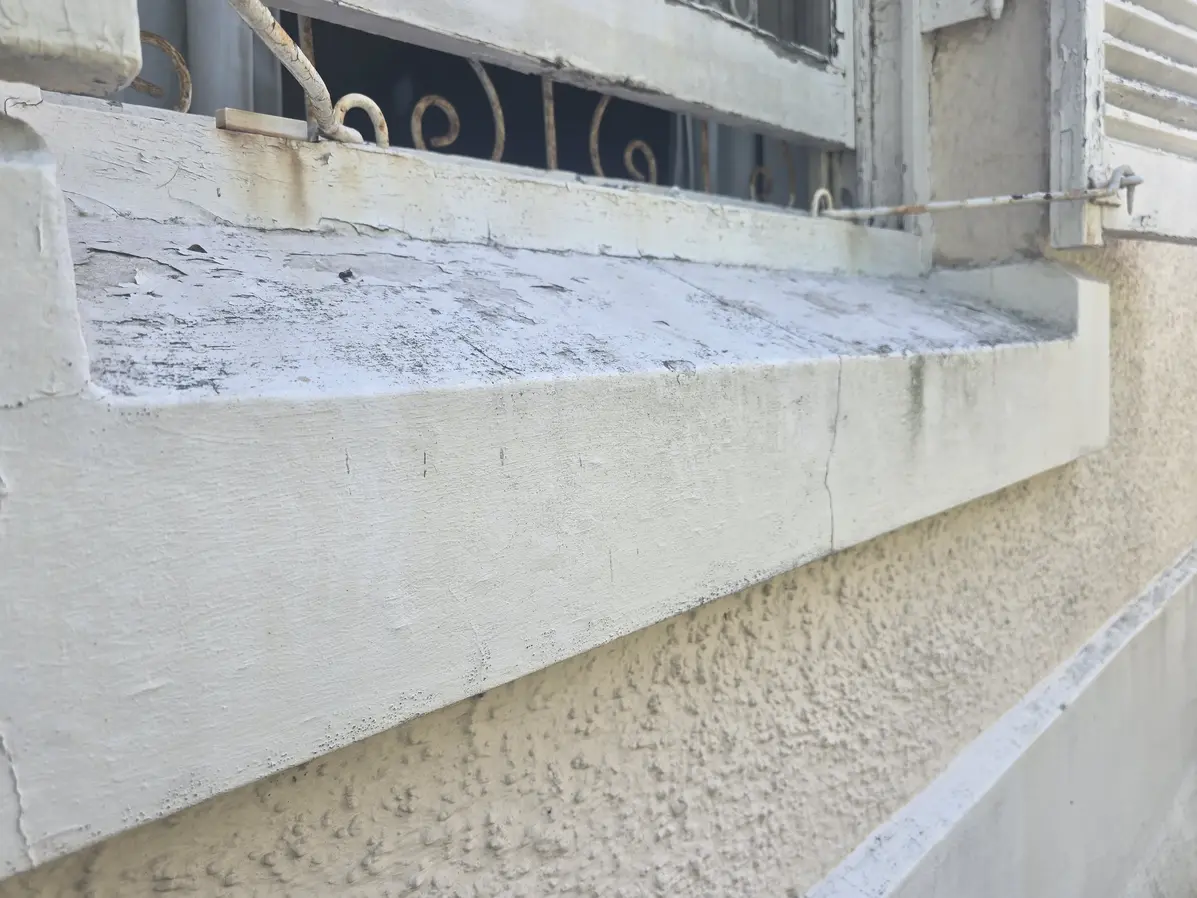
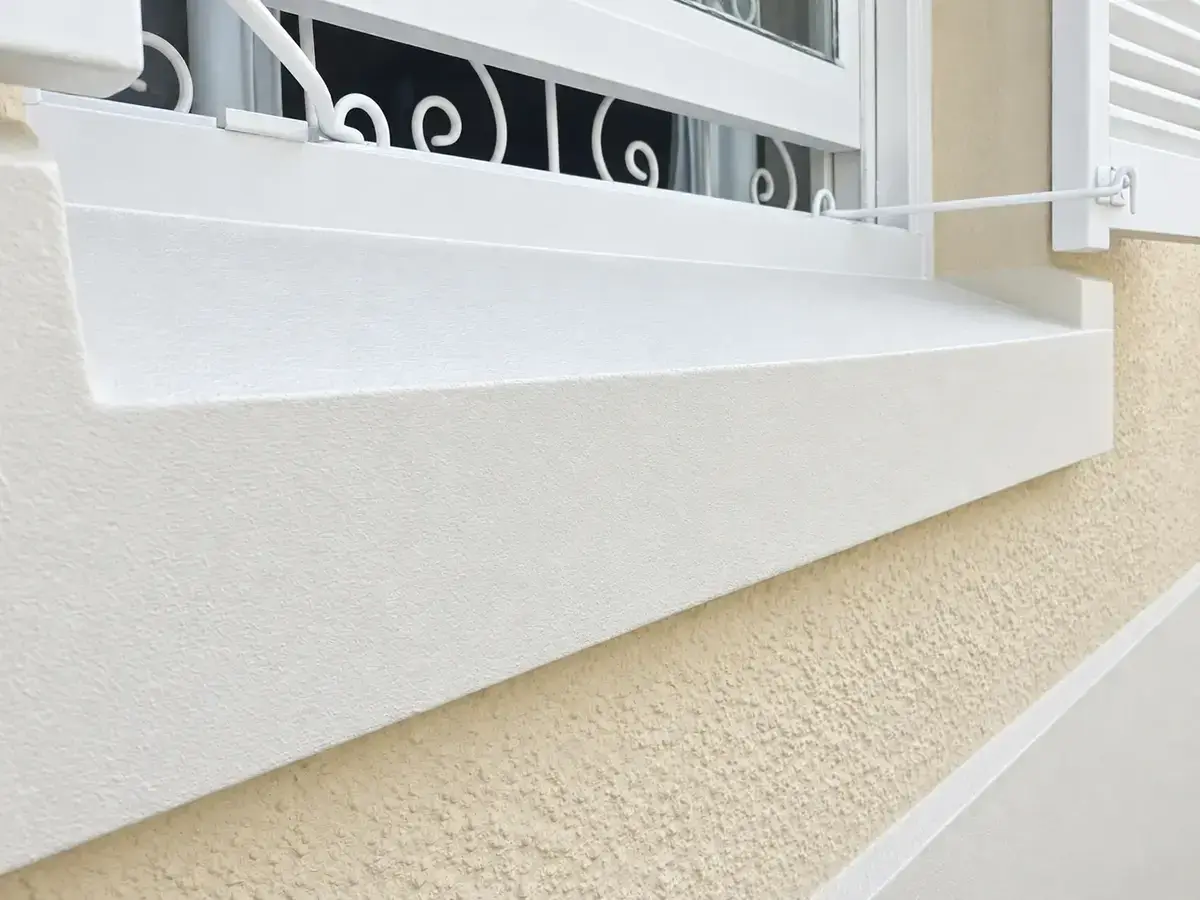
This before-and-after example shows why a windowsill should not be treated like an ordinary vertical wall.
The exposed top had deteriorated and cracked. The correct approach is to prepare the defective surface and cracks first, waterproof the horizontal area according to the written specification and then complete the compatible decorative coating system.
Dulux Rainshield on Parapets, Windowsills and Boundary-Wall Tops
Our written exterior specifications identify suitable horizontal masonry such as:
- parapet wall tops;
- exterior windowsills;
- horizontal toppings of garden walls; and
- horizontal tops or copings of boundary walls.
Once relevant cracks and substrate defects have been prepared, these surfaces can receive the specified waterproof coating system.
Where Dulux Rainshield is specified, we apply two coats, with the second coat applied perpendicular to the first.
The cross-direction application helps provide consistent coverage across the prepared surface before the surrounding decorative coating system is completed.
Waterproofing Starts With Crack Preparation
A waterproof coating should not simply be brushed over every visible crack.
Our specifications distinguish between hairline cracking, wider plaster cracks, map or spiderweb cracking and movement joints because they behave differently and require different preparation.
Hairline Cracks Up to Approximately 1 mm
Suitable hairline cracks receive a preparation system appropriate to their size.
The written specification includes applying an alkali-resistant sealer into the crack and working Dulux Rainshield into the prepared hairline crack with a stiff brush to help fill and bridge the defect.
Where the wall contains multiple fine spiderweb cracks rather than one isolated crack, the affected surface can require a broader flexible waterproofing treatment.
Plaster Cracks of Approximately 1-5 mm
Wider plaster cracks require more substantial preparation.
The documented process includes:
- opening suitable cracks into a V-shaped joint;
- brushing and cleaning the opened crack;
- repairing suitable shallow defects with compatible masonry patching plaster;
- sanding the repair smooth;
- removing preparation dust; and
- applying two Rainshield coats over the repaired zone, with the second coat perpendicular to the first.
This prevents a wider plaster defect from being treated as though it were merely a fine surface hairline.
Map and Spiderweb Cracking
Map cracking creates a network of many fine cracks across an affected wall area.
Although the individual lines may appear small, collectively they can provide multiple routes for moisture entry.
Where specified, the affected area receives suitable priming and flexible Rainshield treatment before the decorative topcoat system is completed.
Expansion Joints Are Designed to Move
An expansion or movement joint should not simply be filled with rigid plaster repair material and painted over.
The joint exists to accommodate movement between building sections.
Our exterior specifications therefore include inspection of existing expansion joints. Deteriorated joint material can be removed and the relevant joint resealed with a suitable single-pack flexible polyurethane sealant.
Using a flexible seal allows the junction to accommodate movement more effectively than a rigid filler.
Window and Door Perimeter Sealing
Failed perimeter seals around windows and doors can allow wind-driven winter rain into the surrounding wall.
The resulting paint failure may show below or beside the opening rather than directly at the failed seal.
Where included in the scope, deteriorated sealant is scraped out or suitably prepared and replaced using flexible polyurethane.
Selected exterior penetrations and wall fittings can also require sealing where gaps may allow water into the substrate.
D’Landen Estate – Cracking, Seals and Horizontal Waterproofing
Our documented D’Landen Estate project recorded readings between 19.7% and 35.9% on the areas inspected.
The exterior scope involved:
- wall cracking;
- failed seals;
- expansion joints;
- moisture-related deterioration; and
- horizontal-surface waterproofing.
This is a good example of why one product should not be expected to solve every moisture symptom. Crack preparation, joint sealing and horizontal waterproofing all form separate parts of the remedial system.
View the D’Landen Estate exterior project
Graanendal Estate – Interior Paint Failure Linked to Exterior Defects
The documented Graanendal Estate project recorded readings between 17.6% and 21.3% on relevant inspected areas.
The interior coating failure was considered together with exterior conditions including:
- cracking;
- failed seals; and
- vulnerable windowsills.
This demonstrates why an interior damp-looking patch should not automatically be treated only from inside the room.
If water is entering through an exterior sill or seal, the external defect may need to be dealt with before the internal coating system can be expected to perform properly.
View the Graanendal Estate damp-paint repair project
Vierlanden – Exterior and Roof Preparation Working Together
Our documented Vierlanden project recorded readings between 12.5% and 16.7%.
The exterior and roof work included cracks, waterproofing, movement joints, timber, Nutec and metalwork.
This illustrates another important point: water-entry risks around a house do not always stop neatly at the roofline or wall line.
Roof, wall, fascia, joint and horizontal-surface conditions can all form part of the same building-envelope inspection.
View the Vierlanden exterior and roof project
Boundary Walls – Waterproof the Top, But Understand the Limitation
Boundary and garden walls are one of the most important waterproofing subjects in Durbanville.
The horizontal top or coping can be directly exposed to winter rain. Cracked or unprotected wall tops can therefore allow moisture into the masonry.
After appropriate crack preparation, a suitable boundary-wall top can receive the specified two-coat Rainshield waterproofing system.
However, the wall may also receive moisture from:
- soil;
- irrigation;
- raised flower beds;
- backfilled ground;
- poor drainage;
- the reverse side of the wall; or
- below the wall where an effective damp-proof barrier is absent or insufficient.
Waterproofing the top cannot permanently stop moisture that continues entering from somewhere else.
Durbanville Hills Boundary-Wall Example
Our documented Durbanville Hills paint-failure case showed deterioration around a boundary-wall coping.
The remedial preparation included bonding preparation on the affected surface followed by Rainshield on the coping before the decorative topcoat system was completed.
The case is useful because it separates two different questions:
- How do we protect the exposed horizontal coping from rain?
- Is there also moisture entering the wall from behind or below?
Those questions should not be confused.
See the case in our Peeling & Bubbling Paint Durbanville guide.
Why Boundary-Wall Warranties Can Be Limited
Main-building walls and freestanding boundary walls can have very different moisture conditions.
Where moisture continuously enters from ground contact, irrigation, backfill or the reverse side, decorative coating performance can remain vulnerable even after the visible face has been professionally prepared.
For this reason, supplier and contractor warranties can exclude or limit moisture-related failure on boundary and perimeter walls where the coating system cannot stop the source of the moisture.
This limitation should be made clear before work starts.
Dulux Dampshield and Moisture-Affected Masonry
Dulux Dampshield can form part of the preparation system on suitable moisture-affected cementitious surfaces where specified.
It should not be presented as a universal cure for every moisture problem.
Dampshield cannot permanently correct:
- an active roof leak;
- a plumbing leak;
- structural movement;
- continuing water entering through an untreated crack;
- failed exterior sealant;
- ground moisture entering a boundary wall; or
- a missing or ineffective damp-proof barrier elsewhere in the structure.
The source or likely route of moisture must therefore still be considered.
Moisture Readings Are Evidence – Not the Whole Diagnosis
A Protimeter reading helps describe the moisture condition of the area tested.
The number alone does not prove whether the source is rising damp, rainwater entry, a failed windowsill, bathroom leak, plumbing problem, roof defect, irrigation or another route.
Our Durbanville projects demonstrate why the physical condition of the surrounding building must be considered together with the reading.
Alkali Attack and Discolouration Below Horizontal Surfaces
Moisture moving through cementitious masonry can carry alkaline salts and contribute to discolouration and degradation of the paint film.
This can become visible below cracked windowsills, parapets and other horizontal areas.
The remedy may therefore involve several stages:
- repair the crack or water-entry route;
- waterproof the exposed horizontal surface;
- prepare moisture-affected wall areas;
- apply the specified primer or specialist preparation; and
- complete the compatible exterior topcoat system.
Waterproofing and Roof Painting Are Not the Same Thing
Durbanville also contains several different roof substrates, including natural slate, tiled roofs and other suitable roof systems.
Roof preparation can include cleaning, fungal treatment, repairs, bonding preparation, corrosion treatment and selected waterproofing where required.
However, roof paint does not repair an active roof leak.
Broken roof components, failed flashings, defective waterproofing details and active leaks require separate repair.
See our Roof Painting Durbanville page for the documented Clara Anna Fontein and Vierlanden roof projects.
Waterproofing vs Damp Proofing
The terms are often used interchangeably, but they can describe different parts of the problem.
Waterproofing generally focuses on preventing liquid water entering through exposed surfaces, cracks, joints and other building details.
Damp-related preparation focuses on masonry already showing elevated moisture or coating deterioration associated with moisture.
A single property may require both.
Waterproofing vs Decorative Painting
A quality exterior paint provides colour, weather resistance and protection to a suitable prepared substrate.
It should not be expected to replace dedicated waterproofing on vulnerable horizontal details.
If a cracked parapet or windowsill is the route by which water enters the masonry, that detail should be treated before the decorative wall coating is relied upon.
Our Durbanville Waterproofing Preparation Process
1. Inspect the Visible Failure
We identify peeling, bubbling, cracking, staining, powdering and other relevant coating deterioration.
2. Inspect Possible Water-Entry Routes
Windowsills, parapets, wall tops, cracks, expansion joints, window seals, rooflines and other relevant building details are considered.
3. Record Moisture Where Relevant
Moisture readings can help describe selected areas but are interpreted together with the physical condition of the property.
4. Repair Cracks According to Their Type
Hairline cracks, wider plaster cracks, map cracking and movement joints do not all receive the same repair method.
5. Reseal Flexible Junctions
Deteriorated window, door and movement-joint seals are renewed where required using the specified flexible sealing system.
6. Waterproof Suitable Horizontal Surfaces
Where specified, parapets, windowsills and suitable boundary or garden-wall tops receive two coats of Dulux Rainshield, with the second coat perpendicular to the first.
7. Treat Suitable Moisture-Affected Masonry
Dampshield or other appropriate preparation is included where the substrate condition and written specification require it.
8. Complete the Painting System
Once the remedial preparation is complete and the substrate is suitable for coating, the specified primer and decorative exterior finishing system is applied.
How Much Does Waterproofing in Durbanville Cost?
There is no honest universal waterproofing price because the required work depends on the actual defects.
Cost can be influenced by:
- number and size of cracks;
- extent of parapet waterproofing;
- number and size of windowsills;
- length of boundary walls;
- failed sealant requiring replacement;
- number of expansion joints;
- access and working height;
- damaged plaster;
- moisture-related preparation; and
- the coating system required after the waterproofing work.
For genuine local quotation evidence, see our House Painting Costs Durbanville guide.
Peeling or Bubbling Paint in Durbanville?
Waterproofing defects are only one possible reason paint can fail.
Our Peeling & Bubbling Paint Durbanville guide documents real cases involving moisture symptoms, windowsills, boundary-wall copings and interior coating deterioration.
Waterproofing Homes in Durbanville Estates
Large estate homes can include extensive parapets, windowsills, garden walls, balconies, roof junctions and perimeter walls.
These details can increase the waterproofing and preparation requirements before repainting.
Our Painting Homes in Durbanville Estates guide covers estate access, planning and project considerations in more detail.
Waterproofing Durbanville and the Northern Suburbs
Durbanville forms part of our wider Painters Cape Town Northern Suburbs authority cluster.
Our documented regional work includes multiple properties where cracking, failed seals, horizontal waterproofing, damp-related preparation and boundary-wall conditions formed part of the painting scope.
Request a Durbanville Waterproofing Inspection
If paint is repeatedly peeling below windowsills, parapets, boundary walls or other exposed masonry, repainting the visible damage alone may not address the underlying water-entry route.
We can inspect the relevant surfaces, record visible defects, define the remedial preparation within our scope and provide a written waterproofing and painting quotation.
Call 082 374 6862 or visit our contact page to arrange an inspection.
Helpful Durbanville Painting Guides
Waterproofing is often only one part of a wider painting or repair project. These Durbanville guides cover coating failure, boundary walls, roofs, costs, estate homes and multi-unit complexes.
Painters Durbanville
View our complete Durbanville painting service, documented local projects and preparation-first approach.
Why Paint Fails in Durbanville
See real Vygeboom, Durbanville Hills and Aurora examples involving moisture, peeling, bubbling and coating deterioration.
Boundary Wall Painting Durbanville
Understand coping waterproofing, cracks, irrigation, backfill, ground moisture and realistic boundary-wall warranty limitations.
Roof Painting Durbanville
See genuine Clara Anna Fontein and Vierlanden projects and why roof preparation depends on the actual substrate and condition.
House Painting Costs Durbanville
See genuine local quotation evidence and how repairs, waterproofing, access and preparation affect painting costs.
Painting Homes in Durbanville Estates
Learn about estate access, security procedures, approved colours and project planning for individual homes inside managed estates.
Body Corporate & Complex Painting
See our completed 14-townhouse D’Landen Estate programme and how multi-unit repainting, waterproofing and repairs were coordinated.
Northern Suburbs Painters
Explore our wider painting coverage and documented projects across Durbanville, Bellville, Plattekloof, Brackenfell and Kuils River.
Waterproofing Durbanville FAQs
Which horizontal surfaces do you waterproof in Durbanville?
Where appropriate and included in the written scope, horizontal masonry can include parapet tops, exterior windowsills and the horizontal tops or copings of boundary and garden walls.
How many coats of Dulux Rainshield do you apply?
Where the Rainshield waterproofing system is specified, two coats are applied to the prepared surface, with the second coat applied perpendicular to the first.
Do you repair cracks before waterproofing?
Yes. Crack preparation is completed first. Hairline cracks, wider plaster cracks, map cracking and movement joints require different preparation methods.
How do you treat hairline cracks?
Suitable hairline cracks up to approximately 1 mm receive the specified sealing preparation, followed by Dulux Rainshield worked into the crack to help fill and bridge it.
How do you repair plaster cracks between approximately 1 and 5 mm?
Suitable wider plaster cracks are opened into a V-shaped joint, cleaned and repaired with compatible masonry patching plaster where appropriate. Once prepared and smooth, two Rainshield coats are applied over the repaired zone, with the second coat perpendicular to the first.
What is map or spiderweb cracking?
Map cracking is a network of fine cracks across a plastered surface. Where specified, the wider affected area receives suitable preparation and flexible waterproofing rather than treating only one isolated crack.
Do you waterproof windowsills?
Yes. Suitable exposed masonry windowsills can be waterproofed because they receive direct rainfall and may allow water into the wall when cracks or previous coatings fail.
Do you waterproof parapet walls?
The exposed horizontal top of a suitable parapet can receive the specified Rainshield waterproofing treatment after cracks and defects have been prepared.
Do you waterproof boundary walls?
The horizontal top or coping of a suitable boundary or garden wall can be waterproofed. This does not permanently stop moisture that continues entering from soil, irrigation, backfill, the reverse side or below the wall.
Why can boundary-wall paint still fail after waterproofing the top?
Boundary walls can have continuing moisture moving through the masonry from below or behind. Waterproofing the exposed top protects that surface but cannot create a missing damp-proof barrier elsewhere in the wall.
Do you reseal windows and doors?
Where included in the scope, deteriorated perimeter sealant around windows and doors can be removed or prepared and renewed with suitable flexible polyurethane.
Do you reseal expansion joints?
Yes, where required. Expansion joints are movement points and should normally receive an appropriate flexible seal rather than rigid plaster filler.
Does Dulux Dampshield stop all moisture?
No. Dampshield can form part of a suitable preparation system on moisture-affected masonry, but it cannot permanently stop an active leak, structural defect, continuing ground moisture or water entering through an untreated route.
Does a moisture reading prove rising damp?
No. A moisture reading records the condition of the tested area but does not by itself determine the source of the moisture.
Does roof paint repair an active roof leak?
No. Roof paint protects a suitable prepared roof surface. Broken roof components, defective flashing and active leaks require separate repair.
Do you use subcontracted waterproofing and painting teams?
No. Our preparation and painting work is completed by our full-time employed painters under working-foreman supervision.
How do I request a Durbanville waterproofing quotation?
Call 082 374 6862 or contact Painters Cape Town to arrange an inspection and written quotation.

Copyright 2026 , all rights reserved.