Boundary Wall Painting Durbanville
Boundary Wall Painting in Durbanville: Damp, Cracks & Waterproofing
Boundary and garden walls often fail differently from the main house. They can receive rain through cracked copings, moisture from soil and irrigation, water from planted beds and continuing moisture from behind or below the wall.
Our approach separates crack repair, coping waterproofing, damp-related preparation and the decorative wall coating so that each part of the problem is treated realistically.
Why Boundary Walls Fail
- Cracked or weathered wall copings
- Rain entering through horizontal tops
- Moisture from soil or irrigation
- Backfilled or planted areas
- Cracks through plaster or masonry
- Chalking and weak previous coatings
- Alkaline moisture-related discolouration
- Missing or ineffective damp-proof separation
Boundary Walls Need Different Expectations
A freshly painted boundary wall can still fail if moisture continues entering from soil, irrigation, backfill or behind the masonry. Our quotations distinguish what the coating system can protect from conditions outside its control.
Coping Waterproofing
Suitable horizontal wall tops can receive dedicated Rainshield waterproofing after cracks and defects are prepared.
Cracks Repaired First
Hairline cracking, wider plaster cracks and structural or movement-related defects are not simply hidden beneath new paint.
Breathable Wall Coatings
Boundary-wall faces can require a coating system selected specifically for exterior exposure and moisture conditions.
Moisture Limitations Explained
We do not promise that decorative paint can permanently stop moisture migrating through masonry from behind or below.
Dampshield Where Appropriate
Selected damp-affected masonry can receive specialist preparation where specified, without presenting it as a cure for every moisture source.
Real Durbanville Evidence
The page uses genuine before-and-after boundary-wall examples rather than stock imagery or generic claims.
27 Years of Experience
Our recommendations are supported by 27 years of painting and surface-preparation experience.
Full-Time Employed Painters
Preparation and painting are completed by our own employed painters under working-foreman supervision.
Why Boundary Walls in Durbanville Need Their Own Painting Strategy
A boundary wall is not simply a smaller version of an exterior house wall.
Freestanding garden and perimeter walls can receive moisture from several directions at the same time. Rain falls directly onto the coping or horizontal top, while soil, irrigation, planted beds and backfilled areas can introduce moisture from behind or below.
This makes boundary walls particularly vulnerable to recurring discolouration, bubbling, peeling, cracking and coating deterioration.
Our main Painters Durbanville page covers our broader local painting service. This specialist page focuses specifically on the preparation, waterproofing and realistic coating expectations for boundary and garden walls.
The Three Main Moisture Routes Through a Boundary Wall
1. Rain Entering Through the Top
A horizontal coping or wall top receives rainfall directly.
If the coping is cracked, porous or inadequately waterproofed, water can enter from above and migrate further down the masonry.
This is a defect that can often be addressed by repairing the relevant cracks and applying a suitable waterproof coating system to the prepared horizontal surface.
2. Moisture Entering From Behind
Boundary walls next to raised gardens, planted beds, backfill or irrigated areas can receive continuing moisture through the rear face.
Painting the visible side cannot permanently stop water that continues entering from the opposite side.
3. Moisture Moving Up From Below
Where a wall has no effective damp-proof barrier separating the masonry from ground moisture, moisture can continue migrating upward through the wall.
A decorative coating can improve and protect the accessible face, but it cannot create a missing damp-proof course inside the structure.
Real Durbanville Boundary Wall Example – Cracked Coping and Wall Corner
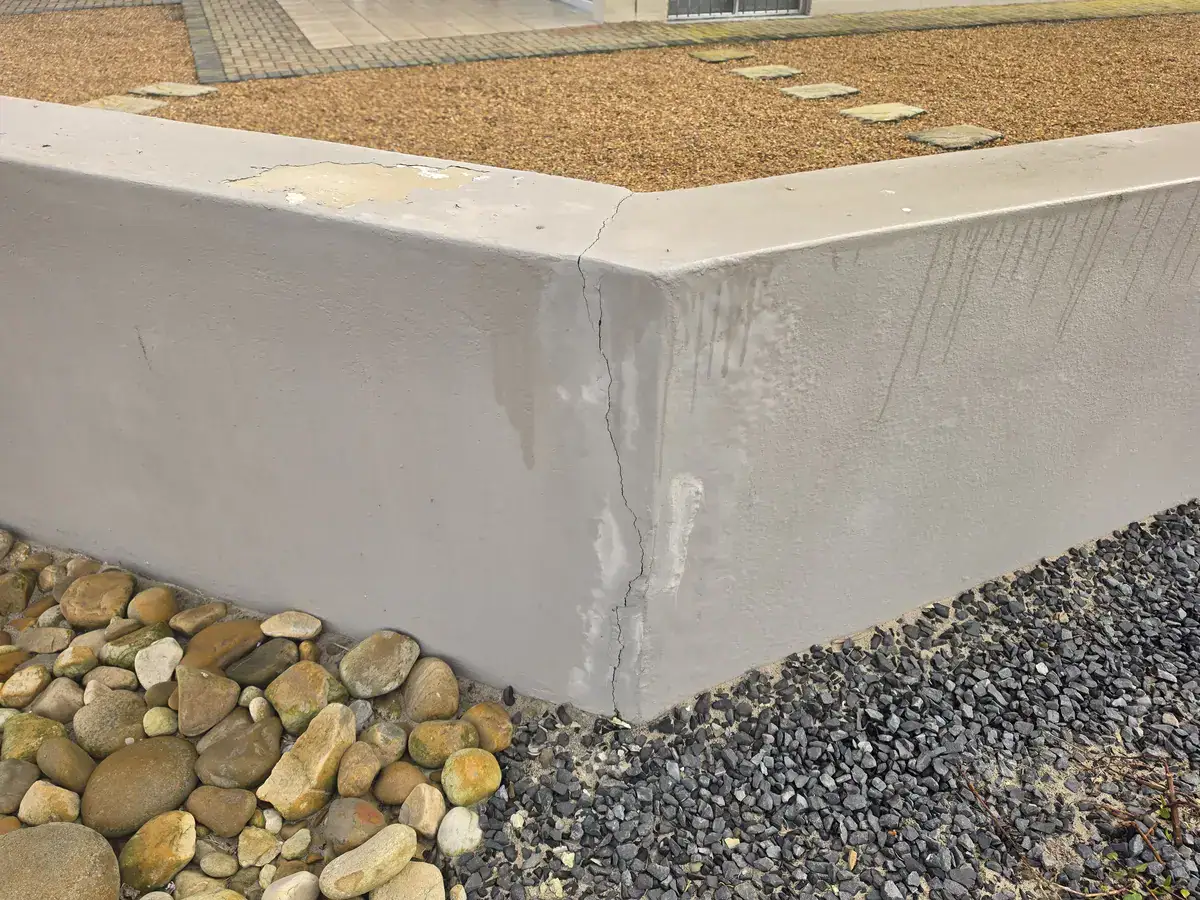
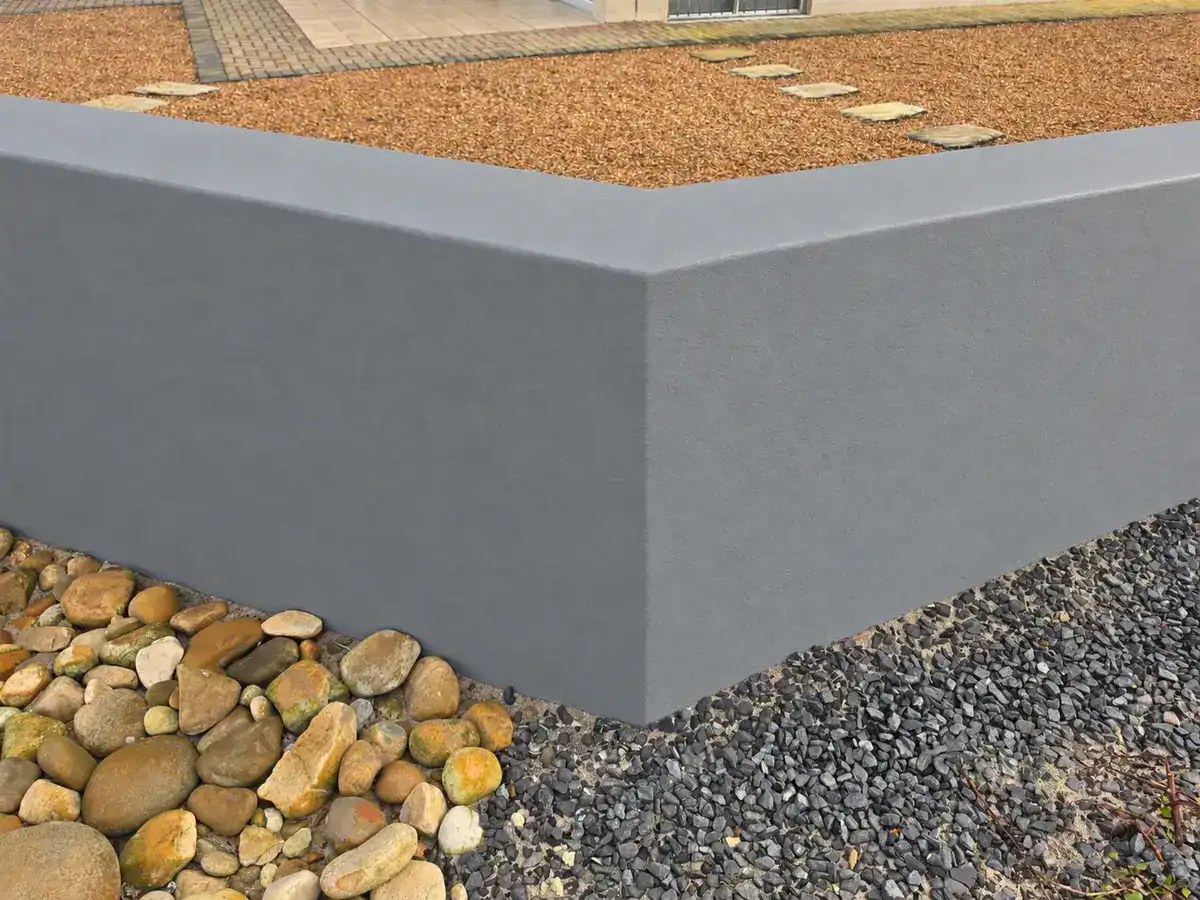
The before image shows why the visible wall face and the exposed coping both need attention.
The cracking extends through the corner and into the horizontal top. Painting only the vertical wall face would leave the vulnerable coping and crack system untreated.
The completed result shows the wall after repairs, preparation and repainting.
Boundary-Wall Copings and Horizontal Tops
The coping is the exposed horizontal or near-horizontal surface at the top of the wall.
It receives far more direct rainfall than the vertical wall face and can become an important source of moisture ingress.
Where appropriate and included in the written specification, the coping is first inspected and relevant cracks or surface defects are repaired.
The prepared horizontal surface can then receive the specified waterproofing system.
Two Coats of Dulux Rainshield on Suitable Wall Tops
Our written specifications include two coats of Dulux Rainshield on suitable prepared horizontal masonry such as boundary and garden-wall toppings.
The second coat is applied perpendicular to the first.
This waterproofing system is applied to the exposed horizontal area after the required crack preparation rather than simply being used to conceal damaged masonry.
For the wider system used on windowsills, parapets and other exposed masonry, see our Waterproofing Durbanville guide.
Durbanville Hills Boundary-Wall Failure
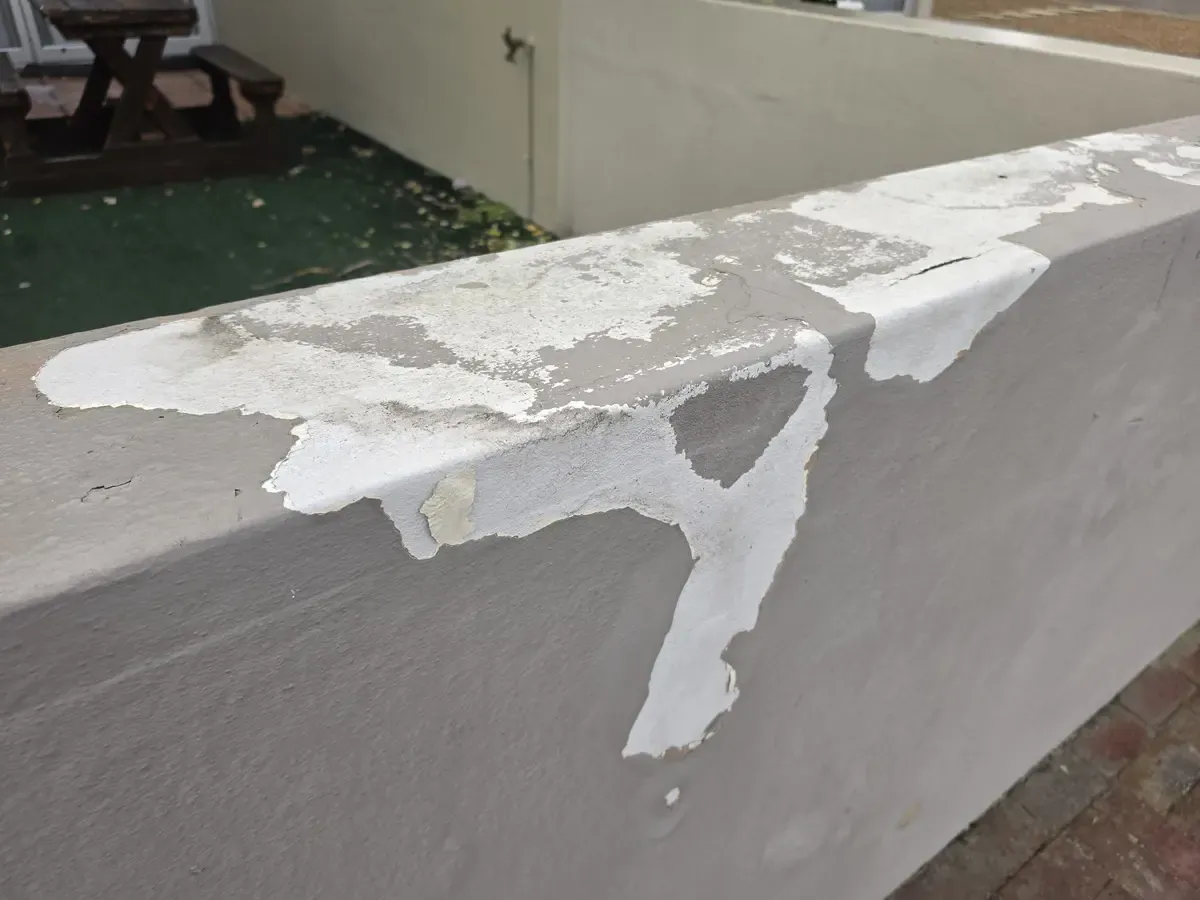
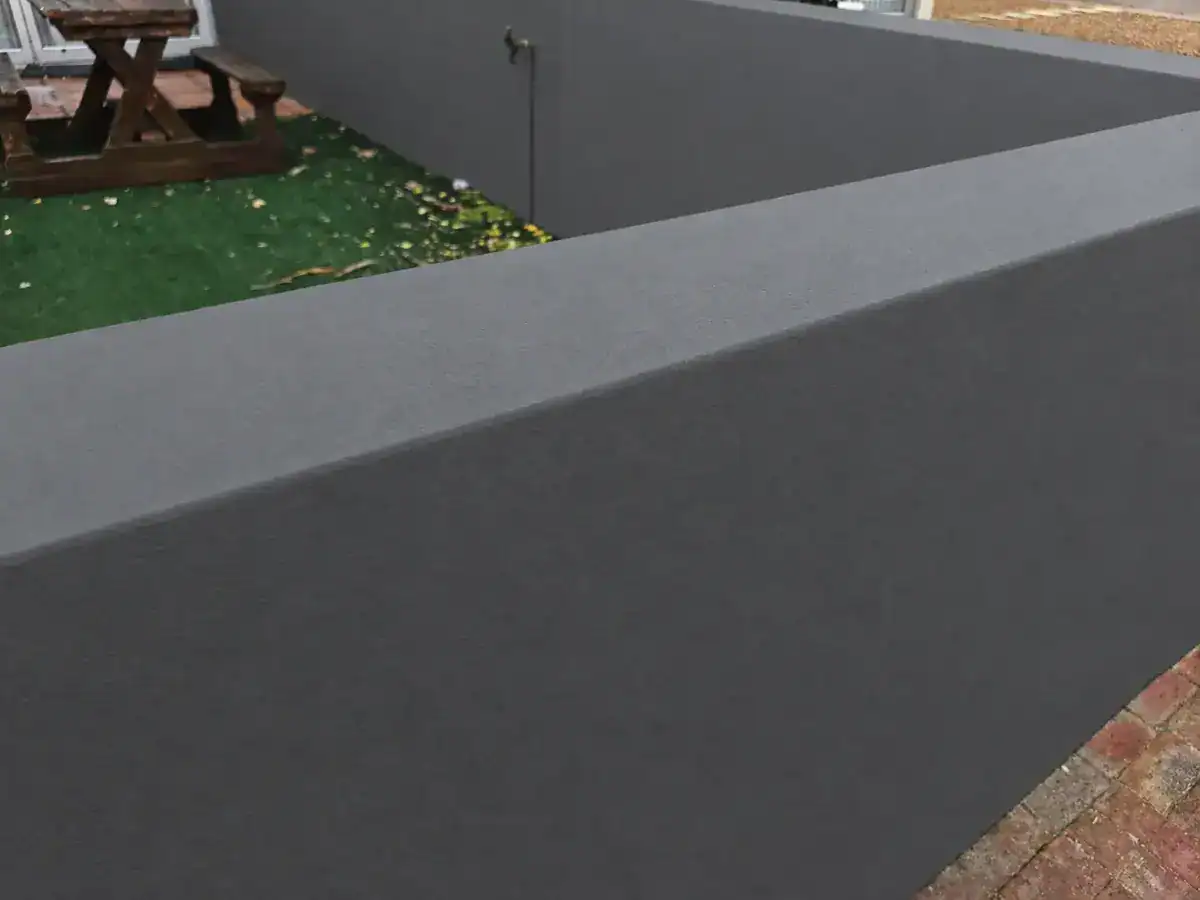
Our documented Durbanville Hills case provides a particularly useful example of coping-related coating failure.
The remedial preparation included Dulux Bonding Liquid on the relevant prepared surface, followed by Dulux Rainshield on the coping before the decorative wall coating was completed.
This case demonstrates why the horizontal top and the vertical wall face should be treated as different parts of the system.
The same project is also discussed in our Peeling & Bubbling Paint Durbanville guide.
Why Bonding Liquid May Be Required
Older boundary-wall coatings can become powdery or chalky as they weather.
A premium new paint cannot bond properly if the substrate underneath remains friable and unstable.
After cleaning and removal of loose material, a penetrating bonding or stabilising primer such as Dulux Bonding Liquid can be specified where appropriate to consolidate the remaining prepared surface before subsequent coatings are applied.
The need for bonding preparation depends on the actual condition of the wall rather than being added automatically to every project.
Cracks in Boundary and Garden Walls
Cracks are important because they can allow direct water entry and may also indicate movement within the wall.
Not all cracks should be treated in the same way.
Fine surface cracks may require flexible treatment, while suitable wider plaster cracks can require opening, cleaning and masonry repair before waterproofing and finishing coats are applied.
A crack that continues moving may behave differently from a stable plaster defect.
Where movement is suspected, simply concealing the crack beneath a decorative coating is unlikely to provide a durable repair.
Map or Spiderweb Cracking
Boundary walls can also develop multiple fine cracks across broad areas of plaster.
This map or spiderweb cracking may allow rainwater through numerous small defects rather than one obvious large opening.
Where suitable, affected areas can require broader flexible preparation rather than treating only the most visible crack.
The Vertical Wall Face Needs a Different Coating From the Coping
A horizontal waterproof coating and a vertical decorative wall finish perform different jobs.
The coping is exposed directly to standing or slowly draining rainwater and may receive dedicated Rainshield waterproofing.
The vertical face requires an exterior coating system suited to the prepared wall and its moisture conditions.
In documented specifications, boundary and garden-wall faces can receive a breathable exterior coating such as Dulux Weatherguard Ultra Smooth where appropriate.
This distinction is useful because applying the same product indiscriminately to every surface does not take account of how those surfaces are exposed.
Why Breathability Matters on Some Boundary Walls
If moisture enters a wall from the ground or reverse side, a completely different moisture condition exists from rain landing on the coping.
The coating system on the accessible wall face must therefore be selected with the substrate and moisture condition in mind.
Even an appropriate breathable coating does not stop the underlying moisture source. It provides the most suitable practical coating treatment for the accessible face while allowing realistic expectations around future performance.
Dulux Dampshield on Selected Boundary-Wall Areas
Dulux Dampshield can form part of the preparation system where identified damp-affected masonry is suitable for the product and the written specification requires it.
It should not be presented as a universal cure for continuing moisture.
Dampshield cannot permanently correct:
- a missing damp-proof course;
- ground moisture continuously entering the wall;
- irrigation soaking the reverse side;
- water trapped behind backfilled walls;
- structural movement;
- an untreated coping defect; or
- another active water-entry route.
Garden Beds and Irrigation
Planted beds are a common reason boundary and garden walls behave differently from main-building walls.
Soil can remain in direct contact with one side of the masonry, while regular irrigation repeatedly introduces water into the same area.
The painted face on the opposite side may then develop:
- dark or discoloured patches;
- blistering;
- peeling;
- powdery deposits;
- alkaline-type staining; and
- recurring coating deterioration.
Painting the visible face cannot permanently prevent these symptoms if water continues entering from behind.
Backfilled Boundary and Foundation Walls
Some walls retain or sit beside backfilled ground.
If no effective waterproofing or damp-proof separation exists on the concealed side, moisture can migrate through the masonry towards the painted face.
The accessible surface can still be professionally prepared and coated, but future moisture-related failure caused by continuing migration should be excluded from unrealistic guarantees.
Alkali-Related Discolouration
Moisture moving through cementitious masonry can carry alkaline salts towards the surface.
This can contribute to pale deposits, staining, discolouration and breakdown of the coating film.
Where this occurs, the visible paint symptom is not necessarily the original cause of the problem.
The moisture route must be considered together with the substrate condition and existing coatings.
Mould and Biological Growth
Boundary walls that remain shaded or damp can also develop mould, algae or fungal contamination.
These biological deposits should be treated and removed during preparation rather than simply painted over.
Areas next to dense planting, irrigation or shaded garden zones deserve particular attention.
Why Boundary-Wall Warranties Are Often Different
This is one of the most important issues for property owners to understand.
A main-building wall with suitable damp-proof protection is not necessarily exposed to the same moisture conditions as a freestanding boundary wall.
Where moisture can continue entering a boundary wall from soil, irrigation, backfill, planted areas or below the masonry, no decorative coating can honestly guarantee that moisture-related bubbling or discolouration will never return.
For this reason, supplier specifications and contractor warranties can exclude boundary walls or moisture-related failures caused by continuing conditions outside the coating system.
What We Can Guarantee – and What We Cannot
We remain responsible for workmanship and application within the agreed painting scope.
That can include:
- correct surface preparation;
- application of the specified primers;
- specified crack repairs;
- Rainshield application to included horizontal surfaces;
- proper application of finishing coats; and
- workmanship by our employed painting team.
What cannot reasonably be guaranteed by paint alone includes:
- continuing moisture from behind a wall;
- ground moisture where no effective damp-proof barrier exists;
- structural movement;
- new cracks caused by future movement;
- irrigation continuously wetting masonry; or
- water entering from an inaccessible untreated side.
Boundary Walls in Durbanville Estates
Large estate properties can contain extensive perimeter and garden walls.
These walls may also form prominent architectural elements visible from roads, neighbouring properties and landscaped gardens, making both appearance and durability important.
Estate projects can additionally involve colour rules, access procedures and restrictions on working hours.
See our Painting Homes in Durbanville Estates guide for wider estate-project planning.
How Much Does Boundary Wall Painting in Durbanville Cost?
Boundary-wall painting cannot be priced accurately from wall length alone.
The final quotation may be influenced by:
- wall height and total surface area;
- condition of the coping;
- extent of cracking;
- amount of loose or chalky paint;
- pressure cleaning requirements;
- fungal treatment;
- Bonding Liquid or other primer requirements;
- Rainshield waterproofing;
- Dampshield preparation;
- access behind vegetation;
- soil or garden contact; and
- the specified wall finishing system.
Our House Painting Costs Durbanville guide explains why preparation and remedial work have such a significant effect on painting quotations.
Our Boundary-Wall Painting Process
1. Inspect the Wall and Surroundings
We consider the wall face, coping, cracks, garden levels, irrigation, planted beds and other visible factors that may affect coating performance.
2. Assess Existing Coatings
Loose, flaking, chalky and unstable coatings are identified before preparation begins.
3. Clean and Treat Contamination
Walls are cleaned according to the condition of the surface, with fungal treatment included where required.
4. Repair Suitable Cracks
Relevant plaster defects are prepared according to their type rather than simply painted over.
5. Waterproof the Coping Where Specified
Suitable prepared wall tops receive the specified Rainshield system, including two coats with the second applied perpendicular to the first.
6. Stabilise Weak Surfaces
Bonding Liquid or another compatible primer is used where the prepared substrate requires stabilisation.
7. Treat Suitable Damp-Affected Areas
Dampshield can be included where appropriate and specified, with moisture limitations recorded where continuing water migration remains outside the coating system’s control.
8. Apply the Boundary-Wall Finishing System
The prepared vertical wall face receives the specified exterior wall coating appropriate to the project.
Boundary Wall Painting vs Waterproofing
The two services overlap but are not identical.
Boundary wall painting covers preparation and finishing of the wall face.
Waterproofing focuses more specifically on exposed horizontal surfaces, cracks, joints and other details through which liquid water may enter.
Many boundary-wall projects require both.
Boundary Walls and Peeling Paint
If your wall repeatedly bubbles, peels or becomes discoloured, the problem may involve more than ordinary weathering.
Our Peeling & Bubbling Paint Durbanville page explains the diagnostic side of coating failure using real local cases.
Boundary Wall Painting and Waterproofing Durbanville
For detailed crack, sill, parapet and horizontal-surface waterproofing specifications, see Waterproofing Durbanville.
For our complete local painting service, visit Painters Durbanville.
Request a Durbanville Boundary-Wall Painting Inspection
If your boundary or garden wall is cracked, peeling, bubbling, discoloured or repeatedly failing, the first step is to determine what can realistically be addressed through preparation, waterproofing and painting.
We can inspect the visible wall condition, define the remedial preparation within our scope and provide a written quotation with appropriate moisture and warranty limitations.
Call 082 374 6862 or visit our contact page to arrange an inspection.
Helpful Durbanville Painting Guides
Boundary-wall problems often overlap with waterproofing, coating failure, estate maintenance and wider exterior repainting. These Durbanville guides provide more detail on the related preparation and painting systems.
Painters Durbanville
View our complete Durbanville painting service, documented local projects and preparation-first approach.
Waterproofing Durbanville
See how parapets, windowsills, cracks, horizontal wall tops and failed seals are prepared and waterproofed before repainting.
Why Paint Fails in Durbanville
See real local examples involving peeling paint, damp symptoms, cracked copings, failed seals and moisture-related coating deterioration.
Body Corporate & Complex Painting
See how boundary walls, waterproofing and repeated exterior defects formed part of our completed 14-townhouse D’Landen Estate programme.
House Painting Costs Durbanville
Understand how crack repairs, coping waterproofing, surface stabilisation and damp-related preparation can affect a painting quotation.
Painting Homes in Durbanville Estates
Learn about estate access, approved colours, security requirements and exterior maintenance planning for homes inside managed estates.
Roof Painting Durbanville
See genuine Clara Anna Fontein and Vierlanden roof projects and why roof coatings require substrate-specific preparation.
Northern Suburbs Painters
Explore our wider documented work across Durbanville, Bellville, Plattekloof, Brackenfell and Kuils River.
Boundary Wall Painting Durbanville FAQs
Why does paint peel on boundary walls?
Boundary-wall paint can peel because of moisture entering through cracked copings, ground contact, irrigation, backfilled soil, poor drainage, weak previous coatings, cracking or inadequate preparation.
Why are boundary walls different from house walls?
Boundary walls can receive moisture from several directions and may not have the same damp-proof protection as the main building. They can therefore require different preparation, coatings and warranty expectations.
Do you waterproof the top of boundary walls?
Yes, where appropriate and included in the specification. Suitable prepared wall tops or copings can receive two coats of Dulux Rainshield, with the second coat applied perpendicular to the first.
Do cracks get repaired before boundary-wall painting?
Yes. Relevant cracks and damaged plaster are prepared before the finishing system is applied. The repair method depends on the type and size of the defect.
Can you stop rising damp in a boundary wall with paint?
No decorative coating can create a missing damp-proof barrier. Where moisture continues entering from below or behind the wall, future moisture-related symptoms may remain possible.
Can irrigation cause boundary-wall paint failure?
Yes. Repeated irrigation or permanently damp planted beds can introduce moisture into masonry from the reverse side, which can contribute to staining, bubbling and peeling on the painted face.
Can raised garden beds cause damp boundary walls?
Yes. Where soil or backfill is in contact with the reverse side of the wall and no effective waterproof separation exists, moisture can migrate through the masonry towards the painted surface.
What is boundary-wall coping waterproofing?
The coping is the exposed top surface of the wall. Where suitable, cracks and defects are prepared before a dedicated waterproof coating such as Dulux Rainshield is applied.
Why is Bonding Liquid sometimes used?
Bonding Liquid can be specified where prepared surfaces remain powdery or friable and require stabilisation before subsequent coatings are applied.
Do you use Dampshield on boundary walls?
Dulux Dampshield can form part of the preparation system on selected suitable damp-affected areas, but it cannot permanently stop moisture that continues entering from an untreated source.
What paint do you use on boundary-wall faces?
The coating system depends on the substrate and project specification. Suitable boundary and garden walls can receive a breathable exterior coating such as Dulux Weatherguard Ultra Smooth where specified.
Are boundary walls covered by the same warranty as the main house?
Not necessarily. Moisture-related failure caused by continuing ground moisture, irrigation, backfill or reverse-side water entry can be excluded or limited because these conditions are outside the control of the decorative coating.
Does waterproofing the coping guarantee the wall will stay dry?
No. Coping waterproofing helps prevent water entering from the top, but it cannot stop moisture entering from soil, irrigation, backfill or below the wall.
Do you remove mould before painting boundary walls?
Where fungal or biological contamination is present, it should be treated and cleaned during preparation rather than painted over.
Do you use subcontracted painters?
No. Preparation and painting are completed by our full-time employed painters under working-foreman supervision.
How do I request a boundary-wall painting quotation in Durbanville?
Call 082 374 6862 or contact Painters Cape Town to arrange an inspection and written quotation.

Copyright 2026 , all rights reserved.