Why Exterior Paint Peels and Bubbles
Learn how water entry, weak plaster, old paint and incompatible preparation contribute to recurring failure.
Documented Bishopscourt Painting Project
A genuine 2026 exterior restoration where readings reached 33.5% and the investigation identified water entering through roof-garden irrigation fixings, unsealed ivy-support wall plugs, cracks, failed perimeter seals and vulnerable horizontal masonry.
The deterioration was extensive enough for a Dulux paint specialist to inspect the property and provide the technical coating specification used for the remedial project.
This project demonstrates why moisture-related coating failure should be traced back to the building details allowing water into the substrate rather than treated only as a paint problem.
Measured substrate conditions were considered together with identifiable water-entry routes rather than treated as an automatic diagnosis of one type of damp.
The project documentation records a Dulux specialist inspection and supplier painting specification because of the extent of the deterioration.
Roof-garden irrigation clamps and ivy-support wall plugs created small but important penetrations through which water was entering the exterior masonry.
Boundary and lower foundation walls exposed to continuing ground or backfill moisture were explicitly separated from ordinary main-building coating conditions.
Cleaning, fungal treatment, crack repairs, flexible sealing, waterproofing, damp-related preparation and timber work preceded finishing coats.
The project quotation records Paint Academy-trained painters with at least ten years' experience with the company, supervised by working foreman Patrick.
This original Painters Cape Town case study documents an exterior restoration at a private double-storey home in Upper Bishopscourt, completed during 9-25 February 2026.
The property showed extensive coating deterioration, moisture-related discolouration, damaged plaster, cracking and badly weathered timber. The inspection also identified several actual routes through which water was entering the exterior masonry.
Protimeter readings across assessed areas ranged from 16% to 33.5%. Because of the extent of the deterioration, a Dulux specialist inspected the property and provided a technical painting specification for the project.
Our work demonstrates the importance of diagnosing failures before preparing and repainting an exterior surface. For the current service, visit Exterior Painters Bishopscourt.
The documented scope covered main-building exterior walls, roof-garden walls, boundary and garden walls, fascia boards, soffits, sprockets and sash-window timber.
Preparation included pressure cleaning, fungal treatment where required, removal of loose and chalking coatings, plaster and crack preparation, flexible sealing, waterproofing of applicable horizontal surfaces, damp-related treatments and extensive timber preparation.
The work was completed by employed painters under working-foreman supervision. The project quotation records Paint Academy-trained painters with at least ten years’ experience with the company and working foreman Patrick.
The principal findings included moisture-related coating deterioration, powdery surfaces, alkali-related discolouration, hairline and map cracking, wider plaster cracks, failed window and door sealing, deteriorated expansion joints and vulnerable horizontal masonry.
Two particular water-entry routes were important: roof-garden irrigation fixings and unsealed wall plugs used to support ivy.
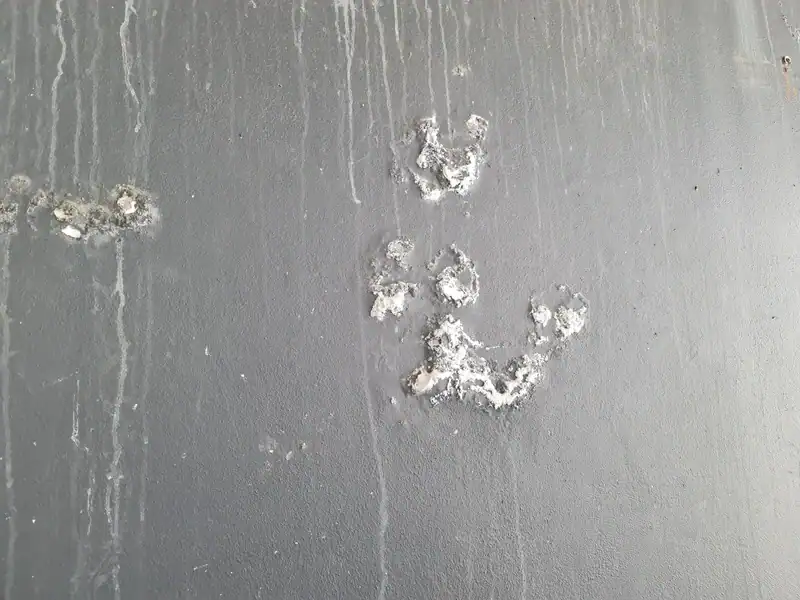
These observations provide a real example of the problems explained on our Peeling and Bubbling Paint Bishopscourt page.
The home had roof gardens with irrigation conduits secured to parapet walls using metal clamps.
Inspection identified water entering around some of the fixing points. The openings were small, but water entering through them could affect the surrounding masonry and contribute to visible coating failure elsewhere.
The documented remedial scope required the relevant clamps to be removed, the penetrations sealed using flexible polyurethane and the irrigation conduits secured again afterwards.
This was not ordinary decorative filling. It addressed an identified water-entry detail before exterior painting.
An exterior gable wall contained wires supporting ivy. The fixing plugs had not been effectively sealed against rainwater.
To address the problem, the scope required the ivy, wires and relevant fixings to be removed so that the wall-plug penetrations could be sealed before the support arrangement was reinstated.
The lesson extends beyond ivy. Screws, brackets, lights, irrigation clamps and other fixtures can compromise the weather protection of a wall where their penetrations are inadequately sealed.
Our Waterproofing Bishopscourt page explains how suitable penetrations, parapets, windowsills and exterior joints are assessed before repainting.
The Protimeter display readings of 16% to 33.5% provided supporting observations about conditions in the tested areas. They did not, by themselves, identify the precise moisture source or establish laboratory moisture-content percentages.
The physical inspection provided the essential context: unsealed penetrations, cracks, failed seals, horizontal masonry and continuing ground-related moisture conditions on particular walls.
A moisture reading should therefore be interpreted together with the substrate, testing location and surrounding defects.
See Damp Assessment Before Painting Bishopscourt for the differences between water entry, residual moisture and other damp-related conditions.
Some discolouration was associated with moisture moving through cementitious surfaces and the resulting alkaline conditions.
Moisture can transport soluble compounds through masonry and affect the coating film. Where old paint is unstable or the plaster continues to receive water, simply applying a new topcoat does not correct the underlying problem.
This made the removal of unsound coatings, appropriate substrate preparation and correction of accessible water-entry routes particularly important.
Horizontal masonry is directly exposed to rainfall. Where these surfaces are cracked, porous or inadequately protected, water may enter from above and later appear as damage further down a vertical wall.
The supplier specification included Dulux Rainshield on applicable prepared horizontal surfaces. The recorded application involved two coats applied in opposing directions.
The treatment was selected for the actual project conditions. It should not be interpreted as a universal specification for every horizontal surface or every damp wall.
Applicable fine cracking received alkali-resistant preparation and flexible Rainshield treatment where specified.
Areas of connected spider-web cracking required broader flexible waterproof preparation rather than simply hiding the pattern under thicker finishing paint.
Wider cracks were opened where required, cleaned to sound edges and repaired with suitable material before the specified waterproof crack treatment was applied.
Movement joints required different treatment from static plaster cracks. Deteriorated joint material was removed where needed and replaced with suitable flexible polyurethane sealant.
Our dedicated Wall Preparation and Crack Repairs Bishopscourt page explains WHY different cracking patterns need different methods and WHEN structural investigation may be necessary.
Failed perimeter seals around included windows and doors were assessed and repaired where they provided water-entry routes.
Sealant selection matters. A suitable product must match the movement, exposure, paint compatibility and manufacturer requirements of the particular joint. Applying paint over an unsuitable or deteriorated seal is not a reliable repair.
The original project included main-building walls as well as boundary and garden walls. Some lower walls lacked effective damp-proof separation from the ground or received moisture from the backfilled side.
A decorative coating on the visible wall face cannot create a missing damp-proof course or permanently stop continuing moisture entering from behind the structure.
The quotation therefore distinguished these conditions from the main-building coating specification and included relevant moisture-related exclusions.
Dulux Dampshield formed part of the preparation on applicable moisture-affected areas, but this did not eliminate the continuing backfill or ground-moisture limitations.
See Boundary Wall Painting Bishopscourt for suitable coating decisions, breathable-system considerations and realistic performance expectations.
The property included fascia boards, soffits, sprockets and sash-window timber. Some woodwork was badly weathered, with peeling coatings and exposed bare wood.
Loose coatings were removed, sound edges feather-sanded and exposed timber spot-primed before the specified undercoat and finishing system.
Dulux Pearlglo Waterbased formed part of the documented finishing specification.
Timber preparation is a distinct task from preparing plaster or fibre-cement surfaces. For further detail, see Timber Window and Exterior Woodwork Painting Bishopscourt.
Following the specified repairs and preparation, Dulux WallClad was used on applicable prepared main-building walls, while Dulux Weatherguard Fine Textured was specified for selected boundary and garden walls.
The coating names are relevant because they establish what was actually used. However, the central lesson of this project is that the preparation and correction of identified defects came before finishing coats.
No particular manufacturer-backed warranty duration is claimed beyond the applicable written project documentation.
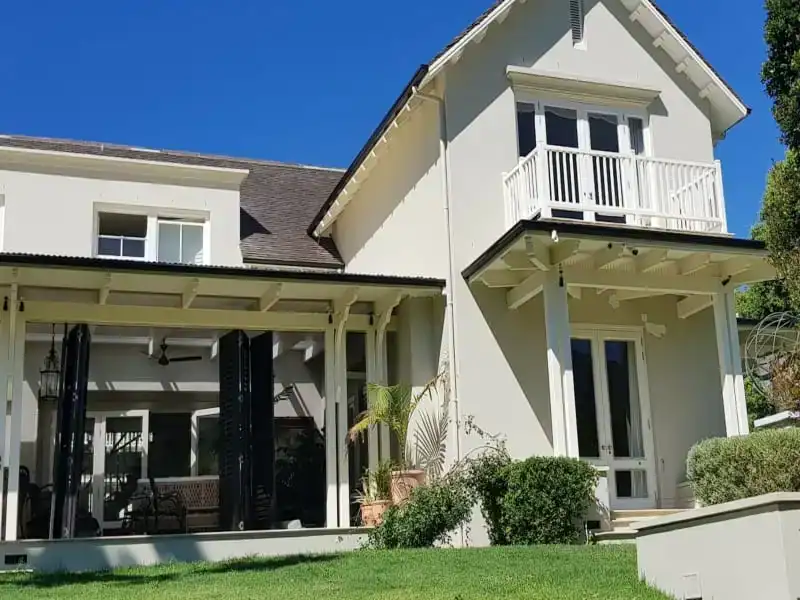
The strongest lesson is that a relatively small building defect can contribute to deterioration over a much larger painted area.
A fixing hole or failed joint can allow water into masonry. The visible bubbling or peeling may then appear away from the actual entry point.
This is why the inspection identified water-entry routes, existing coating failure, cracking, timber condition and wall-specific moisture limitations before the project was repainted.
Two similar-sized properties may therefore require significantly different preparation and labour. Our House Painting Costs Bishopscourt guide explains why a property-specific written quotation is essential.
For the full local painting service, visit Painters Bishopscourt.
Complete exterior preparation and repainting.
Parapets, joints and identified water-entry defects.
Why coatings fail and how they are prepared.
Different crack types and repair choices.
Sash windows, fascias, soffits and woodwork.
Garden and retaining walls with moisture limitations.
Call 082 374 6862 or request a Bishopscourt painting quotation.
Original Painters Cape Town project photography. Image licensing information.
Learn how water entry, weak plaster, old paint and incompatible preparation contribute to recurring failure.
Understand the relationship between failed fixings, wall penetrations, damaged seals and exterior water entry.
Why ground moisture and water entering behind masonry require realistic coating expectations.
Understand the additional preparation, waterproofing, timber and labour that can make two similar homes very different painting jobs.
The recorded project period was 9-25 February 2026.
Identified routes included irrigation fixings, unsealed ivy-support plugs, failed seals and vulnerable masonry details.
Protimeter readings across assessed areas ranged from 16% to 33.5%. The readings were interpreted with the observed building defects.
Yes. A Dulux specialist inspected the property and provided a project painting specification.
Yes. The scope included exterior timber and garden walls, with separate moisture limitations for applicable boundary and lower walls.

Copyright 2026 , all rights reserved.