Upper Bishopscourt Exterior Timber Restoration
Original February 2026 evidence of weathered sash-window timber, fascias, soffits and sprockets requiring scraping, sanding, priming and finishing.
Bishopscourt Timber Window & Woodwork Painters
Preparation-first painting of suitable timber sash windows, fascia boards, soffits, sprockets, exterior doors and other previously painted wooden features.
Our February 2026 Upper Bishopscourt restoration documented badly weathered exterior timber, loose coatings, exposed wood, sanding, spot priming and specified finishing coats.
With 27 years of painting-contractor experience, full-time employed painters and written diagnostic quotations, we establish the preparation before selecting a timber coating system.
Sash windows: Assess existing coatings, joints, exposed timber, painted frames and suitable glazing-adjacent preparation.
Fascias and soffits: Check weathering, peeling paint, timber condition and safe access.
Other painted woodwork: Exterior doors, trims and suitable joinery need their own preparation and specifications.
See our original Bishopscourt timber restoration evidence
Exterior Painters Bishopscourt
The Upper Bishopscourt exterior restoration included weathered sash-window timber, fascias, soffits and sprockets.
Practical painting-contractor experience with aged timber, old coatings, substrate preparation and exterior joinery.
Loose paint removal, feather sanding, exposed-timber priming and compatible undercoating are specified where required.
Dulux Pearlglo Waterbased formed part of the actual February 2026 exterior timber specification.
Our painting teams work under direct working-foreman supervision rather than subcontracted crews.
We identify visible timber defects, preparation, included surfaces, coating requirements and relevant repair exclusions.
Timber window painting Bishopscourt requires careful assessment of the existing paint, soundness of the wood, exposed edges, joints and weather conditions. A wooden sash window cannot be prepared in the same way as a plastered wall or fibre-cement fascia board.
Older painted timber may have several generations of coating. Some areas remain well bonded, while others have cracked, flaked or peeled, leaving the bare wood exposed to rain and sunlight.
Painters Cape Town prepares and paints suitable previously painted timber windows, sash frames, fascia boards, soffits, sprockets and other exterior woodwork as part of an agreed residential painting scope.
Our preparation-first approach is supported by genuine completed work at a private Upper Bishopscourt home in February 2026, rather than an unsupported claim about every property in the suburb.
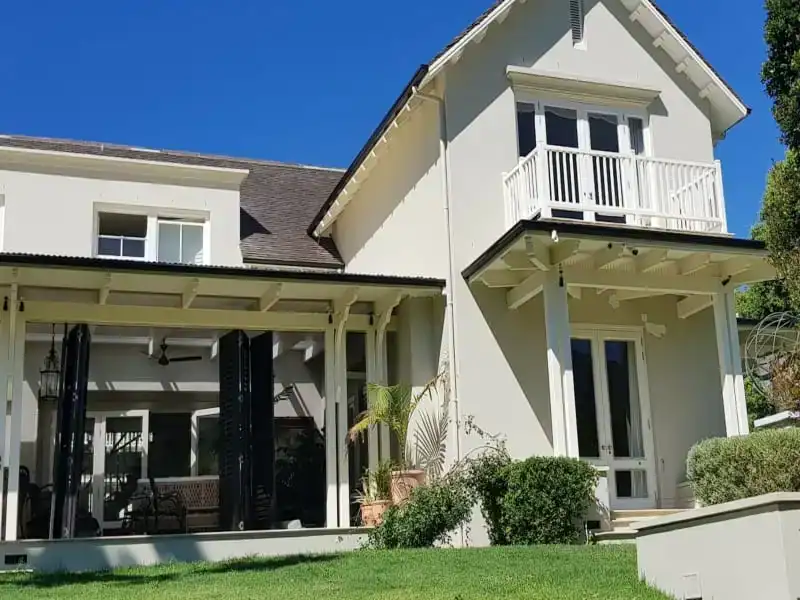
Our documented exterior project took place from 9 to 25 February 2026 at a private double-storey home in Upper Bishopscourt.
Alongside the exterior wall repairs and waterproofing, the project included extensive painting preparation of fascia boards, soffits, sprockets and sash-window timber.
The original inspection found badly weathered woodwork in places, with loose or flaking paint and exposed bare timber.
Failed paint removal: Loose and inadequately bonded coating was removed where necessary.
Feather sanding: Edges between remaining sound paint and exposed wood were prepared to reduce abrupt coating transitions.
Spot priming: Exposed sound timber received appropriate priming before subsequent coats.
Undercoating: The prepared timber received the undercoat specified for the selected system.
Finishing: Dulux Pearlglo Waterbased formed part of the documented exterior timber finish.
The Dulux system used on this property was a project-specific specification. It should not automatically be applied to a different wood species, existing coating or previously varnished surface.
View the complete Upper Bishopscourt exterior restoration case study
Previously painted wooden sash windows, frames and surrounds can require detailed preparation around joints, rebates, painted edges and glazing-adjacent surfaces.
Where windows have moving sashes, the work must account for their operation and avoid unnecessary paint build-up that could cause sticking. Defective window components or extensive timber decay may need separate specialist repair.
Exposed fascia boards are affected by weathering, moisture and coating movement. Scraping, sanding, timber repairs and suitable priming may be required before repainting.
It is important to establish the material correctly. Nutec and similar fibre-cement fascias are not timber and require substrate-appropriate preparation.
Older properties can contain painted timber soffits, sprockets, bargeboards or other roofline details. These areas may be difficult to access and may have deteriorated coatings, exposed wood or water-entry defects nearby.
Safe access and the condition of adjoining roofline details must be considered before the painting specification is finalised.
Suitable painted exterior doors, frames and timber trims can be prepared and finished according to their existing coating and condition. Previously varnished or stained timber may require a different system from previously painted woodwork.
Water can enter through damaged coatings, open timber joints, deteriorated glazing-adjacent details and exposed end grain. Repeated wetting and drying can contribute to swelling, shrinkage and further paint cracking.
Before repainting, any identified water-entry detail must be assessed. Painting alone is not a substitute for repairing a defective window component or active leak.
Older glossy, brittle, peeling or poorly bonded coatings can create problems for a new paint system. A fresh finishing coat may adhere to the old layer while that weak layer continues detaching from the timber.
This is why suitable scraping and sanding matter more than simply applying an additional coat of premium paint.
Painted timber exposed to strong sunlight may weather differently from timber on a shaded, garden-facing side of the same house. Exposure depends on orientation, shelter, ventilation, water entry and the actual coating system.
No particular timber window should be assumed to remain damp or require early repainting solely because it is in Bishopscourt.
Timber expands and contracts in response to changing conditions. Open joints and weak coatings may develop as the material moves.
Soft, rotten or structurally defective wood may need carpentry repair or replacement before painting. A coating cannot restore the strength of decayed timber.
There is no universal repainting interval for every wooden window or fascia board.
Warning signs worth investigating include loose paint, exposed timber, cracks at joints, open glazing-adjacent details, repeated peeling, deteriorated edges or soft wood.
Small local coating failures can sometimes be addressed before moisture causes more extensive damage. However, the correct timing and scope depend on the actual condition.
Painting should wait where the wood is unsuitable because of excessive moisture, unresolved leakage, significant decay or other defects requiring repair.
We assess the visible wood condition, previous coatings, exposed surfaces, open joints, rot symptoms, glazing-adjacent details and access requirements.
Window glass, adjacent plaster, paving, floors, gardens and other valuable finishes receive protection where applicable to the agreed work. Access arrangements are planned for the specific property.
Failed paint is removed where required. Remaining sound paint is sanded to establish suitable adhesion, and exposed edges are feathered. Preparation techniques must account for the age and possible hazards of old coatings.
Minor surface defects and appropriate joints may be repaired using compatible materials. Extensive rotten wood, damaged sash mechanisms or major joinery repairs are separately assessed or referred to the appropriate trade.
Clean, sound exposed timber requires the primer appropriate to its condition and the selected coating system. The primer must be compatible with both the wood and subsequent coats.
The selected undercoat and finishing system are applied according to the current manufacturer specification, practical spreading rates, required coats and drying conditions.
The working foreman checks workmanship against the written scope. Suitable window operation, visible paint finish and agreed finishing details are considered during handover.
A previously painted sash window and a naturally finished or varnished timber door may require different preparation and coating systems.
A varnish or stain system should not be presented as interchangeable with opaque paint. The correct approach depends on the existing finish, condition, timber type and intended appearance.
For broader substrate-specific explanations, see our Southern Suburbs woodwork preparation and painting guide.
The number of windows is only part of the cost.
Two houses with the same number of sash windows may require different preparation because one has sound paint and minor weathering while the other has extensive flaking, exposed wood, open joints and damaged timber.
Window dimensions, sash details, the amount of glazing-adjacent preparation, safe access, existing coating condition, timber repairs, primer requirements and the selected finishing system all affect materials and labour.
Fascia boards and soffits also need to be measured and specified separately. Timber and fibre-cement materials cannot simply be priced using the same preparation assumptions.
Our Bishopscourt house painting costs guide explains why apparently similar homes can require very different preparation and painting quotations.
The written scope should identify the included windows and other timber surfaces, removal of defective coating, sanding, minor repairs, priming, undercoating, finishing coats, access and protection.
Any major carpentry, window mechanism repair, glazing replacement, extensive timber replacement or unresolved water-entry defect should be distinguished from the agreed painting work.
Supplier-backed warranties apply only to qualifying written systems. No particular timber coating lifespan or manufacturer warranty is assumed for every property.
Timber windows, fascias and soffits frequently form part of a wider exterior repaint. The adjoining plaster, windowsills, parapets and seals must also be considered where they affect the performance of the painted surfaces.
For full exterior painting, see Exterior Painters Bishopscourt.
For failed window and door seals, exposed horizontal masonry and applicable water-entry repairs, visit Waterproofing Bishopscourt.
For interior painted doors, frames and skirting, see Interior Painters Bishopscourt. Our Bishopscourt Village interior case study provides separate documented evidence of painted interior joinery.
If your property’s timber sash windows, fascias, soffits or exterior painted joinery show peeling paint, exposed wood, open joints or weathering, we can inspect the condition and establish the required painting preparation.
Painters Cape Town provides direct contractor accountability, employed painters and written diagnostic quotations.
Call 082 374 6862 or request a Bishopscourt timber painting quotation.
For all local painting services, return to Painters Bishopscourt or visit our Southern Suburbs painting hub.
Original February 2026 evidence of weathered sash-window timber, fascias, soffits and sprockets requiring scraping, sanding, priming and finishing.
Understand adhesion, exposed timber, suitable primers, undercoats and coating differences between timber, MDF and fibre cement.
Preparation-first painting of exterior walls, timber, masonry and other suitable exposed building surfaces.
Why preparation, deteriorated timber, different materials, labour and coating quantities can produce very different quotations.
Yes, if the timber is suitable. Loose paint, exposed wood, joints and previous coatings must be assessed and prepared.
Not necessarily. Unsound coatings need removal, while adequately bonded paint may be prepared and retained where compatible with the new system.
Yes. Timber and fibre cement are different substrates. Preparation and primers must suit the actual material and its condition.
We assess the number and condition of surfaces, preparation, access, repairs, primers, finishing coats and labour before providing a written quotation.

Copyright 2026 , all rights reserved.