Newlands Village Exterior Cracks
Original hairline, wider 1-5 mm and map-cracking evidence on an older private home.
WALL PREPARATION & CRACK REPAIRS NEWLANDS
Preparation of cracked plaster, map cracking, damaged coating, failed previous repairs and movement-sensitive building joints before painting.
Original Newlands Village and Fernwood Estate 2026 projects document different crack patterns and genuine preparation decisions on older and comparatively modern homes.
27 years' experience - Original local crack evidence - Written preparation scopes - Full-time employed painters
The older home documented hairline cracks, wider 1-5 mm plaster defects and map or spider-web cracking.
A comparatively modern property required treatment of vertical and horizontal cracks, plaster-band junctions and movement joints.
Fine cracks, wider masonry defects, map cracking and expansion joints received separate documented preparation methods.
Cracking, loose paint, chalky plaster and water-entry risks are considered together when they affect the surface being prepared.
Decorative crack preparation does not correct significant structural movement or guarantee that active cracks will never reopen.
27 years' contractor experience, written diagnostic quotations, employed painting teams and working-foreman supervision.
Painters Cape Town provides suitable non-structural plaster repairs, crack preparation and treatment of damaged previous coatings before interior or exterior painting in Newlands.
Fresh paint depends on the condition of the substrate beneath it. If plaster is unstable, earlier repairs have failed or a crack continues moving, applying a decorative finishing coat may only conceal the problem temporarily.
The first step is to understand the defect. A fine crack in an older wall, widespread map cracking and a movement joint at a modern plaster band cannot all be repaired in the same way.
Our written diagnostic quotations identify observed conditions, suitable preparation, materials and relevant limitations before painting begins.
Plaster cracking can have several causes. These include shrinkage, differential movement between materials, temperature changes, ageing coatings, previous repairs, substrate instability, moisture-related deterioration and building movement.
The appearance, extent and behaviour of a crack are important. A fine stable crack may require relatively limited preparation, while an actively widening or displaced crack may indicate a more serious building issue.
Cracks that continue widening, show displacement, accompany other structural symptoms or repeatedly reopen should not automatically be treated as ordinary cosmetic defects.
Hairline cracks may appear as narrow lines in the plaster or previous coating. Their treatment depends on the underlying material and whether movement is continuing.
In our documented Newlands Village and Fernwood Estate projects, applicable fine cracks received the specified alkali-resistant preparation followed by flexible Dulux Rainshield treatment before the finishing system.
This was a project-specific preparation method rather than a universal prescription for every wall.
Wider cracks may need more than a thin surface filler. The surrounding plaster must be assessed to determine whether the edges are sound and whether the crack is appropriate for non-structural repair.
Both original Newlands exterior specifications addressed relevant wider cracks measuring approximately 1-5 mm.
Where applicable, the documented preparation involved opening cracks into a suitable repair profile, removing loose material, cleaning, applying compatible masonry-patching compound, sanding and using flexible waterproof protection across the prepared area.
The appropriate repair depends on the actual substrate, extent of damage and any continuing movement.
Map cracking is a network of many fine intersecting cracks over a section of plaster. Its treatment may differ from repairing one isolated line.
The original Newlands Village project recorded map cracking alongside numerous other cracks and unstable exterior coating.
Rather than relying on filling only a few visible lines, the written system included broader flexible Rainshield preparation across applicable affected plaster areas.
Widespread map cracking can indicate broader substrate or coating conditions that need attention before final painting.
Our 9-20 February 2026 project involved an older Newlands Village home with hairline cracking, 1-5 mm wider plaster defects, map cracking, peeling coating, moisture symptoms and failed seals.
The inspection also recorded Protimeter readings of 12%-19%, which were interpreted alongside visible deterioration rather than being used to diagnose every crack.
Different crack categories received separate preparation. The written specification also addressed windowsills, parapets, expansion joints and other moisture-sensitive building details.
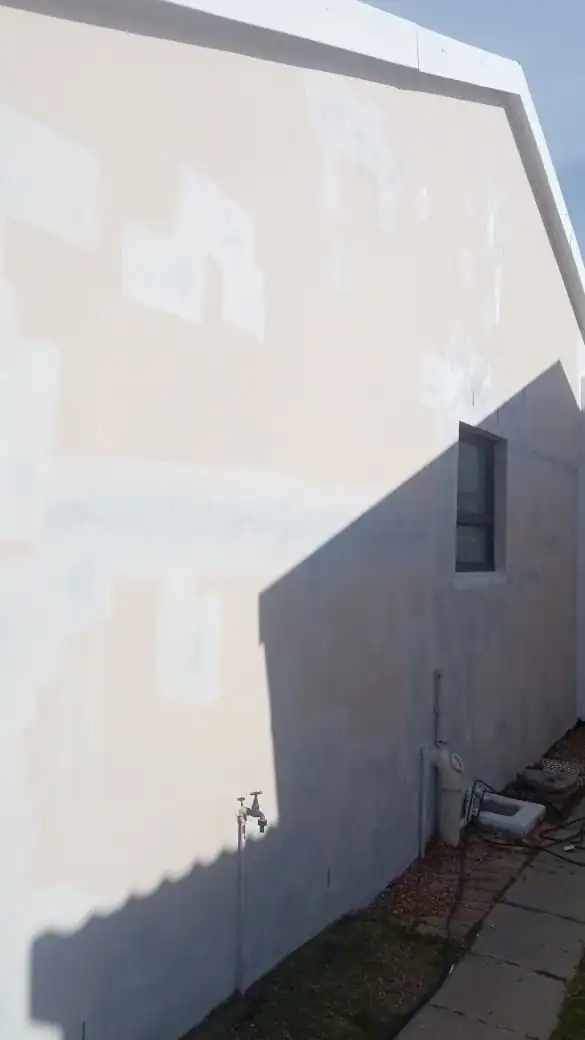
Read the Newlands Village Exterior Painting Case Study for the original project evidence.
Our second documented case, completed at Fernwood Estate from 4 to 11 May 2026, showed that newer buildings can develop different crack and coating failures.
The inspection identified vertical and horizontal cracks, deteriorated window and door seals, expansion-joint defects and vulnerable junctions around decorative plaster bands.
The garage elevation was particularly relevant because changes in plaster profile can create small junctions where movement and water entry need consideration.
Recorded moisture readings ranged from 8% to 22%. High chalkiness or efflorescence on affected wall surfaces required additional preparation and priming before finishing.
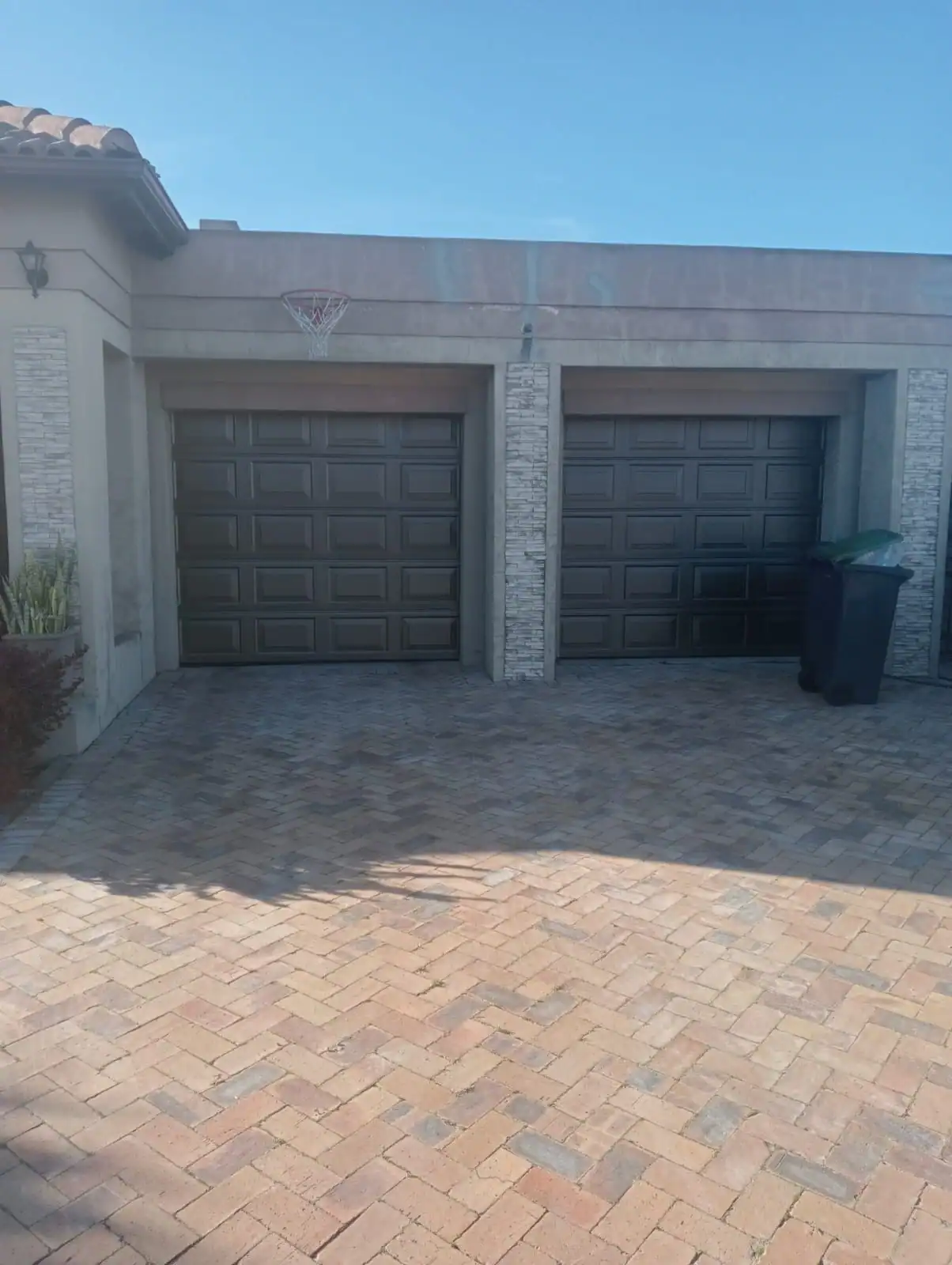
Read the Fernwood Estate Exterior Painting Project for the full preparation scope.
Designed movement joints allow building elements to expand, contract or move relative to one another.
Filling a moving joint with ordinary rigid plaster filler may cause it to crack again. In both documented Newlands projects, applicable movement joints were treated separately using specified flexible single-pack polyurethane sealing.
Correct joint preparation depends on the actual movement, joint geometry, surface condition and compatibility of the sealant.
For adjoining water-entry details, visit Waterproofing Newlands.
Some cracks recur because the underlying material continues moving. Others return when an earlier repair was made over unstable plaster, the repair product was unsuitable or water entry continues affecting the wall.
Merely widening a crack and applying filler does not guarantee permanent repair when the cause is unresolved.
Good preparation therefore considers whether the defect is stable, moving, moisture-related or outside the appropriate painting-repair scope.
Where water enters through cracks, exposed windowsills or failed joints, it may contribute to plaster deterioration and peeling paint.
Both 2026 Newlands projects involved cracking alongside moisture-related exterior defects. However, a crack and a high meter reading appearing on the same wall do not automatically establish that the crack caused all the moisture damage.
For damaged moisture-affected masonry, read Damp Proofing Newlands. For exposed details requiring suitable waterproofing, visit Waterproofing Newlands.
Older Newlands homes may contain several generations of plaster patches, repainting and repair compounds.
Previous repairs do not automatically mean that a wall is defective, but different materials and coating layers can affect adhesion, absorbency and the compatibility of future preparation.
Where powdery or poorly bonded plaster remains, the next finishing coat may fail unless the surface is appropriately stabilised or repaired first.
Fernwood Estate recorded a high level of chalkiness or efflorescence. These conditions required attention before new paint could reliably bond to the prepared surface.
Appropriate preparation may include cleaning, removing loose or powdery coating, repairing damaged plaster and applying compatible bonding or plaster primers according to the written specification.
The choice of primer depends on the actual surface. One bonding liquid or plaster primer is not automatically appropriate for every Newlands wall.
We assess hairline cracks, wider plaster damage, interconnected map cracking, moving joints, old repairs and relevant moisture symptoms.
Potential structural movement, unstable masonry and ongoing water-entry conditions are distinguished from ordinary non-structural painting preparation.
Loose paint, chalking, contamination and unsound material are removed or treated as required by the affected surface.
Compatible patching products, flexible crack systems or appropriate joint sealants are selected according to the defect and written scope.
Suitable repaired plaster receives the necessary drying time, stabilising preparation and compatible primer before finishing.
Appropriate interior or exterior finishing systems are applied under suitable conditions. The work is completed by our employed painters under working-foreman supervision.
Significantly widening cracks, displacement between building elements, recurring structural movement and other concerning changes may require specialist assessment.
Decorative crack filling and painting cannot repair significant structural defects. The necessary professional investigation should not be replaced by a cosmetic repair promise.
Rain, shade, temperature and drying conditions affect when prepared plaster can be primed or coated.
A wall that remains damp after rain may not be suitable for the specified filler, primer or finishing paint, even when another elevation on the same property is dry.
Application should follow the manufacturer’s substrate and curing requirements rather than a fixed seasonal assumption.
Costs depend on crack type, length, extent, location, plaster stability, coating removal, repair materials, moisture-related work, access, drying conditions and labour time.
Repairing a few isolated stable hairline cracks is not directly comparable with treating an entire façade affected by map cracking, peeling coating and failed movement joints.
Our written quotations explain the relevant preparation and exclusions rather than quote one fixed price for every crack.
Read the Detailed Painting Quotations and Specifications Guide.
After suitable plaster repairs, visit Exterior Painters Newlands or Interior Painters Newlands for the appropriate finishing work.
For water-entry protection, see Waterproofing Newlands, and for moisture-affected wall preparation, see Damp Proofing Newlands.
Return to Painters Newlands for our full service offering, original projects and historical painting experience.
Contact Painters Cape Town for an inspection and written preparation-first quotation for suitable non-structural plaster and painting repairs.
Call 082 374 6862 or request a Newlands quotation.
Original local crack evidence and practical repairs linked to their causes.
Original hairline, wider 1-5 mm and map-cracking evidence on an older private home.
Original evidence of cracks at modern plaster bands, failed seals, movement joints and extensive surface preparation.
Learn why cracks at windowsills, parapets and movement joints may require separate water-entry repairs.
Understand how moisture affects damaged plaster and old coatings, and why the moisture source matters.
Regional technical guidance on crack causes, failed previous repairs and suitable non-structural preparation.
Preparation and finishing of repaired plaster, masonry, timber and weather-exposed exterior walls.
Continuing movement, unstable plaster, moisture or an unsuitable previous repair may cause cracking to return. The defect must be assessed before selecting a repair.
Hairline cracking may occur as one or several narrow lines. Map cracking forms a network of many intersecting cracks and can require broader treatment across the affected plaster.
Yes. The original Newlands Village and Fernwood Estate 2026 exterior case studies document different crack types, movement joints and specific preparation systems.
No. Where the joint is intended to move, an appropriate flexible joint system is generally required instead of rigid filling.
No. Significant structural movement or concerning cracks may require assessment and repair by a qualified building professional before decorative painting.

Copyright 2026 , all rights reserved.