Kenilworth Upper Exterior Moisture
See the documented 8%–17% readings, failed joints, damaged coatings, waterproofing and boundary-wall limitations.
DAMP PROOFING KENILWORTH
Investigation and preparation of moisture-affected walls, damp-related plaster damage, bubbling paint and recurring coating failure in Kenilworth homes.
Our original 2026 Kenilworth Upper and Stellenberg projects document different moisture conditions, substrate problems and preparation requirements.
Measured local evidence • Written diagnostic quotations • Full-time employed painters • Honest moisture limitations
Kenilworth Upper and The Stellenberg document real wall and coating conditions investigated during exterior and interior painting in 2026.
Kenilworth Upper recorded 8%–17%, while The Stellenberg recorded 11.2%–18.7% across the relevant inspected areas.
Cracks, defective joints, ventilation, condensation, external water entry and ground contact are considered where relevant to the symptoms.
The original projects included appropriate Dulux Dampshield preparation and separate repairs or treatments where specified.
A coating cannot permanently resolve uncorrected plumbing leaks, inaccessible backfill moisture or a missing damp-proof barrier.
27 years' painting-contractor experience, written diagnostic quotations and full-time employed painters under working-foreman supervision.
Painters Cape Town provides investigation and preparation of suitable moisture-affected painted surfaces in Kenilworth. Our work focuses on the condition of the wall, the observed defects and the coating or water-entry repairs appropriate to the agreed scope.
Peeling, staining, bubbling, powdering, mould and discolouration can result from different underlying conditions. They should not automatically be described as rising damp simply because a wall is visibly damaged.
Our written diagnostic quotations identify relevant symptoms, likely water-entry details where accessible, surface preparation requirements, proposed coating systems and important limitations.
Rainwater may enter through cracked windowsills, failed window and door seals, defective parapets, open movement joints or other exposed building details.
Boundary and lower foundation walls may remain exposed to moisture from soil, irrigation, backfill or an inaccessible opposite face. Their construction may make permanent moisture elimination impossible through decorative painting alone.
Ventilation, indoor moisture and surface temperatures can contribute to condensation and mould on suitable cold or poorly ventilated surfaces. The actual cause should be assessed rather than assuming all mould results from an exterior leak.
Weak adhesion, unsuitable earlier repairs, old plaster and previous paint incompatibility can cause coating failure. A damp-looking symptom does not automatically identify the underlying mechanism.
Our documented 6–14 April 2026 Kenilworth Upper exterior project included walls with bubbling paint, moisture-related discolouration, cracking, failed seals and vulnerable horizontal masonry.
The original Protimeter inspection recorded readings of 8%–17%.
Physical examination identified several possible water-entry routes: damaged windowsills, deteriorated perimeter seals, open movement joints, unsealed chimney junctions and exposed horizontal surfaces.
The quotation also recorded continuing ground or backfill moisture affecting some boundary and lower foundation-wall sections.
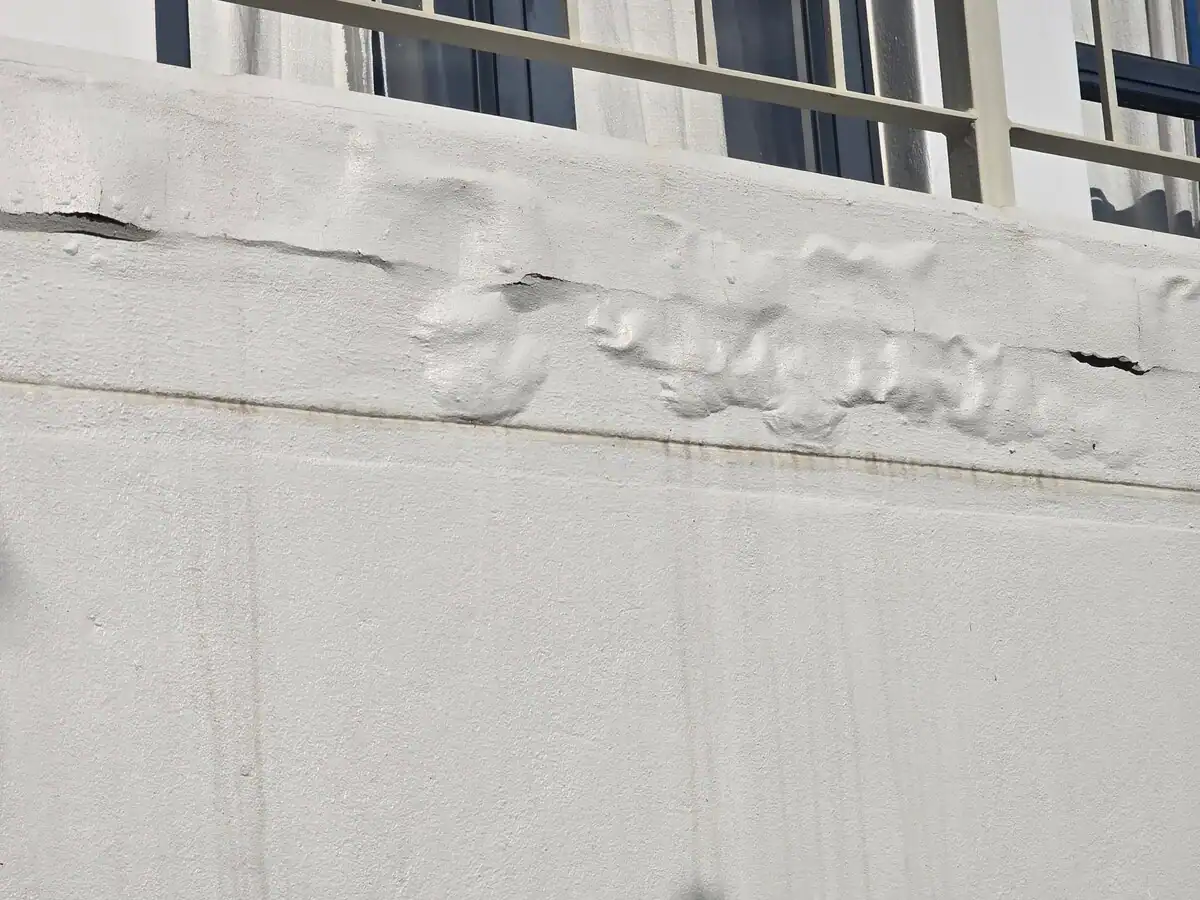
The written preparation included Dulux Pre-Paint Dampshield on applicable prepared affected masonry, together with targeted crack repair, flexible joint sealing and Dulux Rainshield waterproofing on suitable horizontal details.
The Dampshield system did not replace repairs to accessible building defects. The visible wall condition and potential water-entry routes determined the wider specification.
Read the Kenilworth Upper Exterior Project
Our second documented case was a complete interior painting project at The Stellenberg from 8–28 May 2026.
Relevant Protimeter readings ranged from 11.2%–18.7%. The inspection also recorded mould on selected ceilings and upper walls, discoloured or peeling paint, plaster cracks, wind-related cornice movement and defective bath and basin sealing.
These conditions required different responses. The visible mould received the specified fungicidal treatment and appropriate preparation, while suitable moisture-affected walls received the recorded Dulux Pre-Paint Dampshield system.
Ceiling stains, plaster defects, moving cornice joints and painted joinery had their own preparation requirements.
Readings were considered with visible evidence and did not independently establish that every affected surface had one common damp cause.
Read The Stellenberg Interior Project
Our Protimeter helps compare moisture-related conditions across inspected areas and identify surfaces that may require closer assessment.
A displayed meter percentage should not automatically be described as the laboratory-measured percentage of water inside a wall. Readings depend on the test method, instrument response and substrate.
They are also not proof, on their own, that a property has rising damp or that water entered at one particular point.
We consider readings alongside physical defects, construction details, visible coating damage, weather conditions and possible sources of moisture.
Specialist preparation coatings are useful where they are suitable for the actual substrate and written specification. However, painting an actively leaking wall without addressing the underlying water source may allow symptoms to return.
For example, a failed window seal should be addressed as a sealing defect. A cracked parapet may require compatible crack repairs and appropriate horizontal waterproofing. A plumbing leak or structural defect may require a separate specialist.
Visit Waterproofing Kenilworth for suitable exterior water-entry details and associated repairs.
We assess peeling, bubbles, mould, stains, plaster condition, visible cracks, seals and accessible building details relevant to the problem.
Where suitable, meter readings supplement the physical inspection. Uncertain causes are not presented as established facts.
Water-entry repairs, ventilation or drainage problems, continuing ground moisture and other underlying conditions must be distinguished before deciding what painting-related treatment can achieve.
Peeling or weak paint is removed to sound material where required. Powdery plaster and affected repairs are treated according to the actual condition and the written scope.
Where the substrate and product guidance permit, appropriate moisture-related preparation and priming products are used, with the required drying and curing conditions.
Once suitable conditions have been achieved, finishing coats are applied according to the agreed system. Our employed team works under working-foreman supervision.
At The Stellenberg, mould was recorded on several ceilings and upper-wall areas. The project specification included fungicidal cleaning and stain-blocking preparation where required.
Painting directly over untreated mould is not appropriate surface preparation. Relevant ventilation, condensation, leaks or other moisture sources should also be considered.
See our Southern Suburbs Bathroom Painting Guide for humid-room coating considerations.
Water-entry routes can develop at failed plaster, moving joints or defective seals, while continuing movement may cause an earlier cosmetic repair to reopen.
The Kenilworth Upper and Stellenberg projects both demonstrate the importance of identifying the relevant crack type and substrate before applying another coating.
For those repairs, see Wall Preparation and Crack Repairs Kenilworth.
The Kenilworth Upper project documented boundary-wall and lower-wall areas affected by continuing moisture from ground contact and backfilled surfaces.
A coating applied to the accessible side cannot create a structural damp-proof course where none exists. It also cannot permanently stop moisture entering through an inaccessible wall face.
A suitable breathable or other manufacturer-approved system may be a practical maintenance approach for specific walls, but the underlying moisture limitation must be explained in writing.
Read the Southern Suburbs Boundary Wall Painting Guide for the distinction between surface coating performance and ongoing ground moisture.
Winter rainfall, shaded elevations, established gardens and irrigation can contribute to repeated surface wetting or slower drying on particular walls. The effects differ between properties and even between different elevations on the same house.
The correct application sequence depends on the actual moisture condition, recent weather and the coating manufacturer’s preparation and curing requirements.
Costs depend on the size of the affected area, the accessible moisture route, coating removal, plaster repairs, crack treatment, sealing, waterproofing, preparation materials, drying conditions and labour time.
A small visible blister can conceal more extensive failed coating, while a wall with continuing soil moisture may require a separate maintenance strategy and clear performance limitations.
We do not publish a universal damp-proofing price without inspecting the building. The written quotation identifies suitable work, exclusions and uncertain underlying conditions.
For guidance on comparing specifications, read the Detailed Painting Quotations Guide.
For exterior surfaces after suitable moisture repairs, visit Exterior Painters Kenilworth.
For interior walls and ceilings, see Interior Painters Kenilworth. For water-entry protection, visit Waterproofing Kenilworth.
Our main Painters Kenilworth page contains the broader local service and completed-work history.
Painters Cape Town provides direct inspections and written diagnostic quotations for suitable moisture-related wall preparation and painting. Concealed plumbing, structural and other specialist issues outside the painting scope are identified as limitations rather than concealed within a decorative paint guarantee.
Two original moisture-related projects and practical preparation guidance.
See the documented 8%–17% readings, failed joints, damaged coatings, waterproofing and boundary-wall limitations.
Original evidence of mould, interior moisture readings, cracked plaster and damp-related preparation.
Understand the difference between damp-wall preparation and repairing an accessible water-entry detail.
Learn why crack type, movement and substrate condition affect repairs before repainting.
Why continuing ground and backfill moisture can limit the performance of decorative coating systems.
Understand ventilation, mould preparation, moisture-related defects and suitable finishes in humid rooms.
No. Readings must be interpreted with the wall construction, visible defects and possible moisture sources. They do not independently identify one specific cause.
Yes. Our original Kenilworth Upper and Stellenberg projects document measured moisture, affected coatings and different preparation decisions in 2026.
No. Suitable surface preparation does not replace repairs to active plumbing leaks, defective roof components or other ongoing water-entry sources.
No. Continuing moisture from soil, backfill and inaccessible surfaces can remain active even where the visible wall has been correctly coated.

Copyright 2026 , all rights reserved.