Exterior Painters Kenilworth
Understand preparation-first exterior painting of plaster, timber, fascia boards, Nutec and exposed building surfaces.
Documented Kenilworth Upper Painting Project
A documented April 2026 exterior restoration involving moisture-related coating failure, map cracking, vertical and horizontal cracks, failed seals, open joints, unprotected horizontal masonry, peeling timber and mould-stained Nutec soffits.
Protimeter readings ranged from 8% to 17%. The project required separate systems for plaster walls, boundary walls, timber pergolas and fascia boards, concrete ceilings and fibre-cement soffits rather than one generic exterior paint system.
Moisture measurements were interpreted together with bubbling, cracks, unsealed joints, horizontal surfaces and other visible building defects.
Hairline cracks, 1–5 mm plaster cracks and map cracking were given separate preparation systems rather than one generic filler treatment.
Windowsills, parapets, boundary-wall tops, openings, expansion joints, wall fittings and chimney junctions formed part of the moisture-control assessment.
Continuing ground and backfill moisture affecting some boundary and foundation walls was specifically identified rather than hidden behind a coating guarantee.
Plaster, timber, concrete ceilings and Nutec soffits each received preparation and finishing systems appropriate to the substrate.
The project quotation records Paint Academy-trained painters with at least ten years' experience with the company under working foreman Riaan.
This documented Kenilworth Upper exterior painting project was completed from 6 to 14 April 2026 by Painters Cape Town.
The work covered the main building, garages, garden and boundary walls, garage and stoep ceilings, wooden fascia boards, timber pergolas and Nutec soffits. It also involved waterproofing, plaster repairs, moisture-related preparation and sealing of relevant building joints and penetrations.
Our inspection recorded Protimeter readings of 8% to 17% across relevant exterior areas. These readings were considered alongside actual plaster defects and possible moisture-entry routes rather than being treated as a diagnosis by themselves.
This was an example of why professional exterior painting in Kenilworth requires preparation suited to each surface rather than one general paint system.
The written inspection recorded several different conditions:
The surfaces were not all failing for one reason. Some required water-entry repairs, others needed crack preparation or removal of unsound coating, while timber and fibre cement required their own systems.
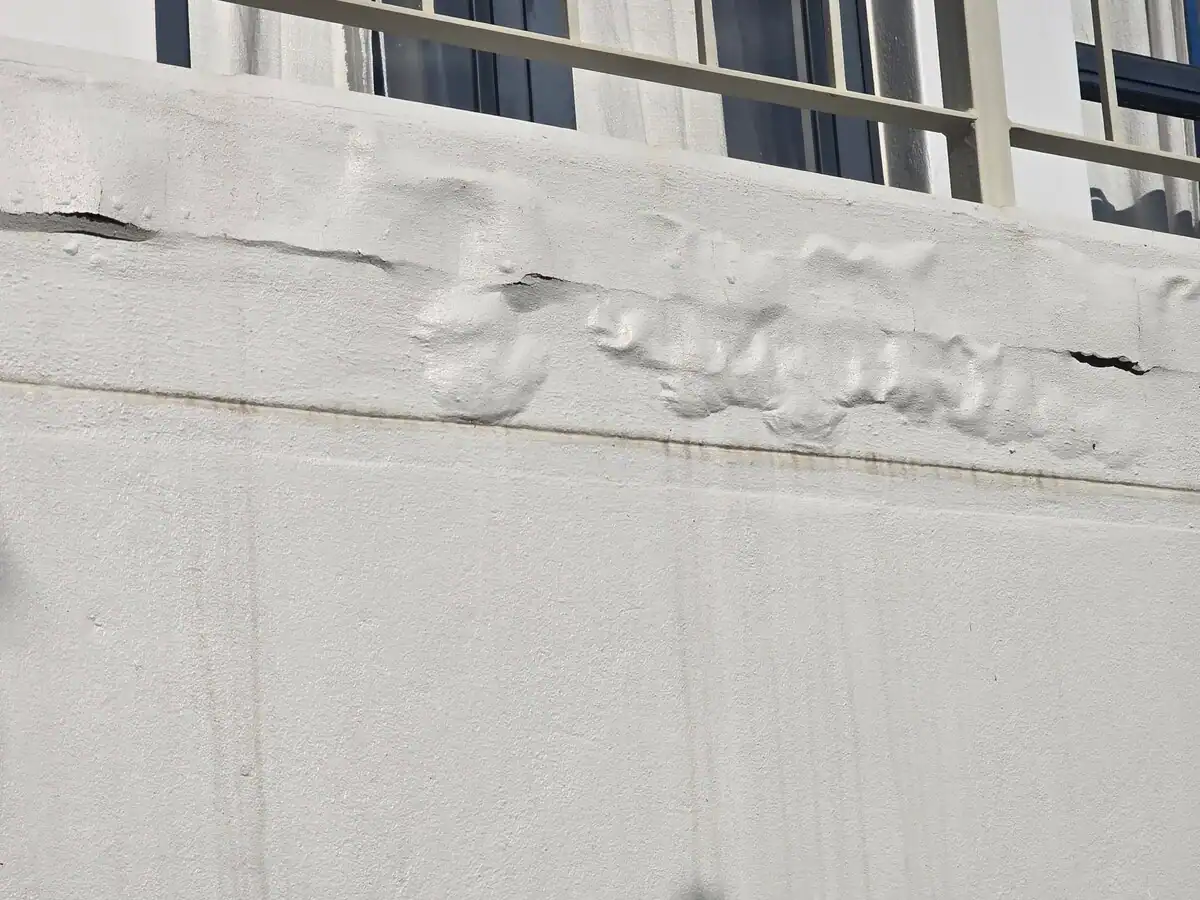
The damaged coating was evidence of a problem, but its appearance alone could not establish the precise moisture source.
Relevant surrounding defects had to be inspected before selecting the repairs. Our Peeling and Bubbling Paint Kenilworth guide explains the different causes of paint failure and why preparation must address the actual substrate.
The original Protimeter readings ranged from 8% to 17%. The recorded values were evaluated together with cracking, coating failure, deteriorated sealants, vulnerable horizontal masonry, expansion joints and wall construction.
Such instrument readings do not by themselves prove rising damp or identify a single water-entry route. They must be considered with the physical evidence.
For the broader approach to moisture-affected masonry and coating preparation, see Damp Proofing Kenilworth.
Part of the inspected exterior coating displayed discolouration consistent with the documented moisture and alkaline conditions in cementitious plaster.
Moisture moving through plaster can contribute to the movement of alkaline compounds toward the paint film, affecting susceptible coatings.
The preparation therefore addressed affected masonry, weak coating and applicable accessible moisture-entry defects before finishing.
Suitable walls were prepared using high-pressure cleaning where appropriate, removing loose or flaking paint, grime, chalky material and other contamination.
Areas where pressure cleaning was not suitable received the specified manual cleaning treatment.
Fungal treatment was included where required, including contamination affecting suitable cracks and other areas.
Cleaning and preparation were not interchangeable with simply applying another finishing coat over an unstable surface.
Exposed horizontal masonry receives direct rainfall and can contribute to moisture entering adjacent plaster when cracking or protective coatings fail.
The documented specification included applicable windowsills, parapet tops and the exposed tops of garden and boundary walls.
After appropriate preparation, these suitable horizontal surfaces received two coats of Dulux Rainshield, with the second coat applied perpendicular to the first.
This formed part of the targeted Kenilworth waterproofing and sealing work, rather than a general promise that decorative paint would permanently correct every damp problem.
The original specification required Dulux Pre-Paint Dampshield on prepared exterior masonry affected by relevant cracking or moisture symptoms.
Specified higher-reading areas received additional treatment where required by the written scope, while bare affected areas received the documented two-coat Dampshield system with appropriate curing between coats.
This preparation did not replace repairs to accessible cracks, failed joints or active water-entry details.
Deteriorated sealant around selected windows, doors and movement joints was included in the assessment.
Failed material was removed where required and suitable joints were resealed using the specified flexible single-pack polyurethane system.
The inspection also identified exterior wall and light fittings as possible penetrations requiring attention, along with unsealed chimney-to-wall junctions.
Expansion joints were treated as details intended to accommodate movement rather than being rigidly filled as ordinary plaster cracks.
Applicable fine cracks measuring approximately 1 mm or less received the specified alkali-resistant sealer followed by suitable flexible Dulux Rainshield treatment.
Relevant cracks measuring approximately 1–5 mm were opened into suitable V-joints where specified, cleaned, repaired with compatible masonry-patching material and sanded before flexible protection was applied across the repaired area.
Where interconnected fine cracks affected a broader plaster area, the specified flexible treatment was applied across the relevant section rather than only covering a few visible lines.
These separate repair decisions are explored in Wall Preparation and Crack Repairs Kenilworth.
The written quotation recorded that certain garden and boundary walls lacked effective damp-proof separation from continuing ground moisture.
Moisture could therefore continue entering masonry from the soil or the opposite face even after correct preparation of the accessible surface.
The specified practical coating system was selected for those conditions, but painting the visible face could not create a missing damp-proof course.
Future moisture-related staining, peeling or bubbling from unresolved ground contact remained an identified limitation.
Read Boundary Wall Painting Kenilworth for realistic preparation, coating and maintenance considerations.
Some lower walls below the relevant expansion-joint and weep-hole level were exposed to moisture entering from the backfilled side.
These sections received the specified preparation and Dampshield treatment, but continuing moisture from behind the wall could not be permanently eliminated through decorative coating on the accessible face.
This limitation was recorded because coating work and structural moisture control are not automatically the same service.
Peeling previous paint had exposed bare timber on parts of the pergolas and fascia boards.
The preparation included removing unstable coating, sanding the remaining sound film, feathering hard paint edges and priming exposed timber with Dulux Wood Primer.
The specified system then included Dulux Universal Undercoat followed by two coats of Dulux Pearlglo Waterbased.
The timber work required a different sequence from the plaster masonry and horizontal waterproofing.
Nutec soffits were prepared as fibre-cement surfaces rather than being treated as timber or ordinary plaster.
Biological contamination was treated during preparation, and the specified finish was Dulux Wall & Ceiling on the prepared surfaces.
The original project specification recorded:
These were the actual project specifications, not universal product recommendations for every Kenilworth property.
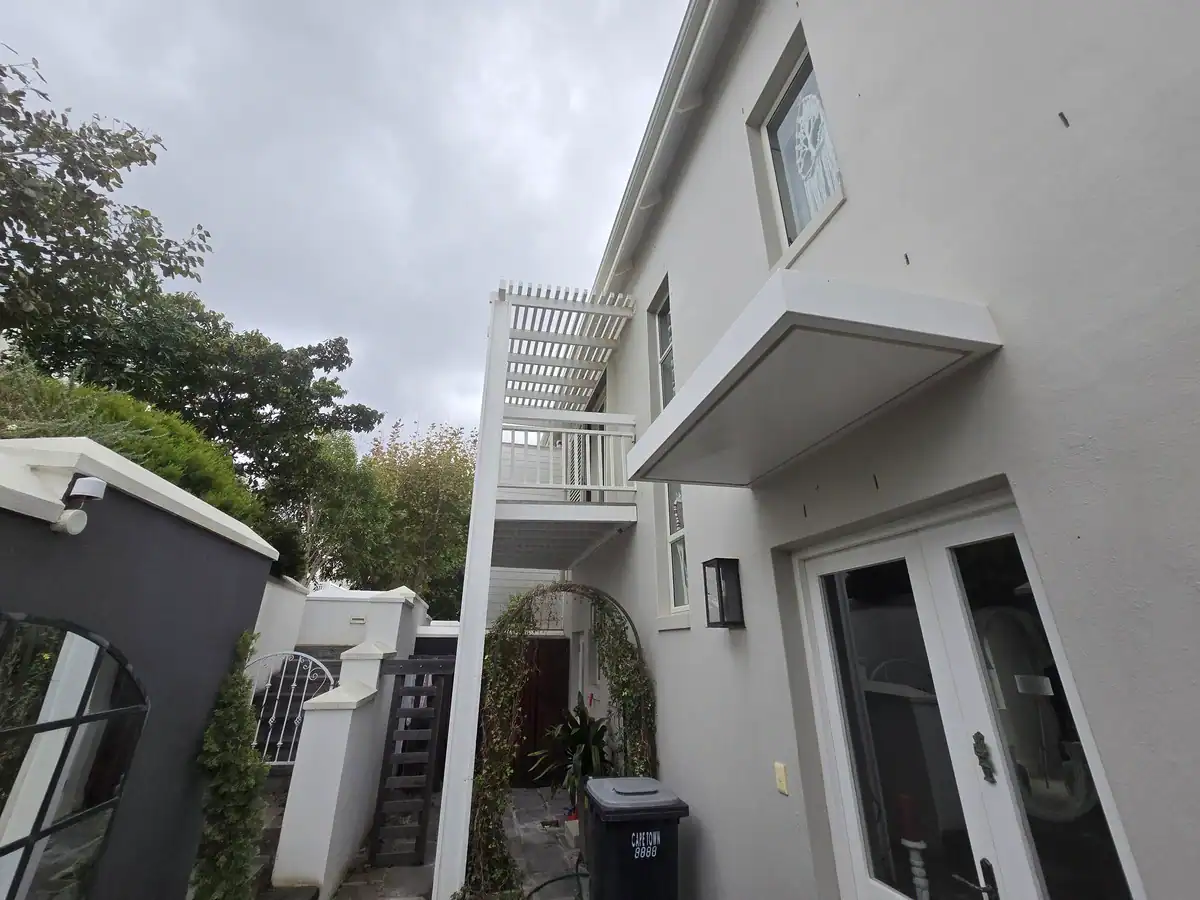
The main lesson is that preparation and coating choices must reflect the actual building. Plaster, exposed timber, fibre cement, concrete ceilings and moisture-sensitive boundary walls cannot all be treated identically.
Where cracks, failed seals, vulnerable wall tops or continuing reverse-side moisture are present, those conditions need to be considered before final coating.
The documented project was supervised by working foreman Riaan, with the quotation recording experienced, Paint Academy-trained employees.
For the wider exterior service, see Exterior Painters Kenilworth. For damaged plaster, follow Kenilworth Wall Preparation and Crack Repairs.
For moisture-related wall symptoms, see Damp Proofing Kenilworth. For windowsills, parapets and joints, visit Waterproofing Kenilworth.
For recurring coating deterioration and boundary-wall limitations, read Peeling and Bubbling Paint Kenilworth and Boundary Wall Painting Kenilworth.
Return to our Painters Kenilworth flagship for the full local service range and established painting history.
For a new inspection and written quotation, call 082 374 6862 or visit the Painters Cape Town contact page.
Original project photography and documented specifications belong to Painters Cape Town. See our image licensing information.
Further guidance on the actual repairs, coatings and limitations documented in this completed project.
Understand preparation-first exterior painting of plaster, timber, fascia boards, Nutec and exposed building surfaces.
See why cracked windowsills, wall tops, parapets and failed flexible joints can require treatment before repainting.
Understand moisture readings, damp-related coating preparation and unresolved water-entry limitations.
Learn why hairline cracks, wider plaster defects and map cracking require different preparation systems.
Why soil contact, absent damp-proof barriers and backfill moisture affect realistic coating expectations.
Understand paint adhesion failure, blistering, moisture and why defective coating should be assessed before finishing.
The documented project was carried out from 6 to 14 April 2026.
Protimeter readings ranged from 8% to 17% across inspected exterior areas.
The inspection recorded bubbling paint, map cracking, hairline and wider plaster cracks, moisture-related discolouration, alkali deterioration, failed sealants, open joints, unwaterproofed horizontal surfaces, peeling timber coatings and mould-stained soffits.
No. The readings were considered together with the position, construction and visible defects of the wall. Several separate water-entry routes and continuing moisture conditions were identified.
Yes. Applicable prepared horizontal masonry received the documented two-coat Dulux Rainshield system.
Applicable fine cracks received alkali-resistant sealer followed by flexible Rainshield preparation.
Applicable 1–5 mm cracks were opened, cleaned, repaired with compatible masonry material, sanded and protected with flexible Rainshield across the repaired area.
Map cracking is a network of fine cracks spread across an area of plaster. The documented specification used flexible treatment across affected areas instead of trying to conceal every crack individually.
Yes. Deteriorated sealant was removed where required and applicable joints resealed with flexible single-pack polyurethane.
Yes. The inspection identified unsealed junctions between chimney structures and the main building as details requiring attention.
Some boundary and garden walls remained exposed to moisture from soil or the reverse side. Painting the visible face cannot create a missing damp-proof barrier within the masonry.
Some lower walls were exposed to moisture from the backfilled side. They could be fully prepared and treated, but continuing moisture migration from behind remained an identified limitation.
Yes. Loose coating was removed, bare wood primed, a full undercoat applied and the prepared timber finished with Dulux Pearlglo Waterbased.
Yes. Mould-stained Nutec soffits were treated and prepared as fibre-cement surfaces before repainting.
The original quotation specifies two coats of Dulux Weathershield to the prepared main-building walls.
Visit the Painters Kenilworth page.

Copyright 2026 , all rights reserved.