Documented Bishopscourt Painting Project
Bishopscourt Village Interior Painting Case Study
A genuine May 2026 occupied-home interior repaint involving residual moisture beside a previously waterproofed shower, wind-related ceiling and cornice movement, wall cracks, wet-area seal failure, historic water staining and painted joinery.
Protimeter readings across inspected areas ranged from 5.4% to 17%, demonstrating why a repaired water source and a fully dry paint substrate are not necessarily the same thing.
Project Evidence
- Private double-storey Bishopscourt Village home.
- Documented 18–28 May 2026 project.
- Protimeter readings: 5.4%–17%.
- Rhinoboard ceilings.
- Wind-related ceiling and cornice movement.
- Hairline and 1–3 mm wall cracks.
- Bedroom wall affected by a previously leaking shower.
- Failing bathroom sealant.
- Brown ceiling water staining.
- Painted doors, frames and skirting.
- Occupied-home furniture and floor protection.
- Working foreman: Riaan.
- Paint Academy-trained employed painters.
Real Bishopscourt Village Project Evidence
5.4%–17% Readings
The range showed that moisture conditions differed substantially across the inspected interior rather than every wall sharing one condition.
Residual Moisture After Repair
A bedroom wall adjoining a previously leaking shower remained moisture-affected even after the shower waterproofing had already been repaired.
Movement-Aware Repairs
Upper-storey cornice gaps associated with ceiling movement during windy conditions required flexible joint preparation rather than rigid filler alone.
Occupied-Home Protection
Flooring, furniture and adjoining finishes were protected before preparation and painting began.
Detailed Joinery Preparation
Chip marks, loose coating and damaged paint on doors, frames and skirting were repaired and prepared before the finishing system.
Experienced Employed Team
The quotation records Paint Academy-trained painters with at least ten years' experience with the company, supervised by working foreman Riaan.
Full Interior Repaint at a Bishopscourt Village Home
This documented May 2026 project involved a complete interior repaint at an occupied private double-storey home in Bishopscourt Village.
At first glance, much of the work could have been described as ordinary interior decorating: ceilings, cornices, walls, doors, frames and skirting.
The inspection showed why that description would have been incomplete.
Protimeter readings ranged from 5.4% to 17%, while the building also showed ceiling and cornice movement, multiple crack types, failing wet-area sealant, historic water staining and local woodwork damage.
The Shower Leak Had Been Addressed — But the Wall Was Still Moisture-Affected
One bedroom wall was positioned behind a shower that had previously leaked.
The shower waterproofing had already been repaired before our painting work.
That is important because it separates two different jobs:
repairing the source of the water and preparing the moisture-affected wall afterwards.
The adjoining wall still produced the highest reading within the documented 5.4%–17% range during our inspection.
A repaired leak therefore does not automatically mean that masonry has immediately dried to the same condition as unaffected interior walls.
Why We Did Not Treat Every Interior Wall the Same
The project contained both comparatively dry areas and surfaces carrying a recent moisture history.
Preparation therefore needed to follow the condition of the individual substrate rather than applying one identical primer sequence to every room merely for convenience.
Wind-Related Ceiling and Cornice Movement
The upper floor contained Rhinoboard ceilings with gaps opening between some cornices and walls.
The inspection linked these gaps to ceiling movement during windy conditions.
This changes the repair method.
A rigid filler placed across a moving joint can crack again as the ceiling and wall continue moving independently.
The specified repair therefore included flexible single-pack polyurethane at applicable gaps.
The Before Condition
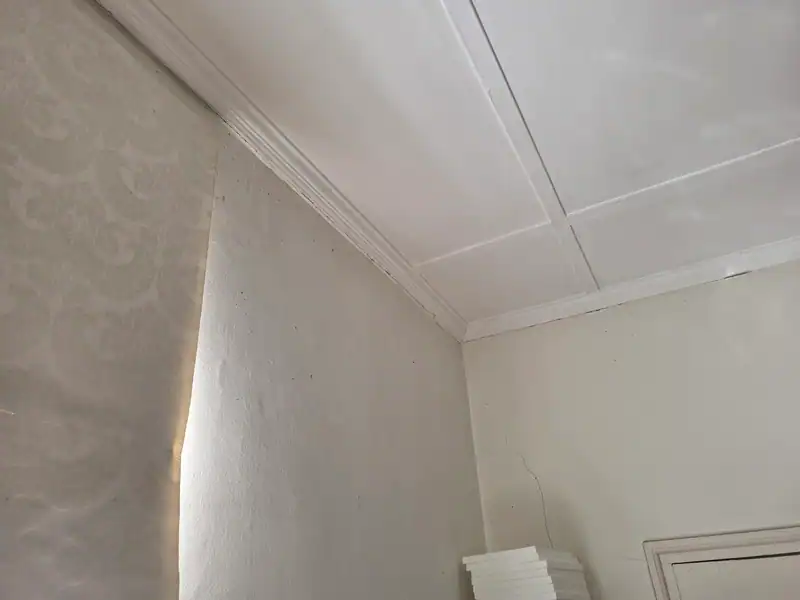
Hairline and Wider Wall Cracks
The inspection recorded both hairline cracking and larger 1–3 mm wall cracks.
These defects required preparation before the decorative topcoats rather than being hidden under additional paint.
Hairline areas received the specified sealer and flexible crack preparation, while larger defects required appropriate repair before priming and repainting.
Damp-Affected Coating Preparation
Loose or deteriorated coating on moisture-affected surfaces was prepared before the specified damp-related primer system was applied.
Dulux Pre-Paint Dampshield formed part of the recorded preparation system on applicable affected areas.
The purpose was to prepare the paint substrate after the known water source had been addressed. It should not be interpreted as a substitute for repairing an active leak.
Historic Ceiling Water Staining
A bathroom ceiling contained an existing brown water stain.
Once a water source is no longer active, old staining can still migrate through new decorative paint unless it is appropriately isolated during preparation.
The specified ceiling preparation therefore included stain-blocking undercoat where required before the ceiling topcoats.
Failing Sealant Around Baths and Basins
Deteriorating sealant was identified around bathroom fixtures.
Failed wet-area joints were removed and resealed where specified so that the surrounding decorative finish was not being completed against visibly failing joints.
Doors, Frames and Skirting Needed More Than Another Enamel Coat
Chip marks and local coating deterioration were visible on painted joinery.
Repairs included filling damaged areas, removing loose coating, feather-sanding hard edges and priming exposed timber before the specified undercoat and Dulux Pearlglo Waterbased finish.
Protecting an Occupied Bishopscourt Interior
The home remained an occupied private residence.
Flooring, furniture and surrounding finishes were therefore protected before preparation began.
Light-switch and plug covers were removed where practical and careful masking used around adjoining finishes to maintain clean lines.
Interior Finishing Systems
After the required repairs and preparation, Rhinoboard ceilings received the specified Dulux Wall & Ceiling system.
Prepared wall surfaces received Dulux Luxurious Silk, while doors, frames and skirting received the documented Pearlglo Waterbased enamel system.
As with the exterior case study, the product names are secondary to the preparation decisions that came first.
Completed Bishopscourt Village Interior
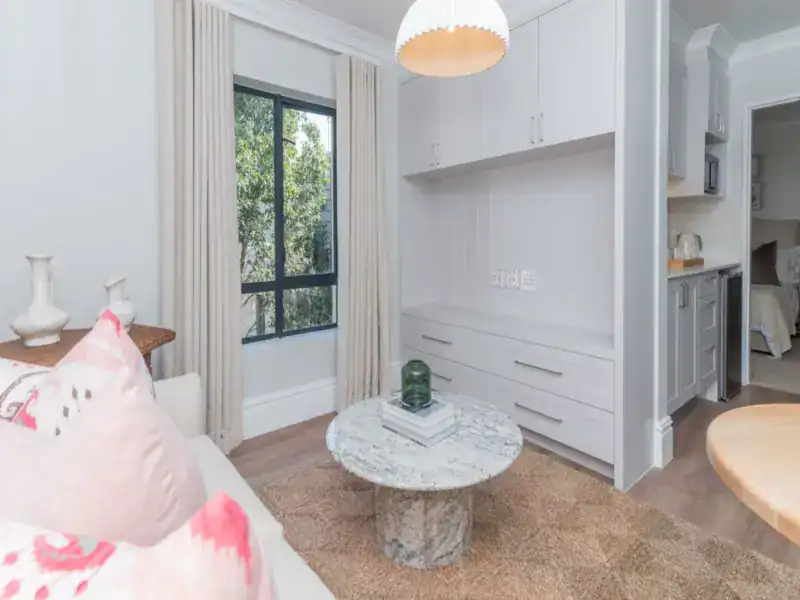
What This Bishopscourt Village Project Demonstrates
The strongest lesson is that repairing the source of a leak and repainting the damaged wall are separate stages.
The shower had already been addressed, but the adjoining masonry still carried a moisture history that had to be recognised when preparing the painting specification.
The project also shows why cornice movement, ordinary wall cracks, historic water staining, wet-area sealing and painted joinery should not all be treated with the same filler and primer.
Related Bishopscourt Painting Services
Return to Painters Bishopscourt.
Related services include Interior Painters Cape Town, Damp Proofing Cape Town and Residential Painters Cape Town.
Call 082 374 6862 or visit our contact page.
Original Painters Cape Town project photography. Image licensing information.
Helpful Painting Guides
Planning a Premium Home Repaint
See how interiors, floors, furniture, glazing and valuable finishes should be protected during substantial painting work.
Damp Walls and Repainting
Learn why moisture sources should be dealt with separately from the damaged coating and repainting that follows.
Why Paint Peels, Fades and Cracks
Understand why coating failure often begins below the finishing coat and why preparation determines durability.
Bishopscourt Village Interior Painting FAQs
When was this project completed?
The documented Bishopscourt Village interior project was carried out during May 2026, with the project period recorded as 18–28 May.
What moisture readings were recorded?
Protimeter readings across the inspected areas ranged from 5.4% to 17%.
What was the main moisture concern?
A bedroom wall adjoining a shower that had previously leaked remained moisture-affected even though the shower waterproofing had already been repaired.
Why can a wall remain damp after a leak has been repaired?
Masonry can retain moisture after the original water-entry source has been stopped. Repairing the source and preparing the still-affected wall are therefore separate stages.
What caused the cornice gaps?
The project inspection recorded gaps between second-floor cornices and walls associated with movement of the Rhinoboard ceiling during windy conditions.
Why were flexible repairs used at some cornice joints?
Where continued movement can occur, a flexible joint material is more appropriate than treating the gap as a completely static plaster crack.
What types of wall cracks were present?
The inspection recorded both hairline cracks and larger cracks in the approximately 1–3 mm range.
Were bathrooms included in the preparation?
Yes. Failing sealant around baths and basins formed part of the documented preparation where applicable.
How was the old ceiling water stain treated?
The ceiling specification included stain-blocking undercoat where required before the decorative ceiling coating.
Were doors, frames and skirting repainted?
Yes. Damaged and chipped painted joinery was repaired, sanded and primed where required before the undercoat and finishing system.
Was the house occupied during the project?
Yes. Flooring, furniture and adjoining finishes were protected while the interior preparation and painting proceeded.
Where can I see your wider Bishopscourt service?
Visit the Painters Bishopscourt page.

Copyright 2026 , all rights reserved.