Documented Durbanville Painting Project
D'Landen Estate Durbanville Exterior Painting Case Study
A real 2026 D'Landen Estate project involving high moisture readings, map cracking, failed sealants, unsealed expansion joints, alkali-related discolouration and unwaterproofed horizontal surfaces before exterior repainting.
The project demonstrates why successful exterior painting in Durbanville often depends on diagnosing moisture entry, repairing defects and preparing the substrate before decorative coatings are applied.
Real Durbanville Project Evidence — Not Generic Painting Content
19.7%–35.9% Moisture Readings
Protimeter readings recorded during the inspection ranged from 19.7% to 35.9%, providing measurable evidence of moisture-related conditions before preparation.
Written Diagnostic Findings
The quotation documented cracking, failed sealants, expansion-joint problems, powdery surfaces, alkali-related discolouration and unwaterproofed horizontal areas.
Preparation Before Paint
Cleaning, crack preparation, waterproofing, damp-related treatment and sealing were specified before the finishing coats were applied.
Direct Painting Contractor
Painters Cape Town is a direct painting contractor using full-time employed painters rather than a lead-generation enquiry service.
Working Foreman Supervision
Projects are supervised by working foremen who oversee preparation, workmanship, protection and daily site organisation.
27 Years' Painting Experience
Our Durbanville work is supported by 27 years of practical residential, estate, exterior, roof and moisture-related painting experience.
Exterior Painting at D’Landen Estate in Durbanville
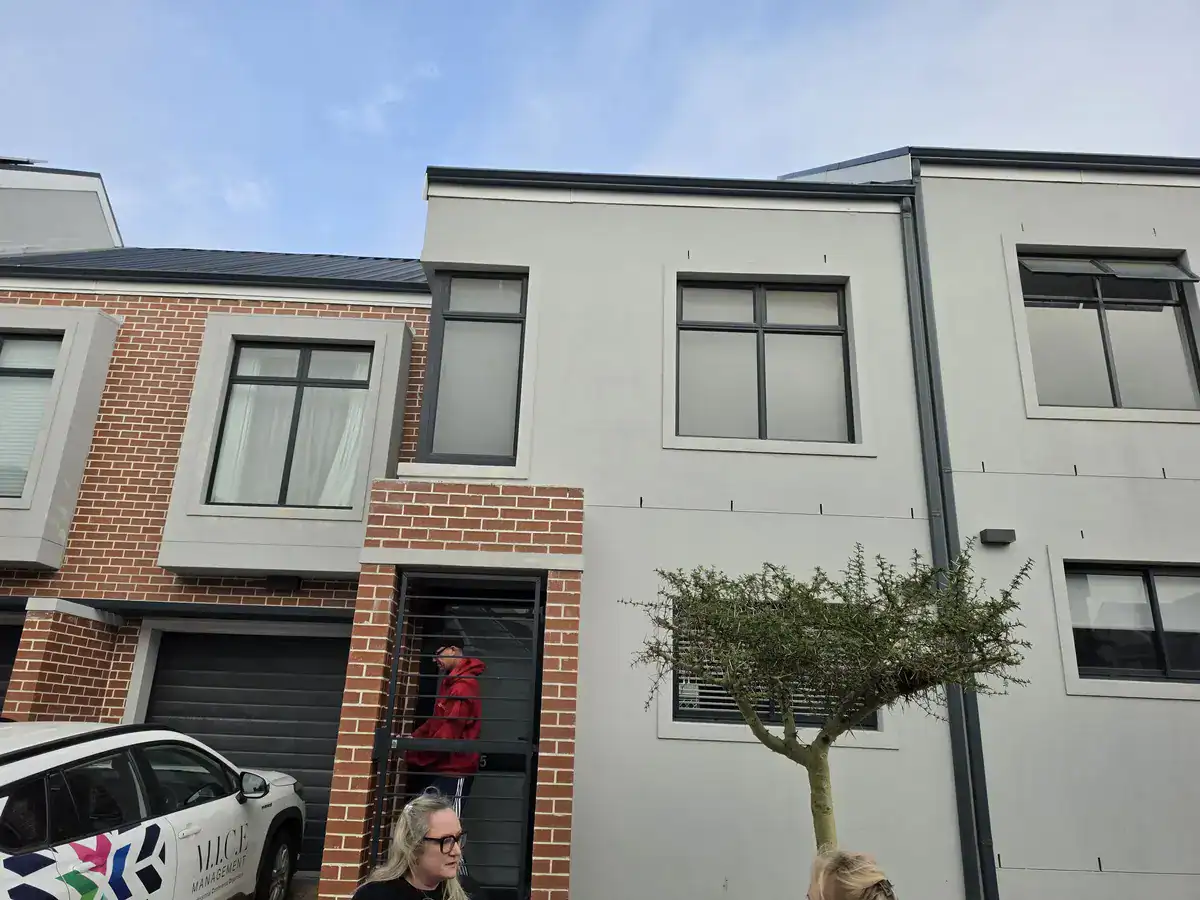
This documented exterior painting project was completed at D’Landen Estate in Vierlanden, Durbanville during 2026. Rather than treating the property as a straightforward repaint, our inspection identified several underlying conditions that required attention before new exterior coatings could be applied.
The project forms part of our wider Durbanville painting service, where we work on established family homes, estate properties, townhouses, complexes and other suitable residential buildings.
The D’Landen project is particularly useful as a case study because the visible discolouration and coating deterioration were connected to a combination of moisture movement, cracking, failed sealing, unprotected horizontal surfaces and alkaline conditions within cementitious substrates.
It demonstrates why exterior painting should begin with diagnosis and preparation rather than simply applying another decorative topcoat.
D’Landen Estate Project Overview
Location: D’Landen Estate, Vierlanden, Durbanville
Property type: Managed residential estate property
Project: Exterior preparation, waterproofing, damp-related treatment and repainting
Documented moisture readings: 19.7% minimum to 35.9% maximum
Key defects: Map cracking, plaster cracking, failed sealants, unsealed expansion joints, powdery surfaces, moisture-related discolouration and unwaterproofed horizontal surfaces
Additional observation: Iron-induced brown staining associated with irrigation overspray was visible on exterior surfaces.
Important principle: Moisture sources and substrate defects were considered before the final decorative coating system was applied.
What We Found During the D’Landen Inspection
Our inspection identified similar coating failures and moisture-related symptoms across areas relevant to the project. These findings were documented in the quotation so that the proposed preparation could be understood before work commenced.
High Moisture Readings
Protimeter readings recorded during the inspection ranged from 19.7% at the lowest measured point to 35.9% at the highest.
A moisture reading does not by itself identify the precise source of water, but it provides important evidence that the substrate should not simply be treated as a dry decorative surface.
Moisture conditions were therefore considered together with visible cracks, failed sealants, expansion joints, wall construction and horizontal surfaces.
Map Cracking and Plaster Cracks
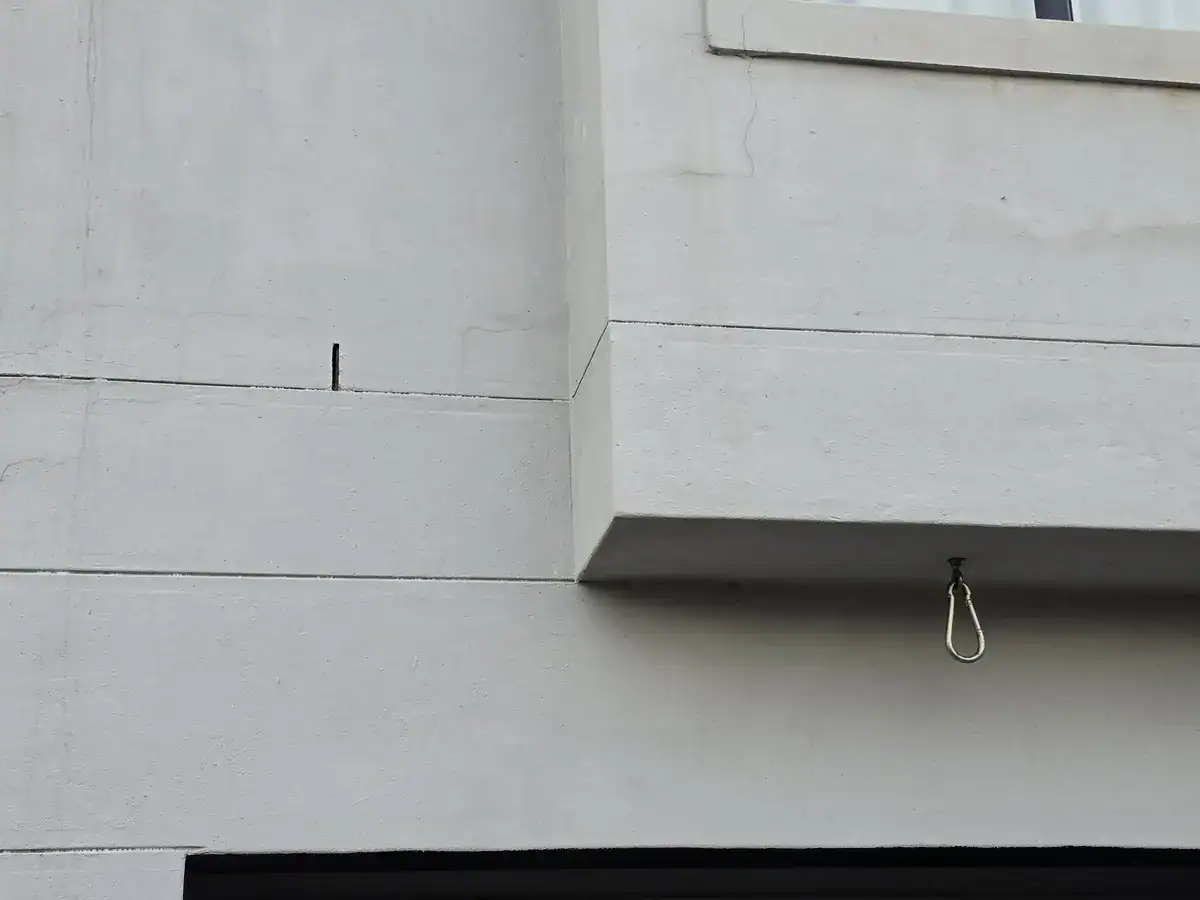
Map cracking, sometimes described as spiderweb cracking, was visible on plastered surfaces. Additional cracks were recorded on both vertical and horizontal areas, including walls, windowsills and expansion-joint locations.
These defects matter because small cracks can become pathways for rainwater and moisture, particularly where exposed horizontal surfaces or joints remain unprotected.
Applying new paint over active or poorly prepared cracking can temporarily improve appearance without dealing with the weakness underneath.
Failed Sealants Around Windows and Doors
Deteriorated sealing was identified around window and door areas. Where these junctions allow water to penetrate behind the coating system, repainting the wall alone cannot remove the source of the problem.
The project therefore included inspection and replacement of deteriorated sealant using flexible polyurethane sealant where specified.
This type of preparation is particularly relevant to exterior house painting because windows, doors, light fittings, penetrations and building joints all interrupt the continuity of an exterior wall.
Expansion Joints That Required Resealing
Expansion joints had not been effectively sealed in affected areas.
Expansion joints are designed to accommodate movement. They should therefore not simply be filled with rigid plaster or coated over as if they were ordinary wall cracks.
The specified preparation included sealing relevant new and existing expansion joints with flexible polyurethane sealant to help reduce moisture entry while retaining flexibility at the joint.
Unwaterproofed Horizontal Surfaces
Horizontal surfaces were another significant part of the moisture investigation. Parapet tops, windowsills and the tops of boundary or garden walls receive far more direct rainfall than vertical wall faces.
If these surfaces remain cracked, porous or inadequately protected, moisture can enter from above and later appear as discolouration, bubbling or peeling lower down the wall.
The D’Landen specification therefore included waterproofing of suitable horizontal tops before repainting the surrounding wall surfaces.
Moisture-Related Discolouration and Alkali Attack
Discolouration recorded during the inspection was associated with moisture movement through cementitious surfaces and the resulting alkaline conditions.
Cement-based plaster contains alkaline compounds. When moisture moves through the substrate, soluble alkaline salts can migrate toward the surface. This can contribute to colour loss, blotchy appearance and deterioration of the paint binder.
For that reason, simply covering discoloured areas with another finishing coat may not solve the underlying problem.
Preparation was designed around the condition of the substrate and included appropriate primers, damp-related treatment, waterproofing and crack preparation before repainting.
Homeowners experiencing similar paint deterioration can read more about our damp-related preparation and damp proofing service.
Boundary Walls and Moisture Limitations
An important part of this project was explaining what painting could and could not reasonably achieve.
Some boundary walls did not have an effective damp-proof separation between the masonry and moisture present in adjoining ground or backfilled areas.
Where water continues moving into a wall from behind or below, even an appropriate breathable or moisture-tolerant coating cannot permanently stop the moisture source.
This is why our quotations distinguish between:
- conditions that can reasonably be dealt with through painting preparation;
- conditions requiring waterproofing or sealing;
- and continuing building or ground-moisture conditions that remain limitations outside the decorative coating itself.
Painting contractors should not promise that another coat of paint will permanently cure moisture that is still entering the structure.
Foundation Walls Below Expansion-Joint Level
Moisture-related discolouration was also observed below weep-hole and expansion-joint levels where wall surfaces were exposed to moisture from the backfilled side.
These areas were prepared and treated according to the specified damp-related coating system, but continuing moisture migration from behind the wall remained an important limitation.
This distinction is valuable on many Durbanville estate and complex properties because landscaping, irrigation, retaining conditions, boundary walls and filled ground can all influence moisture movement through masonry.
Preparation and Waterproofing System
The effectiveness of the final exterior paint depends heavily on the condition of the surface underneath it. Preparation at D’Landen therefore addressed contamination, cracks, moisture entry and weak surfaces before the finishing system was applied.
1. Exterior Cleaning
Suitable exterior walls were high-pressure cleaned to remove loose material, grime, chalky deposits and contamination before further preparation.
More sensitive areas could be cleaned using the specified cleaning solution and clean water rather than inappropriate high-pressure washing.
2. Fungal Treatment Where Required
Areas affected by biological growth were treated using the specified fungal-cleaning system before coating.
Painting over active contamination can compromise adhesion and allow staining or biological growth to reappear.
3. Waterproofing Horizontal Tops
Suitable parapet tops, windowsills and the tops of boundary or garden walls were specified for waterproofing with Dulux Rainshield.
The waterproofing coats were applied in opposing directions where specified to improve coverage of the prepared surface.
4. Damp-Related Priming
Prepared exterior areas affected by elevated moisture were treated using Dulux Pre-Paint Dampshield in accordance with the project specification.
The quotation specifically provided additional treatment where substrate readings remained within the moisture range requiring further damp-related preparation.
5. Window, Door, Joint and Penetration Sealing
Deteriorated sealant around windows, doors and expansion joints was removed where required and replaced with flexible polyurethane sealant.
Wall-mounted fittings and other relevant penetrations were also considered because even relatively small unsealed openings can provide a path for rainwater into an exterior wall.
6. Hairline and Map Crack Treatment
Hairline cracks and areas of widespread map cracking received substrate-specific preparation rather than simply being concealed beneath the finishing coat.
The specified system included alkali-resistant preparation and Dulux Rainshield where appropriate to bridge and protect affected crack areas.
7. Larger Plaster Crack Repairs
Larger plaster cracks were opened where required to allow unstable material to be removed and the repair product to bond into a properly prepared joint.
Repaired areas were sanded and coated according to the specified system before the final wall coatings were applied.
Exterior Coating System Used at D’Landen Estate
Once the preparation and moisture-related work had been completed, the exterior painting system could proceed.
The documented specification included:
- Dulux Wallguard for prepared main-building and boundary-wall surfaces;
- Dulux Rainshield for specified waterproofing and crack-related applications;
- Dulux Dampshield for specified moisture-affected areas;
- flexible polyurethane sealant at relevant windows, doors, expansion joints and penetrations;
- appropriate preparation to Nutec fascia boards and soffits;
- and stain-blocking preparation where irrigation-related brown staining required treatment.
The important point is not the brand name alone. Coating performance depends on using the correct product for the substrate and condition, following the required preparation and dealing with moisture-entry defects before the final coats are applied.
What This Durbanville Painting Project Demonstrates
The D’Landen Estate project illustrates why a professional painting quotation should contain more than quantities of paint and a final colour.
The visible coating problems were connected to several different building conditions:
- elevated substrate moisture;
- map and plaster cracking;
- failed window and door sealants;
- unsealed expansion joints;
- unprotected horizontal surfaces;
- ground and backfill moisture affecting some walls;
- alkali-related coating deterioration;
- and irrigation-related staining.
Each condition required a different response. Painting everything with the same primer and topcoat would not have addressed those differences.
This preparation-first approach is also used across our broader exterior painting service in Cape Town.
Painting Estate and Managed Properties in Durbanville
D’Landen is one example of the estate and managed-property environments we work in across Durbanville and the Northern Suburbs.
These projects can involve more than individual wall preparation. Contractor access, resident communication, working hours, protection of paving and landscaped areas, colour requirements and phased work may all need to be considered.
Our estate and body corporate painting service supports suitable residential estates, complexes, townhouses, sectional-title properties and managed buildings.
More Durbanville Painting Experience
This project forms part of a growing body of documented Durbanville work by Painters Cape Town.
Our main Painters Durbanville page covers painting services, Durbanville property conditions, estates and neighbourhoods together with additional completed-project evidence.
Other documented 2026 Durbanville projects include moisture-related paint failure and repairs at Graanendal Estate, slate-roof preparation and painting at Clara Anna Fontein Estate, and broader exterior and roof painting work in Vierlanden.
As these individual project case studies are published, they will form part of a connected Durbanville painting resource built around genuine inspections, specifications, project photographs and completed work rather than generic location content.
Durbanville also forms part of our wider Cape Northern Suburbs painting service area.
Professional Painting Services Relevant to This Project
The D’Landen project combined several areas of our painting and preparation experience. Property owners can view the related services below:
- Exterior Painters Cape Town — preparation and repainting of exterior walls, plaster, fascias, boundary walls and related surfaces.
- Damp Proofing Cape Town — moisture-related preparation, damp-affected coatings and identification of conditions requiring attention before repainting.
- Estate and Body Corporate Painting Cape Town — painting for managed estates, complexes, sectional-title properties and common areas.
- Painters Durbanville — our main Durbanville service page covering residential, estate, exterior, interior, roof and moisture-related painting work.
Why Written Diagnostic Information Matters
A painting quotation should help a property owner understand why a coating is failing and what preparation is proposed before new paint is applied.
At D’Landen Estate, recording moisture readings and documenting defects such as cracking, failed sealing, exposed horizontal surfaces and moisture limitations meant that the project scope could distinguish between ordinary decorating and the remedial preparation required beforehand.
This also protects the client from unrealistic expectations. A coating system can protect a correctly prepared surface, but it cannot permanently overcome structural movement, continuing ground moisture, unresolved leaks or water entering from an uncontrolled source behind the painted face.
For this reason, every suitable quotation from Painters Cape Town includes written diagnostic information describing visible conditions relevant to the proposed work.
Need an Exterior Painting Inspection in Durbanville?
Peeling, cracking, chalking and discolouration do not always mean that another coat of paint is the correct first step.
Where moisture, failed joints, deteriorated sealants, horizontal waterproofing defects or weak underlying coatings are present, identifying those conditions before repainting can substantially improve the basis for the new coating system.
If you own or manage a home, estate property, townhouse or complex in Durbanville, our Durbanville painting contractors can inspect the relevant surfaces and provide a written quotation describing the proposed preparation and coating system.
For a Durbanville inspection and written painting quotation, call 082 374 6862
or visit our contact page.
Helpful Painting Guides
Why Paint Peels in Cape Town
Understand why Cape Town weather causes paint to peel, fade and crack, and why preparation matters before repainting.
Exterior Paint Failure in Somerset West
Learn why coastal and Winelands homes often fail early at exterior walls, roofs and boundary walls.
Preparing Damp Walls Before Repainting
See how damp walls, timber and boundary walls should be prepared correctly before painting mature properties.
D'Landen Estate Durbanville Painting FAQs
What problems were found before painting at D'Landen Estate?
The inspection identified elevated moisture readings, map cracking, plaster cracks, failed window and door sealants, unsealed expansion joints, powdery surfaces, alkali-related discolouration, unwaterproofed horizontal surfaces and irrigation-related brown staining.
What were the moisture readings at the D'Landen project?
Protimeter readings recorded during the inspection ranged from 19.7% at the lowest measured point to 35.9% at the highest.
Why was the property not simply repainted?
Several visible paint defects were associated with moisture entry, cracking and failed sealing. Repainting without dealing with these conditions would have left important underlying causes unresolved.
Why were expansion joints resealed?
Expansion joints accommodate building movement. Deteriorated or unsealed joints can also allow moisture entry, so relevant joints were prepared and resealed with flexible polyurethane sealant.
Why must horizontal wall surfaces be waterproofed?
Parapet tops, windowsills and wall caps receive direct rainfall. Cracked or porous horizontal surfaces can allow water to enter from above and later cause staining, bubbling or peeling lower down the wall.
What is map cracking?
Map cracking is a network of fine cracks across a plastered surface. The appropriate repair depends on the condition and movement of the substrate, but it should be assessed and prepared rather than simply covered with finishing paint.
What caused the exterior discolouration?
The project included moisture-related discolouration associated with alkaline conditions in cementitious surfaces as well as brown staining linked to irrigation overspray.
Can damp-proof paint permanently stop moisture entering from behind a boundary wall?
No. A coating can form part of an appropriate preparation system, but it cannot permanently stop water that continues entering the masonry from soil, backfill, irrigation or another uncontrolled source behind the painted surface.
Which coatings were specified at D'Landen Estate?
The documented system included Dulux Wallguard, Dulux Rainshield and Dulux Dampshield in the relevant prepared areas, together with flexible polyurethane sealing and substrate-specific primers and repair products.
Do you undertake other painting projects in Durbanville?
Yes. Painters Cape Town undertakes suitable interior, exterior, roof, residential, estate, body corporate and damp-related painting projects throughout Durbanville and surrounding Northern Suburbs areas.
How can I request a Durbanville painting quotation?
Call 082 374 6862 or visit the Painters Cape Town contact page to arrange an inspection and written quotation.

Copyright 2026 , all rights reserved.