Roof Painting Paarl
See genuine Nantes Street roof before-and-after photographs and further evidence of corrugated-roof cleaning, corrosion preparation, primers and protective coatings.
Lemoenkloof • Paarl • Cape Winelands
A documented 2026 Paarl project combining corrugated-roof painting, exterior wall restoration, waterproofing, crack repairs, damp-related preparation, rust treatment, varnished timber and metal garage-door painting.
The inspection recorded 1.4%–17.9% Protimeter readings together with chalky and weathered roof sheets and walls, mould, map cracking, failed seals, deteriorated expansion joints and ageing horizontal waterproofing.
This Lemoenkloof project combined roof, masonry, waterproofing, timber and metalwork preparation under one written specification. The final appearance came after the condition of each substrate had first been assessed and prepared.
Protimeter readings were considered together with cracks, staining, wall construction, waterproofing details and other possible moisture routes.
The weathered corrugated roof required cleaning, biological treatment, rust inspection, waterproofing repairs, full priming and a two-coat Dulux Roofguard Charcoal finish.
Hairline cracks, map cracking, wider plaster cracks and movement joints received different treatments rather than one generic filler.
Parapets, windowsills and wall tops required renewed waterproof protection because the earlier waterproofing had aged.
Boundary and backfilled foundation walls were treated honestly: painting the accessible face cannot permanently stop continuing moisture from behind or below.
Corrugated steel, plastered masonry, Nutec, varnished timber and metal garage doors each required substrate-specific preparation.
The project quotation records our painters as Paint Academy trained and having at least ten years of experience with the company.
Working foreman Riaan supervised the project, supported by additional contractor site visits.
Painters Cape Town completed a substantial roof and exterior painting project at a private home in Lemoenkloof, Paarl, during August 2026.
This was more than an ordinary repaint. The project involved weathered corrugated roof sheets, exterior plastered walls, steel garage doors, varnished exterior timber, Nutec fascias and soffits, cracked masonry, horizontal waterproofing and moisture-related preparation.
The original site inspection recorded Protimeter readings from Min 1.4% to Max 17.9%, along with chalking, mould, plaster cracks, failed seals, ageing waterproofing and deteriorated existing coatings.
Each substrate required an appropriate preparation and finishing system. The work was carried out by our directly employed painting team, under working-foreman supervision.
This original case study supports our Painters Paarl flagship and, particularly, our Roof Painting Paarl service.
Location: Lemoenkloof, Paarl
Property: Private residential home
Project period: August 2026
Protimeter readings: Min 1.4%, Max 17.9%
Roof: Corrugated metal roof sheets
Final roof coating: Dulux Roofguard Charcoal
Walls: Main building, entrance and garden walls
Additional surfaces: Steel garage doors, varnished windows and exterior doors, Nutec fascias and soffits
Waterproofing: Suitable parapets, windowsills and exposed wall tops
Supervision: Working foreman Riaan with additional contractor site visits
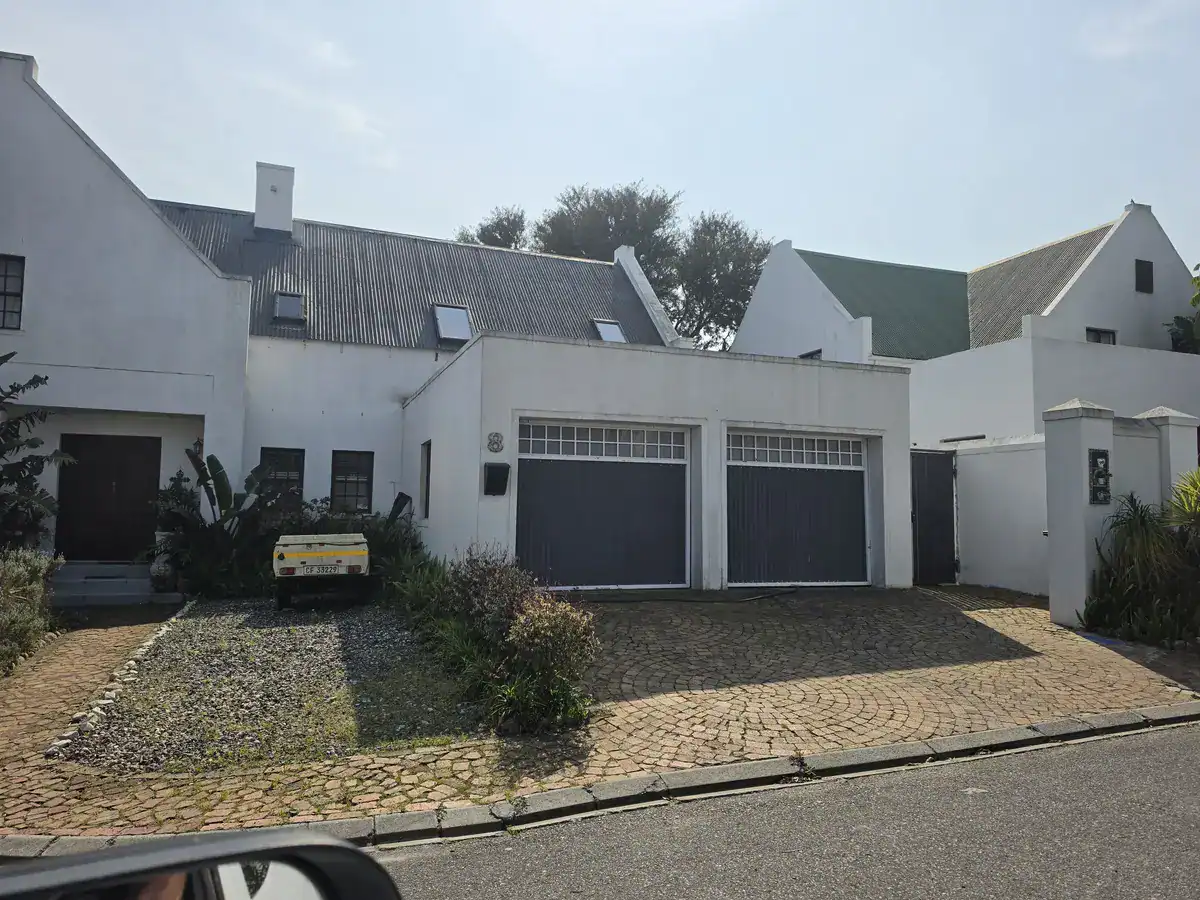
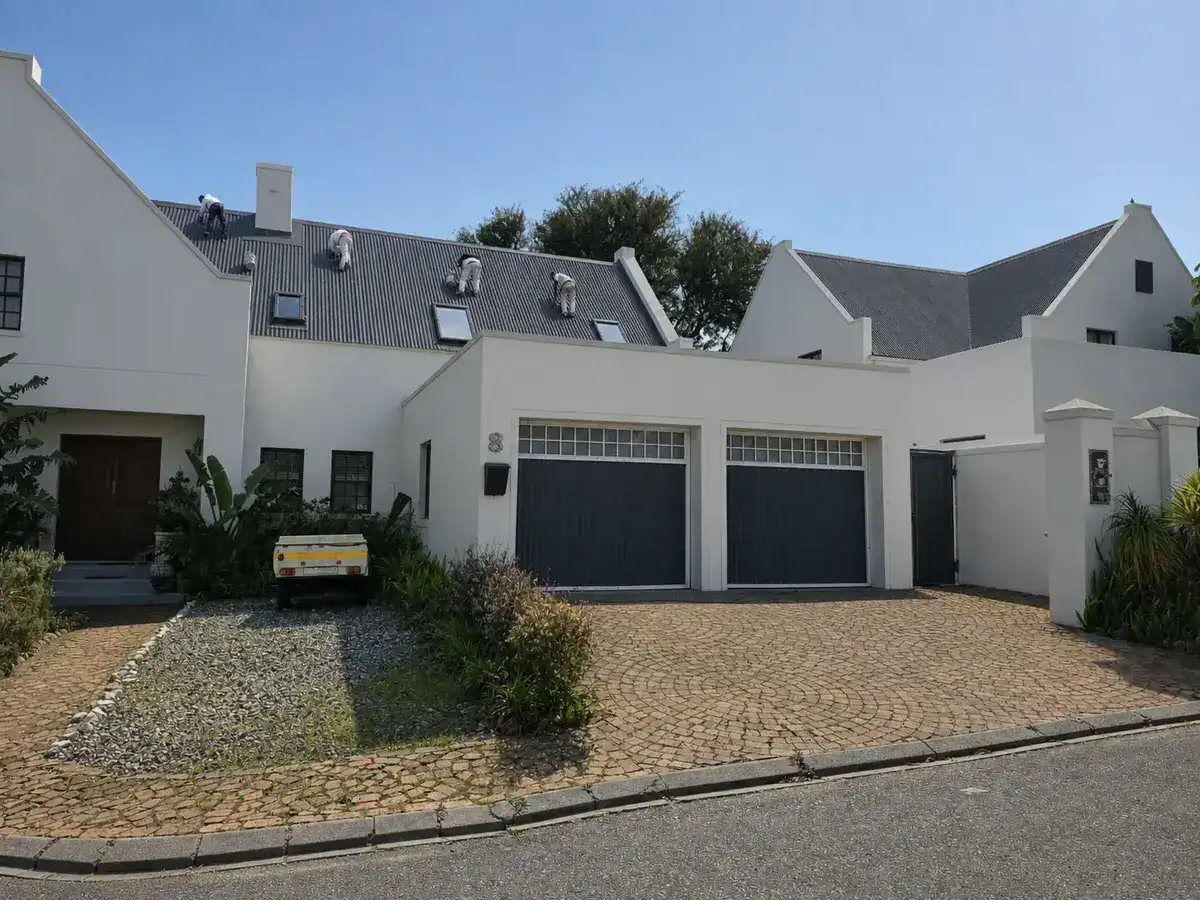
These photographs document the property’s condition before painting and the painting team working on the corrugated roof. The second photograph shows work in progress, not a separate final after photograph.
The inspection identified several different maintenance problems rather than one isolated paint defect:
These observations were included in the written preparation specification before painting began.
The case is also relevant to our Why Paint Peels and Bubbles in Paarl guide, which explains why coating deterioration should be investigated before another coat is applied.
Recorded moisture readings ranged from 1.4% to 17.9% across the assessed exterior masonry.
The variation was significant because a single reading cannot be used to diagnose an entire property as having one type of damp.
Moisture observations were considered together with the condition of the plaster, wall construction, parapets, windowsills, cracks, failed sealants, expansion joints, foundation walls and other possible moisture-entry routes.
Protimeter readings support an inspection; they do not independently identify the water source.
The existing roof and wall coatings had deteriorated through weathering and exposure.
Chalking leaves powdery residue as an ageing coating breaks down. Painting over this weak surface can prevent the new coating from bonding correctly to the underlying substrate.
Other defects—including cracks, failed sealants, moisture-sensitive plaster and worn waterproofing—needed attention before the final decorative finish.
Correct preparation therefore formed the foundation of the work.
Suitable exterior surfaces were specified for high-pressure cleaning to remove loose paint, chalking, grime and surface contamination.
Where pressure washing was not suitable, the specification included manual cleaning using ProGold GP Cleaner followed by a clean-water rinse.
Loose coating material and contamination had to be removed before compatible sealers, primers, waterproofing and finishing coats could be applied.
Mould and staining were recorded on parapets, main-building walls, garden walls and roof-related surfaces.
The preparation specification included ProGold Fungal Wash for affected surfaces before subsequent coating preparation.
Biological contamination should not simply be concealed beneath new paint. The affected surface and any contributing moisture conditions must be considered before repainting.
The property’s horizontal waterproofing had been completed several years earlier and had deteriorated to the point where renewal was required.
The project therefore included suitable parapets, windowsills and exposed wall tops.
The original specification called for two coats of Dulux Rainshield, with the second coat applied perpendicular to the first.
These horizontal surfaces are exposed directly to rainfall. Deteriorated coatings, cracks and openings can allow water into adjacent masonry, sometimes causing paint failure lower down the wall.
Our Waterproofing Paarl page explains these details and includes further local project evidence.
The Lemoenkloof inspection identified different types of plaster cracking. Each required a preparation method suited to the defect.
Suitable cracks up to approximately 1 mm were specified for alkali-resistant sealing, followed by Dulux Rainshield worked into the prepared cracks.
This treatment was intended for appropriate fine defects, rather than cracks involving significant structural movement.
Areas affected by networks of fine cracks required broader preparation.
Following the relevant primer work, Dulux Rainshield was specified for suitable map-cracked areas rather than simply applying the decorative wall coating over the existing cracking.
Suitable cracks measuring approximately 1–5 mm required a different procedure.
These were specified to be opened into appropriate V-shaped joints, cleaned and repaired with compatible masonry patching material.
After curing and sanding, the appropriate Dulux Rainshield treatment was specified across the repaired surfaces before the finishing coats.
These dimensions and repair methods describe this project’s written specification. They are not a guarantee that every crack of a similar size is structurally harmless or suitable for the same repair.
For more detailed technical examples, including original Kaapse Draai and Pearl Valley photographs, see Wall Preparation & Crack Repairs Paarl.
Selected sealants around windows and doors were deteriorating.
The quotation specified removing failed sealant where required and resealing suitable joints with a flexible single-pack polyurethane sealant.
Other relevant fittings and wall penetrations were also considered because openings around frames and penetrations can allow rainwater to enter behind the coating.
Expansion joints are designed to accommodate movement. Rigid plaster filler is not an appropriate substitute for a movement-tolerant joint system where movement is expected.
The original scope therefore included flexible polyurethane sealant for deteriorated expansion joints where required.
Flexible sealing can accommodate movement within its intended capability, but it cannot prevent ongoing structural movement.
Some exterior wall coatings showed discolouration associated with moisture movement through cement-based surfaces.
Moisture can transport soluble salts within masonry. Under certain conditions, these can contribute to discolouration and deterioration of the paint film.
The preparation approach considered cracking, waterproofing, failed seals and moisture-sensitive surfaces rather than assuming that another decorative topcoat would solve the problem.
Chalky or friable wall areas were specified for Dulux Bonding Liquid where necessary to stabilise suitable remaining material.
Moisture-affected areas were also specified for Dulux Pre-Paint Dampshield or Dulux Dampshield treatment where appropriate, according to the recorded condition and preparation requirements.
These coating systems were part of the agreed remedial approach. They were not described as substitutes for repairing accessible moisture-entry defects.
For a more detailed explanation of moisture-related painting limitations, see Damp Proofing Paarl.
The project documentation recorded that certain boundary and garden walls did not have an effective damp-proof barrier separating the masonry from ground moisture.
Water can continue moving into these walls through soil, irrigation or backfill.
Preparing and repainting the accessible face does not create a missing structural damp-proof course.
Consequently, moisture-related discolouration, bubbling or peeling may recur even after careful preparation where the underlying moisture source remains active.
These limitations were explained in the original quotation rather than promising that decorative paint would permanently prevent moisture movement.
Moisture-related discolouration was also noted below some weep-hole and expansion-joint levels.
Parts of these surfaces were exposed to moisture from the backfilled side of the wall.
The visible face could receive appropriate surface preparation and specified coatings, but paint on that face could not permanently eliminate water entering from behind.
The roof formed one of the most important parts of this project.
The existing corrugated-metal roof coating was chalky and weathered. Proper cleaning, corrosion preparation, compatible priming and appropriate roof finishing were required.
For homeowners specifically looking for a contractor to paint a similar roof, our dedicated Roof Painting Paarl page provides further evidence from this project and original Nantes Street before-and-after photographs.
The roof specification included high-pressure cleaning to remove old loose coatings, chalking, grime and other contamination.
Where appropriate, manual cleaning was specified instead.
Fungus-affected areas were treated before additional roof preparation.
The corrugated sheets were inspected for corrosion.
Where rust was present, loose corrosion was removed and the relevant areas were treated with Duram NS1 rust converter and primer before the full primer coat.
Painting directly over active rust would not remove the underlying corrosion.
Potential water-entry areas were inspected separately from the decorative roof coating.
Where appropriate, the original specification allowed for compatible waterproofing material reinforced with a mesh membrane at identified corrugated-sheet details.
Local waterproofing and roof painting are related activities, but they are not identical services.
Following the relevant cleaning, fungal treatment, rust preparation and local waterproofing, the corrugated roof received the specified full Dulux Rust Primer coat.
The full primer system formed an important preparation stage beneath the final roof finish.
The homeowner selected Dulux Roofguard in Charcoal as the final roof colour and coating.
The prepared and primed roof was finished with two coats of Dulux Roofguard Charcoal.
The roof-painting scope therefore included considerably more work than simply applying two coloured coats over the existing paint.
A roof coating protects and refreshes a suitable sound substrate. It does not replace damaged sheets, failed flashings, defective fasteners or repairs to serious corrosion and structural roof problems.
Active leaks and unrelated roofing defects should be identified and repaired appropriately rather than relying on a decorative coating alone.
The steel garage doors were included in the exterior metal-painting scope.
The existing coatings and metal surfaces needed appropriate cleaning, assessment and preparation before the compatible finish was applied.
Loose paint and corrosion must be considered on garage doors just as they must on exposed metal roof sheets, although the specific finishing systems may differ.
The property had varnished exterior woodwork that required maintenance.
The existing finish was specified for light sanding with suitable scouring pads or fine-grit sandpaper, reducing the sheen and creating a suitable key for the next coat.
The timber needed to be clean, dry and sound before receiving the Dulux Woodgard varnish system.
This differed from the preparation of masonry, painted metal and Nutec components.
Peeling paint was recorded on Nutec fascia components at the rear of the property.
The agreed preparation involved removing loose coating material, sanding, feathering hard paint edges and completing fungal treatment where necessary.
The project finishing schedule specified Dulux Roofguard for suitable prepared Nutec soffit areas.
Following cleaning, crack preparation, waterproofing, suitable sealing and damp-related work, the main-building, entrance and garden walls received two coats of Dulux Wallguard.
These finishing coats were the final stage of a broader preparation system rather than the starting point of the project.
Our Exterior Painters Paarl page explains our wider exterior service, including additional original Kaapse Draai project evidence.
The original project documentation included the following materials according to the relevant surface and work requirements:
| Surface or defect | Documented preparation or coating |
|---|---|
| Corrugated-metal roof | Dulux Rust Primer followed by two coats of Dulux Roofguard Charcoal |
| Exterior main-building and garden walls | Dulux Wallguard |
| Horizontal masonry waterproofing | Dulux Rainshield |
| Moisture-affected masonry | Dulux Pre-Paint Dampshield or Dulux Dampshield where specified |
| Chalky wall surfaces | Dulux Bonding Liquid where appropriate |
| Varnished exterior woodwork | Dulux Woodgard |
| Prepared Nutec soffit areas | Dulux Roofguard as specified |
| Local corrosion | Duram NS1 treatment where required |
| Flexible perimeter and expansion joints | Single-pack polyurethane sealant |
| Fungal contamination | ProGold Fungal Wash where required |
These product names reflect the documented project systems. Their inclusion does not imply a manufacturer endorsement or an automatic coating warranty. Any supplier-backed warranty is subject to the applicable written specification, preparation, substrate conditions and exclusions.
Lemoenkloof demonstrates why two properties of a similar size can require very different preparation and painting costs.
At this home, the exterior scope included metal-roof preparation, wall cracking, waterproofing, moisture-related surfaces, varnished timber, steelwork and Nutec components.
Those surfaces required separate inspection and preparation before finishing.
Our House Painting Costs Paarl guide explains why preparation, access, roofs and different coating systems influence a written quotation.
This Lemoenkloof project is one part of our documented painting history in Paarl.
Our Courtrai interior project demonstrates a different set of preparation requirements involving double-volume timber ceilings and movement-sensitive cornices.
We also have dedicated estate-painting evidence from our completed Val de Vie project. Val de Vie additionally has its own Painters Val de Vie service page, separate from our general Paarl services.
For the full range of local work, see Painters Paarl. Our wider regional coverage is described on Cape Winelands Painters.
Painters Cape Town has 27 years of painting-contractor experience.
The original Lemoenkloof quotation recorded painters who were Paint Academy trained and had at least ten years of experience with the company.
Working foreman Riaan supervised the project, supported by additional contractor site visits.
Our painting teams are full-time employees rather than subcontracted crews. Clients deal directly with the contractor responsible for the inspection, quotation, preparation, painting and handover.
If your home has a weathered corrugated roof, cracked exterior plaster, peeling paint, mould, failed seals, ageing waterproofing, rust or deteriorating exterior timber, the correct starting point is an inspection of the affected surfaces.
We’ll discuss the preparation required and provide a written quotation describing the agreed coating systems, work scope and relevant limitations.
Call 082 374 6862 or visit our contact page to request an inspection in Paarl.
See genuine Nantes Street roof before-and-after photographs and further evidence of corrugated-roof cleaning, corrosion preparation, primers and protective coatings.
Explore exterior wall preparation, weathered coatings, cracks, plaster repairs, timber and metalwork, supported by original Paarl project evidence.
Learn why parapets, windowsills, wall copings and failed seals may need waterproofing attention before exterior repainting.
Compare hairline, map and wider plaster cracks, flexible joint sealing and original Kaapse Draai and Pearl Valley preparation photographs.
Understand moisture-related wall preparation, discolouration, alkali-related damage and the limitations of boundary-wall coatings.
Find out why old paint chalks, blisters, discolours or peels, and why correct diagnosis should precede preparation and repainting.
The documented project was carried out at a private residential property in Lemoenkloof, Paarl.
The documented project window was during August 2026.
Protimeter readings across assessed exterior masonry ranged from 1.4% to 17.9%.
The scope included corrugated roof sheets, steel garage doors, main-building, entrance and garden walls, varnished exterior windows and doors, horizontal waterproofing, damp-related preparation, flexible sealing and Nutec elements.
The corrugated roof sheets were weathered and chalky and required cleaning, biological treatment, corrosion inspection, waterproofing assessment and compatible priming before final coating.
The homeowner selected Dulux Roofguard in Charcoal as the final roof finish, applied as a two-coat system over the properly prepared and primed roof.
The roof was cleaned, fungus-affected areas treated, rust inspected and treated where necessary, relevant waterproofing defects addressed and a full coat of Dulux Rust Primer applied before the Roofguard finish.
Yes. The roof specification required corrosion inspection and Duram NS1 treatment on affected areas before the full roof primer.
Yes. The roof was inspected for possible water-entry defects, with compatible membrane waterproofing included for identified corrugated-sheet details where required.
No. Roof coating protects a suitable prepared roof surface but does not replace repair of damaged sheets, failed flashings, structural defects, defective fasteners or other active leak sources.
The inspection recorded weathered and chalky paint, mould and staining, map cracking, wider cracks, deteriorating perimeter seals, ageing waterproofing, failed expansion-joint sealant and moisture-related coating discolouration.
The specified system included cleaning followed by Dulux Bonding Liquid where required to stabilise remaining chalky surfaces before subsequent coatings.
Hairline cracks received alkali-resistant sealing and Dulux Rainshield flexible preparation.
Suitable wider cracks were opened, cleaned, filled with compatible masonry repair material and protected with the specified Rainshield system.
Map-cracked areas received flexible Dulux Rainshield preparation rather than simply being covered by the decorative topcoat.
Yes. Relevant horizontal surfaces were re-waterproofed with two coats of Dulux Rainshield because the previous waterproofing had aged.
Deteriorated sealant was removed where required and the relevant joints resealed with flexible single-pack polyurethane sealant.
Failed expansion-joint material was replaced with flexible polyurethane sealant so the joints could continue accommodating movement.
Yes. Identified areas received the specified Bonding Liquid and Dulux Dampshield preparation where appropriate, together with repair of cracks, waterproofing and failed seals.
The project quotation records boundary walls without effective damp-proof separation from ground moisture. Continuing moisture entering from below or behind can therefore cause future discolouration, bubbling or peeling.
The prepared main-building, entrance and garden walls received two coats of Dulux Wallguard.
The varnished windows and exterior doors were lightly sanded to reduce the sheen and create a suitable key before the Dulux Woodgard maintenance coating was applied.
No. Painters Cape Town uses full-time employed painters with working-foreman supervision.
Call 082 374 6862 or visit the Painters Cape Town contact page to arrange a physical inspection and written quotation.

Copyright 2026 , all rights reserved.