Lemoenkloof Waterproofing & Exterior Project
See genuine 2026 project evidence of ageing horizontal waterproofing, cracks, deteriorated expansion joints, failed seals and moisture-related exterior preparation.
Preparation-First Waterproofing Contractors in Paarl
Inspection-led waterproofing and sealing of suitable exterior masonry, wall copings, parapets, windowsills and vulnerable building junctions.
With 27 years of painting and preparation experience, we identify cracked surfaces, deteriorated waterproofing and failed sealants before specifying remedial work. Genuine projects in Lemoenkloof, Courtrai and Pearl Valley document our practical approach.
Our full-time employed painting teams work under experienced foremen. We inspect the property, document the findings and explain what waterproofing can realistically achieve before work begins.
Effective waterproofing begins with identifying vulnerable surfaces and understanding how water may enter a building. Our approach is supported by original Paarl project records and written specifications.
Established experience in painting, substrate preparation, waterproofing-related repairs and coating systems.
A documented 2026 project involving aged horizontal waterproofing, cracked masonry and weather-exposed surfaces.
Kaapse Draai observations identified vulnerable wall tops, failed seals, cracked plaster and parapet staining.
A 2025 estate-home specification recorded horizontal waterproofing and joint-sealing requirements.
Inspection readings are recorded with minimum and maximum values and assessed alongside visible building defects.
Suitable exposed horizontal masonry is assessed for deteriorated waterproofing, cracks and incompatible previous coatings.
Window, door, expansion-joint and penetration seals are checked and included in the quotation where required.
Written specifications may include compatible primers, Dulux Rainshield and suitable flexible sealing systems.
We distinguish rainwater entry from continuing ground or backfill moisture that surface coatings cannot permanently stop.
Our own employed painting teams undertake appropriate preparation and coating work rather than subcontracted crews.
Quotations record the observed defects, proposed preparation, included waterproofing details and applicable exclusions.
Experienced working foremen oversee preparation, site protection, application and work included in the agreed scope.
Waterproofing suitability, product selection and any warranty depend on the actual substrate and written specification. Continuing moisture from inaccessible ground-contact or backfilled surfaces may remain outside a surface-coating warranty.
Painters Cape Town undertakes suitable masonry waterproofing, crack preparation and joint-sealing work in Paarl as part of its preparation-first painting and property-maintenance services.
Waterproofing should begin by considering where water can enter the building. Cracked parapets, weathered windowsills, exposed wall tops, deteriorated sealants and movement joints can permit rainwater to enter masonry and affect coatings elsewhere.
Our approach is based on physical inspection, written diagnostic observations and a project-specific specification. We do not recommend simply applying a waterproof coating over unsound plaster, failed joints or an unidentified water-entry problem.
Genuine project evidence from Lemoenkloof, Kaapse Draai in Courtrai and Pearl Valley demonstrates the different waterproofing concerns found at Paarl residential properties.
For the full range of local painting services, visit our Painters Paarl page. For exterior painting and complete wall redecoration, see Exterior Painters Paarl.
Our September 2026 Kaapse Draai inspection provides first-hand evidence of how several apparently separate defects can create potential routes for moisture entry into exterior masonry.
Location: Kaapse Draai, Courtrai, Paarl
Quotation date: 11 September 2026
Protimeter readings: Min 8.7%, Max 26.5%
Relevant scope: Exterior masonry preparation, horizontal waterproofing, crack repairs, joint and penetration sealing, and damp-sensitive surface preparation.
The inspection recorded map cracking, cracks on horizontal and vertical surfaces, deteriorating perimeter sealants, unsealed joints and mould staining on parapet walls. The horizontal masonry had not received adequate waterproof protection.
These defects required a coordinated preparation specification rather than a standard repaint that addressed only the visible wall faces.
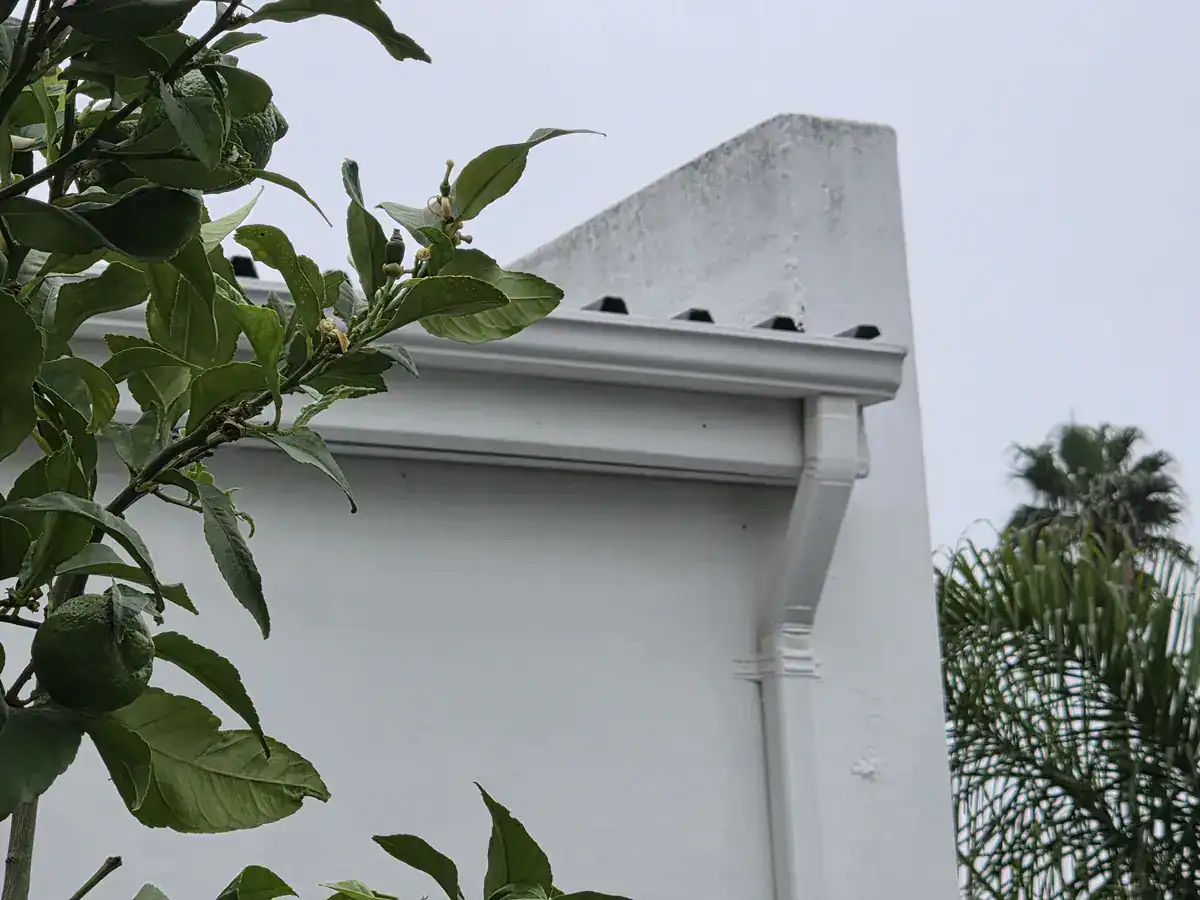
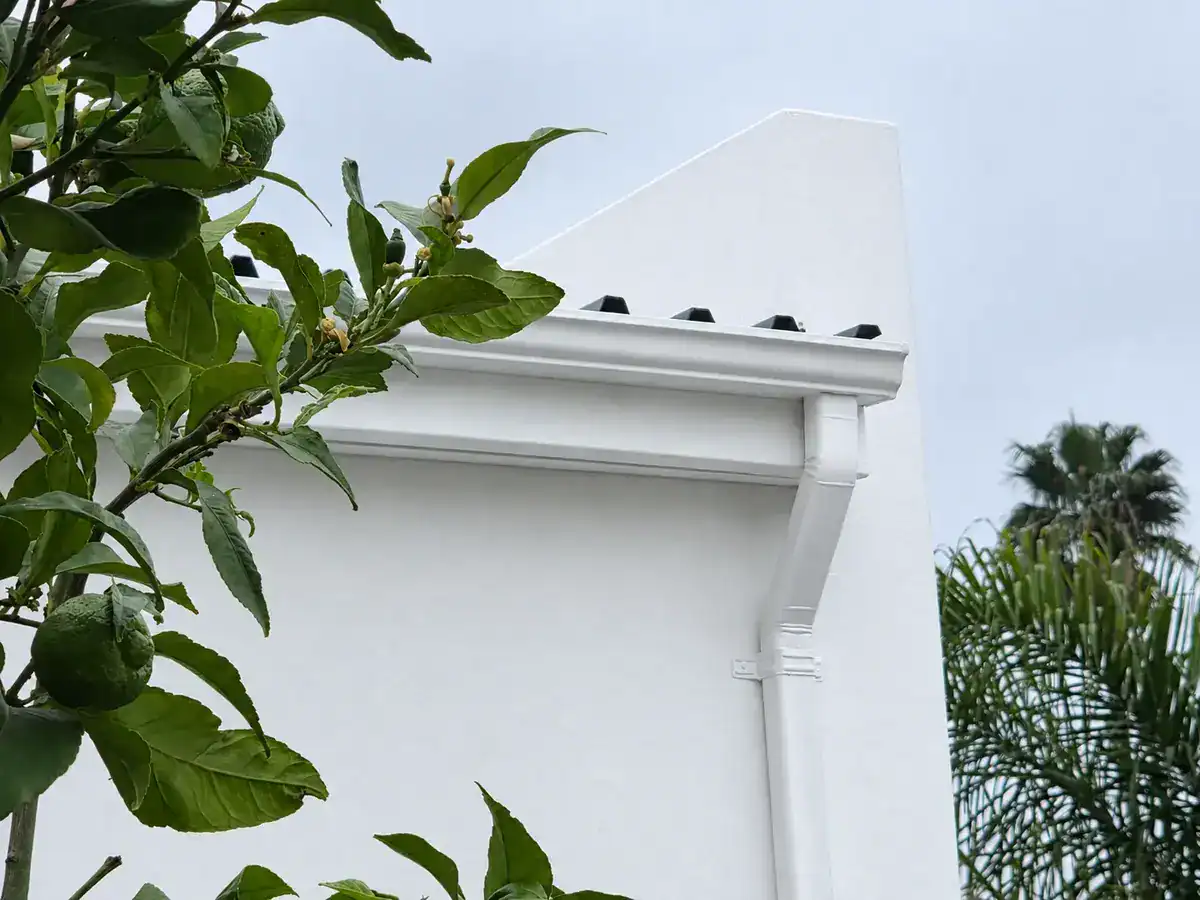
The following original photographs show a weathered parapet above a gutter before the work and the finished appearance after preparation and repainting.
A parapet has an upward-facing surface that receives rainfall directly. Where waterproofing is cracked, inadequate or deteriorated, moisture can reach the wall beneath and contribute to later coating failure.
The quotation specified Dulux Rainshield for suitable horizontal masonry, with two coats applied in perpendicular directions after the necessary substrate preparation.
The photographs demonstrate the visible before-and-after condition. They are not a laboratory test or independent proof that every underlying moisture source has been permanently eliminated.
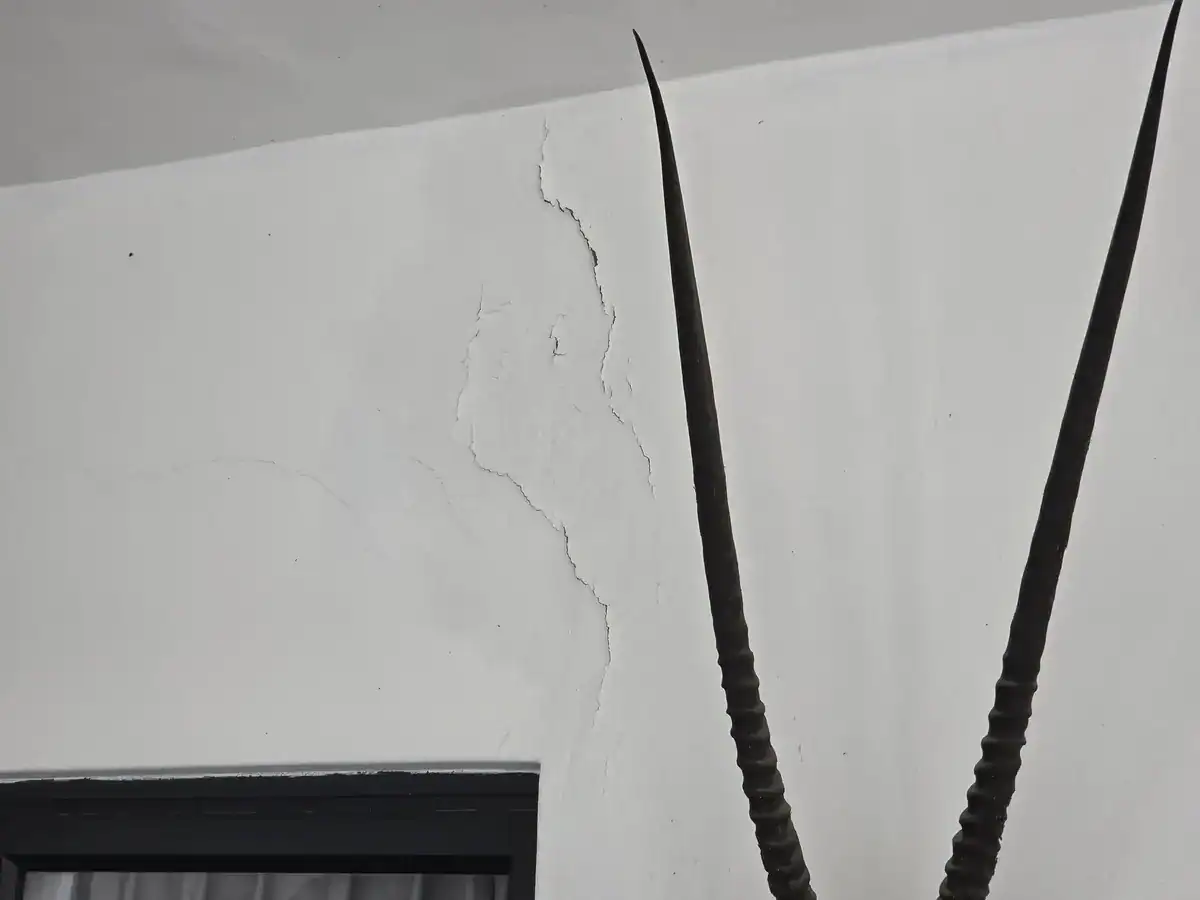
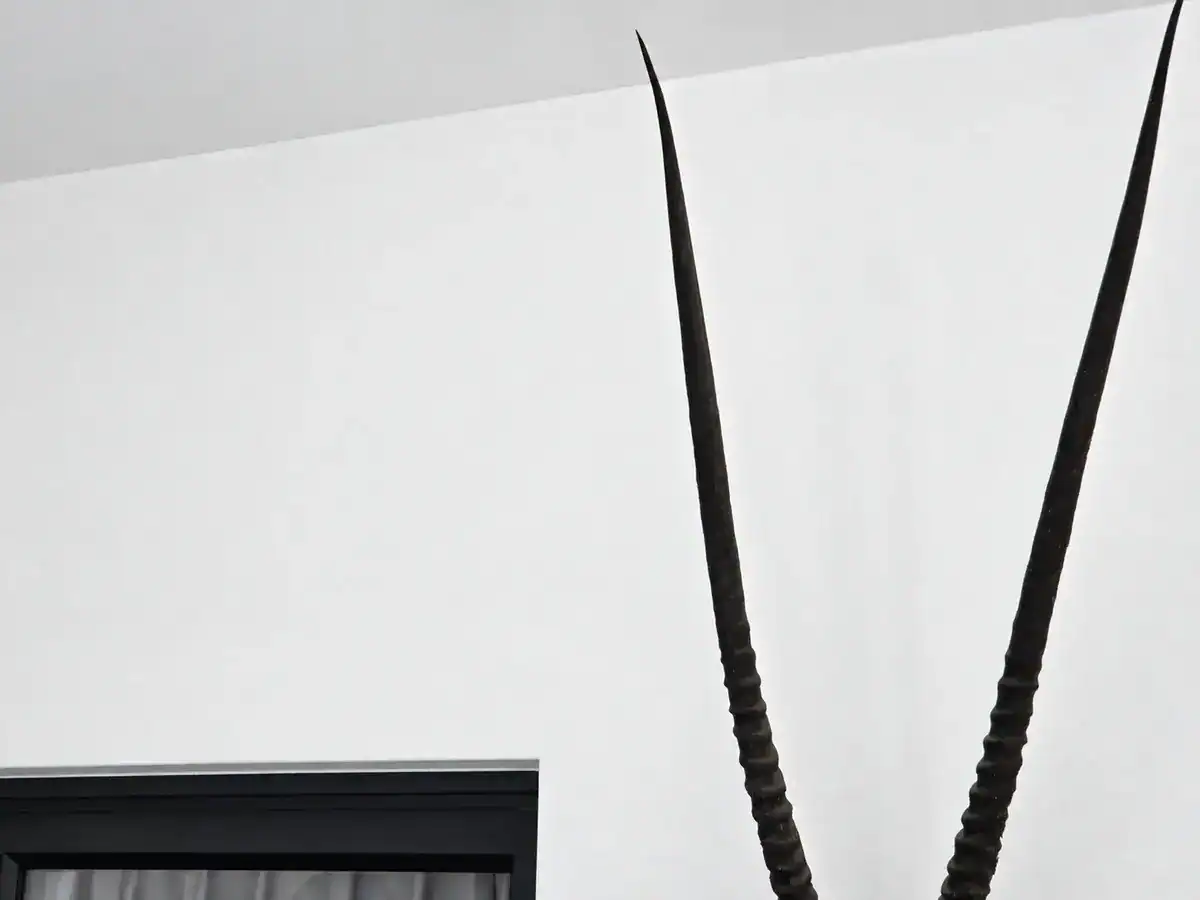
The same property had cracking on exterior walls and adjoining masonry. Cracks can provide routes for moisture where water reaches the affected surface, particularly when combined with failed seals or unprotected horizontal details.
The written specification distinguished hairline cracking, map cracking, wider plaster cracks and expansion joints. It also identified selected window and door sealants that had begun to fail and building junctions requiring flexible sealing.
Where appropriate, the specified treatment included preparing cracks, applying compatible sealers or repair materials, and resealing deteriorated joints using suitable polyurethane sealant.
These repairs matter because waterproofing an exposed wall top while leaving adjacent cracks and defective seals untreated may leave other routes for moisture entry.
Protimeter readings across the Kaapse Draai inspection ranged from Min 8.7% to Max 26.5%. The readings supported the inspection findings but did not, on their own, establish precisely where water entered the building.
The quotation also recorded boundary and foundation-wall areas affected by continuing moisture movement from ground or backfilled surfaces. Those conditions require a separate assessment and honest expectations.
Applying waterproof coating to the visible face of a wall cannot create a missing damp-proof barrier or permanently prevent continuing moisture from behind or below the structure.
Our completed 2026 Lemoenkloof exterior and roof painting project provides a second, distinct example.
The property had horizontal waterproofing that was completed several years earlier and required renewal. The inspection also identified deteriorated expansion-joint seals, cracks, weathered coatings and moisture-related wall deterioration.
Project area: Lemoenkloof, Paarl
Project period: August 2026
Protimeter readings: Min 1.4%, Max 17.9%
Waterproofing scope: Parapets, windowsills and exposed horizontal wall tops, together with relevant crack and joint preparation.
The written specification included preparing the affected masonry and applying two coats of Dulux Rainshield to suitable horizontal surfaces, with the second coat applied perpendicular to the first.
The work formed part of a broader project involving exterior walls, corrugated metal roofing, timber, steelwork and other maintenance requirements. This demonstrates how waterproofing repairs often need to be coordinated with exterior painting rather than treated as an unrelated finishing step.
View the Lemoenkloof Waterproofing and Exterior Project
A February 2025 quotation for a residence at Pearl Valley Golf Estate recorded further evidence of waterproofing-related preparation in the Paarl estate environment.
Exterior Protimeter readings: Min 10.5%, Max 17.3%.
The inspection identified cracks affecting vertical and horizontal masonry, deteriorated window and door seals, unsealed expansion joints, weathered timber and horizontal surfaces without adequate waterproofing.
The exterior specification included preparation of suitable horizontal masonry, crack treatment, joint sealing and a Dulux Rainshield waterproofing system, alongside the proposed exterior redecoration.
This quotation is useful evidence of the inspection and specified remedial work. Its proposed working dates and products should not be mistaken for independent verification of every application or a particular long-term waterproofing outcome.
For estate-specific painting and access considerations, see Painters Val de Vie and Pearl Valley.
Parapet tops and exposed masonry copings are vulnerable because they receive rainfall directly. Their condition, cracks, previous coating systems and drainage details must be assessed before waterproofing.
Where a compatible coating system is appropriate, the quotation will identify the necessary cleaning, repairs, priming and waterproof application requirements.
Windowsills and masonry junctions can admit water through hairline cracks, failed coating details or defective seals. Treatment depends on the construction and condition of the sill, the surrounding plaster and the adjoining window frame.
Perimeter sealants around doors and windows deteriorate over time. Exterior fittings, light fixtures, wall penetrations and adjoining joints may also require sealing where the inspection identifies an accessible route for water entry.
Movement joints must remain capable of accommodating building movement. Where an existing seal has deteriorated, the correct response is generally a compatible flexible joint-resealing system—not rigid plaster filler applied across an active joint.
Suitable roof-related junctions may require local waterproofing or sealing as part of a broader roof painting and preparation specification. Damaged sheets, defective flashings, failed fasteners, broken tiles or structural drainage problems must be assessed separately.
Waterproof coating is not a substitute for correcting an active roof defect. Our Roof Painters Cape Town page explains the difference between roof coating and the underlying roof condition.
Waterproofing requirements vary with the substrate, expected movement, previous coatings, water exposure, surface preparation and intended finish.
For suitable horizontal masonry, written Paarl project specifications have used Dulux Rainshield, together with compatible crack treatments, joint sealants and primers where specified.
However, a wall coping, a moving expansion joint and a leaking roof flashing do not have identical requirements. Nor can an above-ground decorative waterproof coating automatically replace a specialist system designed for a flat roof, trafficable balcony or below-ground structure.
Where a defect falls outside our suitable coating or remedial preparation scope, a specialist building or waterproofing assessment may be necessary.
Although the symptoms sometimes overlap, these topics should not be confused.
For example, a cracked parapet may require waterproofing at the original water-entry point, while a stained wall below may need separate substrate preparation after the source has been addressed.
By contrast, a retaining wall receiving continuing moisture from backfill may not be permanently corrected by treating only its visible face.
Our planned dedicated Paarl damp-proofing and paint-failure pages will examine those distinct subjects in greater depth. For now, our existing Damp Proofing Cape Town page provides broader information.
Older exterior coatings, established garden walls, parapets and weather-exposed masonry may require renewed waterproofing and flexible joint sealing. Our Lemoenkloof project provides documented local evidence.
Large exterior elevations, exposed rooflines, cracked plaster and complex junctions may require detailed assessment before choosing a waterproofing system. The Kaapse Draai inspection provides a genuine Courtrai example.
Waterproofing work at estate residences may require current contractor registration, access arrangements, property protection and approval of visible finishes. Our Pearl Valley quotation documents relevant waterproofing and sealing requirements.
A waterproofing specification must be appropriate for the actual substrate. Supplier-backed warranties are subject to written conditions and exclusions; they do not automatically apply to every surface or moisture problem.
Cost depends on the location of the defect, access, existing coating condition, amount of crack repair, sealant replacement, surface preparation, water exposure and the system required.
Renewing suitable waterproofing on an accessible parapet is not equivalent to repairing a complex roof drainage problem or a below-ground retaining wall.
We therefore assess the actual property before preparing a written quotation rather than promising one price for every waterproofing problem.
If you have deteriorated parapet waterproofing, cracked wall copings, leaking window-seal details, failed expansion joints or moisture symptoms associated with exterior masonry, we can assess whether the problem falls within our suitable remedial scope.
Call 082 374 6862 or visit our contact page to arrange a Paarl inspection and written quotation.
See genuine 2026 project evidence of ageing horizontal waterproofing, cracks, deteriorated expansion joints, failed seals and moisture-related exterior preparation.
Understand the difference between penetrating moisture, damp-affected plaster and continuing moisture movement through boundary walls before repainting.
Learn why parapets, windowsills, wall tops, deteriorated perimeter seals and cracks should be assessed before final exterior painting.
Explore original Paarl project evidence of hairline cracks, map cracking, wider plaster defects and movement-sensitive joints requiring suitable preparation.
Understand how moisture ingress, failed waterproofing, weak coatings, chalking and poor preparation can contribute to recurring paint failure.
Explore our complete painting services in Paarl, supported by original Lemoenkloof and Courtrai projects, moisture readings and written preparation specifications.
Yes, where the substrate and required repair fall within our suitable scope. We inspect the condition of existing waterproofing, plaster, cracks, joints and previous coatings before specifying preparation and a compatible waterproofing system.
Our documented 2026 Lemoenkloof project involved aged horizontal waterproofing requiring renewal, together with cracked masonry, deteriorating joint seals and weathered exterior coatings. Protimeter readings ranged from Min 1.4% to Max 17.9%.
The September 2026 inspection recorded unprotected horizontal masonry, cracks, paint bubbling, deteriorated sealants, unsealed joints and parapet staining. Protimeter readings ranged from Min 8.7% to Max 26.5%.
Our recorded Paarl specifications have included Dulux Rainshield for suitable horizontal masonry such as parapets, windowsills and wall tops. The required surface preparation, primers, coats and curing conditions depend on the written project specification.
No. Moisture readings help assess surface conditions but do not independently identify the source. Cracks, sealants, roof details, plumbing, drainage, irrigation and ground contact may need consideration.
Yes, where included in the agreed scope. Suitable deteriorated sealants may be removed and replaced with compatible flexible systems after inspecting the joint and adjoining surfaces.
No. A waterproof coating cannot replace repairs to damaged roof sheets, flashings, tiles, fasteners or structural drainage defects. We assess suitable local coating and sealing work and identify when separate specialist repairs are required.
Not where moisture continues entering from soil, backfill or beneath masonry without an effective damp-proof barrier. Surface coatings cannot create a missing structural barrier, and continuing moisture-related deterioration may remain possible.
Costs depend on the affected surface, access, existing waterproofing condition, crack repairs, sealant work, preparation and required coating system. We provide a written quotation after inspecting the property.
Call 082 374 6862 or use our contact page to arrange an inspection and written quotation for suitable waterproofing and related preparation work.

Copyright 2026 , all rights reserved.