Kanonberg Lifestyle Estate • Bellville
Exterior Painting at Kanonberg Lifestyle Estate, Bellville
A documented March 2026 exterior restoration involving moisture readings of 17%–20%, cracking, failed seals, movement joints, vulnerable windowsills and detailed waterproofing preparation.
Painters Cape Town inspected the property, documented the defects and completed a preparation-first repaint using our full-time employed painters under working-foreman supervision.
Kanonberg Project Highlights
- Private double-storey home in Kanonberg Lifestyle Estate, Bellville.
- Project completed from 2–11 March 2026.
- Relative masonry moisture readings of 17%–20%.
- Map cracking, wider wall cracks and damaged exterior coatings.
- Failed sealant around selected windows and doors.
- Unsealed expansion and movement joints.
- Waterproofing of vulnerable windowsills, parapets and horizontal surfaces.
- Damp-related preparation before repainting affected masonry.
- Written diagnostic observations and detailed preparation specification.
- Full-time employed painters with working-foreman supervision.
Real Kanonberg Lifestyle Estate Project Evidence
17%–20% Moisture Readings
Relative masonry moisture readings recorded during the inspection ranged from 17% to 20%, supporting the need for careful moisture-related assessment before repainting.
Cracking Identified
Map cracking, hairline cracks and wider plaster cracks were identified on vertical and horizontal masonry surfaces and required different preparation methods.
Failed Seals and Open Joints
Deteriorated sealant around selected windows and doors, together with unsealed expansion joints, created potential routes for moisture entry.
Horizontal Waterproofing
Vulnerable windowsills, parapets and horizontal wall tops required preparation and the specified flexible waterproof coating system before the broader exterior repaint.
Damp-Related Preparation
Dulux Dampshield and Rainshield formed part of the documented preparation system where specified, alongside crack repairs, joint sealing and moisture-entry detailing.
Direct Painting Contractor
Painters Cape Town uses full-time employed painters with working-foreman supervision rather than operating as a lead-generation enquiry website.
Exterior Painting at Kanonberg Lifestyle Estate, Bellville
This documented Kanonberg Lifestyle Estate exterior painting project involved the preparation and repainting of a private double-storey home in Bellville during March 2026.
The work was considerably more involved than applying new exterior topcoats. Our inspection identified elevated masonry moisture readings, map cracking, wider plaster cracks, failed perimeter sealants, unsealed expansion joints, vulnerable horizontal surfaces, powdery coatings and moisture-related discolouration.
The project therefore required a preparation-first system combining cleaning, damp-related preparation, crack repair, flexible sealing, horizontal-surface waterproofing and substrate-specific exterior coatings.
This real Bellville project supports our main Painters Bellville page and demonstrates the type of detailed assessment included in our Exterior Painters Cape Town, Damp Proofing Cape Town and Residential Painters Cape Town services.
Kanonberg Lifestyle Estate Project Summary
- Location: Kanonberg Lifestyle Estate, Bellville, Cape Town.
- Property type: Private double-storey estate home.
- Project period: 2–11 March 2026.
- Moisture readings: 17% minimum to 20% maximum on inspected masonry areas.
- Main scope: Exterior plastered walls, boundary and garden walls, Nutec fascia boards, horizontal waterproofing, damp-related preparation, crack repairs and sealing around included openings and fittings.
- Supervision: Working-foreman supervision with additional site visits.
What We Found During the Exterior Inspection
The purpose of the inspection was to establish why portions of the existing exterior coating were deteriorating before recommending the repainting system.
The observations were not treated as one generic paint failure. Different symptoms had different implications for the preparation work.
- Protimeter readings ranged from 17% to 20% on inspected masonry areas.
- Map or spiderweb cracking was present on sections of wall.
- Cracks affected both vertical and horizontal surfaces.
- Windowsills, expansion joints, garden walls and boundary walls contained cracking requiring attention.
- Sealant around some windows and doors was deteriorating.
- Moisture-related discolouration and alkali attack were visible.
- Powdery or weakened coating surfaces were present.
- Some upward-facing horizontal surfaces had not been adequately waterproofed.
- Expansion joints were not adequately sealed.
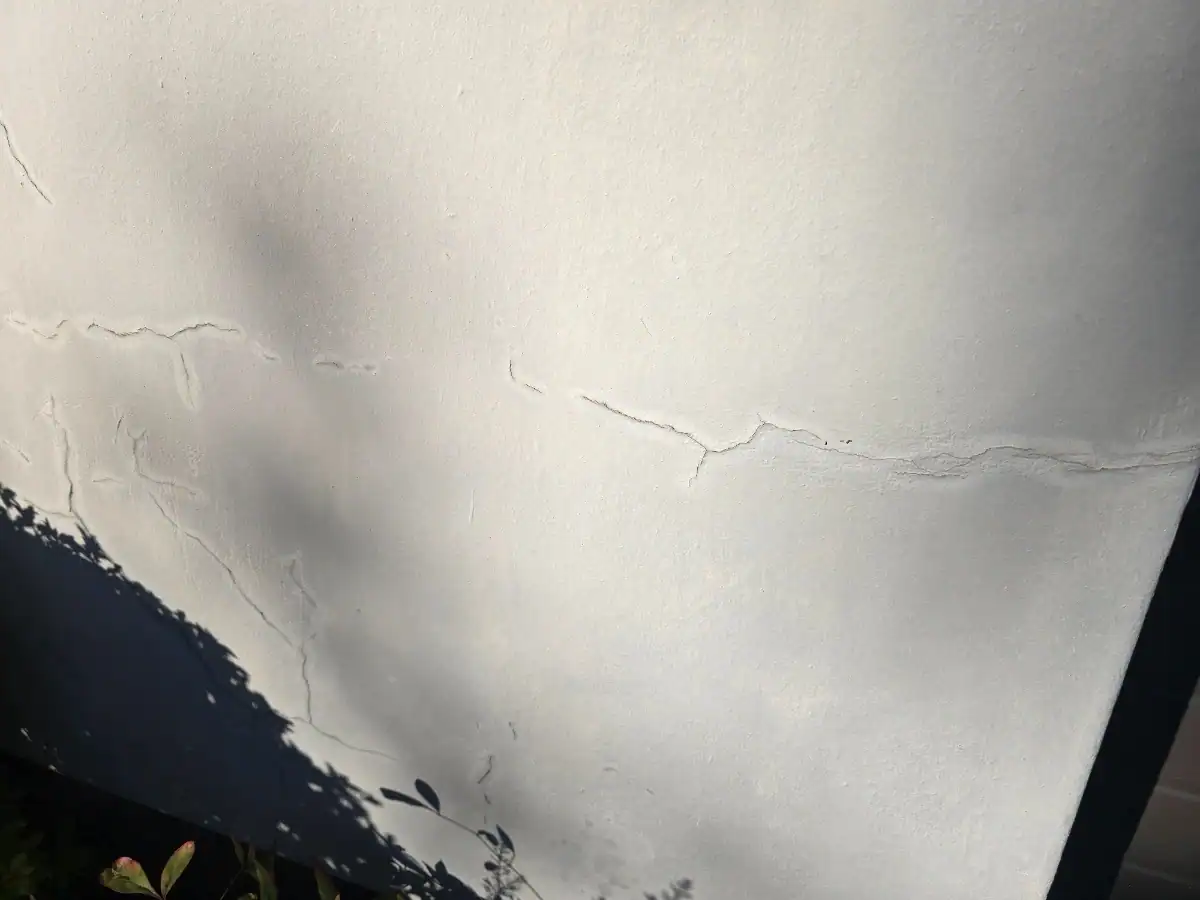
Why the 17%–20% Moisture Readings Mattered
Moisture readings provide useful evidence that a masonry surface requires closer assessment, but they should not be treated as proof that every discoloured area has the same moisture source.
At Kanonberg Lifestyle Estate, the readings were considered together with the physical condition of the property: cracked surfaces, failed perimeter seals, vulnerable windowsills, unsealed joints and horizontal masonry exposed directly to rainfall.
This is important because simply coating a damp-affected wall does not correct the route by which water enters the building fabric.
Where accessible moisture-entry defects formed part of the painting scope, they had to be prepared and repaired before relying on the new exterior coating system.
Boundary Walls and Continuing Ground Moisture
The boundary-wall condition required a particularly careful explanation.
Sections of boundary masonry had no effective damp-proof barrier separating the wall from continuing ground or rear-face moisture. This means moisture can continue migrating through the masonry from behind or below even after the visible face has been correctly prepared and painted.
A suitable breathable coating approach can improve the condition and protection of the prepared face, but no decorative paint system can guarantee against moisture that continues entering through the opposite side or from the ground.
For this reason, moisture-related discolouration, bubbling or peeling caused by continuing ground moisture must be treated as a separate limitation rather than hidden inside an unrealistic paint guarantee.
Foundation Walls Below Expansion-Joint Level
Moisture-related discolouration was also identified below weep-hole and expansion-joint level.
These lower wall sections were exposed to moisture from the backfilled side where no effective damp-proof barrier was present. The preparation specification therefore included damp-related treatment of the affected prepared areas, while continuing moisture migration remained a recognised limitation.
Alkali Attack and Exterior Paint Discolouration
One of the important symptoms identified during the inspection was moisture-related alkali attack.
Cementitious plaster contains alkaline compounds. When moisture moves through the substrate, soluble salts can migrate toward the paint film. This can contribute to discolouration, powdering and deterioration of the coating system.
Repainting the discoloured surface without dealing with cracks, failed seals and vulnerable horizontal areas would therefore have addressed the appearance rather than the mechanism contributing to the failure.
The specified remedial approach combined crack preparation, flexible waterproofing and damp-related surface treatment before the finishing coats were applied.
High-Pressure Cleaning Before Painting
Exterior surfaces were cleaned before repairs and coating application.
High-pressure washing was specified to remove loose and flaking coating, grime, salts and chalky deposits. Areas unsuitable for pressure washing were to be cleaned using the specified general-purpose cleaning solution and rinsed with clean water.
Cleaning is a critical preparation step because high-quality paint cannot compensate for a weak layer of chalk, dirt, salts or poorly bonded old coating underneath it.
Fungal Treatment Where Required
Areas affected by fungal growth received the specified fungal-wash treatment before coating.
Biological contamination should be treated rather than simply painted over. Particular attention was given to affected surfaces and cracks so that preparation was completed on a clean substrate.
Waterproofing Windowsills, Parapets and Horizontal Wall Tops
Horizontal masonry surfaces receive rain very differently from vertical walls.
Windowsills, parapet tops and the tops of boundary or garden walls can hold water and are particularly vulnerable when fine cracking is present.
The Kanonberg specification therefore included two coats of Dulux Rainshield on relevant horizontal surfaces, with the second coat applied perpendicular to the first.
This formed part of the moisture-control preparation before the broader exterior repainting system was completed.
Damp-Related Preparation Before Exterior Repainting
Prepared moisture-affected exterior masonry received the specified Dulux Pre-Paint Dampshield treatment.
Areas within the specified higher moisture range required additional coating treatment according to the written preparation system.
Dampshield was not treated as a substitute for repairing cracks, failed sealants, unprotected horizontal surfaces or continuing ground moisture. Those conditions were considered separately.
This same diagnosis-first principle is explained in more detail on our Damp Proofing Cape Town page.
Window, Door, Fitting and Expansion-Joint Sealing
Sealant around windows, doors and expansion joints was inspected as part of the preparation work.
Deteriorated sealant within the agreed scope was removed and replaced using flexible single-pack polyurethane sealant.
Wall and light-fitting penetrations were also included where sealing was required to reduce direct water entry.
Expansion joints need flexible detailing because their purpose is to accommodate movement. Filling them with rigid plaster or ordinary filler can prevent the joint from functioning correctly and may lead to renewed cracking.
Different Cracks Required Different Repairs
The quotation did not treat every exterior crack in the same way.
Hairline Cracks up to Approximately 1 mm
Hairline cracks received the specified alkali-resistant sealer and flexible Rainshield treatment.
Where multiple spiderweb cracks occurred, the affected area required a broader flexible treatment rather than filling individual visible lines only.
Wider Plaster Cracks
Wider plaster cracks were opened to a suitable V-joint where required, cleaned and repaired using compatible masonry-repair material.
Repaired areas were sanded to a smooth finish before receiving the specified flexible coating treatment.
Map or Spiderweb Cracking
Areas affected by map cracking received the specified Dulux Rainshield treatment to provide a more flexible protective system over the prepared substrate.
Nutec Fascia Board Preparation
The project also included Nutec fascia boards.
Loose and flaking material was removed, surfaces were sanded to a smooth uniform finish and hard coating edges were feathered before bare prepared areas were spot primed.
The fascia and soffit finishing specification called for two coats of Dulux Roofguard.
Exterior Coating System Used
After cleaning, repairs, sealing, waterproofing and damp-related preparation were completed, the finishing systems were applied according to the written scope.
- Main exterior and boundary walls: two coats of Dulux Wallguard.
- Nutec fascia boards and soffits: two coats of Dulux Roofguard.
- Vulnerable horizontal masonry: Dulux Rainshield system where specified.
- Damp-affected prepared masonry: Dulux Dampshield system where specified.
- Failed flexible junctions: single-pack polyurethane sealant where included.
The products named here are recorded because they formed part of the actual written project specification. Their inclusion does not imply that the manufacturer endorses this page or Painters Cape Town.
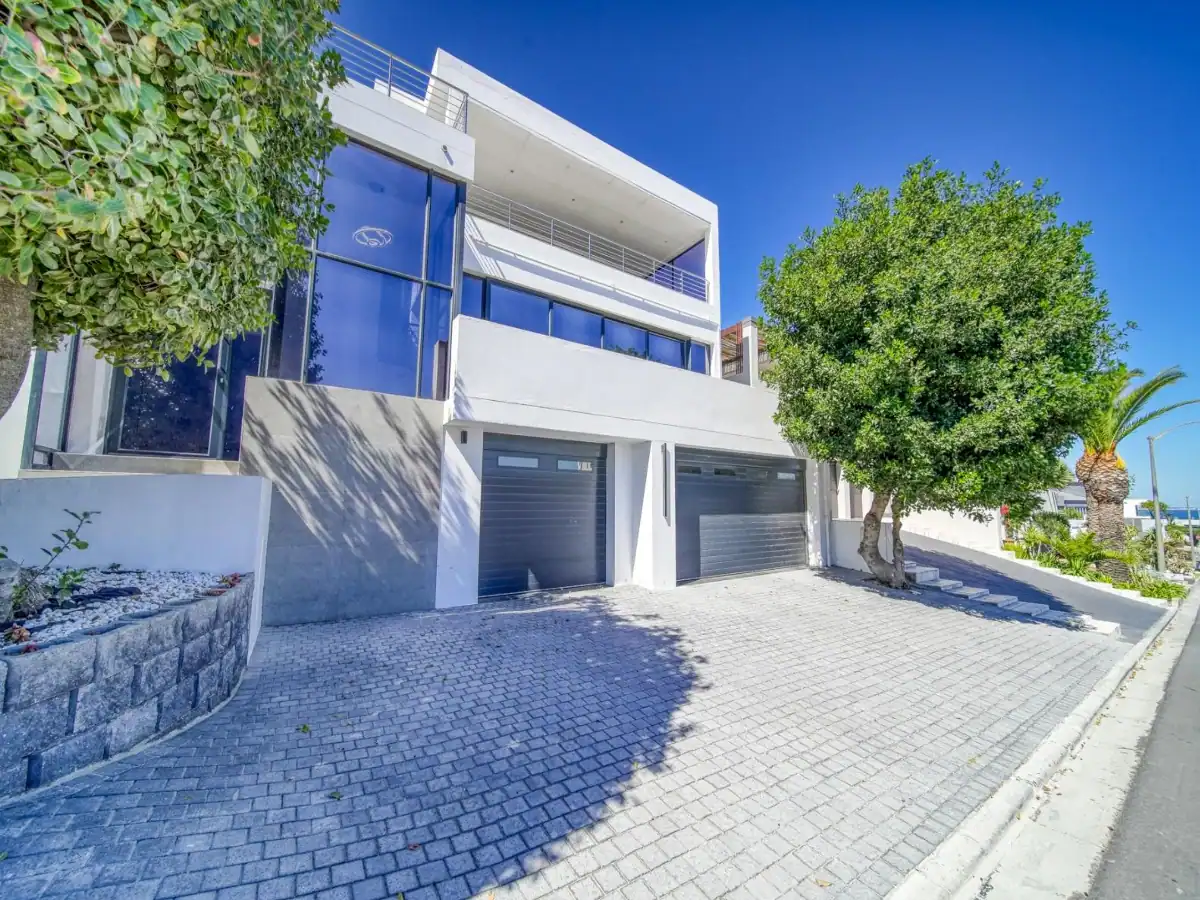
Completed Kanonberg Lifestyle Estate Exterior
The completed exterior had a consistent finish after the identified cracking, failed seals, moisture-affected coating, horizontal surfaces and other included defects had been prepared.
The value of the project lies not only in the finished appearance but also in the documented process leading to that finish: moisture was measured, defects were identified, different cracks received different preparation, failed seals were renewed, vulnerable horizontal surfaces were waterproofed and the finishing products were matched to the prepared substrates.
What This Bellville Project Demonstrates
The Kanonberg Lifestyle Estate project demonstrates why premium residential exterior painting should not be reduced to washing a house and applying two decorative coats.
The visible coating failure was connected with several building-envelope details:
- cracking across vertical and horizontal masonry;
- failed flexible seals;
- unsealed movement joints;
- water-exposed windowsills and parapets;
- moisture migration through some boundary and foundation walls;
- alkali-related coating deterioration;
- weak and powdery existing surfaces.
A successful repaint therefore depended on diagnosing and preparing those conditions separately before the finishing coats were applied.
Kanonberg Lifestyle Estate and the Bellville Painting Cluster
This project forms part of our growing first-hand Bellville evidence cluster.
For the broader area, visit Painters Bellville. Bellville forms part of our Painters Cape Town Northern Suburbs regional hub.
The most directly related Cape Town-wide services are:
- Exterior Painters Cape Town
- Damp Proofing Cape Town
- Residential Painters Cape Town
- Body Corporate and Estate Painting Cape Town
Preparation-First Painting by a Real Cape Town Contractor
Painters Cape Town has 27 years of painting and surface-preparation experience. Our painters are full-time employed rather than subcontracted, and projects are supervised by a working foreman.
We are not a lead-generation company. Clients deal directly with the contractor responsible for the site inspection, quotation, written diagnostic observations, preparation scope, employed team and completed work.
Correct preparation can support a considerably longer maintenance cycle, but paint cannot prevent future structural movement, renewed seal failure or continuing moisture entering from behind walls or below ground level.
Request an Exterior Painting Assessment in Bellville
If your Bellville or Northern Suburbs property shows cracking, peeling paint, failed sealant, damp-related discolouration, powdery coatings or unprotected parapets and windowsills, the first step should be a physical inspection rather than another cosmetic repaint.
Call 082 374 6862 or visit the Painters Cape Town contact page to arrange an inspection and written quotation.
Helpful Painting Guides
These guides explain several of the same technical issues found during the Kanonberg inspection, including peeling paint, cracking, damp, moisture entry and planning a durable home repaint.
Why Paint Peels, Fades and Cracks
Understand how moisture, UV exposure, chalking, cracking, weak adhesion and inadequate preparation contribute to premature paint failure.
Damp Walls and Repainting
Learn why moisture-entry routes, cracks, failed sealing and damp-affected substrates should be assessed before decorative repainting.
Planning a Premium Home Repaint
See what homeowners should consider when planning preparation, protection, repairs, coating systems and long-term maintenance.
Kanonberg Lifestyle Estate Exterior Painting FAQs
What problems were found before painting the Kanonberg Lifestyle Estate home?
The inspection identified masonry moisture readings of 17% to 20%, map cracking, wider wall cracks, failed sealant around some windows and doors, unsealed expansion joints, powdery coatings, moisture-related discolouration and horizontal surfaces requiring waterproofing.
What did the 17%–20% moisture readings mean?
The readings showed that moisture was present in inspected masonry areas and that the surrounding defects required closer assessment. They were considered together with cracks, failed seals, windowsills, parapets and other possible moisture-entry routes rather than being treated as proof that every affected area had the same cause.
Was all the damp at the property rising damp?
No. The inspection did not assume that every moisture-related symptom was rising damp. Cracks, failed perimeter seals, unsealed joints, exposed horizontal surfaces and continuing ground moisture could all contribute to different moisture patterns.
Why were windowsills and parapet tops waterproofed?
Upward-facing masonry receives direct rainfall and can hold water longer than vertical walls. Cracking on windowsills, parapets and wall tops can therefore provide moisture-entry routes, so vulnerable horizontal surfaces received the specified flexible waterproofing treatment.
Why was failed sealant around windows and doors replaced?
Deteriorated sealant can allow rainwater to enter at the junction between different building materials. Failed sealant within the agreed scope was removed and replaced with flexible polyurethane sealant before repainting.
Were all cracks repaired in the same way?
No. Hairline cracks, wider plaster cracks, map cracking and movement joints require different preparation methods. The repair method was selected according to the size, location and nature of each defect.
Can paint permanently stop moisture coming through boundary walls?
No. Where boundary masonry remains exposed to continuing ground or rear-face moisture without an effective damp-proof barrier, moisture can continue migrating through the wall. The visible surface can be prepared and coated appropriately, but paint alone cannot guarantee against continuing moisture from behind or below.
What exterior coating products were specified?
The documented specification included Dulux Wallguard for the main exterior and boundary walls, Dulux Roofguard for Nutec fascia boards and soffits, Dulux Rainshield for specified vulnerable horizontal surfaces and Dulux Dampshield for identified damp-affected prepared masonry.
Does Dulux Dampshield replace repairs to cracks and water-entry defects?
No. Damp-related coatings were used as part of the preparation system. They were not treated as substitutes for repairing cracks, replacing failed seals, sealing movement joints or protecting vulnerable horizontal masonry.
When was the Kanonberg Lifestyle Estate project completed?
The documented exterior project was carried out from 2 to 11 March 2026 at a private double-storey home in Kanonberg Lifestyle Estate, Bellville.
Do you use subcontracted painting crews?
No. Painters Cape Town uses full-time employed painters with working-foreman supervision. Clients deal directly with the painting contractor responsible for the quotation, preparation scope and completed work.
How do I request an exterior painting quote in Bellville?
Call 082 374 6862 or visit the Painters Cape Town contact page to arrange a physical inspection and written painting quotation in Bellville or the surrounding Northern Suburbs.

Copyright 2026 , all rights reserved.