Steenberg Golf Estate Exterior
Original 2026 inspection recorded 19.6%-27.8% WME readings with paint bubbling, failed seals, cracks and vulnerable exposed masonry.
DAMP PROOFING TOKAI
Assessment and preparation of suitable moisture-damaged plaster, bubbling coatings, stains and residual damp symptoms before interior or exterior repainting.
Two original Tokai projects show different moisture situations: an exterior with failed water-entry details at Steenberg Golf Estate, and an interior wall requiring remedial painting after a shower leak had already been repaired at Nieuwe Steenberg Estate.
Original local moisture evidence - 27 years' painting experience - Written diagnostic reports - Employed painting teams
Original 2026 inspection recorded 19.6%-27.8% WME readings with paint bubbling, failed seals, cracks and vulnerable exposed masonry.
Original April 2026 inspection recorded 9.7%-21.0% readings at relevant interior areas after an adjoining shower defect had been repaired.
Repairing the source of water and preparing previously damaged paint are separate steps. We explain the difference before specifying coatings.
Both original project specifications included Dulux Pre-Paint Dampshield in selected suitable areas following the required preparation.
Damp-related painting cannot create missing structural damp protection or permanently correct continuing leaks, soil moisture or concealed defects.
27 years' experience, full-time employed painters, written diagnostic quotations and working-foreman supervision.
Painters Cape Town assesses and prepares suitable moisture-affected plaster and painted surfaces before interior or exterior repainting in Tokai.
Damp-related coating symptoms can include blistering, peeling, discolouration, powdery plaster, weak adhesion and biological growth. However, those symptoms do not automatically establish the same cause on every wall.
Water may enter through cracked horizontal masonry, failed seals or other building defects. Condensation, plumbing problems or ground-contact moisture may also be relevant.
We inspect the visible defects and record the proposed preparation in a written diagnostic quotation. Where a continuing moisture source requires building, roofing or plumbing repairs outside the painting scope, that limitation must be recognised before coating.
Failed window and door sealing, cracked windowsills, damaged wall tops, open joints or relevant roof and gutter defects may allow water into or behind exterior coatings.
Even after the original leak is repaired, plaster or masonry may need further drying and preparation. Previously damaged paint can remain poorly bonded.
Mould on interior walls may relate to ventilation, humidity or cold surfaces, rather than a defect in exterior masonry or a missing damp-proof course.
Some lower walls and boundary structures are repeatedly exposed to garden water, soil or inaccessible backfill. Decorative coating may remain limited by continuing moisture.
The correct response depends on the actual problem. Applying a specialist coating without understanding the source can leave an unresolved defect behind the finish.
Our documented Steenberg Golf Estate exterior project was completed between 26 January and 6 February 2026.
The property had reportedly been repainted approximately two years previously, yet showed bubbling and discoloured paint along with failed seals, open joints and vulnerable cracked masonry.
Recorded Protimeter WME readings ranged from 19.6% to 27.8% at the inspected locations.
The inspection combined these displayed readings with the condition of the previous coating, windowsills, boundary-wall tops and flexible joints.
The written scope included removal of failed coating, crack repairs, appropriate flexible sealing, separate horizontal waterproofing and suitable damp-related wall preparation.
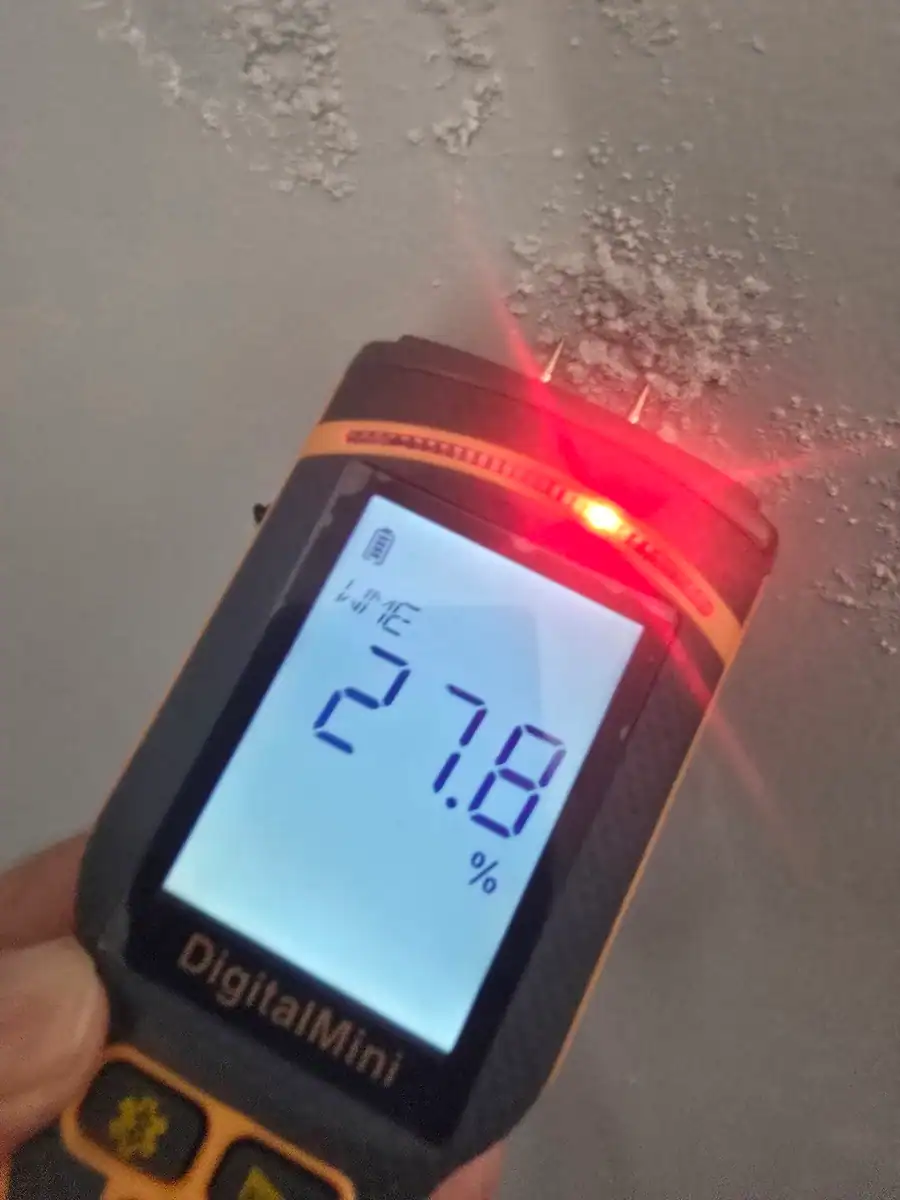
Appropriate specified areas received bonding preparation and Dulux Pre-Paint Dampshield, while accessible water-entry details were addressed separately.
Read the Steenberg Golf Estate exterior case study on the Tokai flagship.
The second original project was completed at an occupied double-storey home in Nieuwe Steenberg Estate from 6 to 14 April 2026.
A defective shower had previously allowed water to affect the adjoining bedroom wall.
Before our painting work started, a separate building contractor had stripped the shower, repaired its waterproofing using an ABE Duraflex system and retiled the shower.
That work addressed the known water-entry source, but the bedroom-side wall had not immediately returned to a suitable painting condition. Damaged paint and residual moisture remained.
Protimeter readings across relevant interior test areas ranged from 9.7% to 21.0%, with the highest recorded reading associated with the wall adjoining the previously defective shower.
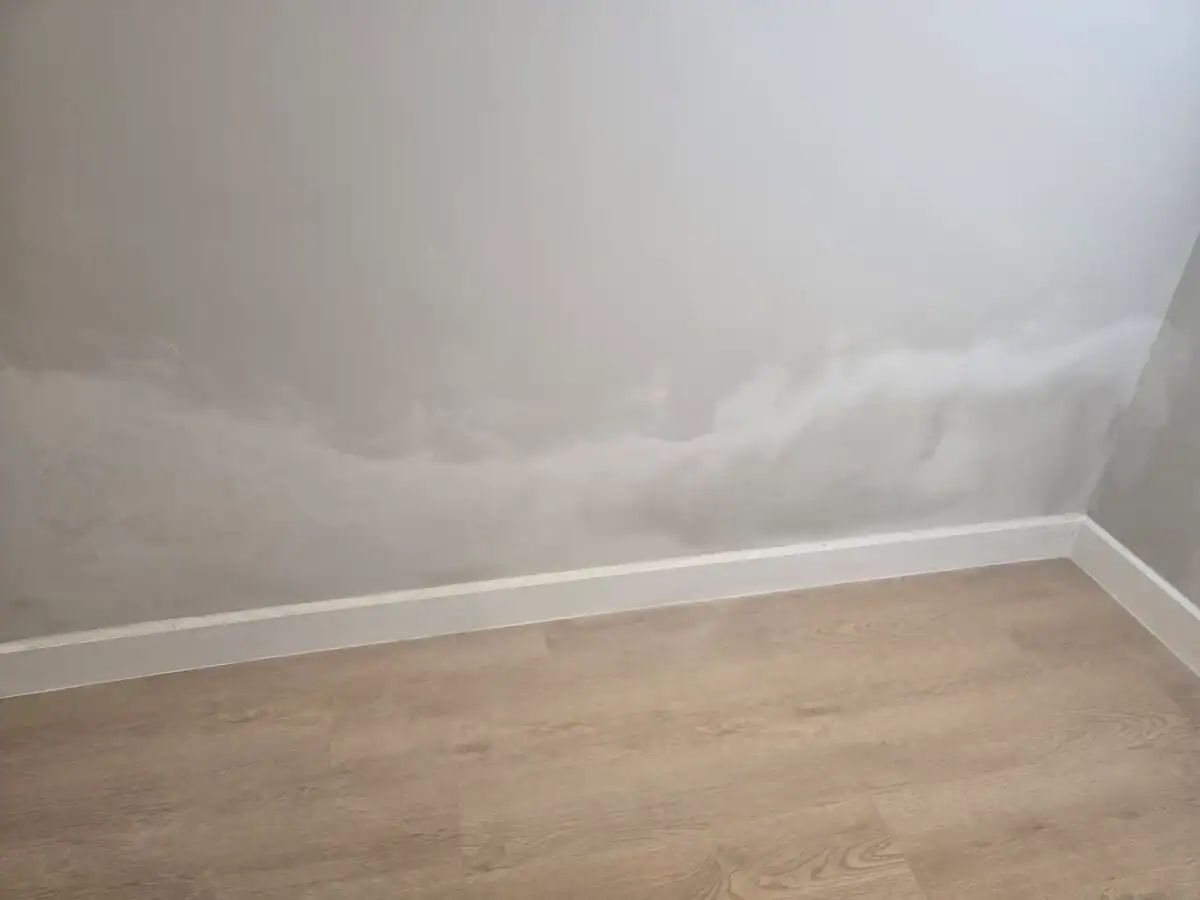
Our painting scope involved removing defective paint, preparing the damaged wall, applying Dulux Pre-Paint Dampshield to the specified areas under suitable conditions and restoring the interior finishes.
We did not perform the original shower waterproofing repair. This case demonstrates our subsequent painting-remediation work.
View the Nieuwe Steenberg Estate original interior project.
Water already absorbed into plaster or masonry does not necessarily disappear as soon as the leak stops.
Drying depends on the materials, ventilation, temperature, depth of wetting and whether the source has genuinely been resolved.
At the same time, previous moisture may already have caused the paint film to lose adhesion. That defective coating cannot be restored simply by waiting for the wall to dry.
The correct sequence includes confirming that the cause has been addressed, assessing the affected substrate, allowing suitable drying where necessary, removing failed coating and applying compatible preparation and finishing systems.
Moisture-meter readings are useful for comparing conditions at relevant test points and identifying areas needing closer assessment.
However, a displayed WME percentage is an instrument-derived reading. It should not automatically be described as the absolute laboratory-measured water content of plaster.
Likewise, a higher reading does not prove rising damp or establish exactly where water entered.
At Steenberg and Nieuwe Steenberg, readings were interpreted together with visible defects and the documented building history.
Both original projects included Dulux Pre-Paint Dampshield within their specified preparation systems.
At Steenberg, the product was relevant to selected affected exterior areas after coating and water-entry defects had been assessed and prepared.
At Nieuwe Steenberg, it was used as part of the interior wall preparation after a known shower waterproofing defect had been repaired by a separate contractor.
Dampshield is not a replacement for a functioning shower waterproofing system, correct roof repairs, structural damp-proofing or adequate wall drying.
Product selection and application must follow the inspected condition and the current manufacturer’s written instructions.
Some Tokai properties have mature trees, established gardens and walls that receive relatively little direct sunlight.
Shade can slow drying after rain or irrigation. Where the surface remains wet or contaminated, biological growth may establish.
Suitable fungal treatment, cleaning and preparation are needed before coating. Repeated wetting or ventilation problems should also be considered.
For bathroom walls and other humid interiors, the Southern Suburbs Bathroom Painting Guide provides related information.
A bubble, flake or powdery section of paint may result from moisture, weak previous adhesion, unsuitable preparation, salts, ageing coating or more than one condition.
A new topcoat applied over unstable material may fail together with the original defective layer.
At Steenberg Golf Estate, a relatively recent previous repaint was already showing localised coating problems. The assessment considered both the painted surface and surrounding water-entry details.
For damaged exterior walls, visit Exterior Painters Tokai.
Open plaster cracks or failed flexible joints can become routes through which moisture reaches the substrate.
However, cracking and a high instrument reading appearing on one wall do not automatically establish the same cause.
Suitable cracks and movement joints require separate preparation. Read Wall Preparation and Crack Repairs Tokai.
For windowsills, parapets and accessible water-entry details, see Waterproofing Tokai.
Boundary walls and garden-facing lower masonry can remain exposed to soil moisture, irrigation or an untreated reverse face.
Where effective damp-proof separation is absent, coating the visible wall cannot install a barrier inside the construction.
Even with suitable preparation, continuing moisture may affect future paint performance. These are important limitations that should be recorded in the quotation.
Read the Southern Suburbs Boundary Wall Painting Guide.
We assess damaged paint, plaster condition, cracks, stains, biological contamination and relevant building details.
Previous leak history, failed seals, rain exposure, condensation, plumbing, roofline conditions and ground contact are considered where relevant.
Suitable instrument readings and physical observations are documented in the preparation-first quotation, together with important limitations.
Loose coatings, damaged previous repairs and unsuitable material are removed or treated as specified.
Included cracks, seals, exposed details and affected plaster receive suitable repairs and compatible preparation products under appropriate drying conditions.
Finishing coats are applied to suitable surfaces by our employed painters under working-foreman supervision.
The price depends on the extent of damage, preparation needed, old coating removal, cracks, affected plaster, access, drying conditions, products and labour.
A limited area of residual damp following a repaired shower leak is a different situation from an exterior wall with multiple failed seals and cracked windowsills.
Where the moisture source cannot be corrected within the painting scope, the quotation should explain that limitation rather than promise permanent damp elimination.
For the broader principles, read the Detailed Painting Quotations and Specifications Guide.
For rain-entry details requiring accessible repairs, visit Waterproofing Tokai.
For cracks and unsuitable previous plaster repairs, see Wall Preparation and Crack Repairs Tokai.
Once damaged surfaces are suitable for finishing, see Interior Painters Tokai or Exterior Painters Tokai.
Return to Painters Tokai for our original completed projects and broader local painting services.
Contact Painters Cape Town for an inspection and written diagnostic quotation for suitable moisture-affected wall preparation and painting repairs.
Two distinct original moisture projects and useful repair decisions for affected walls.
Original residual-damp preparation after a building contractor had repaired an adjoining shower waterproofing defect.
Real exterior moisture readings, bubbling paint, failed window seals, cracks and damp-related preparation.
Learn why windowsills, exposed masonry, failed seals and expansion joints can need separate water-entry repairs.
Understand plaster cracks, weak coatings, flexible cornice joints and why previous repairs sometimes reopen.
Preparation and repainting of walls, ceilings, cornices and suitable woodwork after defects are addressed.
Moisture from soil, gardens, irrigation and untreated reverse faces can place limits on decorative coatings.
Yes. At Nieuwe Steenberg Estate, a building contractor had repaired the shower waterproofing, but the adjoining bedroom wall still needed residual-moisture and coating preparation before painting.
No. The shower waterproofing was repaired by a separate building contractor before our painting work began. We prepared and painted the damaged interior wall.
They are Protimeter instrument-display readings taken at relevant inspection points. They need interpretation with the substrate and visible defects and do not independently prove rising damp.
No. Suitable preparation products do not replace plumbing, roofing, waterproofing or structural repairs required to correct a continuing moisture source.
No. Coating the visible face cannot create a missing damp-proof course or permanently correct continuing water entry from inaccessible soil or backfill.

Copyright 2026 , all rights reserved.