Actual Completed Project
Complete interior repaint at an occupied private estate home between 6 and 14 April 2026.
ORIGINAL TOKAI INTERIOR PAINTING PROJECT
An original completed interior repaint documenting residual moisture after a repaired shower leak, damaged wall coatings, plaster crack preparation, flexible cornice-joint repairs and painted woodwork.
Occupied double-storey private estate home
Work completed: 6-14 April 2026
Recorded Protimeter range: 9.7%-21.0%
Original preparation and completed-project photographs, actual Dulux specifications and painting by our own employed team.
Explore the actual problems and work documented in this project.
Complete interior repaint at an occupied private estate home between 6 and 14 April 2026.
Protimeter display readings of 9.7%-21.0% recorded at relevant areas, with the highest reading near the previously defective shower.
A separate building contractor repaired the shower waterproofing before our painting work. Our team prepared the remaining damaged surfaces.
The project includes residual-damp preparation, wall cracks, opened cornice joints and restoration of previously painted doors, frames and skirting.
Selected Dulux Dampshield preparation, EasyCare wall finishing and Pearlglo Waterbased woodwork finishing were recorded.
Our own full-time employed painters completed the project with working-foreman supervision and property protection.
The original photographs and technical records are from an individual private estate home, not an official estate-wide commission or endorsement.
This original Painters Cape Town project documents a complete interior repaint of an occupied double-storey private home at Nieuwe Steenberg Estate in Tokai.
The painting work took place between 6 and 14 April 2026.
The owner requested detailed preparation and an appropriate final interior sheen. In addition to normal wear, the inspection found moisture-related wall damage, fine and wider plaster cracks, opened cornice junctions, historical ceiling staining and deteriorated previously painted woodwork.
The most important remedial issue concerned a bedroom wall adjoining a shower whose waterproofing defect had already been repaired by a separate building contractor.
Although the known water source had been corrected, the adjoining painted wall still required separate preparation before repainting.
Location: Nieuwe Steenberg Estate, Tokai, Cape Town
Property: Occupied double-storey private estate home
Work period: 6-14 April 2026
Recorded Protimeter range: 9.7%-21.0%
Interior scope: Walls, ceilings, cornices, residual-moisture preparation, wall-crack repairs, flexible cornice-joint treatment and painting of previously painted doors, frames and skirting
Important distinction: The earlier shower waterproofing repair was completed by a separate building contractor
Painting team: Full-time employed Painters Cape Town painters, with working-foreman supervision
The original inspection identified several conditions needing preparation before the finishing coats:
These observations formed the basis for a defect-specific interior preparation and painting specification, rather than treating the work as an uncomplicated decorative repaint.
Before our painting work began, a building contractor had stripped the defective shower, repaired the waterproofing and retiled the area.
The original repair involved an ABE Duraflex waterproofing system.
Painters Cape Town did not carry out that shower waterproofing repair. Our responsibility concerned the subsequent preparation and painting of moisture-damaged interior surfaces.
This distinction is important because correcting the source of water entry and restoring damaged plaster or paint are different types of work.
When a leaking shower or other water-entry defect is corrected, the adjoining plaster and masonry do not necessarily dry immediately.
The wall may retain absorbed moisture for some time, depending on its construction, degree of wetting, ventilation and drying conditions.
Paint that has already lost adhesion also remains defective even after the original leak stops.
At Nieuwe Steenberg Estate, the bedroom-side wall still showed moisture-related damage, requiring suitable preparation before the decorative system could be restored.
Relevant interior test locations produced a recorded minimum Protimeter display reading of 9.7% and a maximum of 21.0%.
The highest recorded reading was associated with the wall adjoining the previously defective shower.
These are instrument display readings and must be interpreted with the substrate and visible defects. They are not independent proof of rising damp or laboratory measurements of the plaster’s absolute moisture content.
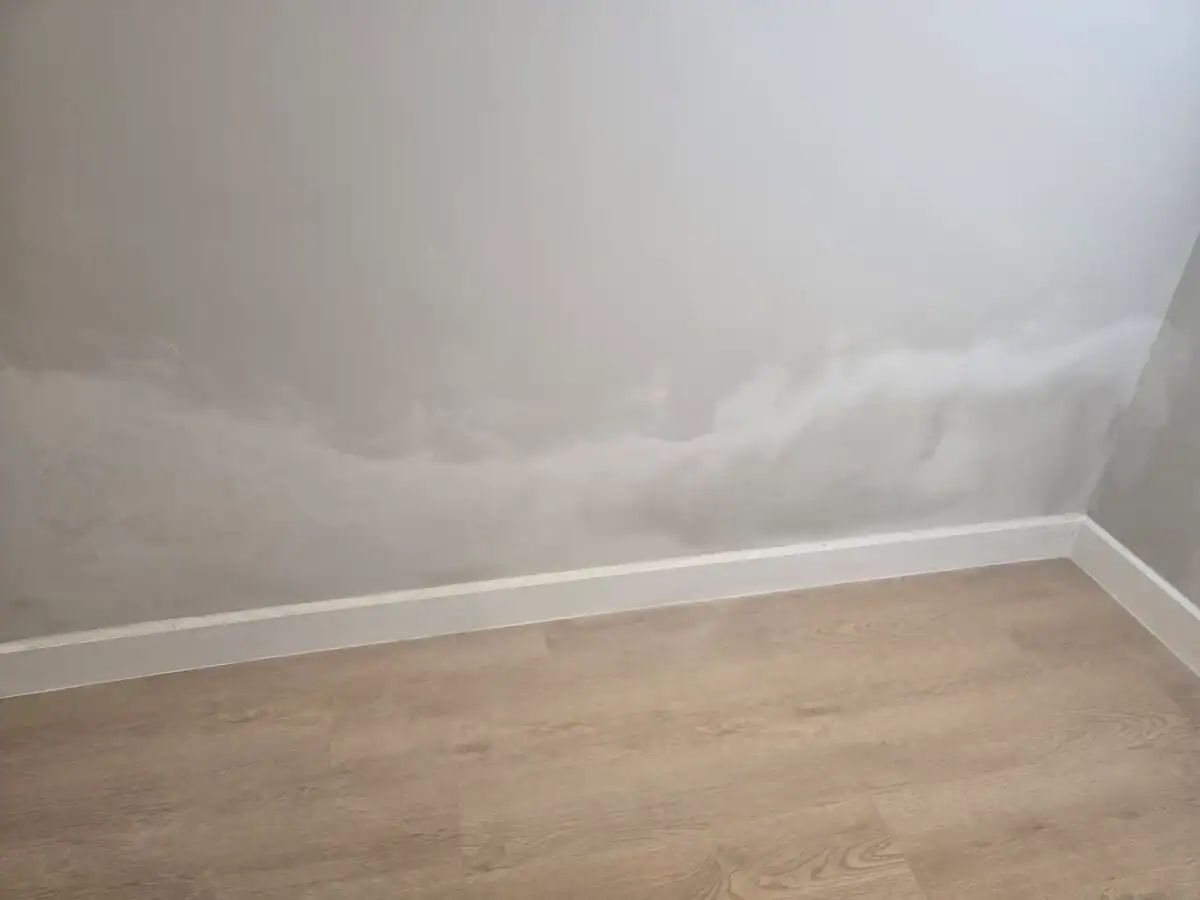
For the broader distinction between damp investigation and preparing moisture-damaged paint, visit Damp Proofing Tokai.
Loose or poorly bonded coating was removed from the affected areas and the underlying surfaces were prepared as specified.
The documented preparation included Dulux Pre-Paint Dampshield on applicable affected masonry, with appropriate drying time and substrate preparation.
Dampshield formed part of the painting preparation after the known shower defect had been repaired.
It was not a substitute for repairing the shower waterproofing, nor was it presented as a permanent cure for any unresolved water source.
The original project included fine and wider plaster cracks requiring different preparation methods.
Suitable fine cracks received the specified preparation and flexible treatment where relevant.
Wider plaster defects were opened as necessary, cleaned, repaired using compatible masonry preparation materials, sanded and prepared before the final paint system.
Cracks should be assessed according to the actual plaster condition and whether movement is continuing.
For further information, see Wall Preparation and Crack Repairs Tokai.
At selected upper-floor locations, cornice junctions had separated slightly from the adjoining walls.
A cornice and its adjacent wall can move differently, making an ordinary rigid filler unsuitable for some movement-sensitive gaps.
The documented work included cleaning and preparation of specified joints followed by appropriate Soudal single-component polyurethane sealant.
The treatment was selected for relevant moving junctions, not as a universal filler for every ceiling crack.
The inspection also noted staining on a bathroom ceiling following an earlier geyser overflow.
Historical water staining may require appropriate stain preparation before the final ceiling finish can be applied.
The underlying source should be considered so that decorating the ceiling does not merely conceal an active problem.
For related interior moisture and humidity considerations, see the Southern Suburbs Bathroom Painting Guide.
The house remained an occupied private residence, so furniture and flooring needed suitable protection during preparation and painting.
Cleaning, scraping, sanding, filling and painting have different protection and access requirements.
We planned the work around the agreed painting scope, with our employed team working under daily working-foreman supervision.
Careful property protection is an important part of interior painting, particularly at larger homes containing finished timber, cabinetry and valuable surfaces.
Some previously painted interior doors, frames and skirting had chipped or peeling paint.
The documented preparation included sanding the existing sound paint to create an appropriate key, removing loose material and treating exposed bare timber.
Bare timber received specified spot priming with Dulux Wood Primer.
The prepared woodwork received Dulux Universal Undercoat followed by two coats of Dulux Pearlglo Waterbased.
The woodwork finish was separate from the coating selected for the plaster walls.
Read the Southern Suburbs Woodwork Preparation and Painting Guide.
After suitable crack and moisture-related preparation, the interior walls received the documented two coats of Dulux EasyCare in the owner’s requested lower-sheen finish.
Ceilings and cornices were included in the interior painting scope and received the specified preparation and finishing treatment relevant to their condition.
Different surfaces, existing coatings and finish expectations require different preparation and product decisions.
For the full service, visit Interior Painters Tokai.
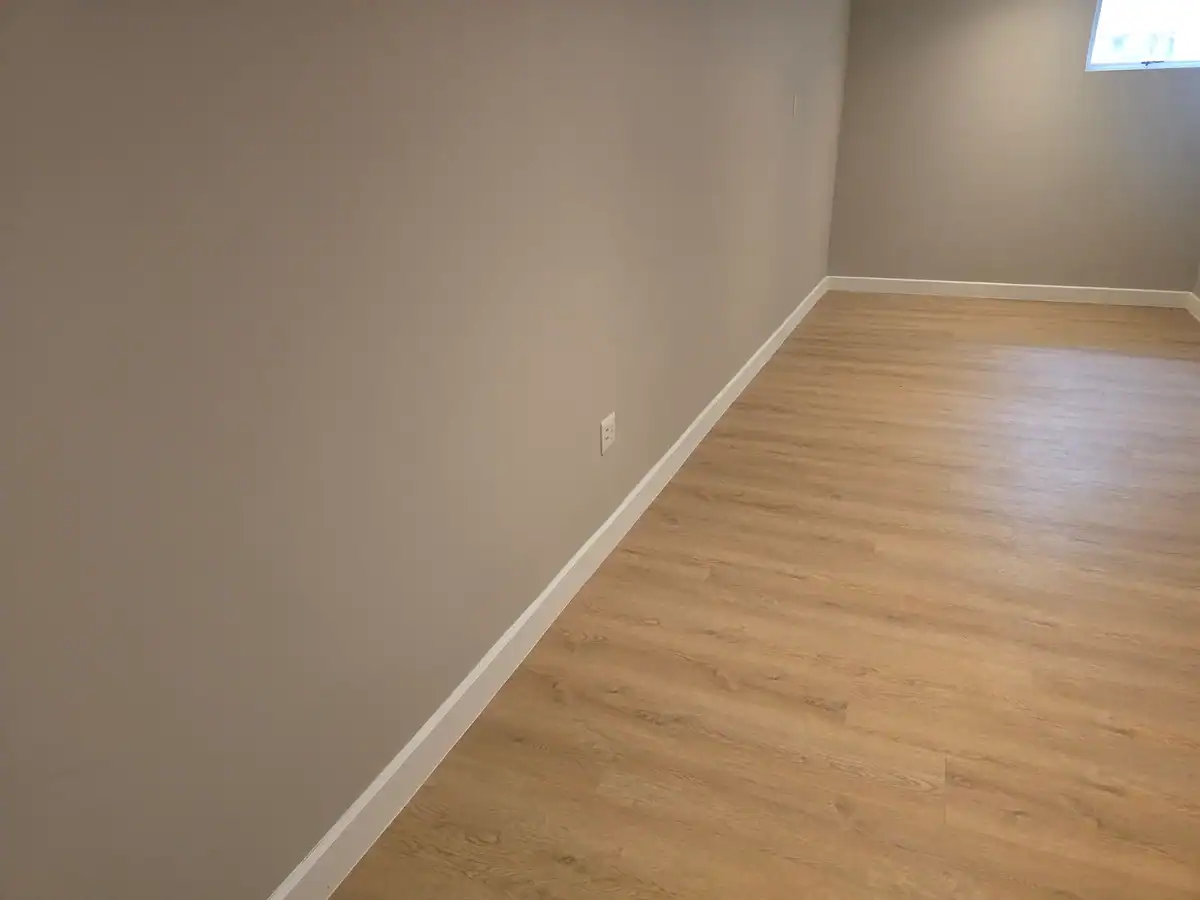
The central lesson is that repairing a water source does not immediately restore the condition of the damaged painted surface.
At Nieuwe Steenberg Estate, the known shower waterproofing issue had already been corrected, but residual moisture and damaged coating remained in the adjoining bedroom wall.
The painting work therefore required separate preparation, including removal of defective paint, appropriate damp-related treatment, crack repairs and restoration of interior finishes.
The scope also included moving cornice joints, historical ceiling staining and painted woodwork, making the job more complex than a straightforward walls-only repaint.
This is evidence of a genuine interior painting project. It is not evidence that our team repaired the shower waterproofing, repainted the property’s roof or received an estate-wide appointment.
For walls, ceilings, cornices and woodwork, visit Interior Painters Tokai.
For painting-related moisture damage after a suitable source repair, visit Damp Proofing Tokai.
For cracked plaster and opened cornice joints, see Wall Preparation and Crack Repairs Tokai.
For historical work at private estate properties, see Painting Homes in Tokai Estates.
For the cost of similar interior preparation, read House Painting Costs Tokai.
For our full Tokai experience and both original 2026 projects, return to Painters Tokai.
Whether your property needs a general repaint, wall-crack repairs, preparation after a repaired moisture problem or repainting of previously painted woodwork, Painters Cape Town can inspect the relevant work and provide a detailed written quotation.
Our own employed painters complete the agreed painting under working-foreman supervision.
Call 082 374 6862 or request a Tokai interior painting quote.
Original project photographs and documented scope: Painters Cape Town. The estate name identifies an individual private work location and does not imply an estate partnership or endorsement.
Follow this project's actual interior painting and moisture-related problems to the correct service.
Preparation and repainting of suitable walls, ceilings, cornices, doors, frames and skirting.
Understand damaged paint and residual moisture after a water-entry defect has already been repaired.
Learn about fine and wider plaster cracks, movement-sensitive cornice joints and repair methods.
How painted doors, frames and skirting are sanded, spot-primed, undercoated and finished.
See genuine historical painting assignments, access planning and protection of individual estate properties.
Why moisture-damaged plaster, cornice repairs, woodwork and occupied-home protection influence quotations.
The documented painting period was 6-14 April 2026 at an occupied double-storey private home in Tokai.
No. A separate building contractor had already repaired and retiled the shower using an ABE Duraflex waterproofing system. Our team carried out subsequent painting-related preparation and interior repainting.
Protimeter display readings ranged from 9.7% to 21.0% across relevant tested interior areas. The highest recorded reading was associated with the bedroom wall adjoining the previously defective shower.
The scope included walls, ceilings, cornices, moisture-damaged paint preparation, suitable plaster crack repairs, flexible cornice-joint treatment and restoration of previously painted doors, frames and skirting.
The original specification included Dulux Pre-Paint Dampshield in suitable areas, two coats of Dulux EasyCare on prepared interior walls and Dulux Pearlglo Waterbased for prepared woodwork after the specified primers and undercoat.

Copyright 2026 , all rights reserved.