Bubbling or Blistering
Raised bubbles form where the paint film loses adhesion. Moisture, heat, contamination or incompatible coating layers may contribute. The depth and location of blistering help guide further inspection.
Paint Failure Advice Based on Real Paarl Projects
Understanding peeling paint, blistering, chalking, cracking and moisture-related discolouration before another repaint.
With 27 years of painting-contractor experience, we have inspected real coating failures at homes in Nantes Street, Kaapse Draai in Courtrai, Lemoenkloof and Pearl Valley.
This guide uses actual inspection observations, Protimeter readings, original photographs and written preparation specifications to explain why paint fails—and why the underlying problem matters more than another coat of paint.
Visible symptoms are clues, not proof of one particular cause. A physical inspection is necessary before choosing a repair system.
Our preparation-first approach is supported by genuine project inspections, photographs, documented coating failures and written repair specifications.
Established practical experience inspecting defective paint, unstable plaster, timber, roofs and moisture-sensitive surfaces.
Original before-and-after wall photographs and a May 2026 report documenting moisture-related discolouration.
Kaapse Draai findings included map cracking, paint bubbling, failed sealants and weathered parapets.
Documented 2026 coating deterioration, chalking, cracks, ageing waterproofing and preparation across several substrates.
A written estate-home inspection recorded discolouration, moisture symptoms, cracks and failed joint seals.
Minimum and maximum readings are documented with other observations, not used alone to diagnose a moisture source.
Moisture and soluble salts in cement-based surfaces are considered when investigating blotchy or deteriorating coatings.
Hairline, map and wider plaster cracks require different assessment and repair methods.
Parapets, windowsills, failed window seals and expansion joints are considered before repainting affected masonry.
Our quotations explain why breathable coatings cannot permanently eliminate moisture entering from soil or backfill.
Observed defects, necessary preparation, coating choices and important exclusions are recorded before work begins.
Our full-time employed painters work under experienced foremen rather than subcontracted painting crews.
Every damaged painted surface should be assessed on its own merits. None of these project findings proves that the same defect has the same cause at another property.
When paint starts bubbling, peeling, cracking or becoming patchy, it is tempting to assume that the problem can be solved by cleaning the surface and applying another coat.
Unfortunately, repainting without understanding the condition of the underlying substrate can result in the same problem returning.
Paint failures have several possible causes. Moisture movement, soluble salts, incompatible coatings, old chalky paint, inadequate preparation, extreme surface temperatures and movement at plaster joints can all affect coating performance.
Not every blister means damp, and not every discoloured wall has alkali attack. The appearance of the problem provides useful clues, but the likely cause must be assessed alongside the location, construction, previous coatings and exposure of the affected surface.
Our painting company has 27 years of experience, and original project records from Nantes Street, Courtrai, Lemoenkloof and Pearl Valley provide practical examples of different coating problems in Paarl.
This guide concentrates on understanding paint failure. For complete painting services in the area, visit our Painters Paarl page.
Raised bubbles form where the paint film loses adhesion. Moisture, heat, contamination or incompatible coating layers may contribute. The depth and location of blistering help guide further inspection.
Paint separates from the underlying surface or an earlier coating. Weak plaster, chalking, moisture, poor cleaning and unsuitable primers may contribute.
Uneven colour changes can arise from moisture and alkaline salts, staining, contamination, inconsistent preparation or weathering. The pattern must be investigated before choosing a remedy.
Some weathered coatings leave powder on the hand. Excessive chalking can affect adhesion, while fading may involve sunlight, pigments, exposure or chemical deterioration.
Our 2026 Nantes Street exterior redecoration project provides a useful example of coating deterioration associated with moisture-sensitive building surfaces.
Project area: Nantes Street, Paarl
Written quotation date: 24 May 2026
Protimeter readings: Min 11.3%, Max 26.9%
Recorded symptoms: Discolouring paint, cracks, failed window seals, mould staining and deterioration of existing coatings.
The inspection described moisture-related paint discolouration and identified alkali attack as a concern. The quotation also recorded cracks on vertical and horizontal masonry and vulnerable window-sealing details.
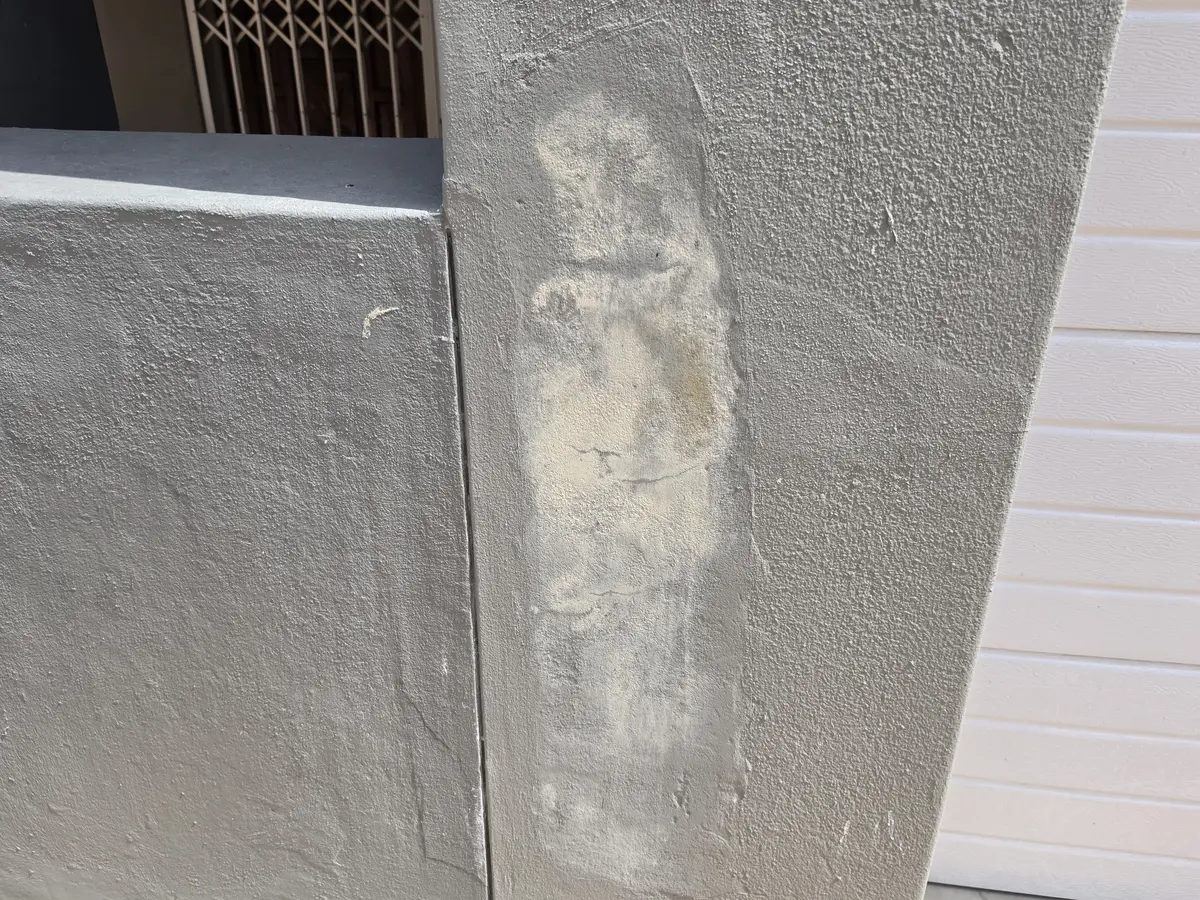
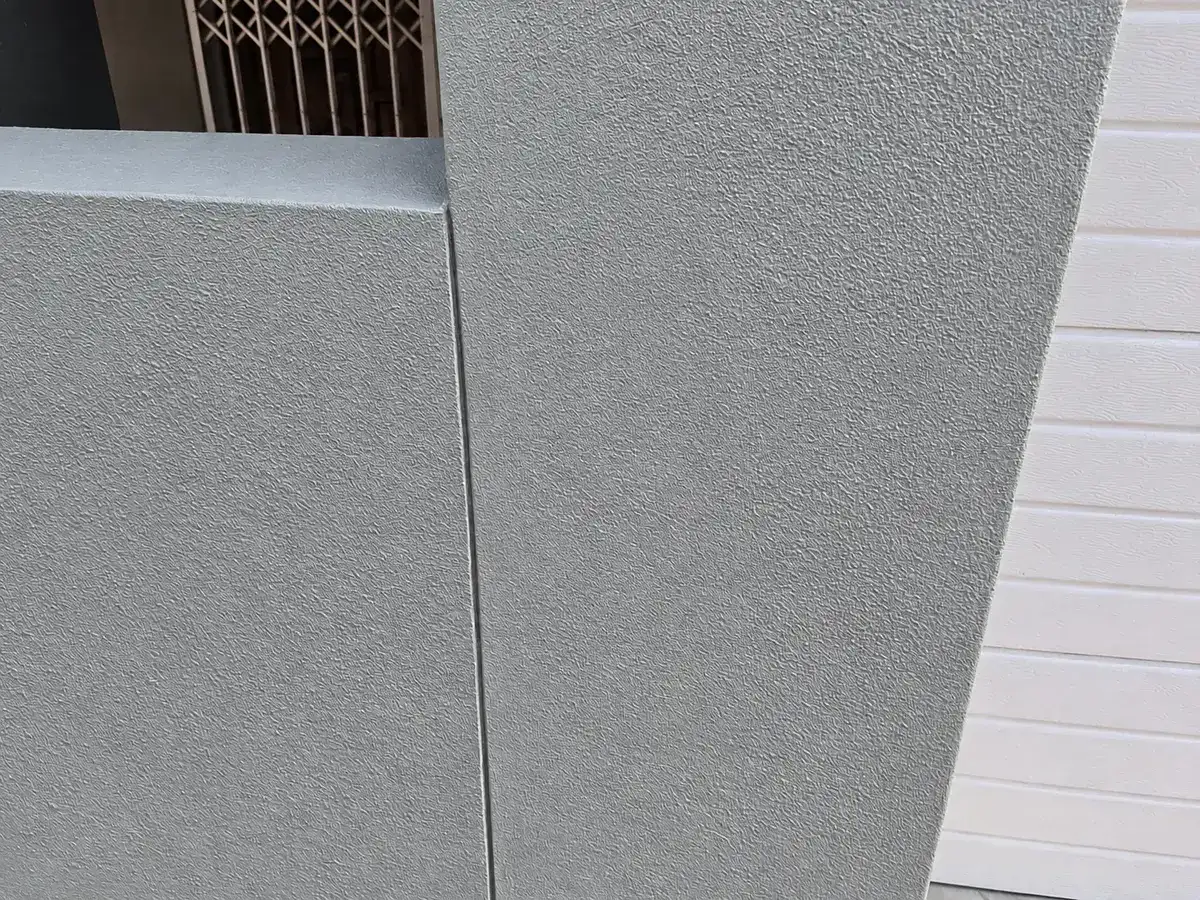
The photographs document a visible change in the appearance of the affected wall. They do not independently establish the exact cause of the original discolouration or prove that future moisture movement is impossible.
The Nantes Street quotation identified more than one potential source of deterioration:
It distinguished between rainwater-entry defects that could be addressed through specified repairs and masonry still exposed to ground or backfill moisture.
That distinction matters because repainting the visible side of a wall does not necessarily eliminate a continuing moisture source behind or beneath the masonry.
Our Damp Proofing Paarl page explains the relevant preparation systems and limitations in more detail.
Alkali attack, also called alkali burn or pH burn, can occur when highly alkaline materials associated with cement-based plaster interact with the paint film.
Water moving through masonry may dissolve and transport soluble salts. Under certain conditions, these substances contribute to deterioration of the coating binder or pigments, leaving discoloured, blotchy or damaged paint.
Possible signs include:
Important: White deposits, fading and blotchy coatings do not automatically confirm alkali attack. Efflorescence, sunlight exposure, substrate contamination and other paint defects can look similar.
Dulux Trade’s technical explanation of alkaline burn also describes the role of moisture, soluble salts and coating deterioration.
Where alkali-related damage is suspected, the condition of the plaster, moisture exposure, salt contamination, suitable primer and final coating specification must be considered together.
A second documented Paarl project, at Kaapse Draai in Courtrai, provides evidence of cracking and related coating defects.
Quotation date: 11 September 2026
Protimeter readings: Min 8.7%, Max 26.5%
Inspection findings: Map cracking, paint bubbling, discolouration, failed joint seals and weathered parapet surfaces.
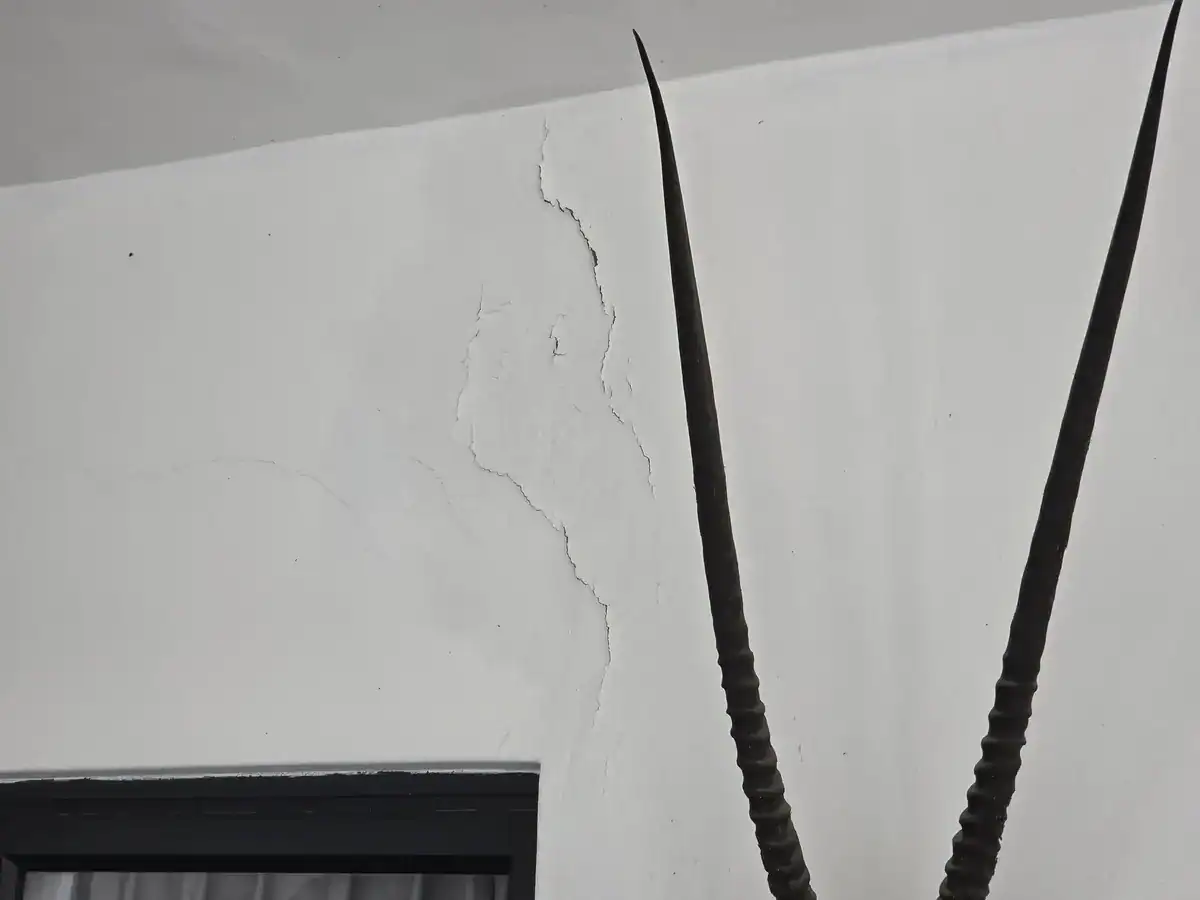
The inspection identified different types of plaster cracks rather than assuming that all defects could be filled with one product.
The written specification distinguished hairline cracks, widespread map cracking, wider plaster cracks and movement joints. It also included preparation of vulnerable horizontal masonry and replacement of deteriorated sealants.
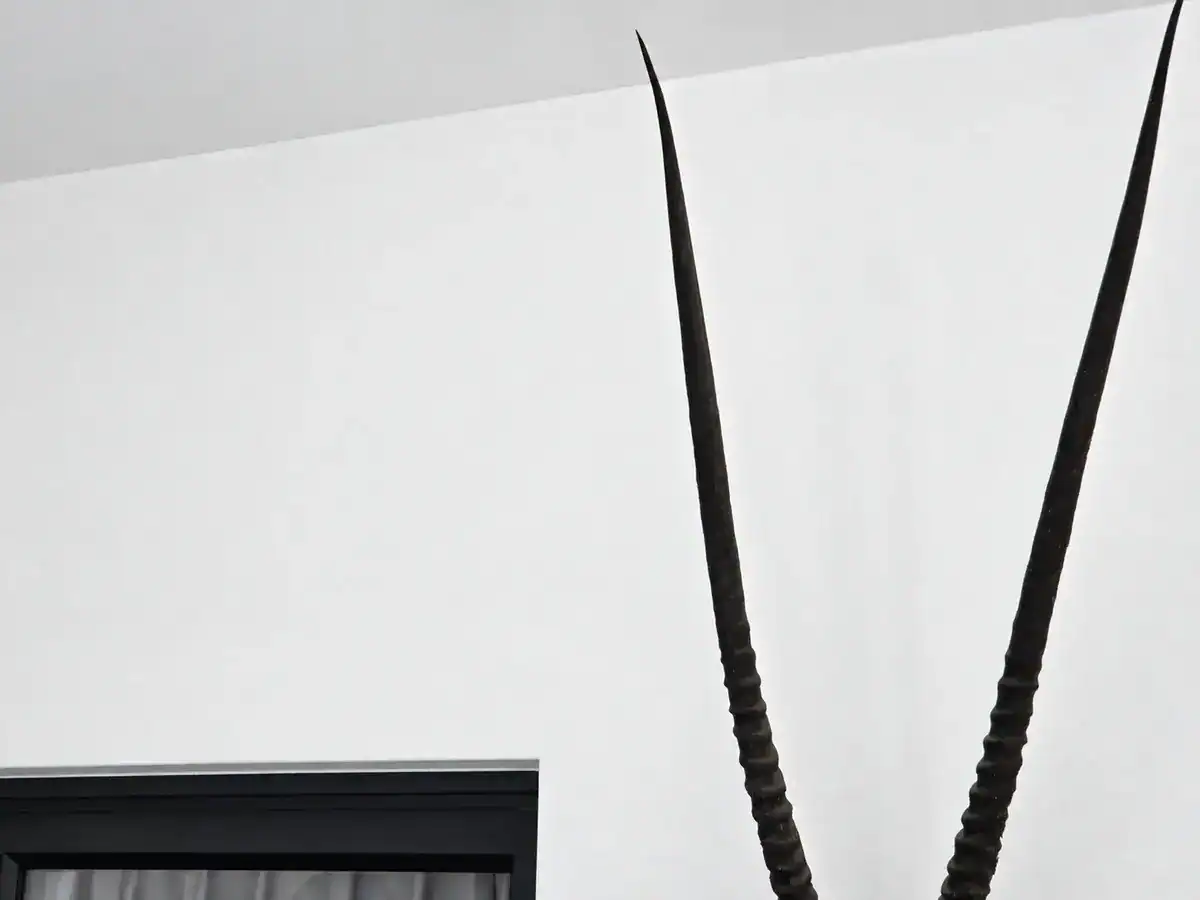
These photographs demonstrate the appearance before and after work, while the written inspection establishes the broader technical findings. A photograph of a crack cannot, on its own, prove whether moisture caused that crack or entered through it.
For the complete exterior preparation approach, visit Exterior Painters Paarl.
Our completed August 2026 project in Lemoenkloof, Paarl, recorded several different coating problems at the same property.
Protimeter readings: Min 1.4%, Max 17.9%.
The inspection described chalky and weathered exterior walls and corrugated roof sheets, mould and staining, map cracking, ageing horizontal waterproofing, deteriorated sealants and peeling paint on Nutec fascia components.
This project demonstrates an important point: a single property may have several causes of paint deterioration, depending on the substrate and its exposure.
Weathered metal roof paint requires different preparation from unstable plaster, timber finishes or peeling coatings on Nutec components. The original Lemoenkloof project specification treated those substrates separately.
Read the original Lemoenkloof exterior and roof painting case study for the detailed preparation evidence.
A February 2025 exterior redecoration quotation for a home in Pearl Valley Golf Estate recorded further examples of damaged coatings and possible moisture-entry routes.
Exterior Protimeter readings: Min 10.5%, Max 17.3%.
The inspection identified plaster cracks, failing window and door sealants, paint discolouration associated with moisture-related alkali attack, and horizontal surfaces without adequate waterproofing.
The quotation called for separate preparation of walls, cracks, seals and exposed masonry, rather than concealing the visible coating damage under new paint.
These are documented inspection findings from that particular property. They should not be taken to mean that all Pearl Valley homes have similar paint failures.
Bubbling does not automatically mean ground moisture is moving upward through a wall.
Other possible contributors include:
These are recognised causes discussed in manufacturer guidance, including the Dulux Trade flaking and blistering guidance.
The correct repair depends on identifying what failed: the final coat, an earlier coating layer, the primer, or the underlying surface.
The following observations can guide an inspection, but they are not definitive diagnoses.
| Visible symptom | Possible contributors | What to inspect |
|---|---|---|
| Bubbles below windowsills | Water entry, salts, poor adhesion | Sill tops, cracks, window seals, plaster condition |
| Blotchy discolouration | Moisture, alkali attack, stains, uneven coating | Moisture routes, salts, previous coatings, colour pattern |
| Paint peeling in sheets | Loss of adhesion, poor preparation, incompatible layers | Adhesion of each layer, old paint, primers and substrate |
| Powder on an exterior wall | Weathering and chalking | Surface stability, cleaning needs, primer suitability |
| Recurring lower-wall deterioration | Ground or backfill moisture, irrigation, other defects | Wall construction, ground contact, drainage, DPC condition |
One repeated concern in your recorded Paarl quotations is moisture affecting boundary, garden and foundation walls.
These walls may lack an effective damp-proof course or may receive moisture from soil, irrigation and backfill. Moisture can continue moving through the masonry even after careful surface preparation.
A suitable breathable finish may reduce some coating-related problems, but it does not create a missing structural moisture barrier.
Our Nantes Street and Lemoenkloof quotations explicitly recognised these conditions and excluded deterioration caused by continuing moisture migration from the relevant coating warranties.
Applying a more expensive decorative paint is not a permanent solution to an unresolved structural moisture pathway.
Our Damp Proofing Paarl page explains these limitations and the distinction between surface preparation and correcting an underlying damp problem.
All four Paarl project examples in this article illustrate the value of written inspection observations before repainting.
There is no single repair formula for every paint failure. A suitable process may involve removing unstable paint, investigating moisture or contamination, allowing appropriate drying, repairing unsound plaster, treating cracks or joints, and selecting compatible primers and finish coats.
The correct sequence depends on the cause, substrate condition and product specification.
For example, a parapet that allows rainwater into the wall beneath may require waterproofing attention before the stained wall is repainted. An unstable, chalky coating may require cleaning and stabilisation. A corroded metal surface requires appropriate corrosion preparation.
Where relevant, the next step may be our Waterproofing Paarl, Exterior Painters Paarl or Roof Painting Paarl service.
An inspection is worthwhile when bubbling or peeling returns repeatedly, large areas lose adhesion, plaster becomes soft or hollow, staining appears near windows and parapets, or moisture symptoms continue despite previous repairs.
A specialist building, plumbing or waterproofing investigation may also be required if the apparent cause extends beyond accessible painting-contractor repairs.
Our full-time employed painting team works under experienced foremen, with written diagnostic quotations that document the actual preparation scope and relevant exclusions.
If your walls, roof coatings, timber or exterior finishes are peeling, bubbling, chalking or becoming discoloured, avoid assuming that another coat of paint will correct the problem.
We can assess suitable painting and preparation work, record visible defects and recommend a written scope appropriate to the property.
Call 082 374 6862 or visit our contact page to request an inspection in Paarl.
Explore a genuine August 2026 Paarl project involving chalking, moisture-related discolouration, cracked plaster, failing sealants, weathered roof coatings and remedial preparation.
Learn why bubbling, peeling, salts and moisture-related discolouration require investigation before repainting, and why moisture readings alone do not establish the cause.
Understand how defective waterproofing on parapets, windowsills and wall tops, together with failed seals, may contribute to recurring paint failure.
See original Paarl examples of plaster cracks, damaged surfaces and movement-sensitive joints, and learn why different defects require different preparation methods.
Explore genuine Kaapse Draai and Lemoenkloof exterior evidence covering cracked walls, weathered coatings, parapets and preparation before repainting.
Return to our main Paarl painting service page for established local experience, original project evidence, written diagnostic quotations and professional painting services.
Possible causes include moisture beneath the coating, excessive surface heat during application, contamination, weak previous paint, unsuitable primers and incompatible coating layers. The pattern and substrate condition must be inspected before selecting a remedy.
No. Bubbling may result from rainwater entering through cracks, heat, poor adhesion, application conditions or other causes. A moisture-meter reading or visible blister does not independently prove rising damp.
Alkali attack can occur when moisture and highly alkaline substances associated with cement-based masonry affect the coating film. It may produce blotchy discolouration or deterioration, but similar symptoms can have other causes.
A new coating may fail if it was applied over loose, chalky or contaminated paint, an incompatible previous finish, an unsuitable primer or a damp substrate. The failed layers and underlying surface should be assessed before repainting again.
Cracks, deteriorated sealants and failed waterproofing on exposed masonry can allow water into the wall below. Moisture-related paint failure may continue until the relevant entry route has been addressed.
Our May 2026 inspection recorded coating discolouration, cracks, mould-affected areas and failed window seals. Protimeter readings ranged from Min 11.3% to Max 26.9%. The quotation also recorded moisture-related limitations at boundary and foundation walls.
The September 2026 inspection recorded map cracking, paint bubbling, discolouration, failing seals and weathered parapets. Protimeter readings ranged from Min 8.7% to Max 26.5%, with original before-and-after photographs of exterior wall preparation.
No. A Protimeter provides readings that support assessment of a surface, but it cannot independently prove the source of moisture. Cracks, sealants, plumbing, drainage, roof details, ground contact and construction may need further investigation.
Not where ground or backfill moisture continues entering masonry without an effective damp-proof barrier. A suitable breathable finish can be specified, but decorative paint cannot guarantee permanent prevention of moisture-related discolouration, bubbling or peeling.
Call 082 374 6862 or use our contact page. We assess suitable painting and preparation requirements and provide a written quotation explaining the agreed scope and limitations.

Copyright 2026 , all rights reserved.