Moisture Diagnosis Before Repainting
Damp Proofing Bellville
Professional assessment and remedial preparation of damp-affected walls in Bellville, including peeling coatings, moisture-related discolouration, plaster deterioration and suitable damp-resistant coating systems.
Our genuine Kanonberg Lifestyle Estate and Welgemoed projects demonstrate why moisture readings, visible defects and possible water-entry routes should be considered together before repainting.
Damp-Related Conditions We Assess
- Peeling and blistered paint.
- Moisture-related discolouration.
- Alkali attack on cement plaster.
- Chalky or weakened coatings.
- Water stains on walls and ceilings.
- Cracked exterior plaster.
- Failed window and door sealants.
- Unprotected parapet tops.
- Cracked windowsills.
- Boundary-wall ground moisture.
- Possible plumbing or roof leaks.
- Protimeter moisture readings.
- Appropriate substrate preparation.
Damp-Related Painting Work Starts With Diagnosis
A damp stain does not automatically reveal the source of moisture. We inspect visible symptoms, take relevant moisture readings, consider cracks and water-entry details and explain realistic coating limitations before preparing a remedial painting quotation.
27 Years of Experience
Twenty-seven years of painting and preparation experience, including moisture-related coating problems on residential and estate properties.
Protimeter Inspections
Moisture readings are recorded where relevant and interpreted alongside the visible condition and history of the affected wall.
Real Bellville Projects
Kanonberg documents exterior moisture symptoms, while Welgemoed documents interior coating deterioration and water staining.
Written Diagnostic Reports
Our quotations identify visible defects, recommended preparation, coating systems and limitations that could affect the outcome.
Full-Time Employed Painters
Preparation and painting are completed by our employed painters rather than subcontracted teams.
Working-Foreman Supervision
A working foreman supervises the preparation and application of the specified painting system.
Damp Proofing in Bellville Starts With Understanding the Moisture Problem
Painters Cape Town provides moisture-related wall preparation and remedial painting services in Bellville for suitable residential, estate and other properties.
Damp-looking paintwork does not necessarily mean that the same repair will work on every wall.
A discoloured exterior wall may be affected by rainwater entering through failed window sealant. Peeling paint near the bottom of a boundary wall may be influenced by ground moisture. A brown stain on an interior ceiling may be associated with an earlier or continuing water-entry problem.
These situations require different investigation and preparation.
Our Bellville service therefore starts with a physical inspection, examination of visible defects and relevant moisture readings before recommending a remedial coating specification.
For general painting services throughout the area, visit Painters Bellville.
What Our Bellville Damp-Related Painting Service Covers
Depending on the property and accepted quotation, suitable remedial work can include:
- physical inspection of damp-affected painted walls;
- Protimeter readings on relevant surfaces;
- assessment of visible peeling, bubbling and discolouration;
- assessment of water-entry details around windows and doors;
- identification of vulnerable parapets, windowsills and wall tops;
- recording of cracked or damaged plaster;
- removal of loose or poorly bonded coatings;
- cleaning and preparation of affected masonry;
- appropriate crack and joint preparation;
- compatible bonding and primer systems;
- specified damp-resistant treatment on suitable cementitious surfaces;
- repainting of prepared and suitably treated areas; and
- written explanation of limitations where moisture cannot be permanently controlled by painting.
Specialist leak detection, structural repairs, drainage works or other building repairs may be required where the moisture source falls outside a painting contractor’s agreed scope.
Why Moisture Readings Matter Before Painting
A moisture meter helps identify differences in the condition of suspect surfaces.
However, a meter reading does not establish whether water came from rainfall, soil, plumbing, condensation or another source.
Readings should be interpreted together with the location of the damage, visible cracks, nearby windows, roofline details, the history of the problem and the condition of the substrate.
We use a Protimeter DigitalMini moisture meter as part of relevant painting inspections.
The readings assist with preparation decisions and with identifying areas that may require further investigation. They should not be treated as a complete building moisture diagnosis on their own.
Moisture Symptoms Are Not All Rising Damp
One of the most common mistakes in dealing with damaged paint is describing every damp-looking wall as rising damp.
Rising damp describes moisture moving upward through porous masonry from a lower moisture source.
Penetrating damp refers to water entering through a building element, such as a cracked wall, failed joint, vulnerable windowsill or damaged external surface.
Condensation is different again. It can occur when moisture in indoor air condenses on colder surfaces, particularly where ventilation, humidity and temperature conditions allow it.
The repair method depends on the actual mechanism causing the problem.
At Kanonberg Lifestyle Estate, the visible distribution of exterior defects and the condition of the windows, joints and parapets made it important to investigate possible penetrating moisture rather than automatically classifying all discolouration as rising damp.
Peeling and Blistering Paint on Damp Walls
Moisture can contribute to deterioration of the paint film and its bond to the underlying substrate.
Symptoms may include blistering, peeling, discolouration, a powdery surface or repeated failure after repainting.
These symptoms may also be associated with poor preparation, weak previous coatings, unsuitable primers or contamination.
Simply applying a new finish over loose paint will not correct an unstable underlying coating.
Our separate Peeling & Bubbling Paint Bellville guide explains these coating-failure symptoms in greater detail.
Alkali Attack and Paint Discolouration
Cement-based plaster contains alkaline compounds.
When moisture migrates through masonry, alkaline conditions and soluble materials within the substrate can contribute to coating discolouration, powdering and deterioration.
This form of coating damage may be described as alkali attack or alkali burn.
A new decorative coat does not necessarily prevent the problem from recurring if water continues entering the wall.
The condition of the substrate and the possible moisture-entry routes therefore need attention before an appropriate preparation and coating system can be selected.
Real Bellville Damp Evidence: Kanonberg Lifestyle Estate
Our Kanonberg Lifestyle Estate project provides a genuine example of exterior moisture-related coating problems in Bellville.
Location: Kanonberg Lifestyle Estate, Bellville
Property: Private double-storey home
Project dates: 2–11 March 2026
Recorded relative masonry moisture readings: 17%–20% on inspected areas
The property required exterior restoration after approximately eleven years of coating exposure.
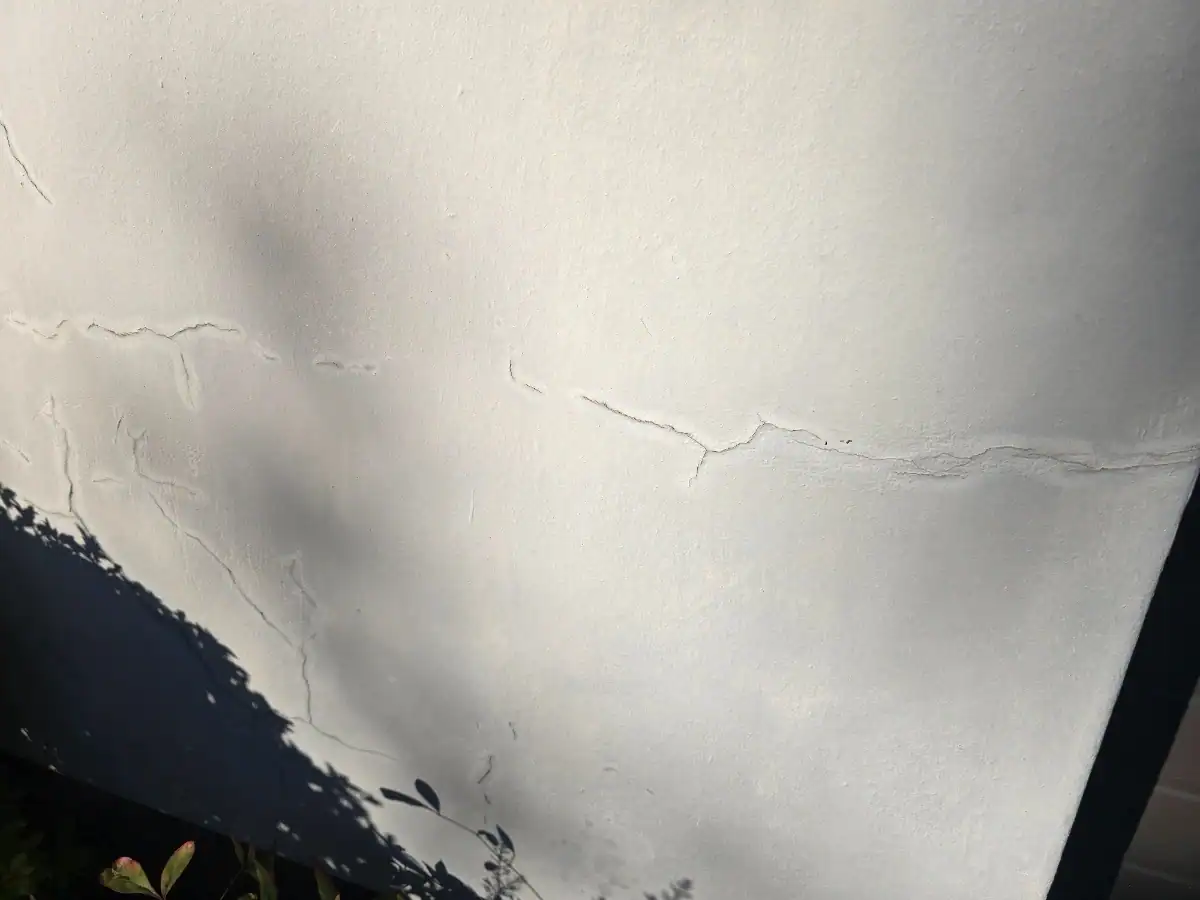
The inspection identified weathered and discoloured paint, peeling areas, map cracking, wider plaster cracks, failed sealants around selected windows and doors, open movement joints and vulnerable horizontal surfaces.
The moisture readings were considered together with these defects rather than being used as the sole explanation for the damaged coating.
What Was Causing Concern at Kanonberg?
The exterior inspection identified several credible routes for moisture to enter or affect the wall system.
These included deteriorating perimeter sealant around windows and doors, open expansion joints, cracks through plaster and cracking on horizontal windowsill and parapet surfaces.
Rainwater can enter through these defects and later contribute to coating failure elsewhere on the wall.
For example, damp-related discolouration below a window may originate from a defective window junction or sill rather than from moisture rising from the ground.
Understanding the location of these defects helped guide the preparation and repair scope.
The Kanonberg Remedial Preparation
The documented work combined exterior coating preparation with repairs to accessible defects contributing to moisture exposure.
The preparation scope included:
- high-pressure washing and removal of loose paint;
- cleaning and preparation of affected plaster;
- repair of suitable hairline and wider cracks;
- flexible treatment of specified cracked areas;
- resealing relevant movement joints;
- replacement of deteriorated window and door sealant where included;
- waterproofing treatment of specified horizontal parapet and windowsill surfaces;
- appropriate primer and bonding treatments; and
- specified damp-resistant preparation of affected cementitious areas.
The project demonstrates why a damp-related coating system should form part of the wider preparation specification rather than being treated as a substitute for repairing the building defects.
Dulux Dampshield on Suitable Damp-Affected Masonry
The documented Kanonberg preparation included Dulux Pre-Paint Dampshield on specified affected cementitious wall surfaces.
Dulux describes Pre-Paint Dampshield as a water-based damp barrier intended for suitable cement plaster and concrete wall surfaces.
Its application depends on the substrate, surface preparation and the applicable manufacturer specification.
We do not automatically recommend Dampshield for every damp-looking surface or for every type of moisture problem.
The condition and source of moisture should first be considered so that the remedial preparation does not conceal an unresolved defect.
The manufacturer’s product information is available from Dulux South Africa.
Real Bellville Damp Evidence: Welgemoed Interior Painting
Our second genuine Bellville example comes from a private residential home in Welgemoed.
Location: Welgemoed, Bellville
Project dates: 16–23 March 2026
Duration: Six working days
Painting team: Six painters
Recorded Protimeter readings: 8.2%–16.7%
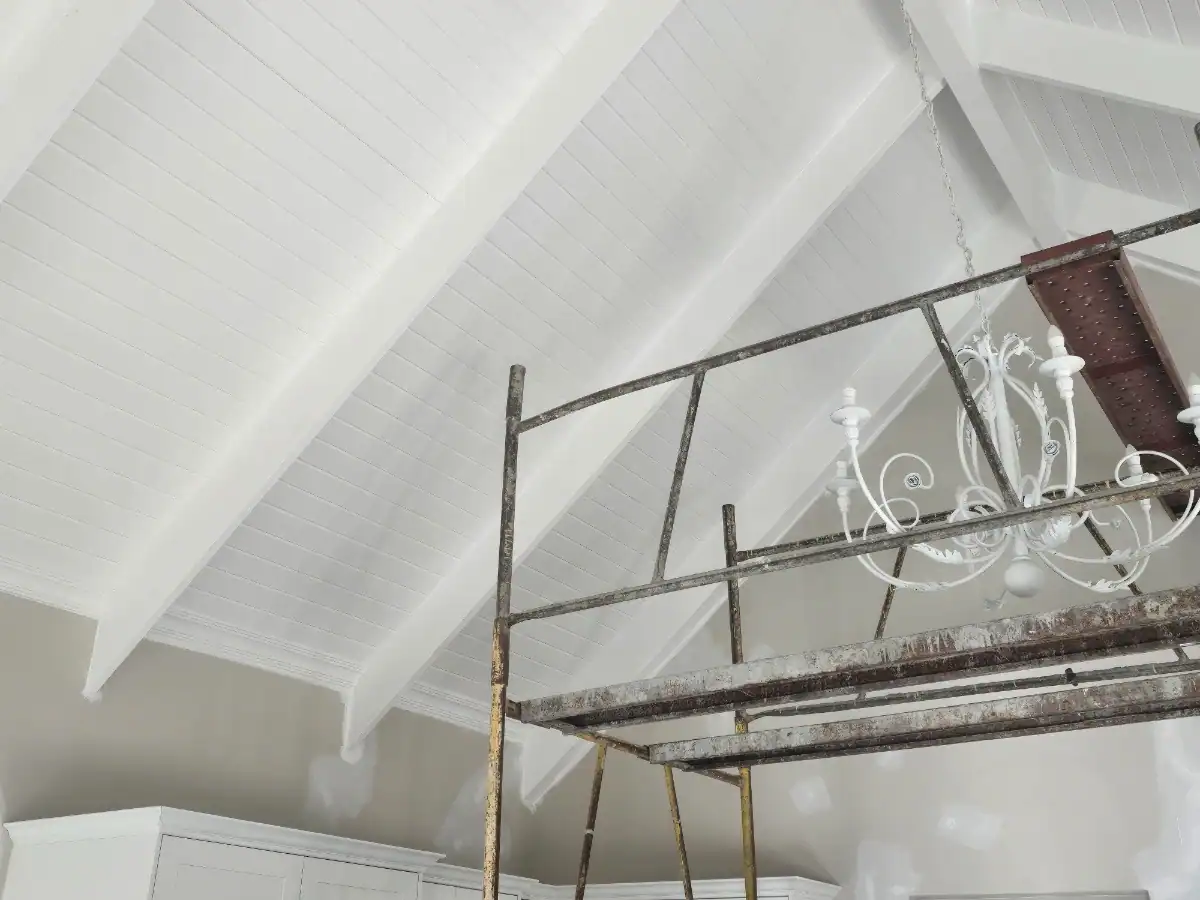
The inspection included a full interior painting assessment. Some walls showed peeling or discoloured coatings, and a separate brown water stain was visible on a bathroom ceiling.
The project also included opened ceiling joints, movement-related cornice gaps, plaster cracks and damaged joinery.
These were distinct conditions and required different preparation methods.
The documented specification included damp-related treatment on identified interior cementitious wall areas and separate preparation of the stained ceiling.
View the Full Welgemoed Interior Painting Case Study
Why Welgemoed Needed Different Preparation Systems
The Welgemoed home contained several different substrates and defects.
Moisture-affected plastered walls, a water-stained bathroom ceiling, painted timber and flexible ceiling joints could not all be prepared using the same product.
The written coating specification therefore distinguished between damp-affected cementitious surfaces, conventional ceiling boards, timber elements and painted joinery.
The affected interior masonry received the specified damp-related preparation before the decorative wall finish was applied.
The brown ceiling stain received separate stain-blocking preparation.
These measures addressed different coating symptoms and did not amount to a claim that a damp-resistant wall coating could repair an active leak.
Water-Stained Ceilings and Active Leaks
A brown water stain on a ceiling may remain visible even after the surface is dry.
If the original moisture source has been resolved, appropriate preparation and stain-blocking treatment may reduce the risk of the discolouration bleeding through the new decorative finish.
However, if water continues entering through a roof, plumbing installation or another building defect, repainting the stain is not a permanent repair.
At Welgemoed, the documented preparation addressed the visible brown stain as a separate finishing requirement.
Where an active leak is suspected, the source should be investigated and repaired before relying on repainting.
Rising Damp and Ground Moisture in Boundary Walls
Boundary walls, garden walls and some lower foundation-wall areas can be especially difficult to maintain where moisture continues entering from soil or backfill.
Many boundary walls do not contain an effective damp-proof course separating the masonry from ground moisture.
Water can therefore migrate through the wall even after the visible painted face has been prepared and coated.
Applying an impermeable decorative system without considering this continuing moisture movement can lead to renewed failure or moisture becoming trapped within the masonry.
Where appropriate, breathable coatings and repairs to vulnerable wall tops can improve maintenance performance.
However, neither ordinary exterior paint nor a damp-resistant coating can guarantee permanent prevention of moisture entering continuously from behind or below the wall.
These limitations must be explained in the quotation rather than hidden behind unrealistic coating-life or waterproofing promises.
Why Boundary Walls Are Not the Same as Main Building Walls
Main building walls and boundary walls can have very different moisture conditions.
A main building wall may be protected by a damp-proof course and suitable building-envelope detailing.
A boundary wall may be in direct contact with soil, planted beds, irrigation or backfill on one side.
Even when both surfaces are constructed from cement plaster, they may require different coating systems and different maintenance expectations.
At Kanonberg, the documented inspection specifically distinguished between moisture affecting the main exterior building surfaces and continuing ground or rear-face moisture affecting some boundary or foundation-wall areas.
Damp Around Windows and Doors
Failed window and door sealant can become a source of rainwater penetration.
When the perimeter seal deteriorates, moisture may enter between different building materials and later appear as a discoloured or damaged painted area.
Simply coating the resulting stain does not restore the failed seal.
The affected joints should be inspected and, where appropriate, defective sealant removed and replaced before the surrounding painted surface is prepared.
This was an important part of the Kanonberg exterior preparation.
Parapets and Windowsills Can Introduce Moisture From Above
Parapets and windowsills receive direct rainfall.
They may develop hairline cracking, wider plaster cracks or porous areas that allow water into the surrounding masonry.
When moisture enters from above, discolouration or peeling may later appear on the vertical wall below.
Where these defects are identified, waterproofing of the suitable prepared horizontal surfaces may be required before repainting.
Our separate Waterproofing Bellville page deals specifically with these water-entry details and their preparation.
What About Condensation and Mould?
Not every moisture problem originates from rain penetrating a wall.
Condensation can also contribute to persistent surface moisture, especially on cooler surfaces in rooms with elevated humidity or insufficient ventilation.
Where mould is present, it is important to consider why the surface remains damp and whether ventilation, temperature, building defects or another cause is contributing.
Cleaning and repainting without addressing a persistent moisture source may result in the problem returning.
Some cases may require specialist building or indoor-environment assessment rather than decorative coating work alone.
When Damp-Resistant Paint Is Not the Answer
A coating system is only one possible part of moisture-related remedial work.
Damp-resistant paint should not be presented as the permanent solution where the actual problem is:
- an active roof leak;
- defective plumbing;
- blocked or overflowing drainage;
- failed external waterproofing;
- unresolved structural cracking;
- water entering through failed window and door seals;
- continuing moisture from soil or backfill; or
- another uncontrolled source of moisture.
The underlying condition should be addressed, or the limitations documented, before deciding whether remedial coating work is appropriate.
Why Preparation Matters After Moisture Problems
Moisture-affected paint may have lost adhesion or become powdery.
Loose paint, salts, contamination or unstable plaster should not simply be hidden beneath another decorative coat.
Preparation can include cleaning, removing failed coatings, repairing suitable plaster defects, assessing drying conditions and applying a compatible primer or damp-related system where specified.
The preparation method depends on the substrate and the cause and extent of damage.
A new coating system can only perform reliably when the underlying surface is suitable for that system.
Damp Proofing and Waterproofing Are Different Services
The terms are often used together, but they describe different aspects of protecting a building.
Damp-related painting preparation deals with assessing affected wall surfaces and preparing suitable substrates for a remedial coating system.
Waterproofing deals with preventing or controlling water entry through vulnerable building details such as parapets, horizontal wall tops, joints and other suitable surfaces.
Some painting projects require both.
At Kanonberg, the preparation combined treatment of affected masonry with repairs to water-entry details.
The two services are related, but neither should be confused with simply applying ordinary finishing paint.
Damp-Related Painting in Bellville Homes and Estates
We undertake suitable moisture-related painting inspections and preparation work in Bellville and surrounding residential areas, including:
- Welgemoed;
- Loevenstein;
- Ridgeworth;
- Door de Kraal;
- Oakdale;
- Boston;
- Kanonberg Lifestyle Estate; and
- nearby Northern Suburbs residential areas.
Older homes may contain previous coating layers, historic repairs and ageing plaster. Premium estate homes may contain large exterior elevations, parapets, movement joints and extensive windowsill detailing.
The property type does not establish the cause of damp. Each affected area still needs to be assessed according to its actual condition.
What Our Written Damp-Related Painting Quotation Includes
Our quotation records the preparation and remedial painting scope appropriate to the property.
Depending on the inspection, this may include:
- the location of visible moisture-related symptoms;
- relevant Protimeter readings;
- cracks and existing coating defects;
- failed or vulnerable seals and joints;
- horizontal surfaces requiring separate waterproofing;
- cleaning and removal of loose coating;
- recommended substrate preparation;
- the proposed compatible primer and coating system;
- work outside the agreed scope; and
- limitations relating to continuing moisture movement or unresolved building defects.
We avoid promising that painting alone will permanently resolve a moisture problem that requires separate building repairs.
Why Choose Painters Cape Town for Damp-Related Painting in Bellville?
- 27 years of painting and surface-preparation experience.
- Genuine Kanonberg and Welgemoed project evidence.
- Protimeter readings where relevant.
- Written diagnostic observations with quotations.
- Preparation-first remedial painting specifications.
- Experience with cracks, failed seals and moisture-related coating deterioration.
- Realistic limitations for boundary and foundation-wall moisture.
- Full-time employed painters rather than subcontracted crews.
- Working-foreman supervision.
- Public Liability Insurance through OUTsurance.
- Direct contractor accountability.
Request a Damp-Related Painting Inspection in Bellville
If you have peeling paint, damp-related discolouration, blistering coatings, water stains or repeatedly failing paint on a Bellville property, the first step is to investigate the condition of the affected surfaces and possible moisture-entry routes.
Where the work is suitable for remedial painting, we can prepare a written quotation covering the agreed preparation and coating system.
Where a specialist repair is required, that limitation should be identified rather than offering a decorative coating as a permanent solution.
Call 082 374 6862 or use our contact page to arrange an inspection.
Helpful Bellville Damp & Painting Guides
Explore our related Bellville services and genuine project evidence covering moisture-related coating problems, waterproofing, preparation, interior and exterior painting.
Painters Bellville
Our main Bellville page connects the local painting services, real projects and specialist guides.
Waterproofing Bellville
Learn about parapets, windowsills, cracks, failed seals, joints and other surfaces requiring protection against water entry.
Why Paint Peels & Bubbles in Bellville
Understand why moisture, weak coatings, contamination, poor adhesion and defective preparation can lead to premature paint failure.
Exterior Painters Bellville
Exterior coating preparation includes cracks, failed seals, moisture symptoms, parapets and vulnerable windowsills.
Interior Painters Bellville
Interior walls, ceilings, stains and joinery require substrate-specific preparation before redecorating.
Kanonberg Lifestyle Estate Project
See real exterior moisture readings, cracked walls, failed seals, movement joints and remedial preparation completed in March 2026.
Welgemoed Interior Project
See the recorded interior moisture readings, discoloured wall coatings, bathroom ceiling stain and preparation work.
Damp Proofing Cape Town
Our citywide guide covers moisture-related preparation and documented painting projects across Cape Town.
Damp Proofing Bellville — FAQs
What damp-related painting problems do you inspect in Bellville?
We inspect suitable moisture-affected wall and coating problems, including peeling paint, blistering, discolouration, chalky coatings, cracked plaster, failed seals and vulnerable horizontal surfaces.
Do you use a moisture meter?
Yes. We use a Protimeter moisture meter where relevant to assist with assessing suspect wall areas. The readings are considered together with visible defects and possible moisture-entry routes.
Do moisture readings identify the exact source of damp?
No. A meter reading can assist the inspection but does not by itself establish whether moisture comes from rainfall, soil, plumbing, condensation or another source.
What moisture readings were recorded at Kanonberg Lifestyle Estate?
Relative masonry moisture readings ranged from 17% to 20% on inspected exterior areas during the March 2026 Kanonberg project.
What moisture readings were recorded at Welgemoed?
Protimeter readings recorded during the Welgemoed interior inspection ranged from 8.2% to 16.7%.
What is the difference between rising damp and penetrating damp?
Rising damp involves moisture moving upward through porous masonry from a lower moisture source. Penetrating damp involves water entering through a wall or building detail, such as a crack, failed seal or defective external surface.
Can damp-resistant paint permanently stop an active water leak?
No. A suitable damp-resistant coating may form part of a remedial painting system, but continuing water entry through roof defects, plumbing, cracks, failed seals or other sources must be addressed separately.
Do you use Dulux Dampshield?
Yes, where appropriate for the substrate and preparation specification. Dulux Dampshield formed part of the documented remedial painting systems at Kanonberg and Welgemoed.
Why do exterior walls become discoloured?
Possible causes include coating weathering, moisture, alkali-related effects, contamination and other substrate problems. The actual condition should be assessed before choosing a repair system.
Can boundary-wall damp be stopped permanently with paint?
No. Where ground or rear-face moisture continues entering masonry without an effective damp-proof barrier, decorative coatings cannot permanently prevent that moisture movement. Suitable breathable coating approaches may be considered, with realistic limitations.
Why is the paint peeling below my window?
Possible causes include defective window seals, cracked windowsills, moisture entry or weak existing coatings. The visible damage should be assessed together with the surrounding building details before repainting.
Do you repair cracks and failed sealants?
Suitable crack preparation and replacement of failed sealant can be included where appropriate and specified in the quotation. These repairs are separate from the damp-resistant coating itself.
Can you paint over a brown ceiling water stain?
Once any continuing moisture source has been addressed, suitable stain-blocking preparation can help reduce discolouration showing through the new finish. Our Welgemoed project included separate preparation of a bathroom-ceiling water stain.
Does waterproofing form part of damp proofing?
Some projects require both services. Waterproofing addresses suitable water-entry details, while damp-related painting preparation addresses affected wall surfaces and the compatible remedial coating system.
Do you provide a written diagnostic report?
Yes. Our painting quotations are supported by written diagnostic observations covering relevant visible defects, preparation recommendations, coating specifications and important limitations.
How do I arrange a Bellville damp-related painting inspection?
Call Painters Cape Town on 082 374 6862 or use our contact page to arrange a physical inspection and written quotation.

Copyright 2026 , all rights reserved.