Bellville Paint Failure Guide
Why Paint Peels, Bubbles or Fails on Bellville Homes
Peeling paint, bubbles, chalking, staining and cracks are symptoms - not a diagnosis. Our Bellville project evidence shows how moisture, failed sealants, movement, exposed horizontal surfaces, fungal contamination, corrosion and weak coatings can require very different preparation before repainting.
This guide uses four genuine 2026 Bellville projects in Kanonberg Lifestyle Estate, Welgemoed, Protea Valley and Welgedacht to explain what can go wrong and why identifying the likely cause matters before another coat of paint is applied.
Real Bellville Failure Evidence
- Kanonberg: 17%-20% readings, cracks, failed seals and vulnerable horizontal surfaces.
- Welgemoed: 8.2%-16.7% readings, peeling paint, staining and movement-related gaps.
- Protea Valley: chalking, fading, fungal contamination and damaged cement roof tiles.
- Welgedacht: IBR chalking, fungal growth, grime and localised corrosion.
How We Approach Paint Failure in Bellville
The visible paint defect is only the starting point. Our quotations record relevant cracks, moisture symptoms, coating condition, sealing defects, waterproofing concerns, roof issues, corrosion and other preparation requirements before repainting begins.
4 Real Bellville Cases
This guide is supported by genuine 2026 work in Kanonberg, Welgemoed, Protea Valley and Welgedacht rather than generic examples.
Moisture Readings Need Context
A moisture-meter reading records the condition of the tested area. It does not automatically prove rising damp or identify the water source.
Preparation Before Paint
Cracks, weak coatings, failed sealants, fungal contamination, rust and vulnerable horizontal surfaces must be considered before finishing coats.
Written Diagnostic Reports
Our quotations record visible conditions and the proposed remedial preparation so clients can understand what is being treated and why.
27 Years of Experience
Our approach is supported by 27 years of painting, surface-preparation and coating experience across Cape Town properties.
Full-Time Employed Painters
Painting is completed by our own employed painters under working-foreman supervision rather than subcontracted painting crews.
Supplier Systems Where Appropriate
Compatible primers, waterproofing products and coating systems are selected according to the substrate and written project scope.
Direct Contractor Accountability
Painters Cape Town is not a lead-generation company. Clients deal directly with the contractor responsible for inspection, preparation and painting.
Peeling or Bubbling Paint Is a Symptom – Not the Diagnosis
When paint peels, bubbles, blisters, cracks, powders or becomes stained, the immediate temptation is to remove the damaged area and repaint it. Sometimes that is enough. In other situations the failed paint is only the visible symptom of a separate problem beneath, behind or around the coating.
Bellville properties can experience several different types of coating failure. Older homes may contain several generations of previous paint. Premium homes can have long parapets, windowsills, movement joints, timber, metalwork and extensive roofs. Garden irrigation and planted beds can affect boundary walls, while winter rainfall can expose failed sealants, roofline defects and vulnerable horizontal surfaces.
The correct preparation therefore depends on why the coating failed, not merely what the damaged paint looks like.
Our main Painters Bellville page documents four genuine 2026 Bellville projects. Those projects provide useful first-party examples of very different paint and coating problems.
What Can Cause Paint to Peel, Bubble or Fail?
There is rarely one universal cause. Common conditions we consider during an inspection include:
- water entering through cracks;
- failed window or door sealants;
- unprotected or deteriorating windowsills;
- cracked parapet tops and horizontal wall surfaces;
- movement and settlement cracking;
- open or failed expansion joints;
- historic plumbing or roof leaks;
- bathroom and shower moisture;
- boundary-wall moisture;
- garden irrigation and raised ground levels;
- weak previous paint layers;
- poor adhesion between old coating systems;
- UV degradation and chalking;
- fungal or biological contamination;
- rust beneath coatings;
- incompatible primers;
- painting over contaminated or unstable surfaces; and
- insufficient preparation during a previous repaint.
Several of these conditions can exist on the same property. That is why simply identifying a wall as “damp” or a coating as “old” is not always enough to specify the repair.
Moisture Readings Do Not Automatically Mean Rising Damp
We use moisture readings as one diagnostic observation where relevant, but the reading itself does not identify where the moisture originated.
A higher reading may be associated with water entering through a crack, failed seal, windowsill, parapet, roof junction, bathroom, shower, plumbing problem, irrigation, ground contact or another building condition.
Rising damp is one possible moisture mechanism in some buildings, but it should not be diagnosed simply because a meter produces an elevated number.
This distinction is important because the remedial work for a failed windowsill seal is different from the work required for a leaking roof, cracked parapet, shower leak or genuine moisture rising through masonry.
Case 1: Kanonberg Lifestyle Estate – Exterior Paint Failure, Cracks and Moisture Symptoms
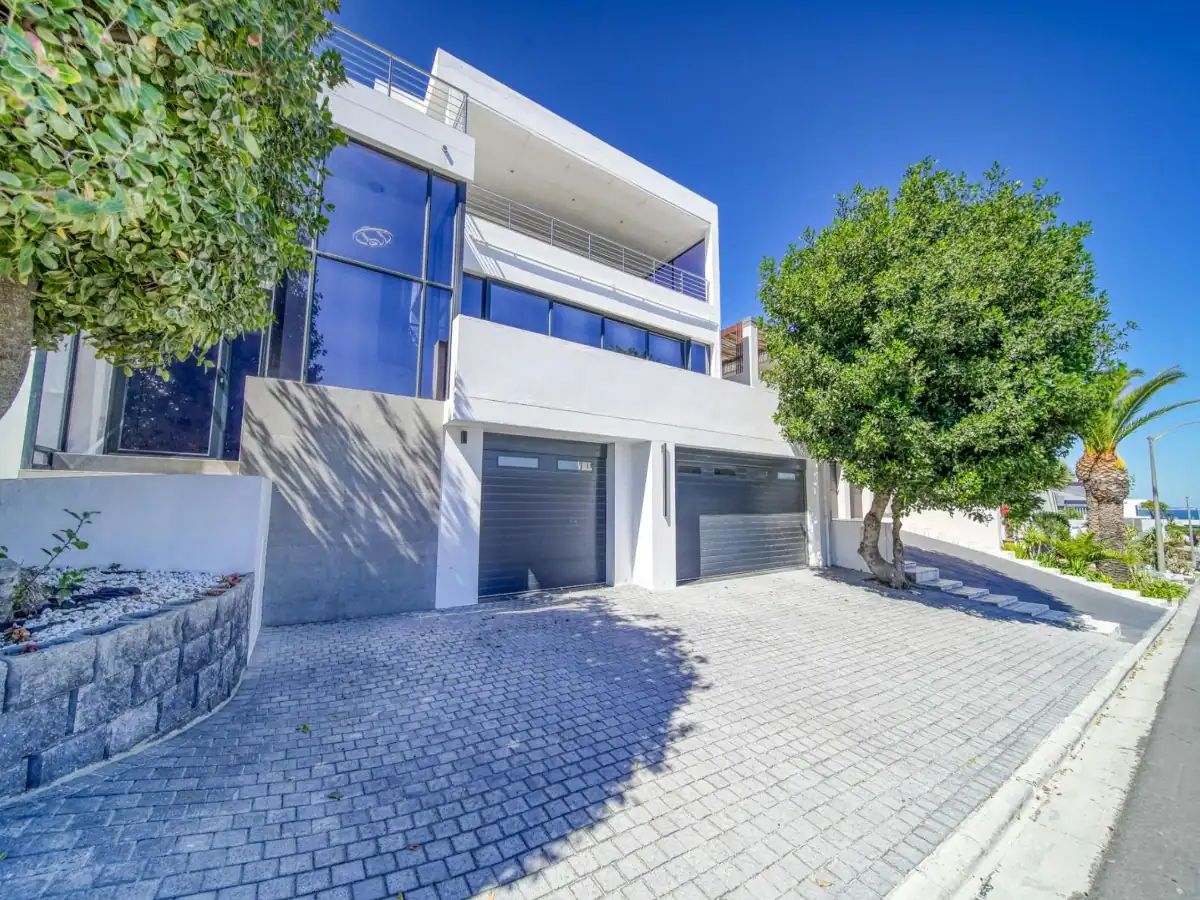
Our March 2026 Kanonberg Lifestyle Estate project involved a private double-storey home where relative masonry moisture readings on inspected areas ranged from 17% to 20%.
The inspection did not treat the meter reading as a complete diagnosis. It was considered together with the visible condition of the building.
Observed conditions included:
- weathered exterior coatings;
- map or spiderweb cracking;
- wider plaster cracks;
- failed sealants;
- open movement or expansion joints;
- vulnerable windowsills and parapets;
- powdery surfaces;
- discolouration and alkaline-type symptoms; and
- horizontal surfaces requiring additional protection.
The preparation scope therefore involved more than repainting the damaged areas. Cleaning, crack repairs, flexible sealing, joint preparation, damp-related preparation and waterproofing of selected horizontal surfaces formed part of the work before the finishing coatings were applied.
This case demonstrates an important point: peeling or deteriorating exterior paint can be influenced by several routes of moisture and several substrate defects at the same time.
View the full Kanonberg Lifestyle Estate case study
Why Horizontal Surfaces Matter
Parapets, wall tops, windowsills and other near-horizontal surfaces receive rain differently from vertical walls.
If these surfaces crack or their protective coating deteriorates, water can remain on the surface and enter the masonry. The visible paint failure may then appear below or beside the actual point of entry.
Where suitable and included in the written scope, these areas may require a waterproofing treatment such as Dulux Rainshield before the decorative wall system is completed.
Waterproofing a horizontal surface is not the same as applying another coat of standard wall paint. The product, preparation and location need to match the actual defect.
Failed Sealants and Expansion Joints
Window perimeters, doors, building junctions and movement joints can open or deteriorate over time.
If failed sealant is simply painted over, the joint may continue admitting moisture or reopen as the building moves.
Where relevant, defective material should be removed or prepared and the joint resealed with an appropriate flexible product before the surrounding paint system is reinstated.
Expansion joints require particular care because they exist to accommodate movement. Filling a movement joint with a rigid wall filler can create another crack rather than solving the original one.
Case 2: Welgemoed – Interior Peeling Paint, Water Staining and Movement
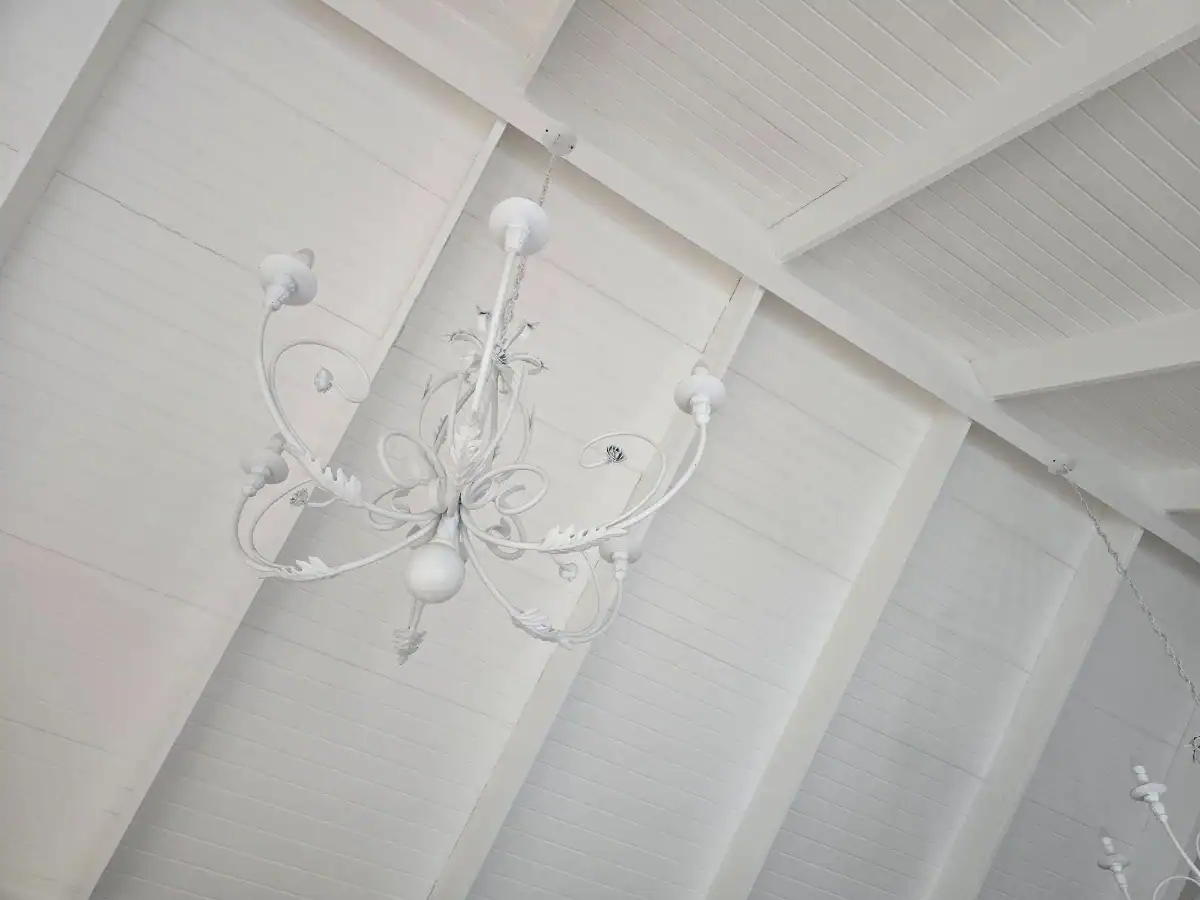
Our March 2026 Welgemoed interior project produced moisture readings between 8.2% and 16.7% on the areas inspected.
The property also contained several different physical defects:
- opened timber joints;
- gaps where exposed trusses met adjoining surfaces;
- movement-related cornice gaps;
- wall cracking;
- failing bathroom sealant;
- peeling and discoloured wall paint;
- damaged painted joinery; and
- a brown water stain on the bathroom ceiling.
These conditions illustrate why one interior property can require several different preparation methods.
A historic water stain may require stain blocking. A local damp-affected wall may require a suitable specialist preparation system. A moving junction may require flexible sealant rather than rigid filler. Painted woodwork requires a different preparation sequence from plastered walls.
For this project the preparation included crack repairs, flexible joint work, damp-related preparation where specified, stain blocking and suitable primer and finishing systems for the different substrates.
View the full Welgemoed interior painting case study
Brown Water Stains Need More Than Ordinary Wall Paint
A dried water mark can continue bleeding through new decorative paint even when the original leak has already been repaired.
The first question is whether the water source is still active. If the cause has been corrected and the substrate is sufficiently stable for recoating, a suitable stain-blocking treatment may be required before the finishing coats.
Painting directly over a strong brown stain with ordinary ceiling or wall paint can allow the discolouration to reappear through the new finish.
Dampshield Is a Preparation Product – Not a Universal Cure
Specialist moisture-tolerant coatings such as Dulux Dampshield can be useful on suitable prepared surfaces where the written specification calls for them.
They should not be presented as a product that permanently stops every source of water entering a building.
If water continues entering through a failed roof, plumbing leak, cracked parapet, defective seal, saturated boundary wall or another untreated route, the underlying building problem still exists.
The coating system must therefore form part of a broader diagnosis and preparation plan rather than replacing that process.
Case 3: Protea Valley – Chalking, Fading and Fungal Contamination on Cement Roof Tiles
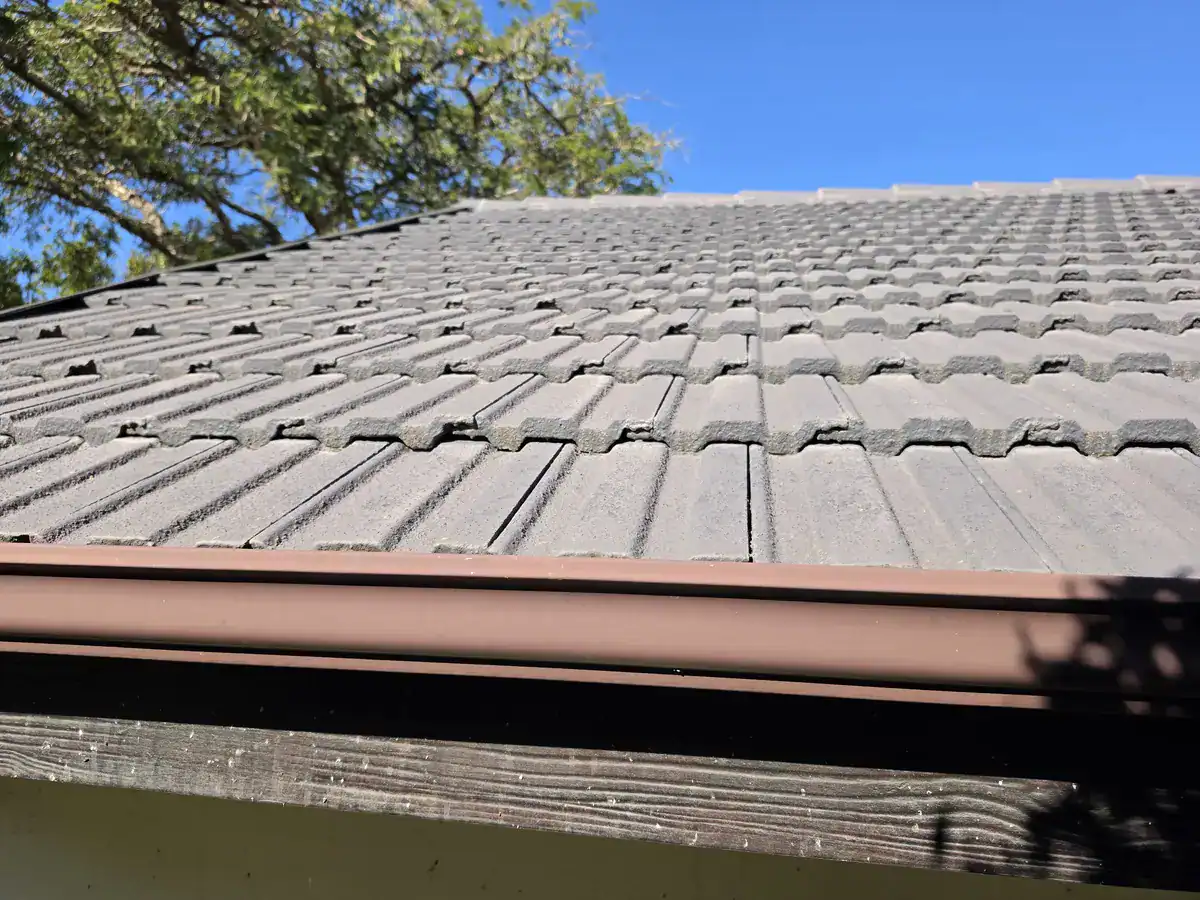
Paint failure is not limited to walls.
The April 2026 Protea Valley roof project involved weathered cement roof tiles showing:
- chalking;
- colour fading;
- fungal growth;
- surface dirt and contamination; and
- chipped or damaged tiles.
Chalking occurs as an older coating breaks down and leaves a powdery residue on the surface. Applying another coating directly over unstable chalk can result in poor adhesion because the new paint is effectively bonding to loose powder rather than a sound substrate.
The Protea Valley preparation included fungal treatment, pressure washing, replacement of defective tiles where required, waterproofing where included in the scope and suitable bonding preparation before the specified roof finish.
This is one reason roof preparation is as important as the roof coating itself.
View the Protea Valley project on our Roof Painting Bellville guide
What Is Chalking Paint?
Chalking is the powdery residue that develops as some exterior coatings weather and their binder gradually deteriorates.
Strong UV exposure can accelerate the process, particularly on exposed elevations and roof surfaces.
A simple finishing coat cannot make an unstable powdery surface sound. Depending on the severity of the condition, preparation may include washing, brushing, pressure cleaning, removal of unstable material and a suitable bonding or stabilising primer.
The objective is to create a surface capable of supporting the new coating system.
Fungal Growth and Algae Must Be Treated Before Painting
Dark or green biological growth can develop on shaded or slow-drying walls and roofs.
Simply painting over fungal contamination does not properly prepare the substrate. The contamination should first be treated and removed using a suitable cleaning or fungal-wash process before the coating system is applied.
Shaded roof areas, valleys, walls behind dense vegetation and south-facing elevations can remain damp for longer after winter rainfall and therefore require additional attention during preparation.
Case 4: Welgedacht – IBR Roof Chalking, Fungal Growth and Corrosion
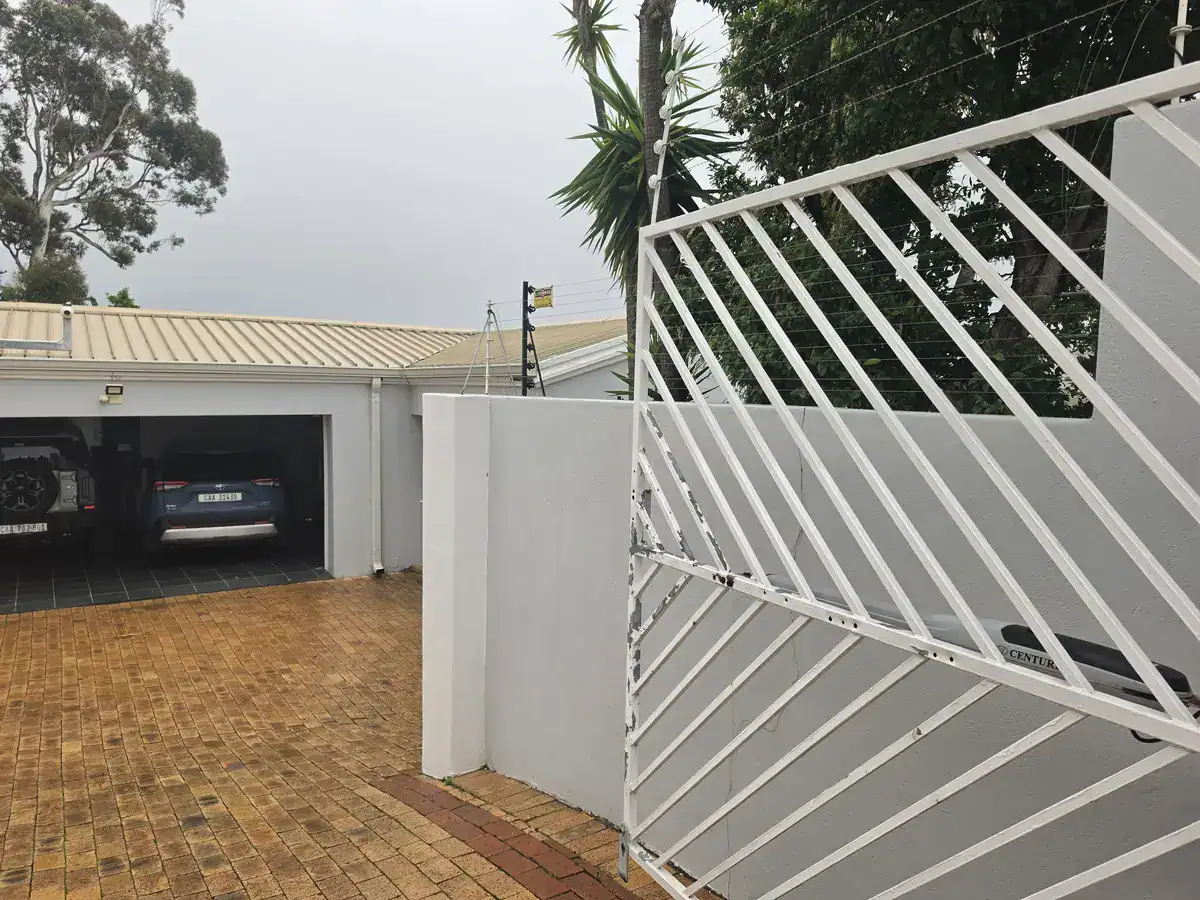
The February 2026 Welgedacht project demonstrates a completely different type of roof failure from Protea Valley.
The IBR roof sheets showed:
- weathering and chalking;
- fading;
- grime;
- fungal growth; and
- localised corrosion.
Unlike cement roof tiles, a metal roof also requires attention to corrosion, fasteners and metal-compatible primers.
The preparation scope included high-pressure cleaning, inspection of roof screws, waterproofing where required, rust preparation, Duram NS1 Rust Buster where specified, fungal treatment, Roof HydroEtch Primer and two coats of Dulux Roofguard.
The two Bellville roof projects therefore show why a generic instruction such as “clean and paint the roof” is not enough. Cement tiles and IBR metal sheets are different substrates with different preparation requirements.
View both Bellville roof projects
Rust Beneath Paint Should Not Simply Be Covered
When rust appears on gates, steelwork, roof sheets or other metal surfaces, the corrosion should be prepared before finishing coats are applied.
Loose rust, scale and failing coatings can continue deteriorating underneath new paint if they are merely covered.
The correct sequence depends on the metal, extent of corrosion, existing coating and specified primer system.
Why Paint Can Bubble
A bubble or blister develops when the coating film loses contact with the substrate beneath it.
Possible contributing factors include:
- moisture behind the coating;
- painting over a contaminated surface;
- weak adhesion of an earlier paint layer;
- painting before a substrate is suitably dry;
- heat or exposure affecting a weak coating;
- water entering through nearby cracks or seals; and
- incompatible coating layers.
The shape of the bubble alone therefore does not prove the cause. The surrounding wall, moisture condition, paint layers and possible water-entry routes need to be assessed together.
Why Paint Peels
Peeling occurs when one or more coating layers lose adhesion.
Sometimes only the most recent topcoat separates. In other cases several old layers release together because a much older coating beneath them was already weak.
This is especially relevant on older Bellville properties that may have been repainted many times.
Applying premium paint over an unstable previous coating cannot restore the bond between the original coating and the wall beneath it.
Why Paint Cracks
Not every visible crack is the same.
Fine map cracking may be confined to coating or surface layers. Other cracks may follow plaster movement, building junctions, settlement or expansion joints.
The repair therefore needs to reflect the type and behaviour of the crack.
Rigid filler may be suitable for some stable plaster defects but inappropriate for a joint designed to move. Flexible polyurethane or another specified joint material may be required where movement remains part of the building detail.
Boundary Walls Are a Special Case
Boundary and garden walls frequently experience moisture from soil, irrigation, raised flower beds or backfilled areas.
Some walls also lack an effective damp-proof course or waterproofing system.
Painting the visible face cannot permanently stop water that continues entering from behind or below the wall.
For that reason, decorative coating performance and warranty expectations on boundary walls may differ from those applying to properly protected main-building walls.
What Paint Can Fix – and What It Cannot
Correctly specified paint can protect and decorate a suitable prepared substrate.
Painting and coating preparation can address conditions such as:
- weathered coatings;
- chalking;
- localised loose paint;
- surface contamination;
- fungal growth after suitable treatment;
- minor stable plaster defects;
- prepared rust;
- staining after the water source has been corrected;
- specified damp-related preparation; and
- compatible waterproofing of selected exposed surfaces.
Paint cannot permanently repair:
- an active roof leak;
- broken roof components;
- ongoing plumbing leaks;
- structural movement;
- continuing ground moisture;
- a missing damp-proof course;
- water continuously entering the reverse side of a boundary wall; or
- failed waterproofing systems that remain unrepaired.
Our Bellville Paint-Failure Inspection Process
1. Inspect the Failed Coating
We identify where the coating is peeling, bubbling, cracking, chalking, staining or otherwise deteriorating.
2. Look Beyond the Paint
Nearby cracks, sealants, windowsills, parapets, bathrooms, rooflines, boundary walls, irrigation, roof components and other possible moisture routes are considered.
3. Record Moisture Where Relevant
Moisture readings can help describe the condition of selected areas but are interpreted together with the physical building evidence.
4. Assess Existing Paint Adhesion
Loose, chalky or poorly bonded coatings may require removal, stabilisation or compatible priming before repainting.
5. Define the Remedial Preparation
The written quotation identifies relevant cleaning, crack repairs, sealing, waterproofing, damp-related preparation, stain treatment, fungal treatment, rust preparation and primers.
6. Apply Substrate-Specific Coating Systems
Plaster, timber, Nutec, cement roof tiles and metal roofs do not all receive the same preparation or primer system.
7. Supervise the Work
Our full-time employed painters work under a working foreman responsible for preparation, property protection, workmanship and daily site organisation.
How Much Does Paint-Failure Repair Cost in Bellville?
There is no reliable universal price because two apparently similar damaged walls may require completely different preparation.
A straightforward loose-paint repair is different from a project involving multiple cracks, damp-related preparation, waterproofing, failed sealants, stain blocking, rust treatment or high-level access.
Our separate House Painting Cost Bellville guide uses genuine historical Bellville quotations to demonstrate how preparation and scope influence the final project price.
Roof Paint Failure in Bellville
Our Bellville project evidence includes both cement roof tiles and IBR metal roofing.
These substrates illustrate why roof paint failure should not be treated as one generic problem. Cement tiles can require fungal treatment, cleaning, tile replacement and bonding preparation, while IBR roofs may additionally require corrosion treatment, fastener inspection and a metal-specific primer.
For the complete roof process and both projects, see our Roof Painting Bellville guide.
Bellville Paint Failure and the Wider Northern Suburbs
Bellville forms part of our Painters Cape Town Northern Suburbs authority cluster, which documents 14 genuine 2026 painting projects across Durbanville, Bellville, Plattekloof, Brackenfell and Kuils River.
The regional projects show that similar symptoms can have very different surrounding conditions. A damp-looking wall, peeling coating, cracked parapet, fungal roof or rusted metal surface should therefore be assessed according to the actual property rather than assigned one generic diagnosis.
When Should You Arrange an Inspection?
An inspection is worthwhile when:
- paint repeatedly peels in the same area;
- bubbles or blisters return after repainting;
- brown staining appears on walls or ceilings;
- paint becomes powdery or chalky;
- cracks continue opening;
- sealant around windows or doors has failed;
- parapets or windowsills are cracked;
- mould or fungal growth continues returning;
- rust is visible beneath painted metalwork;
- roof coatings are faded, chalky or contaminated;
- boundary-wall coatings repeatedly fail; or
- you are planning a substantial repaint and want the underlying defects assessed first.
Preparation Matters More Than Another Coat of Paint
The longest-lasting repaint is not necessarily the one using the most expensive finishing paint. The performance of the final coating depends heavily on what it is bonded to and whether the underlying defects have been addressed appropriately.
That is why our Bellville painting work begins with inspection, written observations and a defined preparation scope.
Clients looking for the complete local service can visit our Painters Bellville page.
Request a Bellville Paint-Failure Assessment
If paint on your Bellville property is peeling, bubbling, cracking, chalking, stained or repeatedly failing, the first step is determining what the surface requires before another coating is applied.
Call 082 374 6862 or visit the Painters Cape Town contact page to arrange an inspection and written quotation.
Helpful Bellville Painting Guides
Painters Bellville
View the complete Bellville painting service and documented local projects.
Waterproofing Bellville
See the crack, parapet, windowsill, boundary-wall and flexible sealing systems used before repainting.
Roof Painting Bellville
Compare cement-tile and IBR roof failure and preparation using two genuine Bellville projects.
House Painting Cost Bellville
See how additional repairs and preparation influence genuine historical Bellville quotation totals.
Premium Home Painting Bellville
See detailed preparation requirements for substantial Welgemoed, Kanonberg, Protea Valley and Welgedacht homes.
Northern Suburbs Painters
Explore our wider documented work throughout Cape Town's Northern Suburbs.
Peeling, Bubbling and Paint Failure Bellville FAQs
Why does paint peel on Bellville homes?
Paint can peel because of moisture, weak previous coatings, poor adhesion, chalking, contamination, cracks, failed sealants, inadequate preparation or incompatible coating layers. The damaged paint should be assessed together with the surrounding building condition.
Does bubbling paint automatically mean rising damp?
No. Bubbling can be associated with moisture, but the source may be a crack, failed seal, parapet, windowsill, plumbing issue, bathroom, roof defect, irrigation, ground moisture or another condition. A bubble alone does not diagnose rising damp.
Does a high moisture-meter reading prove rising damp?
No. A moisture reading records the condition of the tested area but does not by itself identify the source of the moisture. The reading must be considered together with the location, cracks, seals, roofs, plumbing, ground contact and other building conditions.
What moisture readings were recorded at the Kanonberg project?
Relative masonry moisture readings on the inspected Kanonberg areas ranged from 17% to 20%. These readings were considered together with cracks, failed seals, vulnerable horizontal surfaces and other visible defects.
What moisture readings were recorded at the Welgemoed interior project?
Protimeter readings at the Welgemoed project ranged from 8.2% to 16.7%. The inspection also identified peeling and discoloured paint, movement-related gaps, failed bathroom sealant, wall cracks and water staining.
Why do brown water stains come through new paint?
Some water stains can bleed through ordinary decorative paint even after the original leak has been repaired. Once the moisture source has been corrected and the substrate is suitable for coating, an appropriate stain-blocking system may be required.
What is chalking paint?
Chalking is a powdery residue that forms as some exterior coatings weather and their binder deteriorates. The unstable residue needs suitable cleaning or stabilisation before new paint is applied.
Why must fungal growth be removed before painting?
Fungal and biological contamination should be treated and cleaned before painting. Applying a finishing coat directly over contaminated material does not provide a properly prepared substrate.
Why do parapets and windowsills cause paint problems?
Parapets and windowsills are exposed surfaces where rain can collect. Cracks or failed waterproofing can allow moisture into adjoining walls, sometimes causing paint failure below the actual entry point.
Can Dulux Dampshield permanently stop all damp?
No. Dampshield can form part of a suitable preparation system on specified surfaces, but it cannot permanently stop an active roof leak, plumbing leak, structural defect, continuing ground moisture or water entering through an untreated route.
Can Rainshield be used on horizontal surfaces?
Where appropriate and included in the written specification, a waterproofing product such as Dulux Rainshield can be used on suitable prepared horizontal surfaces such as certain parapets or windowsills before the decorative coating system is completed.
Why does paint fail on IBR roofs?
Metal roofs can suffer from chalking, contamination, corrosion, failed previous coatings and unsuitable primers. Correct preparation may require cleaning, rust treatment, screw inspection, waterproofing repairs and a metal-compatible primer before the roof coating is applied.
Does roof paint fix a leaking roof?
No. Roof paint is a protective coating for a suitable prepared substrate. Broken roof components, failed flashing, defective waterproofing and active leaks require separate repair.
Why do boundary walls keep peeling?
Boundary walls can receive moisture from soil, irrigation, raised garden beds or backfilled areas. Repainting the visible side cannot permanently stop water that continues entering the wall from behind or below.
Should loose paint simply be painted over?
No. Loose or poorly bonded coatings should be removed or properly prepared. A new premium coating cannot create adhesion between the wall and an unstable older paint layer underneath it.
Do you use subcontracted painters?
No. Painting is completed by full-time employed painters under working-foreman supervision.
How do I arrange a Bellville paint-failure inspection?
Call 082 374 6862 or contact Painters Cape Town to arrange an inspection and written quotation for peeling, bubbling, cracking, staining, chalking or other paint problems.

Copyright 2026 , all rights reserved.