Courtrai • Paarl North • Cape Winelands
Interior Painting at a Courtrai Home in Paarl
A documented April 2026 interior repaint of a private double-storey home involving a dramatic double-volume wooden ceiling, exposed trusses, moving cornice junctions, opened timber joints, wall cracks, moisture-related preparation and worn painted joinery.
Protimeter readings ranged from 5.7% to 11.3%. The project required different systems for plastered walls, Rhinoboard ceilings, high-level painted timber, cornices, doors, frames, skirting and cupboard joinery.
Courtrai Project Highlights
- Private double-storey Courtrai home.
- Project period: 6–16 April 2026.
- Repeat client.
- Protimeter readings: 5.7%–11.3%.
- Double-volume wooden ceiling.
- High-level exposed painted trusses.
- Opened timber joints and ceiling-board gaps.
- Cornice movement below the roof structure.
- Hairline wall cracks.
- Peeling and discoloured wall coatings.
- Bathroom ceiling water staining.
- Failing bath and basin sealants.
- Chip marks and wear to doors, frames and skirting.
- Washable Dulux EasyCare wall finish.
- Working-foreman supervision.
Documented Courtrai Interior Painting Evidence
This project shows why a substantial interior repaint can involve much more than changing wall colours. Movement joints, high-level timber, ceiling stains, cracks, moisture readings and worn joinery all required separate preparation before the finishing coats.
5.7%–11.3% Readings
Protimeter readings provided measurable information about assessed interior masonry without treating every coating defect as the same type of damp.
Double-Volume Interior
High-level wooden ceiling boards and exposed trusses required careful access, flexible joint preparation and a timber-specific finishing system.
Movement-Aware Repairs
Cornice gaps and timber junctions were treated with flexible polyurethane where movement had opened the joints.
Occupied-Home Protection
Floors, furniture, glazing and finished surfaces required protection while preparation and painting proceeded through the home.
Different Interior Substrates
Plastered walls, Rhinoboard, painted timber, cornices and joinery each received preparation matched to the existing surface.
Repeat Client
The project was completed for an existing client, adding a useful direct trust signal to this documented Paarl case study.
Experienced Painting Team
The quotation records the painters as Paint Academy trained and having at least ten years of experience with the company.
Working Foreman Patrick
The project was allocated to working foreman Patrick, with additional contractor site visits during the work.
Courtrai Interior Painting Project in Paarl North
Painters Cape Town completed this documented Courtrai interior painting project at a private double-storey home in Paarl North from 6 to 16 April 2026.
The property belonged to a repeat client and presented a particularly interesting interior because the lounge and kitchen area included a high double-volume ceiling with painted wooden boards and exposed trusses.
The wider scope included Rhinoboard ceilings, cornices, plastered walls, painted doors and frames, skirting, cupboard joinery, moisture-affected surfaces and other worn interior finishes.
Protimeter readings recorded during the inspection ranged from 5.7% to 11.3%.
This project provides genuine local evidence supporting our Painters Paarl, Interior Painters Cape Town, Damp Proofing and Moisture-Related Preparation and Residential Painters Cape Town services.
Courtrai Project Summary
- Location: Courtrai, Paarl North.
- Property: Private double-storey home.
- Client: Repeat client.
- Project dates: 6–16 April 2026.
- Protimeter readings: 5.7% minimum to 11.3% maximum.
- Ceilings: Rhinoboard plus double-volume painted wooden ceiling.
- Architectural feature: High-level exposed painted trusses.
- Walls: Plastered interior walls with cracks and coating deterioration.
- Joinery: Doors, frames, skirting, kitchen cupboards and selected built-in cupboards.
- Bathroom details: Failing bath/basin sealants and a brown ceiling water stain.
- Supervision: Working foreman Patrick with additional contractor visits.
A Different Kind of Paarl Interior Repaint
Courtrai and the Paarl Mountain side of town include substantial homes where double-volume interiors, high ceilings, exposed roof structures, timber features, mature surroundings and complex access can make preparation more demanding than an ordinary room repaint.
This home demonstrated that clearly.
The prominent wooden ceiling and exposed trusses were an important architectural feature of the living area, but movement had opened visible joints between ceiling boards and around timber junctions.
At the same time, cracks and movement were visible elsewhere in the interior, while worn paintwork, bathroom staining and chipped joinery required separate remedies.
The objective was therefore not merely to make the rooms look freshly painted. It was to prepare each substrate so that the finished interior looked coherent despite the different materials, heights and existing defects.
What the Interior Inspection Found
- Protimeter readings from 5.7% to 11.3%.
- Small opened joints between wooden ceiling boards.
- Gaps where exposed trusses met surrounding surfaces.
- Gaps between Rhinoboard cornices and walls caused by ceiling movement during windy conditions.
- Hairline and approximately 1 mm cracks in plastered walls.
- Failing sealant around baths and basins.
- Peeling and discolouring paint on selected wall areas.
- Chip marks and general wear on doors, frames and skirting.
- A brown water stain on a bathroom ceiling.

5.7%–11.3% Protimeter Readings
The recorded Protimeter range was 5.7% to 11.3% across the assessed areas.
These readings were considered together with visible peeling, discolouration, cracks, bathroom staining and surrounding building details.
A moisture meter does not automatically identify the cause of a coating defect. The position of the staining, plumbing details, joints, external building envelope and previous water entry still need to be considered.
The quotation contained a damp-resistant coating specification for prepared affected masonry, but the recorded readings themselves did not justify describing every mark or defect as rising damp.
Protecting an Occupied Interior Before Preparation
A detailed repaint inside an occupied home requires preparation of the room before preparation of the paintwork.
Flooring and furniture were protected against dust, scrapings, fillers, sealants, primers and paint splashes.
Electrical plug and light-switch covers were removed where practical, and masking was used to create neat junctions around ceilings, walls, frames and skirting.
This becomes even more important around a double-volume working area where ladders, access equipment and high-level preparation need to be coordinated without damaging finished surfaces below.
Why Ceiling Movement Opened the Cornice Joints
The inspection recorded gaps between Rhinoboard cornices and the adjoining walls where the ceiling moved during windy conditions.
A rigid cosmetic filler is not always the best response where the joint itself is subject to recurring movement.
The specification therefore used single-pack polyurethane sealant with approximately 25% flexibility at relevant gaps between cornices and walls.
The aim was to give the repaired junction more capacity to accommodate movement than a brittle rigid filler.
Double-Volume Ceiling and Exposed Truss Junctions
The kitchen and lounge area contained a high vaulted wooden ceiling with exposed painted trusses.
Movement had opened small gaps between ceiling boards and around the truss junctions.
These joints were prepared and sealed with flexible polyurethane where required before the timber coating system was completed.
Because the ceiling is such a dominant architectural element, poor preparation at the joints would remain highly visible from the living areas below.
Preparing the Painted Wooden Ceiling
The earlier project record documents detailed preparation of the high-level timber before repainting.
Loose coating was removed, hard edges were feathered and the painted timber was sanded to create a suitable key.
Opened joints between the timber ceiling boards were treated with flexible polyurethane rather than rigid filler where movement needed to be accommodated.
Bare timber areas were spot-primed with Dulux Wood Primer, followed by the required undercoat preparation before the finishing coats.
Dulux Pearlglo on the Wooden Ceiling and Trusses
The wooden ceiling and exposed trusses received two coats of Dulux Pearlglo Waterbase.
A water-based enamel provided a durable painted finish suitable for the prominent high-level woodwork while maintaining continuity with the other painted joinery in the interior.
Rhinoboard Ceiling Preparation
The Rhinoboard ceilings required a different system from the painted timber.
Ceiling defects and junctions were prepared first, while water-stained areas were specified for Universal Undercoat to help isolate the stain before topcoating.
The original quotation specified two coats of Prominent Paints Wall & Ceiling Paint to the prepared Rhinoboard ceilings.
Brown Water Staining on the Bathroom Ceiling
A brown water stain was recorded on a bathroom ceiling during the inspection.
Simply covering a historic water stain with ordinary ceiling paint can allow the discolouration to bleed through the new finish.
The specification therefore included stain-isolating Universal Undercoat before the ceiling topcoats where required.
Any active source of new water entry would still need to be corrected separately; stain blocking treats the visible residue left by previous moisture, not an ongoing leak.
Bathroom Sealant Around Baths and Basins
Failing sealant was recorded around baths and basins.
These joints are part of the wet-area maintenance of a bathroom and should not be ignored simply because the surrounding paint is being renewed.
Where water can repeatedly enter an open sanitary joint, repainting surrounding surfaces does not remove the need for the joint itself to remain properly sealed.
Hairline Wall Crack Repairs
Hairline cracks up to approximately 1 mm were prepared before the final wall finish.
The documented specification included:
- alkali-resistant sealer worked into the cracks;
- Dulux Rainshield brushed into suitable fine cracks;
- a thin Polyfilla layer where required to create a smoother finish;
- light sanding; and
- Dulux Wall Primer before the finishing coats.
The important principle is that visible cracks were prepared before the decorative wall coating rather than simply disappearing temporarily beneath another coat of paint.
Damp-Related Wall Preparation
The quotation specified Dulux Pre-Paint Dampshield for prepared moisture-affected interior masonry where appropriate.
It also specified Dulux Dampshield on prepared bare areas as part of the remedial system.
The specification contained an additional spot-coat requirement where readings reached 15%–50%. The recorded Courtrai inspection range of 5.7%–11.3% did not itself reach that threshold.
This distinction is important because the coating system should respond to the actual substrate condition rather than automatically applying the most severe treatment everywhere.
Dulux EasyCare on Interior Walls
After crack preparation, repairs and suitable priming, the interior walls received two coats of Dulux EasyCare.
The washable matt finish was appropriate for an occupied family-home interior where practical cleanability matters alongside appearance.
Doors, Frames, Skirting and Cupboard Joinery
The painted woodwork scope extended beyond doors and frames.
It included skirting, kitchen cupboards and built-in cupboards in one bedroom where applicable.
Chip marks were filled with wood filler and sanded smooth.
Loose or flaking paint was removed, hard edges were feathered and bare timber received Dulux Wood Primer.
A full coat of Universal Undercoat was then specified to promote adhesion before the final enamel system.
Dulux Pearlglo Waterbased on Painted Joinery
The prepared doors, frames, skirting and relevant cupboard joinery received two coats of Dulux Pearlglo Waterbased enamel.
Using a compatible enamel system on these high-contact surfaces provides a different performance requirement from the matt coating used on broad wall areas.
Different Surfaces Required Different Paint Systems
One of the strongest technical features of the Courtrai project is that there was no attempt to use one paint type throughout the interior.
- Plastered walls: Dulux EasyCare.
- Rhinoboard ceilings: Prominent Paints Wall & Ceiling Paint.
- Water stains: Universal Undercoat where required.
- Painted wooden ceiling and exposed trusses: Dulux Pearlglo Waterbase.
- Doors, frames, skirting and cupboard joinery: Dulux Wood Primer on bare areas, Universal Undercoat and Dulux Pearlglo Waterbased enamel.
- Movement joints: flexible single-pack polyurethane sealant where specified.
- Moisture-affected masonry: Dulux Dampshield system where appropriate.
Product names are included because they form part of the documented project specification. Their inclusion does not imply manufacturer endorsement of Painters Cape Town or this webpage.
Why Flexible Repairs Still Have Maintenance Limitations
A flexible sealant can accommodate more movement than a rigid decorative filler, but no paint or sealant can eliminate movement within the building itself.
If timber boards, roof structures or ceiling systems continue moving substantially, joints may require future maintenance.
Likewise, repainting a historic bathroom stain cannot prevent recurrence if new water continues entering from plumbing, sanitary joints, roof defects or other building sources.
These limitations are part of an honest painting specification rather than defects being hidden beneath a new finish.
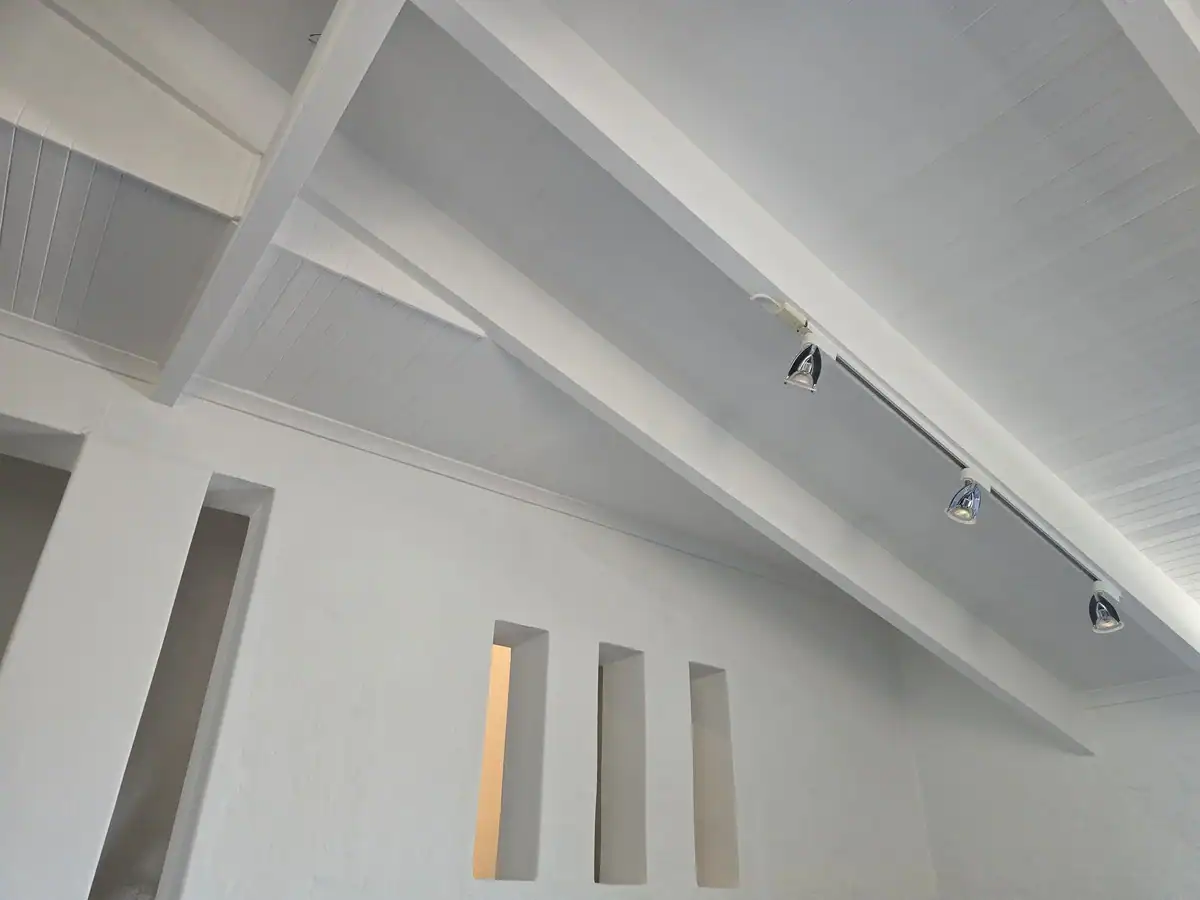
The Completed Courtrai Interior
The finished double-volume ceiling demonstrates the visible result, but much of the important work is no longer apparent once painting is complete.
The preparation beneath the finish included attention to opened timber joints, moving ceiling junctions, cracks, stains, damaged woodwork and the interfaces between several different substrates.
This is the difference between an interior that has merely been recoloured and an interior repaint that has been properly prepared.
What This Courtrai Project Demonstrates
- Large double-volume interiors require careful access and protection planning.
- Timber ceiling joints can move and should not always be repaired with rigid filler.
- Cornice gaps caused by ceiling movement require movement-aware preparation.
- Moisture readings should be interpreted rather than used to label every defect as damp.
- Historic water stains require suitable stain isolation before ordinary ceiling paint.
- Bathroom sanitary seals are separate maintenance details from decorative paint.
- Wall cracks should be prepared before the finishing coats.
- Rhinoboard, plastered walls, timber ceilings and painted joinery require different coating systems.
- Doors, frames, skirting and cupboards need more abrasion-resistant finishes than broad wall surfaces.
- Flexible repairs can reduce visible recurrence but cannot eliminate structural or timber movement.
A Genuine Interior Painters Paarl Case Study
This Courtrai project gives our Painters Paarl page a completely different type of first-party evidence from our exterior projects.
Instead of another exterior house, Courtrai demonstrates interior painting in Paarl involving a substantial double-volume home, high-level timber, cornice movement, cracks, staining, joinery and washable interior finishes.
That diversity is important because a genuinely experienced painting contractor should be able to demonstrate different property types and different preparation problems rather than only repeating the same generic exterior repaint.
Different Paarl Projects, Different Evidence
Our Lemoenkloof exterior and roof painting case study documents corrugated-roof preparation, rust treatment, waterproofing, exterior cracking, moisture-related preparation and Dulux Roofguard Charcoal.
Courtrai provides the interior counterpart: double-volume timber ceilings, exposed trusses, cornice movement, wall cracks, moisture assessment and detailed painted joinery.
Our Val de Vie painting page provides the premium-estate component of the wider Paarl and Cape Winelands cluster.
Related Painting Services
- Interior Painters Cape Town
- Damp Proofing and Moisture-Related Preparation
- Residential Painters Cape Town
- Cape Winelands Painters
Experienced Employed Painters
Painters Cape Town has 27 years of painting and surface-preparation experience.
The Courtrai quotation records the painters as Paint Academy trained and having at least ten years’ experience with the company.
The project was supervised by working foreman Patrick, with additional contractor visits during the work.
Our painters are full-time employees rather than subcontracted painting teams.
We are not a lead-generation company. Clients deal directly with the contractor responsible for inspection, quotation, preparation, painters, supervision and handover.
Request a Courtrai or Paarl Interior Painting Quote
If your Paarl home requires interior painting, high-ceiling preparation, cornice repairs, painted timber restoration, wall-crack preparation, stain treatment or assessment of moisture-related coating problems, the existing surfaces should first be inspected.
Call 082 374 6862 or visit the Painters Cape Town contact page to arrange an inspection and written quotation.
Helpful Paarl Painting Guides
Why Paint Peels, Fades and Cracks
Learn why movement, moisture, weak previous coatings and insufficient preparation can cause paint and joint repairs to fail prematurely.
Damp Walls and Repainting
Learn why water stains and moisture readings should be considered together with plumbing, waterproofing, seals and other possible moisture routes.
Planning a Premium Home Repaint
See why floors, furniture, glazing, timber, high ceilings and other finished surfaces should be protected before substantial interior painting begins.
Courtrai Interior Painting FAQs
Where was this interior painting project completed?
The documented project was completed at a private double-storey home in Courtrai, Paarl North.
When was the Courtrai project completed?
The documented project period was 6–16 April 2026.
Was this an existing client?
Yes. The Courtrai interior project was completed for a repeat client.
What moisture readings were recorded?
Protimeter readings across assessed areas ranged from 5.7% to 11.3%.
What surfaces were included?
The scope included Rhinoboard ceilings, a double-volume wooden ceiling with exposed trusses, cornices, plastered walls, doors, frames, skirting and relevant cupboard joinery.
What problems were found before painting?
The inspection recorded opened timber joints, gaps at truss junctions, movement-related cornice gaps, hairline wall cracks, failing sealant around baths and basins, peeling or discoloured wall paint, chip marks on joinery and a brown bathroom-ceiling water stain.
Why had gaps opened between the cornices and walls?
The quotation records movement in the ceiling during windy conditions as the reason gaps had developed between some Rhinoboard cornices and adjoining walls.
How were movement-related cornice gaps repaired?
Relevant gaps were prepared and filled with flexible single-pack polyurethane sealant rather than only rigid cosmetic filler.
Why use flexible sealant at timber and ceiling joints?
A flexible sealant can accommodate more movement than rigid filler at joints where timber or ceiling components continue moving.
Can flexible sealant permanently eliminate building movement?
No. It can provide a more movement-tolerant repair, but it cannot eliminate movement in timber, ceiling boards or the building structure itself.
How was the double-volume wooden ceiling prepared?
The project records document removal of unstable coating, sanding and feathering, flexible gap repairs, spot priming of bare timber and preparation before the final painted finish.
What finish was used on the wooden ceiling and exposed trusses?
The documented specification called for two coats of Dulux Pearlglo Waterbase on the prepared painted wooden ceiling and exposed trusses.
What paint was specified for the Rhinoboard ceilings?
The quotation specified two coats of Prominent Paints Wall & Ceiling Paint on the prepared Rhinoboard ceilings.
How was the bathroom ceiling water stain treated?
The ceiling specification included Universal Undercoat on water-stained areas before topcoating to help prevent historic staining from bleeding through the new finish.
Does stain-blocking paint fix an active water leak?
No. It isolates historic staining. Any ongoing plumbing, roof, waterproofing or other moisture source still needs separate repair.
Were bathroom sealants inspected?
Yes. The quotation records failing sealant around baths and basins as one of the inspection findings.
How were hairline wall cracks prepared?
The documented system included alkali-resistant sealer, flexible crack preparation, smoothing where required, sanding and Dulux Wall Primer before the finishing coats.
Was damp-related preparation specified?
Yes. The quotation included Dulux Pre-Paint Dampshield and Dulux Dampshield where suitable on prepared moisture-affected masonry.
What paint was used on the interior walls?
The prepared walls were specified for two coats of Dulux EasyCare washable matt paint.
How were chipped doors, frames and skirting prepared?
Chip marks were filled and sanded, loose coating removed, hard edges feathered and exposed timber primed before undercoating and enamel finishing.
What finish was applied to doors, frames and skirting?
The prepared painted joinery received the specified Dulux Pearlglo Waterbased enamel system.
Do you paint other substantial homes in Courtrai and Paarl?
Yes. Painters Cape Town provides interior and exterior painting for suitable homes in Courtrai, Paarl Mountain, Lemoenkloof and other Paarl areas.
Do you use subcontracted painting teams?
No. Painters Cape Town uses full-time employed painters with working-foreman supervision.
How do I request an interior painting quote in Courtrai or Paarl?
Call 082 374 6862 or visit the Painters Cape Town contact page to arrange an inspection and written quotation.

Copyright 2026 , all rights reserved.