Kenilworth Upper Waterproofing Evidence
See the original exterior project documenting failed seals, chimney junctions, cracks and horizontal waterproofing.
WATERPROOFING KENILWORTH
Preparation-first waterproofing for suitable windowsills, parapets, horizontal masonry, exterior cracks, window and door seals, and exposed building joints in Kenilworth.
Supported by our original April 2026 Kenilworth Upper project, which documented water-entry risks, cracked masonry and multiple separate surface treatments.
27 years' painting-contractor experience • Written diagnostics • Employed painters • Supplier-aligned specifications
Our Kenilworth Upper exterior project documents actual cracks, damaged seals, chimney junctions and vulnerable horizontal masonry.
The April 2026 inspection recorded Protimeter readings of 8%–17%, assessed alongside visible defects rather than treated as a complete diagnosis.
The documented specification included two coats of Dulux Rainshield on suitable prepared windowsills, parapets and wall tops.
Deteriorated window, door and movement-joint sealants were assessed and suitable joints specified for flexible polyurethane sealing.
Accessible waterproofing cannot create a missing damp-proof course or permanently stop groundwater entering an inaccessible wall face.
Our full-time employed painters work under working-foreman supervision, with written diagnostic quotations and clear repair boundaries.
Painters Cape Town provides suitable painting-related waterproofing and preparation in Kenilworth, including windowsills, parapets, wall tops, selected masonry cracks, exterior opening seals and movement joints within an agreed scope.
Waterproofing is not simply a matter of applying a waterproof product over damp or cracked paint. The underlying defect needs to be assessed first. A suitable repair can involve cleaning, coating removal, crack treatment, sealant replacement, horizontal waterproofing and compatible finishing coats.
The correct system depends on the substrate, exposure, movement, moisture conditions and the existing coating.
Our documented 6–14 April 2026 exterior painting project in Kenilworth Upper included substantial preparation of water-sensitive masonry and building joints.
The inspection recorded Protimeter readings of 8%–17%, with bubbling paint, map cracking, hairline and wider plaster cracks, failed window and door seals, open expansion joints and vulnerable horizontal masonry.
It also identified unsealed chimney-to-building junctions, exterior fittings and moisture-sensitive boundary and lower foundation walls.
These findings demonstrated why the work needed several targeted repairs rather than one general waterproof coating.
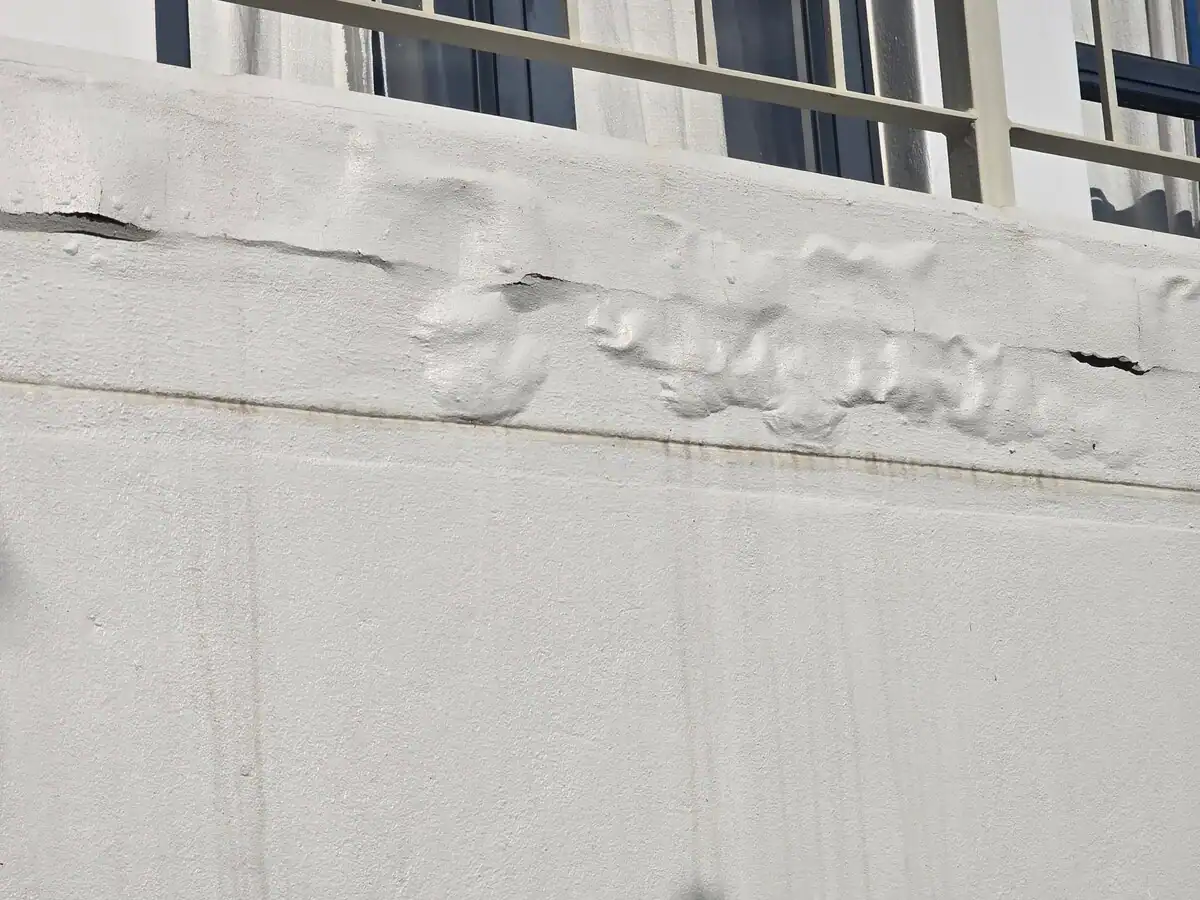
The image documents coating deterioration, but the photograph alone does not establish a moisture source. The visible cracks, open joints and other accessible details formed part of the physical assessment.
Read the Complete Kenilworth Upper Exterior Case Study
Windowsills receive rainfall directly and may develop fine or wider cracks as coatings age and substrates move. Water entering through these defects can contribute to dampness and paint failure below or around the opening.
The Kenilworth Upper specification included repair and protection of applicable prepared windowsills using two coats of Dulux Rainshield. The second coat was applied perpendicular to the first as recorded in the original work specification.
Appropriate waterproofing still depends on the actual material and preparation. A windowsill with a structural defect or an active leak may require work beyond a coating application.
Horizontal masonry is exposed to more direct standing or slow-draining rainfall than a typical vertical wall. Small cracks can allow water into surrounding plaster even when the vertical finish appears sound.
Our Kenilworth Upper project included suitable parapet tops and the exposed tops of garden and boundary walls in its horizontal waterproofing scope.
Preparation, crack treatment, drying conditions and compatible waterproofing all affect the result. The coating cannot compensate indefinitely for uncorrected structural movement or continually saturated backfill.
Old sealant around windows and doors can shrink, detach or split, creating an accessible water-entry route.
Where the joint condition warrants repair, deteriorated material should be removed as required, the joint properly prepared and a compatible flexible sealant specified.
The recorded Kenilworth Upper project included a single-pack polyurethane sealing system for appropriate joints. Sealant selection and preparation should reflect the actual joint movement and any manufacturer requirements.
Movement joints have a different function from ordinary static plaster cracks. Their purpose is to accommodate movement between building elements.
Using rigid plaster filler where movement continues may cause the repair to reopen. The Kenilworth Upper specification therefore distinguished open expansion joints from other cracks and provided flexible sealing to applicable joints.
For more detail about the different defects, visit Wall Preparation and Crack Repairs Kenilworth.
The 2026 project recorded unsealed joints where chimney structures joined the main building. Exterior wall and light fittings were also considered because openings around penetrations may allow moisture behind coatings.
These details are often easy to overlook during a purely decorative repaint. Their actual construction and movement characteristics determine the necessary sealing and repair approach.
Not all plaster cracks permit water entry, and not every wall with damp symptoms has a crack-related cause. Nevertheless, the combination of cracking and repeated rainfall can contribute to coating deterioration.
At Kenilworth Upper, the written preparation distinguished hairline, wider and map cracking. The appropriate repair was selected for each condition before the finishing system.
Read the Southern Suburbs Plaster and Crack Treatment Guide for practical explanations of the different repair decisions.
Waterproofing concerns suitable protection or repair of water-entry details such as vulnerable sills, parapets, joints and horizontal masonry.
Damp-related wall preparation concerns assessing moisture-affected plaster or coating and deciding which repairs and coating systems are appropriate after the source has been considered.
For that separate investigation and preparation service, see Damp Proofing Kenilworth.
The Kenilworth Upper project specifically recorded limitations where boundary and garden walls lacked effective damp-proof separation from continuing ground moisture.
Soil, irrigation, drainage and moisture from an inaccessible opposite face can continue affecting masonry even when the visible side has been properly prepared.
A decorative or surface waterproofing coating cannot create a missing damp-proof course inside the wall or guarantee that moisture will stop migrating through the structure.
For a fuller explanation, read the Southern Suburbs Boundary Wall Painting Guide.
Winter rainfall, established garden shade and irrigation can affect how quickly masonry dries and how often vulnerable exterior details become wet. These conditions vary between individual properties and elevations.
Application should be planned around the actual surface condition, recent and forecast rainfall, temperature, expected curing conditions and the selected product’s instructions.
We examine relevant cracks, openings, seals, parapets, horizontal wall tops, coating failures and accessible surrounding building details.
Where useful, moisture readings assist the investigation. They are interpreted alongside the physical evidence and do not independently identify one type of damp.
Failed paint, unsuitable material, deteriorated sealant and relevant cracks are prepared according to the actual substrate and agreed work scope.
Suitable crack repairs, flexible joint systems and horizontal waterproofing are specified to match the relevant building detail.
Where the adjoining painted surfaces form part of the contract, primers and finishing systems are applied under the specified conditions and curing requirements.
Structural movement, defective roofing components, concealed plumbing leaks, failed balcony systems and inaccessible reverse-face water entry may require separate specialist repairs or investigation.
We distinguish suitable surface-related waterproofing from repairs that cannot responsibly be achieved with decorative coatings.
The price depends on the actual affected surfaces, inspection findings, access, crack and joint repairs, deteriorated coating removal, required products, drying conditions and the labour time involved.
Resealing a short failed window joint is not directly comparable with repairing multiple parapets, long expansion joints and extensive moisture-damaged plaster.
A written quotation should explain what is included, what remains outside the scope and any important limitations.
For quotation comparisons, read the Detailed Painting Quotations and Specifications Guide.
Where suitable waterproofing forms part of a wider repaint, see Exterior Painters Kenilworth.
For moisture-affected plaster, visit Damp Proofing Kenilworth. For cracks and movement-joint preparation, see Wall Preparation and Crack Repairs Kenilworth.
Our full local painting history and services are available at Painters Kenilworth.
Painters Cape Town provides direct inspections and written diagnostic quotations for suitable painting-related waterproofing and surface repairs. We explain relevant preparation, products, access requirements and exclusions.
Original project evidence and relevant repair decisions.
See the original exterior project documenting failed seals, chimney junctions, cracks and horizontal waterproofing.
Understand why a moisture-affected wall needs investigation and suitable coating preparation.
Why hairline cracking, larger plaster defects and movement joints require different treatments.
Preparation and repainting of exposed masonry, walls, timber and waterproofed details.
Why ground contact, backfill and continuing moisture limit what coatings can achieve.
Understand crack causes, when repairs reopen and the importance of compatible preparation.
Yes. Rainwater can enter through damaged horizontal masonry and failed opening seals. The actual defect should be assessed before a waterproofing treatment is selected.
Yes. The documented April 2026 scope included suitable windowsills, parapets and horizontal wall tops, together with crack and flexible-seal repairs.
No. A coating on the accessible face cannot create a missing damp-proof course or stop moisture entering from soil and inaccessible backfill.
No. Readings assist the investigation but must be interpreted with cracks, joints, building construction and other physical evidence.

Copyright 2026 , all rights reserved.