Documented Fish Hoek Interior Project • May 2026
Sunny Cove Fish Hoek Interior Painting
A genuine Sunny Cove interior repaint involving visible mould, 7.6%–14.2% Protimeter readings, damp-related symptoms, hairline and approximately 1 mm cracks, movement at Rhinoboard ceiling and cornice junctions, failing wet-area sealant and worn painted joinery.
Completed from 18 to 26 May 2026, the project demonstrates why mould treatment, ventilation, flexible repairs and substrate-specific preparation matter before a full interior repaint.
Project Evidence
- Location: Sunny Cove, Fish Hoek.
- Project: Full interior repaint.
- Completed: 18–26 May 2026.
- Protimeter readings: 7.6%–14.2%.
- Visible mould on ceilings and upper walls.
- Damp-related coating symptoms.
- Rhinoboard ceilings.
- Movement at cornice and ceiling junctions.
- Hairline and approximately 1 mm wall cracks.
- Peeling and discoloured wall paint.
- Failing bath and basin sealant.
- Doors, frames and painted skirting.
- Working foreman: Riaan.
- Original before-and-after photographs.
Documented Sunny Cove Evidence, Supplier Approval and Direct Contractor Accountability
This case study is based on a genuine Sunny Cove interior repaint and the written inspection prepared before work commenced. The project records measurable moisture conditions, visible mould, ceiling movement, cracks, failed wet-area sealing, joinery defects, preparation systems and working-foreman supervision.
7.6%–14.2% Readings
Protimeter readings were recorded during the property inspection and are reported as evidence rather than being used to make an unsupported diagnosis of rising damp.
Written Diagnostic Report
The quotation documented mould, moisture-related symptoms, cracks, ceiling and cornice movement, failing wet-area seals and damaged painted joinery before the repainting system was specified.
Ventilation Addressed First
The owner had installed extractor fans before painting. This recognised that a decorative or mould-resistant coating cannot replace adequate ventilation or correct an ongoing moisture source.
Flexible Movement Repairs
Movement-related gaps at Rhinoboard ceiling, cornice and wall junctions were specified for flexible polyurethane repair rather than ordinary rigid filler alone.
Approved by Major Paint Suppliers
Painters Cape Town is approved by major paint suppliers and can work to formal supplier specifications on qualifying projects where technical involvement is appropriate.
Supplier-Backed Warranty Options
Supplier-backed warranties are available on qualifying projects. New raw-plaster systems can qualify for up to 10 years, while qualifying redecorations are typically 7–8 years depending on supplier and written specification.
No Unsupported Warranty Claim
We do not claim that this individual Sunny Cove repaint carried a formal supplier-backed warranty because the available project records do not establish that status.
Full-Time Employed Painters
Painting is completed by our own full-time employed painting teams rather than subcontracted painting crews.
Working Foreman: Riaan
The original quotation records Riaan as working foreman, supervising preparation and workmanship while also assisting with the painting work.
27 Years’ Contractor Experience
Painters Cape Town has 27 years of painting-contractor experience across occupied homes, interiors, exteriors, moisture-related preparation, roofs and coastal properties.
Direct Painting Contractor
Painters Cape Town is not a lead-generation or quote-comparison company. Clients deal directly with the contractor responsible for inspection, quotation, employed painters, supervision and handover.
OUTsurance Public Liability
Our painting work is supported by Public Liability Insurance through OUTsurance for additional accountability.
Original Project Photography
The photographs on this page are from the actual Sunny Cove home and document the mould-affected condition before preparation and the completed interior.
Formal supplier warranty terms are always governed by the written supplier specification, conditions, exclusions and maintenance requirements. Supplier approval does not mean that every Painters Cape Town project automatically carries a manufacturer-backed warranty.
Documented Interior Painting in Sunny Cove, Fish Hoek
This case study documents a genuine interior repaint completed by Painters Cape Town at a private home in Sunny Cove, Fish Hoek from 18 to 26 May 2026.
Before painting started, the written inspection recorded visible mould, moisture-related symptoms, peeling and discoloured paint, wall cracks, movement at Rhinoboard ceiling and cornice junctions, failed bath and basin sealant and wear to painted doors, frames and skirting.
Protimeter readings ranged from 7.6% to 14.2%.
The project forms part of our wider Painters Fish Hoek evidence cluster and the regional False Bay Painters hub.
For comparison, our separate Fish Hoek Mountainside exterior painting project documents a completely different set of local conditions, including 13%–21% readings, exterior cracking, failed seals, waterproofing, deteriorated glazing putty and weathered timber.
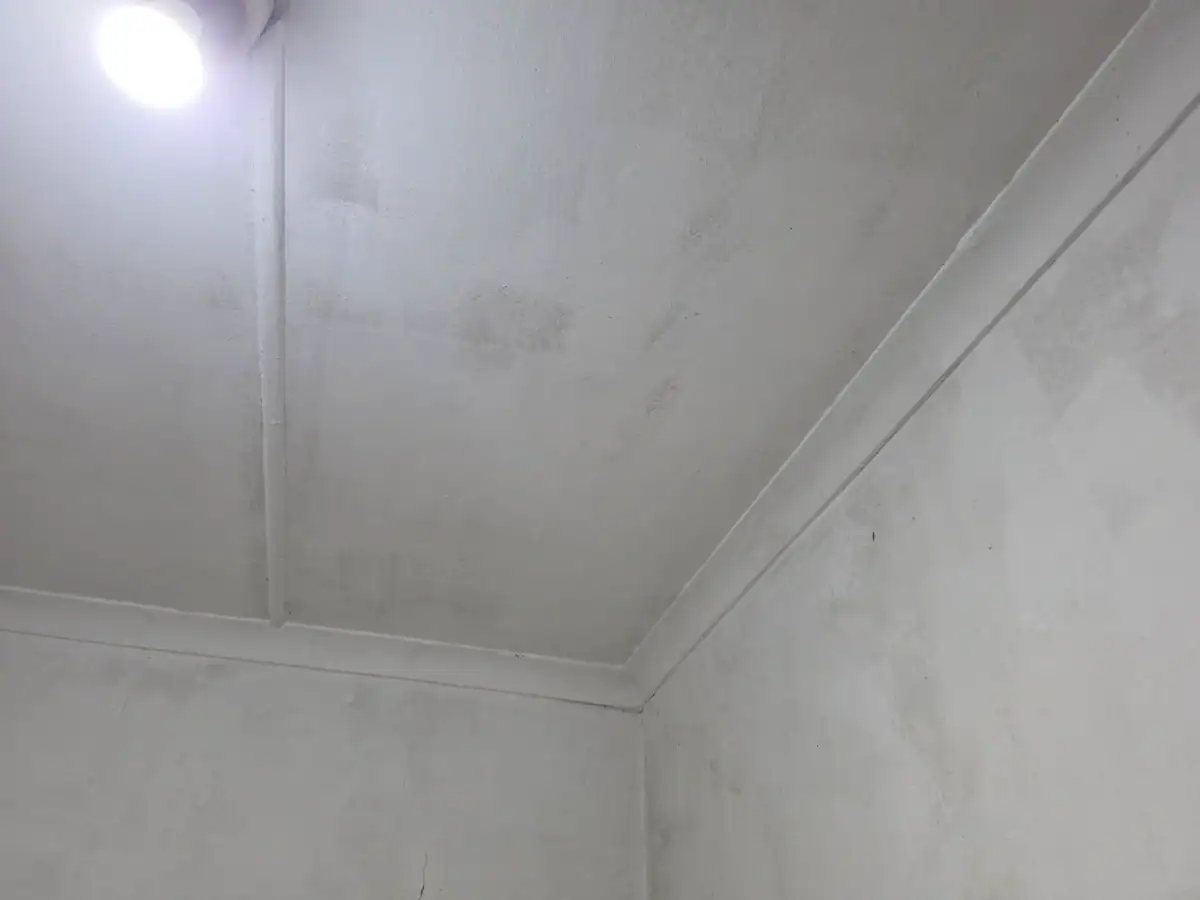
What the Sunny Cove Inspection Documented
This was not treated as a simple colour-change project.
The original inspection recorded:
- Protimeter readings from 7.6% to 14.2%;
- visible mould across several ceilings and upper-wall areas;
- general damp-related symptoms;
- peeling and discoloured coating on selected walls;
- hairline and approximately 1 mm wall cracks;
- Rhinoboard ceilings;
- gaps between cornices and walls;
- gaps between cornices and ceilings;
- movement at these junctions during windy conditions;
- failed sealant around baths and basins; and
- chip marks and coating deterioration on doors, frames and painted skirting.
Each condition required the preparation method to match the substrate and defect rather than using one filler, one primer and one topcoat throughout the house.
7.6%–14.2% Protimeter Readings
The moisture readings are included because they form part of the genuine project evidence.
They should not be misinterpreted.
A meter reading does not automatically prove rising damp, a roof leak, a plumbing defect or condensation.
The correct interpretation depends on the position of the reading, visible staining, building construction, ventilation, recent moisture exposure and other site evidence.
For this reason, the project documents the readings and the visible symptoms without claiming a specific moisture mechanism that the available evidence does not establish.
Visible Mould Required Treatment Before Paint
The original photograph documents substantial visible mould across part of the ceiling and upper-wall area.
Applying decorative paint directly over active mould would merely conceal biological contamination beneath the new film.
The written specification therefore included fungicidal treatment using Dulux Weathershield Fungicidal Wash, followed by cleaning and rinsing before the subsequent preparation stages.
Stained surfaces could receive Dulux Universal Undercoat where specified to reduce stain migration through the final finish.
Ventilation Was Improved Before Painting
The owner had installed extractor fans before the painting work commenced.
This is important first-hand project context because paint cannot correct poor ventilation.
Where humid interior air repeatedly condenses on cooler surfaces, mould can return even after careful cleaning and repainting.
Improving ventilation before the repaint therefore addressed a building-use factor rather than expecting the coating system to solve the entire moisture environment.
If mould returns after painting, the cause should be investigated rather than repeatedly covering the symptom.
Protecting an Occupied Interior
The written scope began with protection of floors, furniture and surrounding finishes before preparation and painting.
Electrical switch and plug covers were removed where practical, while masking was used around junctions to maintain clean finishing lines.
These details are particularly important during interior painting in Cape Town, where clients may continue living in the property while work proceeds.
Hairline and Approximately 1 mm Wall Cracks
The project included both hairline and approximately 1 mm wall cracks.
The written preparation system specified alkali-resistant sealer at relevant fine cracks, followed by Dulux Rainshield as a flexible crack-treatment component where appropriate.
A thin layer of filler was then used to restore a smooth finish before sanding, priming and application of the decorative coatings.
Cracks were therefore treated as substrate defects before the walls were repainted.
Rhinoboard Ceiling and Cornice Movement
One of the more distinctive findings at this property involved the Rhinoboard ceilings.
The inspection recorded gaps between:
- cornices and walls; and
- cornices and ceilings.
The quotation associated these gaps with movement occurring during windy conditions.
That is important because a moving junction should not automatically be repaired using only a hard brittle filler.
Relevant gaps were specified for single-pack polyurethane sealant with approximately 25% flexibility.
This allows more movement than an ordinary rigid patching compound.
Ceiling Preparation and Painting
The Rhinoboard ceilings were prepared before decorative painting commenced.
Water-stained areas were specified for Universal Undercoat where required to help prevent staining from migrating through subsequent coatings.
After preparation, the quotation specified two coats of Dulux Paints Wall & Ceiling Paint to the Rhinoboard ceilings.
Interior Wall Preparation and Painting
Wall surfaces were inspected for cracks, holes, damaged plaster and other imperfections before priming and painting.
After the required preparation, the documented finishing specification was two coats of Dulux Luxurious Silk.
The finishing paint was therefore the final stage of the process—not the treatment for the underlying defects.
Damp-Affected Wall Preparation
The written project specification included Dulux Pre-Paint Dampshield for designated prepared damp-affected wall areas where applicable.
The specification contained additional treatment requirements for higher moisture ranges.
However, the actual readings documented at this Sunny Cove property were 7.6%–14.2%.
This page therefore does not use a generic product instruction to exaggerate the measured conditions at the property.
Paint products intended for damp-affected substrates remain preparation tools; they do not repair an active plumbing leak, roof defect, failed waterproofing system or other continuing water source.
Read more about our Damp Proofing Cape Town approach.
Doors, Frames and Painted Skirting
The inspection documented chipped and worn areas on doors, frames and painted skirting.
The written preparation system included:
- repairing relevant cracks or junctions;
- filling chip marks;
- sanding repaired areas smooth;
- removing loose and flaking coating;
- feathering hard coating edges;
- spot priming exposed timber with Dulux Wood Primer;
- a full coat of Dulux Universal Undercoat; and
- two coats of Dulux Pearlglo Water Based Enamel.
This provides a coating system appropriate to higher-contact painted joinery rather than using ordinary wall paint as a shortcut.
Bath and Basin Sealant Repairs
Failed sealing was documented around baths and basins.
The written scope specified removal of failed material and resealing of relevant joints using flexible single-pack polyurethane sealant.
A decorative coating cannot correct a defective wet-area joint—the joint itself has to be repaired where it falls within the painting scope.
Supplier Approval, Specifications and Warranty Options
Painters Cape Town is approved by major paint suppliers.
Where technical involvement is appropriate, we can work to formal supplier painting specifications rather than relying only on a contractor-selected generic system.
Supplier-backed warranties are available on qualifying projects.
Qualifying new-build projects on correctly prepared raw plaster can receive supplier-backed specifications of up to 10 years where the complete specified system is followed from the initial primer through preparation, waterproofing and finishing coats.
For qualifying redecoration or repainting, supplier-backed warranties are typically 7–8 years, depending on the supplier and written specification, because the original preparation and primer system beneath existing coatings cannot always be verified.
Formal warranties always remain subject to the supplier’s written conditions, maintenance requirements and exclusions.
This Sunny Cove interior case study is not being presented as a formal supplier-warranty project because the available project records do not establish that status.
Supplier approval at company level should not be confused with supplier endorsement of every individual job.
Completed Sunny Cove Interior
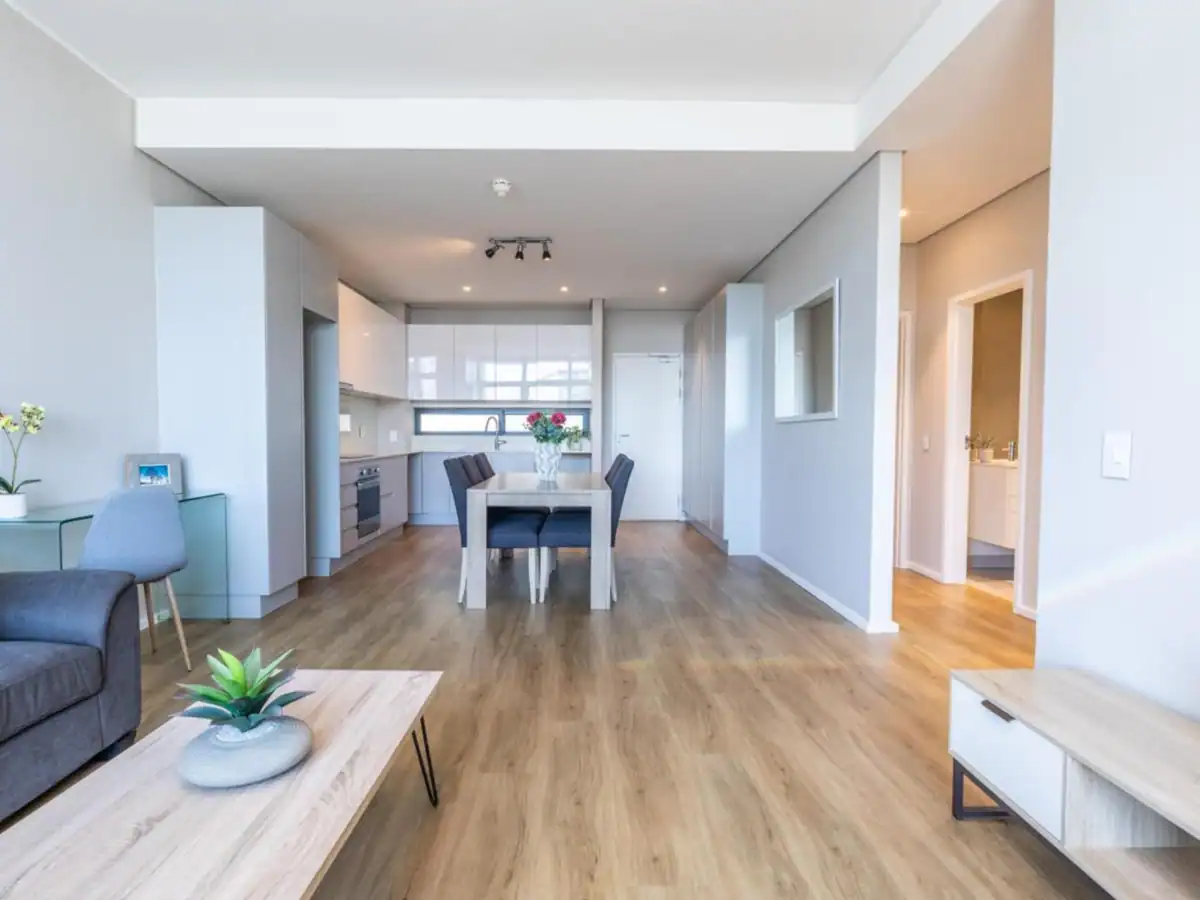
The completed interior represents the visible result of a preparation process that considered mould, ventilation, moisture readings, ceiling movement, wall cracking, wet-area joints and different painted substrates.
Continued ventilation remains important after completion.
If mould, staining or peeling returns, the moisture or ventilation conditions should be investigated rather than repeatedly applying more paint over the symptom.
What This Sunny Cove Project Demonstrates
This project provides particularly useful first-hand evidence because it documents interior maintenance conditions that are completely different from the exterior problems at our Fish Hoek Mountainside project.
The Sunny Cove case study records:
- actual 7.6%–14.2% Protimeter readings;
- visible mould rather than an assumed mould problem;
- ventilation improvement before repainting;
- Rhinoboard ceiling and cornice movement;
- flexible movement-joint repairs;
- interior crack preparation;
- wet-area seal repairs;
- substrate-specific ceiling, wall and joinery finishes;
- a named working foreman;
- original before-and-after photography; and
- a documented completion period in May 2026.
Together with the Fish Hoek Mountainside exterior project, this creates genuine evidence of both interior and exterior painting work completed in Fish Hoek.
Related Fish Hoek and False Bay Painting Services
For our complete local service, visit Painters Fish Hoek.
Fish Hoek and Sunny Cove form part of our wider False Bay Painters region.
Relevant Cape Town-wide services include:
- Interior Painters Cape Town;
- Damp Proofing Cape Town;
- Residential Painters Cape Town; and
- Cape Town Painting Service Areas.
Request a Fish Hoek Interior Painting Assessment
If your Fish Hoek home has mould, staining, peeling coatings, wall cracks, ceiling movement, damaged painted joinery or failed wet-area seals, a professional repaint should begin with inspection and preparation rather than simply applying another decorative coat.
Call 082 374 6862 or visit the Painters Cape Town contact page.
Helpful Painting Guides for Fish Hoek Property Owners
Why Paint Peels, Fades and Cracks
Learn how moisture, coating failure, cracking, weak adhesion and poor preparation can affect both interior and exterior painted surfaces.
Damp Walls and Preparation
Understand why mould, moisture readings and damaged coatings need to be assessed alongside ventilation, leaks and other possible moisture sources before repainting.
Planning a Premium Home Repaint
See how floors, furniture, access, preparation, painted timber and household finishes should be protected during a professional interior repaint.
Sunny Cove Fish Hoek Interior Painting Project FAQs
Where was this documented interior painting project completed?
The project was completed at a private home in Sunny Cove, Fish Hoek, Cape Town.
When was the Sunny Cove project completed?
The documented full interior repaint was completed from 18 to 26 May 2026.
What Protimeter readings were recorded?
Readings recorded during the inspection ranged from 7.6% to 14.2%.
Do the moisture readings prove rising damp?
No. Moisture readings alone do not diagnose rising damp, a leak, condensation or another specific source. They must be considered with the location of the readings, visible symptoms, ventilation and building conditions.
What problems were identified before repainting?
The inspection recorded visible mould, damp-related symptoms, peeling and discoloured wall paint, hairline and approximately 1 mm cracks, Rhinoboard ceiling and cornice movement, failing bath and basin sealant and wear to painted doors, frames and skirting.
Why were extractor fans important?
The owner installed extractor fans before painting to improve ventilation. Paint and mould treatment cannot replace adequate ventilation or correct an unresolved moisture source.
How was the visible mould treated?
The written project specification included Dulux Weathershield Fungicidal Wash, followed by cleaning and appropriate preparation before repainting.
Why were cornice and ceiling junctions repaired flexibly?
The inspection recorded movement at the Rhinoboard ceiling and cornice junctions during windy conditions. Flexible polyurethane sealant was therefore specified for relevant moving gaps rather than relying only on rigid filler.
What was specified for the ceilings?
The prepared Rhinoboard ceilings were specified for two coats of Dulux Paints Wall & Ceiling Paint, with suitable stain treatment where required.
What paint was specified for the walls?
The original quotation specified two coats of Dulux Luxurious Silk to the prepared wall surfaces.
How were the doors, frames and painted skirting prepared?
Loose coatings were removed, chip marks repaired and surfaces sanded. Bare timber was specified for Dulux Wood Primer, followed by Dulux Universal Undercoat and two coats of Dulux Pearlglo Water Based Enamel.
Can mould return after repainting?
Yes. If inadequate ventilation, leaks or another continuing moisture condition remains, mould can return despite correct surface preparation and repainting.
Is Painters Cape Town approved by major paint suppliers?
Yes. Painters Cape Town is approved by major paint suppliers and can work to formal supplier specifications on qualifying projects.
Are supplier-backed warranties available?
Yes, on qualifying projects. New raw-plaster systems can receive supplier-backed specifications of up to 10 years, while qualifying redecorations are typically 7–8 years depending on the supplier and written specification. Formal warranties remain subject to the supplier's conditions, exclusions and maintenance requirements.
Did this Sunny Cove project have a formal supplier warranty?
We do not claim that it did. The available project documentation supports the preparation and coating systems described on this page but does not establish this particular repaint as a formal supplier-warranty project.
Are your Fish Hoek painters subcontractors?
No. Painters Cape Town uses its own full-time employed painting teams rather than subcontracted painting crews.
Who supervised the Sunny Cove project?
Riaan was recorded as the working foreman and supervised preparation and workmanship while also assisting with painting.
Are you a lead-generation or quote-comparison company?
No. Painters Cape Town is the direct painting contractor responsible for inspection, quotation, employed painters, supervision and completed work.
Do you have another genuine Fish Hoek project?
Yes. Our documented Fish Hoek Mountainside exterior project was completed from 27 March to 7 April 2026 and included 13%–21% readings, crack and seal repairs, horizontal waterproofing, glazing-putty restoration and painted timber.
How do I request an interior painting quotation in Fish Hoek?
Call 082 374 6862 or visit the Painters Cape Town contact page.

Copyright 2026 , all rights reserved.