Documented Rondebosch Painting Project
Grove Village Rondebosch Exterior Painting Case Study
A genuine 2026 townhouse project involving bubbling coatings, moisture-related discolouration, cracks, failed window and door seals, open expansion joints, weathered timber, boundary-wall moisture and vulnerable horizontal masonry.
Recorded readings ranged from 11.9% to 15.2%. The documented scope also included roof cleaning, boundary and garden walls, fascia and soffit preparation, Nutec barge capping, metalwork, garage interior walls and a hard-wearing garage-floor coating system.
Project Evidence
- Grove Village townhouse in Rondebosch.
- Documented 30 June–9 July 2026 project.
- Protimeter readings: 11.9%–15.2%.
- Bubbling and deteriorated exterior coatings.
- Vertical and horizontal cracking.
- Failed window and door sealing.
- Open expansion joints.
- Horizontal waterproofing renewed.
- Main-building walls.
- Boundary and garden walls.
- Weathered wooden fascia and soffits.
- Nutec barge capping.
- Exterior steel and fittings.
- Tiled-roof cleaning and fungal treatment.
- Garage interior walls.
- Garage-floor coating system.
- Working foreman: Riaan.
Real Grove Village Project Evidence
11.9%–15.2% Readings
Measurements were considered together with bubbles, cracks, failed sealing and exposed horizontal masonry rather than being treated as an automatic diagnosis of rising damp.
More Than Bubbling Paint
The visible bubbles were part of a larger maintenance picture involving cracks, flexible joints, weathered timber and moisture entry.
Boundary-Wall Limitations
The written scope explicitly recognised that continuing ground or backfill moisture cannot be permanently stopped by decorative coating on the visible face.
Roof Included in Inspection Scope
The tiled roof formed part of the documented project scope, including pressure cleaning and treatment of biological growth where present.
Garage Floor Coating
The wider project also included preparation and a two-coat heavy-duty poly-alkyd floor finish to the garage floor.
Experienced Employed Team
The project was supervised by working foreman Riaan and completed using the company's employed, Paint Academy-trained painters.
Exterior Painting and Remedial Preparation at Grove Village, Rondebosch
This documented Rondebosch project was completed at a Grove Village townhouse between 30 June and 9 July 2026.
The visible symptom attracting attention was bubbling exterior paint, but the original inspection and quotation show that the actual project was significantly broader.
Recorded Protimeter readings ranged from 11.9% to 15.2%.
The scope included the tiled roof, main-building walls, painted boundary and garden walls, barge boards, fascia boards, wooden soffits, exterior fittings, garage interior walls, garage floor and damp-related preparation.
What the Inspection Found
The documented observations included:
- 11.9%–15.2% moisture readings;
- cracks on vertical masonry;
- cracks on horizontal surfaces;
- failed window and door sealing;
- paint bubbling;
- weathered wooden fascia boards;
- unprotected horizontal masonry;
- open expansion joints;
- moisture-related coating deterioration; and
- conditions on some boundary and lower walls where continuing moisture required realistic limitations.
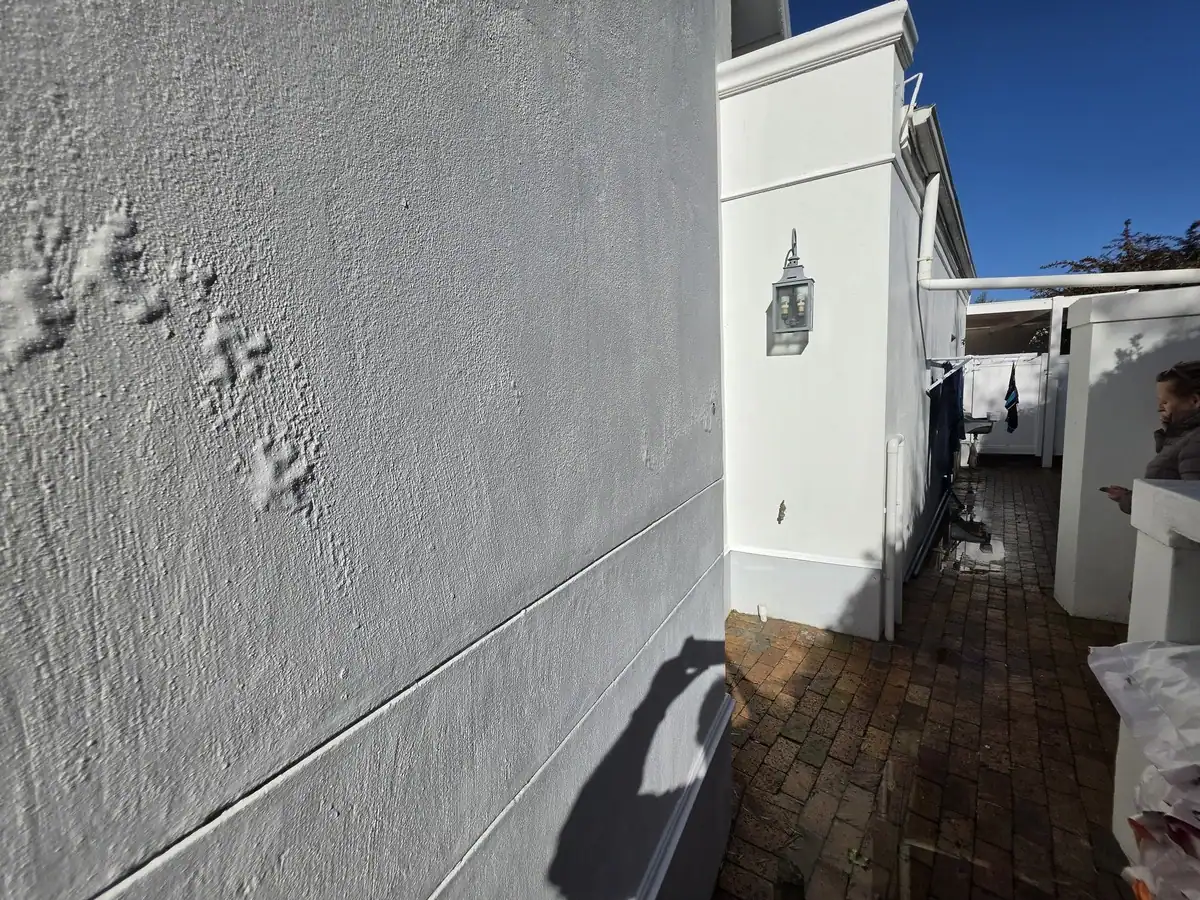
The Before Condition
Why the Paint Bubble Was Only a Symptom
A paint bubble tells you that adhesion has been lost somewhere in the coating system.
It does not by itself tell you why.
At Grove Village, the bubbles were considered together with cracking, failed flexible sealing, horizontal water-entry details and moisture readings.
That broader assessment is more useful than simply cutting out each visible bubble and repainting the patch.
Cracks on Vertical and Horizontal Surfaces
The project specification differentiated between hairline cracking, wider plaster cracking and map cracking.
Hairline Cracks
Fine cracks received the specified alkali-resistant sealing and flexible waterproof treatment.
Wider Plaster Cracks
Wider cracks were opened where necessary, cleaned and repaired with suitable masonry repair material before waterproof crack protection was applied.
Map Cracking
Multiple fine spider-web cracks received broader flexible preparation rather than being hidden under another conventional finishing coat.
Windowsills, Parapets and Wall Tops
The quotation identified horizontal masonry as an important moisture-entry risk.
Windowsills, parapets and the tops of garden or boundary walls receive direct rainfall and can admit water through fine cracking or porous surfaces.
Applicable prepared areas therefore received the documented Dulux Rainshield waterproof system.
Window, Door and Expansion-Joint Sealing
Failed sealing around windows and doors was inspected and deteriorated material removed where required.
The documented system used flexible polyurethane to restore applicable perimeter and movement joints.
Exterior fittings were also included in the sealing inspection because penetrations around lights and fittings can become small routes for water entry.
Moisture and Alkali-Related Preparation
The project documentation records moisture-related discolouration and alkali-sensitive preparation.
Where appropriate, powdery or affected surfaces received the specified stabilising primer before later coatings were applied.
Dulux Dampshield formed part of the documented preparation on applicable damp-affected cementitious areas.
Boundary and Garden Walls Needed Different Expectations
The quotation specifically records an important limitation for boundary walls.
Where masonry has no effective damp-proof separation from wet soil or ground conditions, moisture can continue migrating through the wall from below or behind.
A breathable coating system can be the most appropriate practical finish to the accessible face, but decorative paint cannot manufacture a missing damp-proof barrier inside the structure.
Future deterioration caused by continuing moisture therefore has to be treated differently from an ordinary coating-workmanship failure.
Foundation Walls Below Expansion-Joint and Weep-Hole Level
The written specification also identified moisture-related discolouration below expansion-joint and weep-hole level on relevant lower walls.
Where moisture continues arriving from a backfilled side, preparation and Dampshield can protect the accessible face as specified, but it cannot permanently stop continuing moisture migration from behind the structure.
Weathered Wooden Fascia Boards and Soffits
The wooden fascia boards were recorded as weathered.
Loose or flaking coating was removed, hard edges feathered and exposed timber prepared before compatible undercoat and finishing coats.
Cover-strip joints were also included in the sealing specification where required.
Nutec Barge Capping
The project contained new and previously painted Nutec barge-capping elements.
These surfaces required their own sanding and primer preparation rather than simply receiving the same treatment as plaster or timber.
Steelwork, Gates and Exterior Fittings
Exterior metalwork was cleaned and sanded, with loose coating removed and bare steel prepared with compatible rust primer before the finishing system.
This was a smaller steel component than the extensive Rondebosch Oval Estate steel restoration, but it demonstrates again that each substrate needs its own primer.
The Tiled Roof Was Part of the Documented Scope
The tiled roof appeared in the original project scope.
The written preparation called for pressure cleaning to remove contamination and unstable surface deposits, together with fungal treatment where biological growth was present.
I am deliberately not claiming a specific roof finishing product here because the supplied project quotation does not clearly document a final roof topcoat in the section provided.
That is more accurate than inventing one.
The Garage Interior Was Also Included
Garage interior walls and the stoep ceiling received the specified wall-and-ceiling finishing system after preparation.
This part of the original scope had largely disappeared from the older web case study.
A Separate Garage-Floor Coating System
The garage floor was also part of the project.
After suitable cleaning and preparation, the written system specified two coats of heavy-duty polyurethane-modified poly-alkyd floor enamel for the cementitious floor.
A floor coating is exposed to wear in a completely different way from wall paint and therefore requires a purpose-specific system.
Exterior Wall Coating Systems
The documented specification differentiated between the main building and moisture-sensitive boundary walls.
The main building received the specified Dulux Weathershield system, while specified boundary and garden walls received a breathable Dulux Weatherguard finish.
Prepared wooden fascia and metalwork received compatible Pearlglo finishes, while specified barge and soffit surfaces received their own appropriate system.
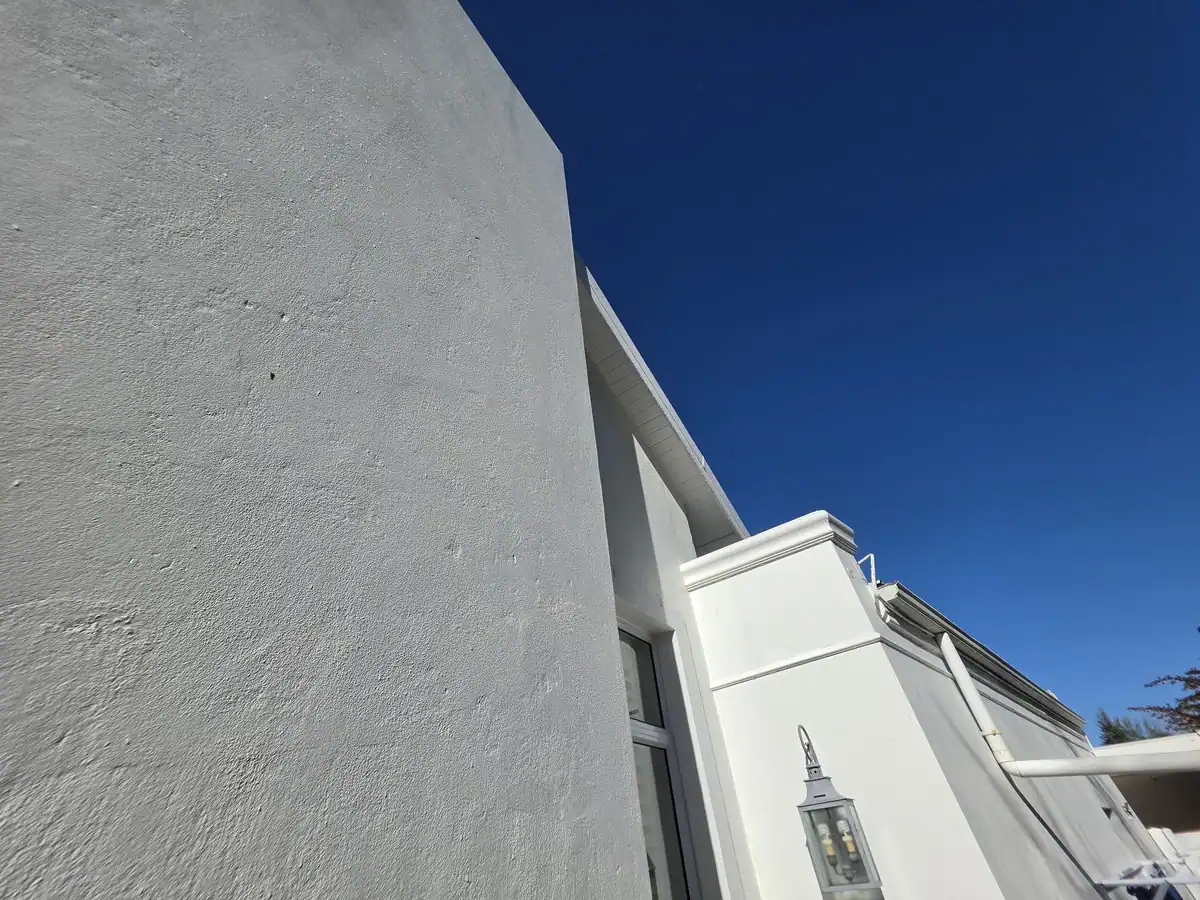
Completed Grove Village Exterior
What This Grove Village Project Demonstrates
The strongest lesson is that modern-looking townhouse developments can still require substantial diagnostic preparation.
Movement cracks, ageing flexible sealants and small defects in horizontal masonry can create moisture-entry routes long before the property appears “old”.
The project also shows why one maintenance contract can involve several distinct coating environments: main-building masonry, moisture-sensitive boundary walls, timber, Nutec, metalwork, tiled-roof preparation, garage walls and a traffic-bearing garage floor.
Those surfaces should not all be treated with the same primer or finishing paint.
Related Rondebosch Painting Services
Return to our Painters Rondebosch page.
Related services include Exterior Painters Cape Town, Damp Proofing Cape Town, Roof Painters Cape Town and Residential Painters Cape Town.
Call 082 374 6862 or visit our contact page.
Original Painters Cape Town project photography. Image licensing information.
Helpful Painting Guides
Why Paint Peels, Fades and Cracks
Learn why moisture, adhesion, cracking and inadequate preparation cause paint systems to deteriorate prematurely.
Damp Walls Before Repainting
Understand boundary walls, failed seals, cracks, waterproofing defects and continuing moisture before choosing a paint system.
Planning a Premium Home Repaint
See how preparation, access, protection, timber, metalwork and surrounding finishes should be managed before painting starts.
Grove Village Rondebosch Painting FAQs
When was the Grove Village project completed?
The documented project ran from 30 June to 9 July 2026.
What moisture readings were recorded?
Protimeter readings across inspected wall areas ranged from 11.9% to 15.2%.
Why was the exterior paint bubbling?
The bubbling was assessed together with cracking, moisture-related deterioration, failed flexible seals and vulnerable horizontal surfaces rather than being treated as an isolated paint defect.
Were windows and doors resealed?
Deteriorated perimeter sealing was removed and replaced where required with the specified flexible polyurethane system.
Were expansion joints included?
Yes. Open or deteriorated expansion joints formed part of the documented flexible-sealing preparation.
Were horizontal surfaces waterproofed?
Applicable windowsills, parapets and wall tops received the specified waterproof preparation after suitable repairs.
Why were boundary walls treated differently?
Boundary walls can continue receiving moisture from ground contact, soil or the reverse face. Painting the visible face cannot create a missing damp-proof barrier within the structure.
Was the tiled roof included?
Yes. The documented project scope included the tiled roof, with pressure cleaning and fungal treatment where biological growth was present. No unsupported roof finishing product is claimed on this page.
Were fascia boards and soffits included?
Yes. Weathered wooden fascia and soffit elements were prepared separately from the plaster walls, with primer and undercoat applied where required.
Was Nutec included?
Yes. New and previously painted Nutec barge capping formed part of the documented preparation scope.
Was metalwork included?
Yes. Applicable exterior gates, fittings and other steelwork were prepared and rust-primed before compatible finishing coats.
Was the garage painted?
Yes. The project included garage interior walls as well as a separate hard-wearing floor-coating system to the garage floor.
Does Dampshield permanently stop moisture from behind a wall?
No. A coating on the accessible face cannot permanently stop continuing moisture entering masonry from backfill, soil, plumbing, failed waterproofing or another unresolved source.
Where can I see your complete Rondebosch service?
Visit our Painters Rondebosch page.

Copyright 2026 , all rights reserved.