Documented Claremont Exterior Painting Project
Claremont Village Exterior Painting Case Study
A documented May 2026 exterior repaint involving unusually high wall moisture, map cracking, wider plaster cracks, failed window and door seals, open expansion joints, alkali-related paint deterioration, powdering, peeling and unprotected horizontal masonry.
Protimeter readings ranged from 24.8% to 29.5%. The written system required extensive Dampshield preparation, Rainshield waterproofing, crack repair, flexible sealing and separate finishing systems for the main building, boundary walls and timber fascia boards.
Project Evidence
- Private Claremont Village home.
- Documented 18–22 May 2026 project.
- Protimeter readings: 24.8%–29.5%.
- Map/spider-web cracking.
- Vertical and horizontal plaster cracks.
- Peeling and badly weathered coating.
- Powdery surfaces.
- Alkali-related discolouration.
- Failed window and door sealant.
- Open expansion joints.
- Unwaterproofed horizontal masonry.
- Boundary and garden-wall moisture limitations.
- Backfilled lower-wall limitations.
- Full exterior Dampshield specification.
- Rainshield horizontal waterproofing.
- Wooden fascia restoration.
- Working foreman: Patrick.
Real Claremont Village Project Evidence
24.8%–29.5% Readings
High readings were considered together with cracks, failed seals, open joints, horizontal surfaces and the construction of moisture-sensitive walls.
Alkali & Powdering
The quotation specifically records alkali-related coating deterioration, powdery surfaces, peeling and severe weathering.
Full Dampshield System
Because of the measured condition, the written specification required a substantial Dampshield treatment across the prepared exterior wall system.
Several Crack Types
Hairline cracking, wider plaster cracking and map cracking were given separate preparation methods.
Honest Moisture Limitations
Continuing ground and backfill moisture affecting boundary and lower foundation walls was expressly separated from normal coating-performance expectations.
Experienced Employed Team
The quotation records Paint Academy-trained painters with at least ten years' company experience under working foreman Patrick.
Exterior Painting and Moisture-Related Repairs in Claremont Village
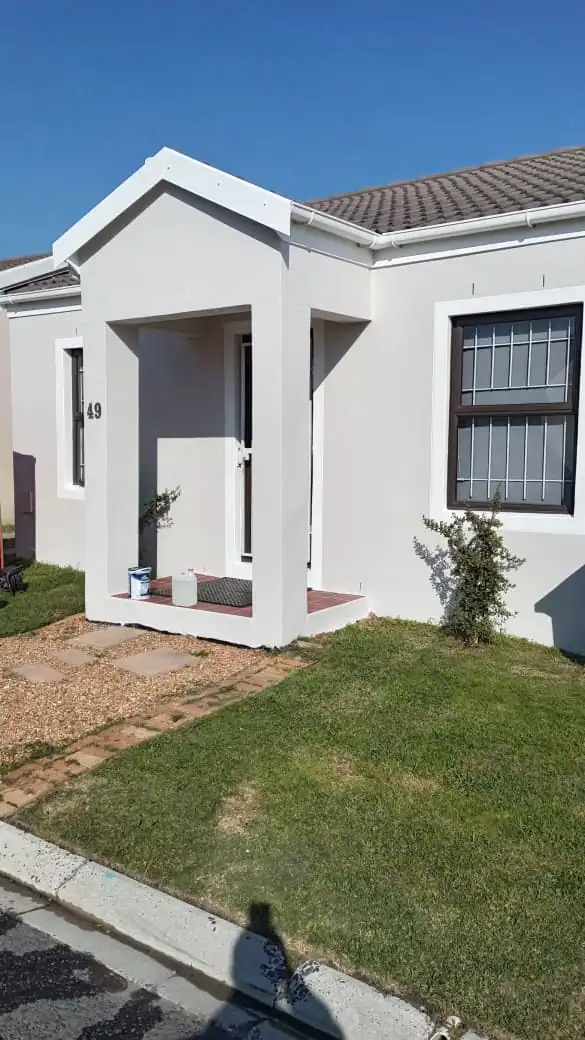
This documented exterior project was completed at a private Claremont Village home from 18 to 22 May 2026.
The scope included the main-building walls, boundary and garden walls, wooden fascia boards, high-pressure cleaning, horizontal waterproofing, damp-related preparation and flexible sealing around openings, penetrations and movement joints.
Protimeter readings ranged from 24.8% to 29.5%.
The Full Inspection Was Considerably More Detailed Than a Normal Repaint
The original quotation recorded:
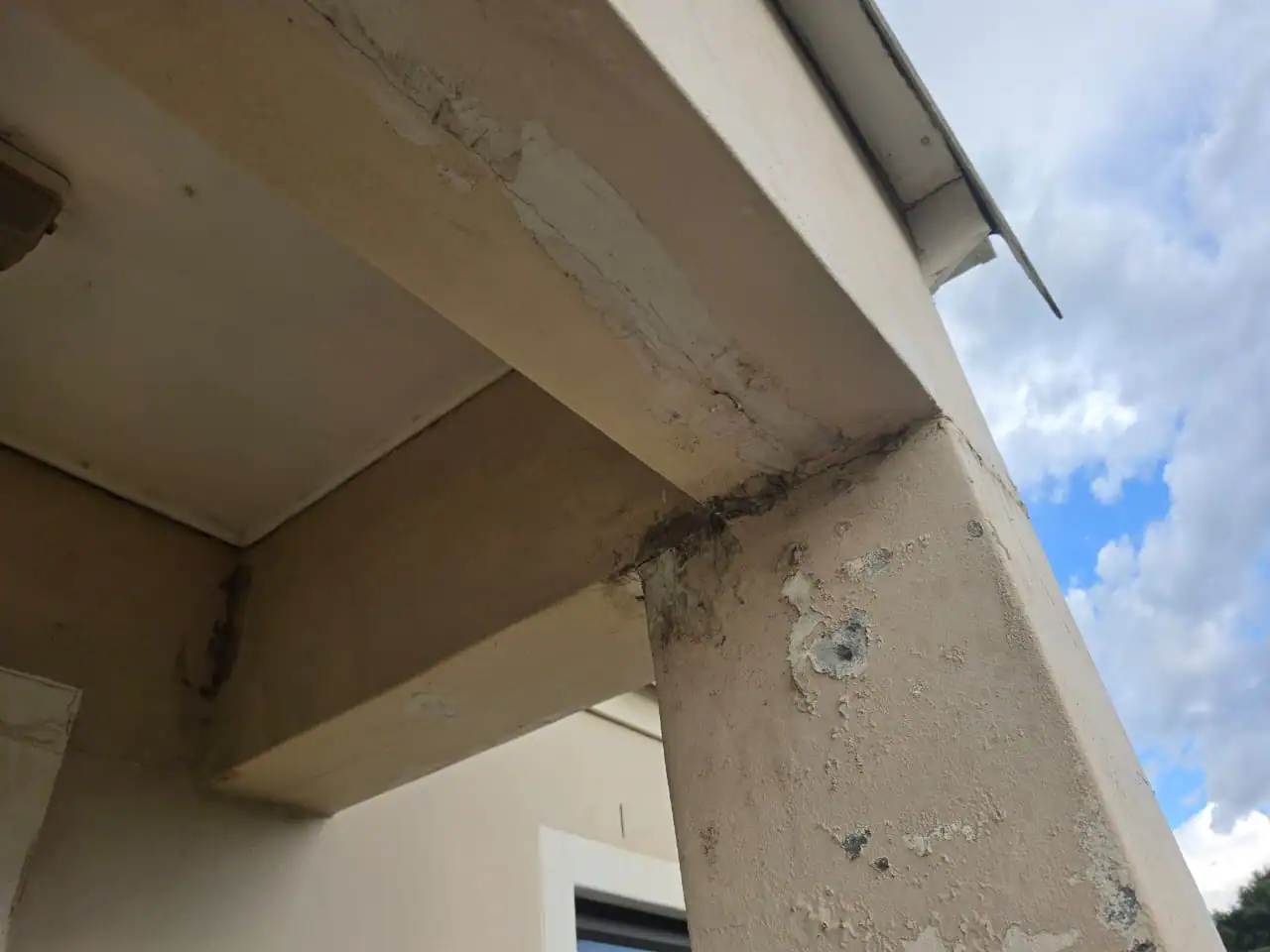
- map or spider-web cracking;
- multiple cracks on vertical and horizontal masonry;
- cracking on windowsills;
- expansion-joint defects;
- garden and boundary-wall cracking;
- failed window and door sealant;
- moisture-related discolouration;
- alkali-related coating deterioration;
- powdery surfaces;
- peeling coating;
- badly weathered paint;
- horizontal surfaces that had not been adequately waterproofed; and
- unsealed expansion joints.
The Before Condition
High Moisture Did Not Mean One Universal Damp Cause
The readings confirmed that substantial moisture was present in inspected areas.
They did not, however, explain how that moisture reached every section of wall.
The physical inspection identified several potential routes:
- failed opening seals;
- hairline and wider plaster cracks;
- map cracking;
- open movement joints;
- cracked windowsills;
- unprotected parapet and wall tops;
- ground moisture affecting boundary walls; and
- backfill moisture affecting lower foundation walls.
Alkali Attack and Why Moisture Can Damage the Paint Film
The original quotation specifically identified alkali-related deterioration.
When moisture moves through cementitious plaster, alkaline salts can migrate toward the coating surface.
This can contribute to discolouration, powdering and degradation of a paint binder where the coating system is vulnerable.
That is why stabilising and moisture-tolerant preparation below the finish coat was an important part of this project.
Cleaning and Substrate Preparation
Walls were cleaned using high-pressure washing where appropriate to remove loose coating, grime, chalky material and general surface contamination.
Areas unsuitable for pressure washing could be cleaned manually using the documented cleaning system.
The written specification also provided for fungal treatment where biological contamination was found.
On the completed project, no obvious mould required unnecessary treatment in the photographed areas.
A Particularly Strong Dampshield Specification
Because of the high readings and wall condition, the written system went considerably further than a small amount of spot priming.
The specification required Dulux Pre-Paint Dampshield across prepared exterior walls, with additional treatment according to the moisture condition.
It specifically called for two full coats of Dulux Dampshield on the exterior walls because of the high readings, together with the documented system to bare areas.
This moisture-tolerant coating system was part of the preparation.
It was not presented as a substitute for fixing accessible cracks, failed joints or other continuing water-entry routes.
Horizontal Waterproofing
Windowsills, parapets and the tops of garden or boundary walls receive rain directly.
The written system specified two coats of Dulux Rainshield to applicable prepared horizontal surfaces, with the second coat applied perpendicular to the first.
Window, Door, Expansion-Joint and Penetration Sealing
All applicable window and door perimeter sealing and expansion joints were inspected.
Deteriorated material was removed and replaced using flexible single-pack polyurethane where required.
Wall and light fittings were also included because poorly sealed penetrations can allow rainwater behind exterior coatings.
Hairline Cracks
Hairline cracks received alkali-resistant preparation and flexible Rainshield worked into the crack.
Where multiple spider-web cracks were present, broader flexible treatment was used across the affected plaster rather than attempting to disguise every line with finishing paint.
Wider Plaster Cracks
Applicable 1–5 mm cracks were opened, cleaned, repaired with masonry patching material and sanded.
The repaired section then received flexible Rainshield preparation extending beyond the crack itself.
Map Cracking
Map cracking was specifically identified during the inspection.
This network of fine cracks required flexible treatment across the affected area rather than a single line of ordinary filler.
Boundary Walls — Where Paint Has Real Limits
The quotation explicitly records that the relevant boundary walls had no effective barrier separating the masonry from continuing ground moisture.
Moisture could therefore continue migrating from below or behind.
The breathable finishing system specified for these walls was considered the most practical coating solution, but paint could not manufacture a missing damp-proof barrier inside the structure.
Future discolouration, bubbling or peeling caused by continuing moisture was therefore excluded from ordinary coating-warranty expectations.
Foundation Walls Below Expansion-Joint and Weep-Hole Level
Moisture-related discolouration was also documented on lower wall sections beneath the relevant expansion-joint and weep-hole level.
These walls were exposed to continuing moisture from the backfilled side.
The accessible surfaces could be fully prepared and treated with Dampshield, but the coating on the visible face could not permanently stop continuing moisture arriving through the wall from behind.
Wooden Fascia Restoration
The fascia boards also formed part of the project.
Loose and flaking coating was removed and sound surfaces sanded and feathered.
Once cleaning and preparation exposed weaker timber areas, the real extent of the woodwork preparation became clearer than it had been during the original visual quotation.
Wood filler was used where applicable before full preparation with the specified undercoat and Dulux Pearlglo Waterbased finish.
Separate Finishing Systems for Different Walls
The main building received the documented Dulux Weathershield exterior system.
The boundary and garden walls received Dulux Weatherguard Fine Textured.
This distinction matters because a moisture-sensitive freestanding boundary wall can behave differently from the main house façade.
Completed Claremont Village Exterior
What This Claremont Village Project Demonstrates
The strongest lesson from this project is that a high moisture reading still does not replace physical diagnosis.
Several separate building details were capable of allowing moisture into the coating or masonry.
The project therefore required cleaning, stabilisation, moisture-tolerant priming, crack repair, flexible sealing, waterproofing and realistic limitations for walls where the underlying moisture source could not be eliminated from the painted face.
Related Claremont Painting Services
Return to Painters Claremont.
Related services include Exterior Painters Cape Town, Damp Proofing Cape Town and Residential Painters Cape Town.
Call 082 374 6862 or visit our contact page.
Original Painters Cape Town project photography. Image licensing information.
Helpful Painting Guides
Why Paint Peels, Fades and Cracks
Learn how moisture, cracks, weak coatings, chalking and inadequate preparation contribute to exterior paint failure.
Damp Walls and Repainting
Understand boundary walls, backfill moisture, failed seals, waterproofing defects and other moisture routes before repainting.
Planning a Premium Home Repaint
See how access, protection, timber, masonry and surrounding finishes should be planned before painting starts.
Claremont Village Exterior Painting FAQs
When was this project completed?
The documented exterior project was completed from 18 to 22 May 2026.
What moisture readings were recorded?
Protimeter readings ranged from 24.8% to 29.5% across inspected exterior areas.
What defects were identified?
The inspection recorded map cracking, numerous vertical and horizontal cracks, failed opening seals, open expansion joints, powdering, peeling, weathering, alkali-related discolouration and unprotected horizontal masonry.
Did the high readings prove one type of damp?
No. The physical inspection identified several possible moisture routes and the readings were interpreted together with those defects.
Was Dampshield applied extensively?
Yes. The written specification required a substantial Dampshield preparation system, including two full coats across the prepared exterior wall system because of the measured condition.
Were horizontal surfaces waterproofed?
Yes. Applicable windowsills, parapets and garden or boundary-wall tops received the specified two-coat Rainshield system.
Were window and door seals repaired?
Yes. Deteriorated sealing was removed where required and applicable joints resealed with flexible polyurethane.
Were expansion joints resealed?
Yes. Applicable movement joints were sealed using a flexible polyurethane system rather than rigid plaster filler.
How were cracks treated?
Hairline, wider plaster and map cracking received different preparation systems according to their condition.
Why were boundary walls treated differently?
Continuing moisture from soil, ground contact or the reverse face can remain active even after the accessible wall surface is correctly prepared and painted.
What limitation applied to lower foundation walls?
The quotation recorded continuing moisture from backfill behind some lower walls. Surface coating could protect the accessible face but could not permanently stop moisture migrating through the structure.
Were wooden fascia boards included?
Yes. Loose coating was removed and the timber was prepared and finished using the specified compatible system.
Where can I see your full Claremont service?
Visit our Painters Claremont page.

Copyright 2026 , all rights reserved.