Baronetcy Estate • Plattekloof
Exterior Painting at Baronetcy Estate, Plattekloof
A documented March 2026 exterior restoration involving 9%–13% moisture readings, settlement and map cracking, failed seals, unprotected horizontal surfaces, mould-stained soffits and weathered exterior coatings.
Painters Cape Town inspected the property, documented the defects and completed a preparation-first exterior repaint involving cleaning, crack repairs, flexible sealing, waterproofing, damp-related preparation and substrate-specific exterior coatings.
Baronetcy Project Highlights
- Private estate home in Baronetcy Estate, Plattekloof.
- Project period: 9–24 March 2026.
- Protimeter readings of 9%–13%.
- Settlement plaster cracks and map cracking.
- Cracks on walls, windowsills, expansion joints and boundary walls.
- Failed seals around selected windows and doors.
- Unsealed expansion joints.
- Horizontal surfaces requiring waterproofing.
- Moisture-related discolouration and alkali attack.
- Mould staining on soffits.
- Peeling paint on Nutec fascia boards.
- Working-foreman supervision and site visits.
Real Baronetcy Estate Project Evidence
9%–13% Moisture Readings
Protimeter readings recorded during the exterior inspection ranged from 9% to 13% and were assessed together with visible cracking, staining, failed seals and exposed horizontal surfaces.
Settlement and Map Cracking
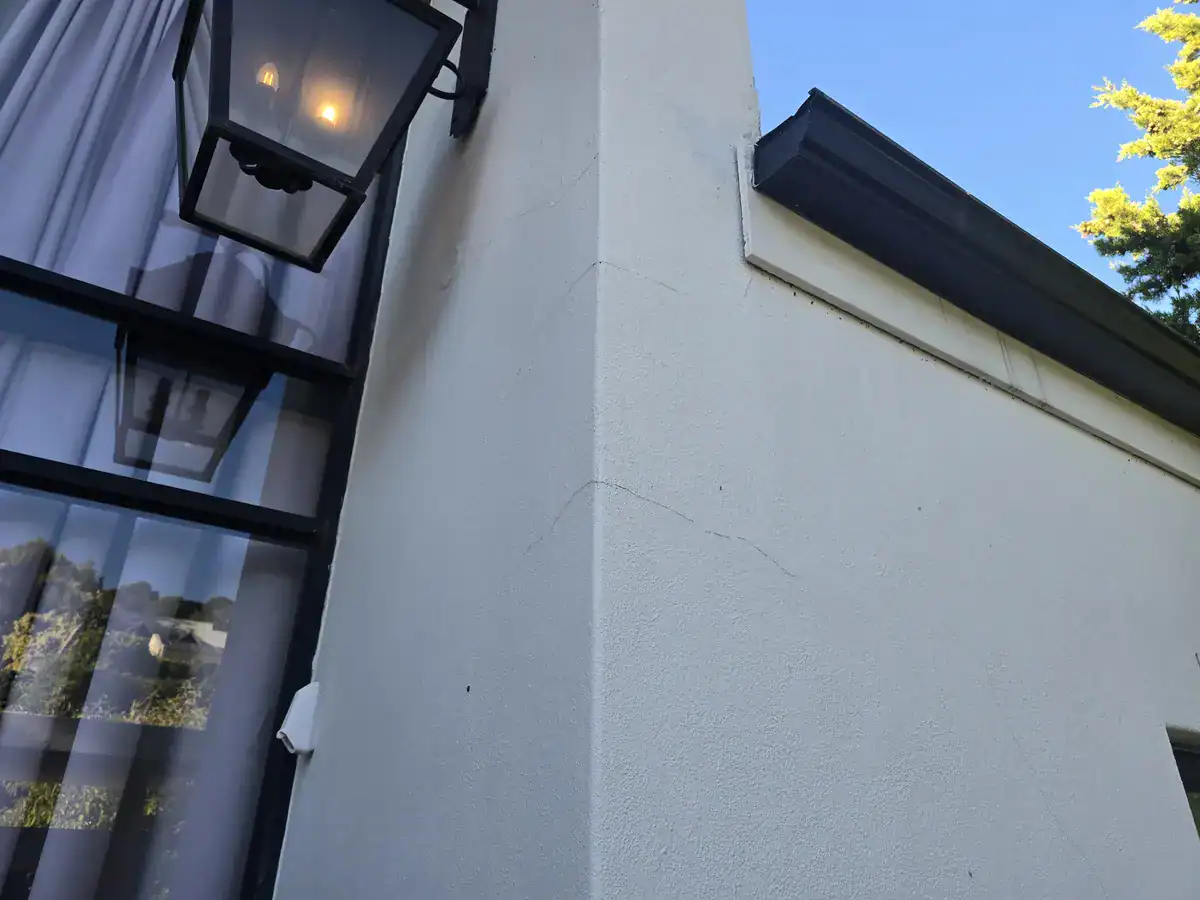
The inspection identified settlement cracks, spiderweb or map cracking and wider defects across vertical and horizontal masonry requiring different repair methods.
Failed Seals and Open Joints
Deteriorated perimeter sealant and unsealed expansion joints were identified as potential routes for moisture entry before repainting.
Waterproofing Preparation
Parapets, windowsills and boundary-wall tops required the specified flexible waterproofing treatment because upward-facing surfaces receive direct rainfall.
Nutec and Soffit Restoration
Peeling coating on Nutec fascia boards and mould staining on soffits required separate cleaning, preparation, priming and finishing procedures.
Direct Painting Contractor
Painters Cape Town uses full-time employed painters with working-foreman supervision rather than operating as a lead-generation enquiry website.
Baronetcy Estate Exterior Painting Project in Plattekloof
This documented Baronetcy Estate exterior painting project involved detailed preparation and repainting of a private residential property in Plattekloof during March 2026.
The work was not treated as a simple colour refresh. The physical inspection identified settlement plaster cracks, extensive map cracking, failed perimeter seals, unsealed expansion joints, weathered exterior coatings, powdery surfaces, unprotected horizontal masonry, mould staining on soffits and peeling paint on Nutec fascia boards.
Relative masonry moisture readings across inspected areas ranged from 9% to 13%.
The preparation scope therefore combined cleaning, fungal treatment, crack repairs, flexible joint sealing, horizontal-surface waterproofing, damp-related preparation and substrate-specific coating systems.
This genuine local project supports our Painters Plattekloof page and provides first-hand project evidence for our Exterior Painters Cape Town, Damp Proofing Cape Town, Residential Painters Cape Town and Estate Painting Cape Town services.
Baronetcy Estate Project Summary
- Location: Baronetcy Estate, Plattekloof, Cape Town.
- Property type: Private estate home.
- Project period: 9–24 March 2026.
- Moisture readings: 9% minimum to 13% maximum.
- Main scope: Main-building and boundary walls, Nutec fascia boards, Nutec soffits, high-pressure cleaning, horizontal waterproofing, damp-related preparation and sealing around included openings, joints and fittings.
- Supervision: Working-foreman supervision with additional site visits.
What We Found During the Exterior Inspection
The physical inspection was used to identify the preparation requirements before repainting rather than assuming all visible deterioration had one cause.
- Protimeter readings ranged from 9% to 13%.
- Settlement plaster cracks were present.
- Map or spiderweb cracking affected sections of wall.
- Cracks were present on vertical and horizontal surfaces.
- Windowsills, expansion joints and boundary walls contained cracking.
- Some perimeter sealant around windows and doors was deteriorating.
- Moisture-related discolouration and alkali attack were visible.
- Powdery coating surfaces were present.
- Some horizontal surfaces had not been waterproofed adequately.
- Expansion joints were not adequately sealed.
- Paint was weathered on windowsills and sections of the main and boundary walls.
- Mould staining was visible on soffits.
- Paint was peeling from some Nutec fascia boards.
Why the 9%–13% Moisture Readings Were Considered Together with the Building Defects
The Protimeter readings provided useful information about the relative moisture condition of the inspected masonry, but the numbers were not treated as a diagnosis on their own.
The readings were assessed together with the visible cracks, failed seals, exposed windowsills, expansion joints, boundary-wall conditions and moisture-related discolouration.
This is important because moisture can reach masonry through several routes. A cracked horizontal surface may respond differently from a boundary wall receiving continuing ground moisture, while a failed window seal may create a localised route of rainwater entry.
The preparation system therefore addressed the visible building-envelope defects individually rather than applying one generic damp treatment across every surface.
Boundary Walls and Continuing Ground Moisture
The written inspection specifically identified an important limitation affecting sections of boundary masonry.
These walls did not have an effective damp-proof barrier separating the masonry from continuing ground moisture. Water can therefore continue migrating through the wall from below or behind even after the visible painted surface has been correctly prepared.
A breathable exterior coating can improve protection and appearance, but it cannot permanently stop moisture that continues entering through the rear or base of the wall.
This is why coating warranties and maintenance expectations need to distinguish between paint performance and continuing moisture migration through the masonry.
Foundation Walls Below Expansion-Joint Level
Moisture-related discolouration was also identified below weep-hole and expansion-joint level.
These lower wall sections were exposed to moisture from the backfilled side where no effective damp-proof barrier was present.
The specified preparation included Dulux Dampshield treatment on affected prepared areas, but continued moisture movement from behind remained an identified limitation.
Alkali Attack and Paint Discolouration
Moisture-related alkali attack was one of the coating problems recorded during the inspection.
Cementitious plaster contains alkaline compounds. When water moves through the substrate, soluble salts can migrate toward the painted surface and contribute to colour loss, powdering and deterioration of the binder within the paint film.
The project therefore combined moisture-related preparation with crack treatment, joint sealing and protection of vulnerable horizontal areas instead of simply covering the visible discolouration with new paint.
High-Pressure Washing Before Repainting
Exterior walls were cleaned before repairs and coating application.
High-pressure washing was specified to remove loose and flaking coating, grime, salts and chalky deposits.
Where high-pressure washing was unsuitable, the written specification called for a 1:10 ProGold GP Cleaner solution followed by scrubbing and rinsing with clean water.
This cleaning stage is important because even an expensive exterior coating can fail if it is applied over chalk, dirt or poorly bonded old paint.
Fungal Treatment of Mould-Affected Areas
The inspection recorded mould staining on soffits and fungal contamination on relevant exterior surfaces.
A 1:5 ProGold Fungal Wash solution was specified for affected areas, including inside relevant cracks, with the required reaction period before further preparation.
Painting over mould without first treating the contamination can allow staining and biological growth to recur beneath or through the new finish.
Waterproofing Parapets, Windowsills and Boundary-Wall Tops
Horizontal surfaces are particularly important on exposed Plattekloof homes because they receive rain directly rather than shedding it in the same way as a vertical wall.
The Baronetcy specification identified parapet tops, windowsills and the tops of boundary walls for waterproofing.
The system called for two coats of Dulux Rainshield, with the second coat applied perpendicular to the first.
This formed part of the preparation system before the main exterior finishing coats were applied.
Window, Door and Expansion-Joint Sealing
Deteriorated sealant around windows, doors and expansion joints was inspected before repainting.
Failed material within the agreed scope was removed and replaced with a single-pack polyurethane sealant with approximately 25% flexibility.
Wall and light-fitting penetrations were also included where sealing was required.
Flexible movement joints should not simply be bridged with rigid plaster or wall filler. Expansion joints exist to accommodate building movement and require a material capable of tolerating that movement while reducing direct water entry.
Different Types of Exterior Cracking Required Different Repairs
The Baronetcy specification distinguished between hairline cracks, wider plaster cracks and map cracking rather than treating them all with the same filler.
Hairline Cracks up to Approximately 1 mm
Hairline cracks were treated with an alkali-resistant sealer followed by Dulux Rainshield brushed into the cracks to fill and bridge the affected area.
Where multiple spiderweb cracks occurred, the specification called for broader Rainshield treatment after the relevant alkali-resistant plaster primer.
Plaster Cracks from Approximately 1–5 mm
Wider plaster cracks were opened into a suitable V-joint and cleaned before filling with the specified masonry patching repair material where appropriate.
The repairs were then sanded to a smooth finish before two coats of Dulux Rainshield were applied across the repaired zone, with the second coat perpendicular to the first.
Map or Spiderweb Cracking
Areas affected by map cracking received Dulux Rainshield as a flexible waterproof treatment after the required preparation.
Nutec Fascia Board and Soffit Preparation
The inspection identified peeling paint on Nutec fascia boards and mould staining on the soffits.
Loose and flaking coating was removed, the surfaces were sanded to a smooth uniform finish and hard coating edges were feathered before dust was removed.
Bare Nutec areas received the specified Dulux Plaster Primer before the finishing system.
The fascia boards and soffits were then specified for two coats of Dulux Roofguard.
Exterior Coating Systems Specified
After cleaning, fungal treatment, crack repairs, sealing, waterproofing and other preparation were completed, the written project specification included several separate finishing systems.
- Main-building exterior walls: Dulux Wallguard.
- Boundary-wall sections: the specification separately lists Dulux Weatherguard Fine Textured as a breathable flexible coating for boundary masonry.
- Nutec fascia boards and soffits: two coats Dulux Roofguard.
- Horizontal masonry: Dulux Rainshield where specified.
- Damp-affected prepared masonry: Dulux Dampshield system where specified.
- Flexible junctions and penetrations: single-pack polyurethane sealant where required.
The named products are included because they appear in the actual written project specification. Their inclusion does not imply manufacturer endorsement of Painters Cape Town or this webpage.
Completed Baronetcy Estate Exterior
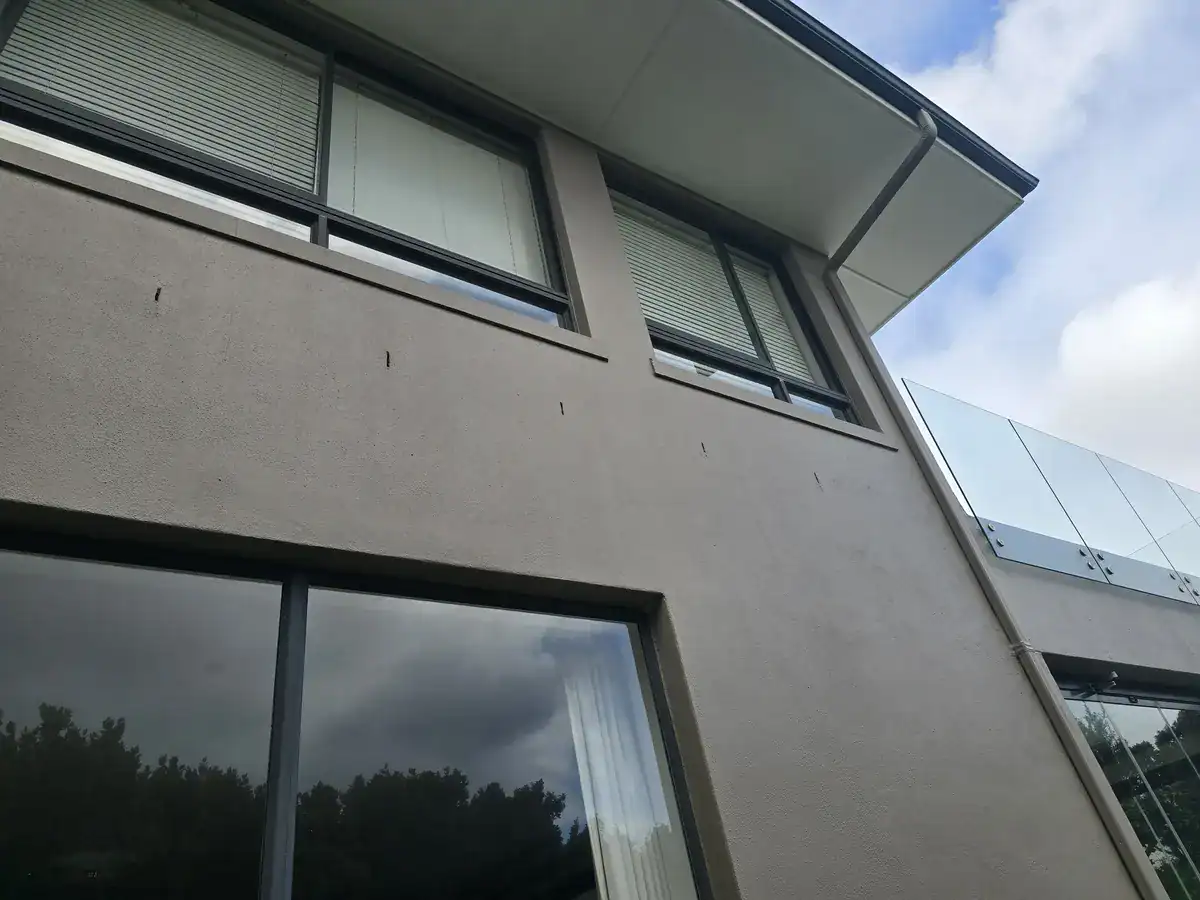
The completed façade had a consistent exterior finish after the cracks, deteriorated seals, mould-affected areas, vulnerable horizontal surfaces, Nutec elements and other defects included in the scope had been prepared.
The value of the project lies not only in the final appearance but also in the documented process behind it: moisture was measured, different crack types were identified, flexible joints were repaired, mould was treated, horizontal masonry was waterproofed and separate coating systems were selected for different substrates.
What This Plattekloof Project Demonstrates
The Baronetcy Estate project demonstrates why premium residential exterior painting should not be reduced to applying another two finish coats over an ageing coating system.
The project involved several separate building-envelope conditions:
- settlement cracking;
- map or spiderweb cracking;
- failed perimeter seals;
- open expansion joints;
- exposed parapets and windowsills;
- continuing moisture risk on some boundary and foundation walls;
- alkali-related coating deterioration;
- mould contamination;
- weathered Nutec fascia boards and soffits.
A durable repaint required these conditions to be identified and prepared before the finishing system was applied.
Baronetcy Estate and the Plattekloof Painting Cluster
Baronetcy Estate is an important part of our Plattekloof residential painting work and represents the premium, elevated-home side of the Northern Suburbs market.
For the broader area, visit Painters Plattekloof.
Plattekloof forms part of our Painters Cape Town Northern Suburbs regional hub.
Related Cape Town-wide services include:
- Exterior Painters Cape Town
- Damp Proofing Cape Town
- Residential Painters Cape Town
- Body Corporate and Estate Painting Cape Town
Preparation-First Painting by a Real Cape Town Contractor
Painters Cape Town has 27 years of painting and surface-preparation experience. Our painters are full-time employed rather than subcontracted and projects are supervised by working foremen.
We are not a lead-generation painting company. Clients deal directly with the contractor responsible for the physical inspection, written diagnostic observations, quotation, preparation scope, employed painting team and completed project.
Correct preparation can support a substantially longer maintenance cycle, but paint cannot prevent future structural movement, renewed seal failure, drainage problems or continuing moisture entering from behind or below masonry.
Request an Exterior Painting Assessment in Plattekloof
If your Plattekloof property shows cracking, weathered coatings, failed sealant, damp-related discolouration, mould staining, peeling fascia paint or vulnerable parapets and windowsills, the surfaces should be inspected before another cosmetic repaint is specified.
Call 082 374 6862 or visit the Painters Cape Town contact page to arrange a physical inspection and written quotation.
Helpful Plattekloof Painting Guides
Planning a Premium Home Repaint
See how large homes, interiors, gardens, paving, glazing, timber, metalwork, roofs and detailed finishes should be protected before painting starts.
Why Paint Peels, Fades and Cracks
Learn how damp, cracks, UV exposure, chalking, roofline defects, poor adhesion and weak preparation can cause exterior coatings to fail.
Damp Walls and Repainting
Learn why continuing ground moisture, failed waterproofing, exposed horizontal surfaces and other damp-related conditions should be assessed before repainting.
Baronetcy Estate Exterior Painting FAQs
When was the Baronetcy Estate exterior project completed?
The documented project was carried out during March 2026, with the project period running from 9 to 24 March.
What moisture readings were recorded?
Protimeter readings across the inspected masonry areas ranged from 9% to 13%.
What defects were found before repainting?
The inspection identified settlement cracks, map or spiderweb cracking, cracks across vertical and horizontal surfaces, failed window and door seals, unsealed expansion joints, powdery coatings, alkali-related discolouration, weathered paint, mould staining on soffits and peeling paint on Nutec fascia boards.
Why were parapets and windowsills waterproofed?
Horizontal masonry receives direct rainfall and can retain water for longer than vertical walls. Cracks or failed waterproofing on parapets, windowsills and boundary-wall tops can provide moisture-entry routes into adjoining masonry.
How were hairline cracks treated?
The written specification included alkali-resistant sealer followed by Dulux Rainshield brushed into hairline cracks. Areas containing multiple spiderweb cracks received broader flexible Rainshield treatment after the relevant preparation.
How were wider plaster cracks repaired?
Wider cracks were opened into suitable V-joints where required, cleaned, repaired using compatible masonry patching material, sanded and then protected with the specified flexible Rainshield system.
Why were expansion joints sealed with flexible material?
Expansion joints are designed to accommodate building movement. The specification therefore used flexible single-pack polyurethane rather than rigid plaster or ordinary filler at the relevant joints.
What caused the alkali-related paint deterioration?
Moisture moving through cementitious plaster can carry alkaline salts toward the painted surface. This can contribute to discolouration, powdering and deterioration of the paint binder.
Can paint permanently stop moisture through boundary walls?
No. Where moisture continues entering boundary masonry from the ground or rear side without an effective damp-proof barrier, a coating on the visible face cannot permanently stop that water movement.
How were mould-affected soffits prepared?
The specification included fungal treatment on affected surfaces before the coating system was applied. Biological contamination should be treated and cleaned rather than simply painted over.
How were the Nutec fascia boards prepared?
Loose and flaking paint was removed, surfaces were sanded and feathered, bare areas received the specified primer and the fascia boards and soffits were finished with Dulux Roofguard.
What coating products were specified?
The documented specification included Dulux Wallguard, Dulux Weatherguard Fine Textured, Dulux Rainshield, Dulux Dampshield, Dulux Roofguard and flexible single-pack polyurethane sealant for relevant substrates and defects.
Do you use subcontracted painting teams?
No. Painters Cape Town uses full-time employed painters with working-foreman supervision.
How do I request a painting quote in Baronetcy Estate or Plattekloof?
Call 082 374 6862 or visit the Painters Cape Town contact page to arrange a physical inspection and written quotation.

Copyright 2026 , all rights reserved.