Why Paint Peels, Bubbles or Chalks on Stellenbosch Homes
Paint failure is usually a symptom. The important question is what caused the coating to fail.
Using documented 2026 projects in De Zalze, Nuutgevonden, Paradyskloof and Rozendal, we explain how moisture, cracks, failed sealants, chalking, hollow plaster, alkali attack and deteriorated waterproofing can lead to repeated paint failure.
Common Paint-Failure Symptoms
- Peeling or flaking exterior paint
- Paint bubbles or blisters
- Powdery or chalky coatings
- Blotchy discolouration
- Repeated cracking
- Mould or biological growth
- Loose or hollow plaster
- Failure around windows and doors
- Repeated boundary-wall deterioration
- Chalking or peeling roof coatings
Repainting the symptom without identifying the cause can result in the same failure returning.
Paint-Failure Diagnosis Based on Real Stellenbosch Projects
Our approach starts with the substrate and the likely cause of failure rather than assuming every peeling, bubbling or discoloured wall simply needs another coat of paint.
27 Years' Experience
Long-term experience with exterior, interior, damp-related and remedial painting work.
Four Stellenbosch Case Studies
Documented projects in De Zalze, Nuutgevonden, Paradyskloof and Rozendal provide real local diagnostic evidence.
Moisture Readings
Protimeter readings are used together with physical inspection to help identify moisture-affected substrates.
Preparation First
Failed paint, cracks, unstable plaster, damp areas, sealants and waterproofing defects are assessed before topcoats are specified.
Supplier Specifications
Where appropriate, remedial preparation and coating systems can follow written manufacturer or supplier specifications.
Full-Time Employed Painters
Projects are completed by our own employed painting teams under working-foreman supervision.
Written Diagnostic Observations
Our quotations can record moisture, cracks, chalking, failed seals, waterproofing defects and substrate deterioration.
Not a Lead-Generation Company
You deal directly with the painting contractor responsible for inspection, specification, preparation and completed work.
Correct diagnosis comes before the decorative coating.
Why Paint Fails on Stellenbosch Homes: The Visible Symptom Is Not Always the Cause
When paint begins peeling, bubbling, chalking or changing colour, it is tempting to treat the damaged coating as the problem.
Often it is only the symptom.
The underlying cause may be moisture entering through cracks, failed window sealant, deteriorated waterproofing, an unstable old coating, high alkalinity in damp masonry, hollow plaster, mould, roof deterioration or ongoing moisture movement through a wall.
Painting over the visible symptom without dealing with the underlying cause can allow the same failure to return.
This guide uses documented Stellenbosch projects in De Zalze Estate, Nuutgevonden Estate, Paradyskloof and Rozendal Farm to explain how different paint failures can develop and why the remedy must suit the actual cause.
For our main local painting service, see Painters Stellenbosch.
Quick Answer: What Causes Paint to Peel, Bubble or Chalk?
Common causes include moisture entering through cracks or failed seals, damp moving through masonry, degraded or chalky old coatings, poor adhesion, high alkalinity in cementitious substrates, failed waterproofing, mould, unstable plaster and the use of an unsuitable coating system.
The correct remedy depends on the cause.
A wall with unstable chalking paint may need a bonding or stabilising primer. A damp wall may require moisture-related preparation. A cracked parapet may need waterproofing. Hollow plaster must be removed and rebuilt. Failed window sealant must be replaced rather than painted over.
Paint-Failure Symptoms and What They Can Mean
| Visible symptom | Possible cause | What should be checked |
|---|---|---|
| Peeling or flaking paint | Poor adhesion, moisture, unstable previous coating or inadequate preparation | Substrate condition, damp, old coating adhesion and primer requirement |
| Bubbling or blistering | Moisture behind the coating or loss of adhesion | Cracks, waterproofing, sealants and moisture readings |
| Chalking or powdery paint | Weathered or degraded coating | Whether the surface is sound enough for direct repainting or requires stabilisation |
| Blotchy discolouration | Moisture movement, alkalinity or previous coating deterioration | Moisture source, cracks, horizontal surfaces and substrate condition |
| Recurring cracks | Movement, failed previous repairs or substrate deterioration | Crack width, location, movement and surrounding plaster |
| Hollow plaster | Plaster has lost its bond to the substrate | Extent of delamination before any painting is done |
| Failure around windows | Failed perimeter sealant or cracking around openings | Window and door seals, reveals and adjacent cracks |
Moisture Readings Help With Diagnosis — But They Are Not the Diagnosis by Themselves
A moisture meter is useful because it can help identify areas where the substrate contains more moisture than surrounding surfaces.
However, the number should be considered together with what can physically be seen on the building.
A high reading near a damaged windowsill means something different from a high reading low down on a retaining or boundary wall.
That is why our inspection process considers moisture readings together with cracks, joints, sealants, plaster condition, horizontal surfaces, exterior exposure and the existing coating system.
1. Why Paint Peels or Flakes
Peeling occurs when the paint film loses adhesion to the layer beneath it.
That layer may be the old paint, primer, plaster or another previous coating.
Possible reasons include moisture, chalking, poor surface preparation, contamination, a missing or unsuitable primer, or an old coating that has already lost adhesion.
Loose paint must therefore be removed back to a sound edge before repainting.
Applying another coat over loose paint only transfers the new coating onto an unstable foundation.
2. Why Paint Bubbles or Blisters
Bubbling or blistering can occur when adhesion fails and the paint film lifts away from the substrate.
Moisture behind the coating is an important possibility, particularly where the wall also has cracks, failed sealants or vulnerable horizontal surfaces.
The correct investigation is therefore not simply, “Which paint should we use?”
It is:
- Where could water be entering?
- Is the substrate damp?
- Are the window or door seals failing?
- Are parapets or windowsills waterproofed?
- Are there cracks that allow water penetration?
- Is the old coating still firmly bonded?
3. Why Exterior Paint Becomes Chalky or Powdery
Chalking describes a powdery surface that develops as a coating weathers and its binder deteriorates.
A severely chalky surface is not a suitable foundation for new topcoats without proper preparation because the new paint may simply adhere to unstable powder rather than a sound substrate.
Cleaning removes loose contamination and chalking. Where required by the coating specification, a bonding or stabilising primer can then be used to create a sound surface for subsequent coatings.
This was particularly relevant on the roof surfaces assessed at Paradyskloof and Rozendal.
4. Moisture, Alkalinity and Paint Discolouration
Cementitious substrates such as plaster and masonry are alkaline.
Where moisture moves through the substrate, alkaline salts can contribute to coating deterioration and visible colour changes.
This is often described as alkali attack or alkali burn.
The visible result may include blotchy colour, powdery areas or general deterioration of the paint film.
Simply repainting the discoloured area does not deal with the water entry or moisture movement that contributed to the problem.
5. Why Failed Window and Door Sealant Matters
Paint failure around windows is frequently blamed on the paint itself.
However, cracked or deteriorated perimeter sealant can allow rainwater to enter around the frame or reveal.
This can affect the surrounding plaster and, in some cases, contribute to symptoms on the inside of the building.
Failed sealant should therefore be removed and replaced with an appropriate flexible sealant where required before the final coating system is applied.
6. Cracks Can Become Water-Entry Points
Not every crack means the same thing.
Fine hairline cracking, map cracking, wider plaster cracks and movement joints all need to be assessed differently.
Cracks on parapets, windowsills and other exposed surfaces are particularly important because they can allow rainwater into the masonry.
For more detail on preparing walls before repainting, see our Wall Preparation Stellenbosch guide.
7. Hollow Plaster Is Not a Paint Problem
Hollow plaster occurs when plaster loses its bond to the underlying masonry.
Painting it does not restore that bond.
The loose or hollow section should be removed until firmly bonded plaster is reached. The exposed substrate can then be cleaned, prepared, bonded and replastered before the decorative coating system is applied.
This is an important distinction because a beautifully painted surface can still fail if the plaster behind it is detaching from the wall.
8. Horizontal Surfaces Need Waterproofing Attention
Parapet tops, windowsills, copings and similar horizontal surfaces receive direct rainfall and remain wet for longer than most vertical wall surfaces.
Cracks or failed protection on these areas can allow moisture into the wall below.
The resulting paint failure may then appear some distance away from the actual water-entry point.
This is why horizontal waterproofing forms part of many exterior preparation specifications rather than being treated as an unrelated extra.
9. Boundary Walls Can Behave Differently From the Main House
Boundary and garden walls may be exposed to moisture from the ground or from backfilled areas where no effective damp-proof barrier is present.
In these situations, moisture can continue moving through the masonry even after the visible surface has been repaired and repainted.
No decorative coating can permanently eliminate an ongoing structural source of rising or lateral moisture.
For this reason, breathable coating systems and realistic warranty exclusions may be appropriate for boundary walls.
See our Damp Proofing and Waterproofing service for more information.
Real Stellenbosch Paint-Failure Evidence
| Project | Moisture readings | Examples of recorded defects |
|---|---|---|
| De Zalze | Exterior 16.3–21.5%; interior 14.7–27.9% | Damp, bubbling, peeling, chalking, failed seals, cracks and moisture-related discolouration |
| Nuutgevonden | 8.9–14.2% | Cracks, loose copings, failed seals, mould, unprotected horizontal surfaces and expansion joints |
| Paradyskloof | 10.4–15.6% | Map cracking, hollow plaster, alkali-related discolouration, failed sealants, mould and chalky roof tiles |
| Rozendal Farm | 11.3–22.8% | Chalky and peeling roof paint, rust, mould and moisture-related coating deterioration |
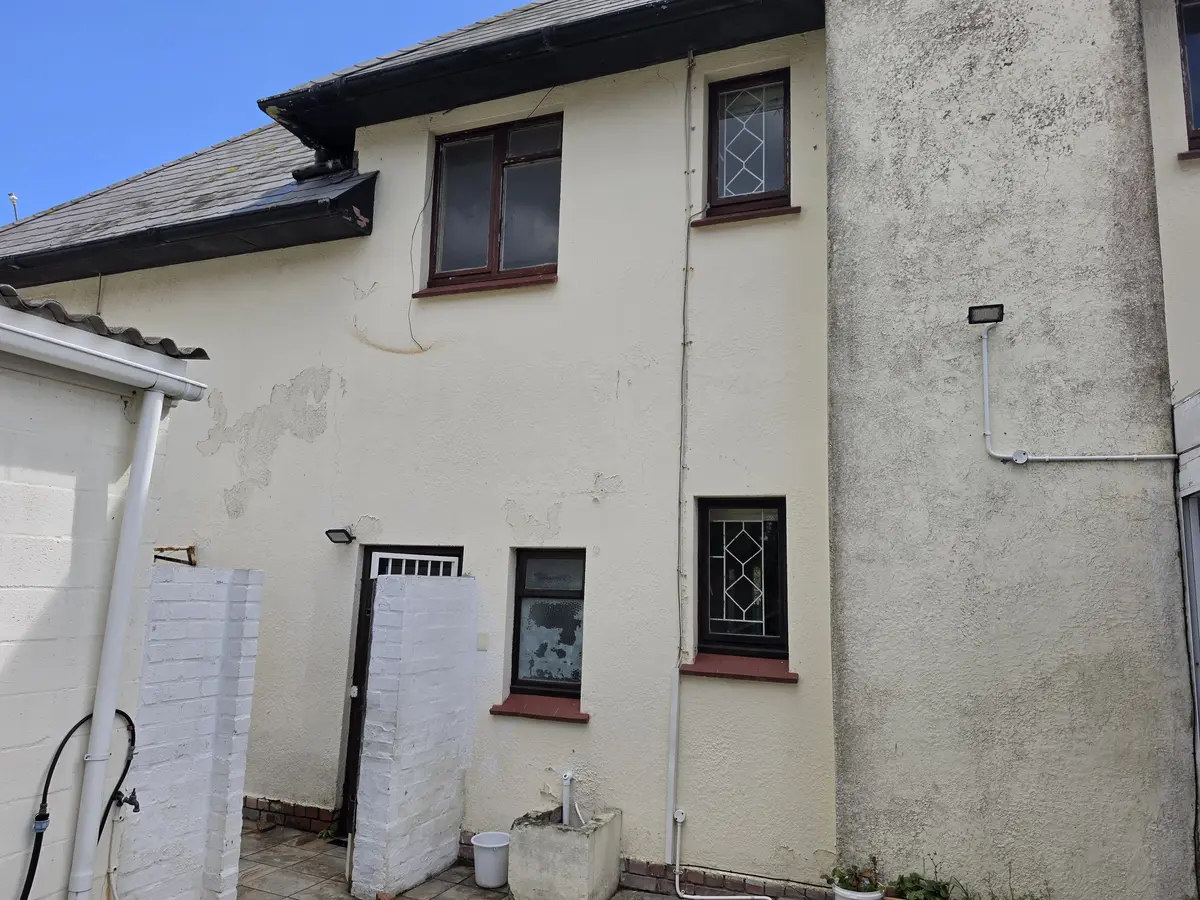
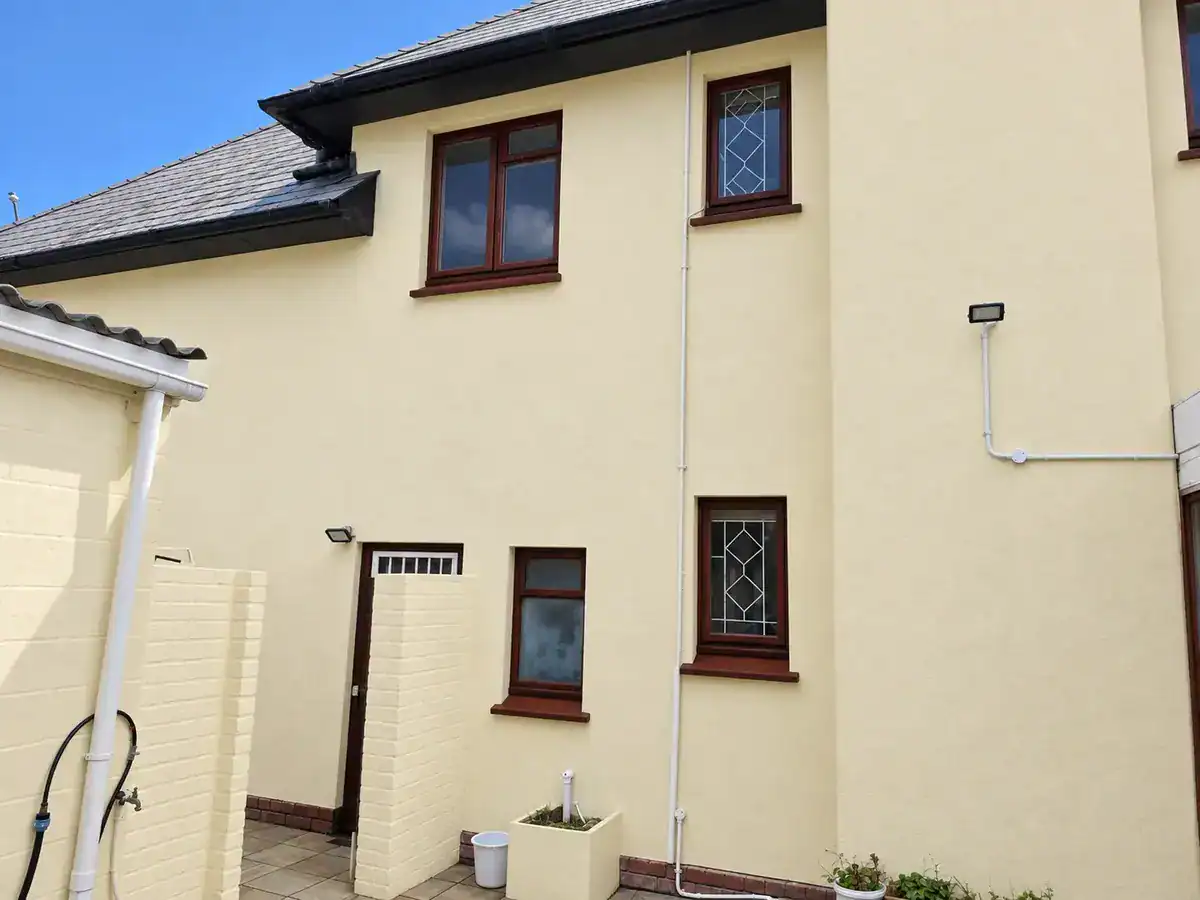
De Zalze Case Study — Coating Failure, Mould and Moisture Entry
The De Zalze inspection identified damp walls, cracking, failed seals, powdery surfaces and moisture-related coating deterioration.
The project demonstrated why visible exterior failure should be assessed together with the surrounding building envelope rather than treated as a simple colour-refresh exercise.
Nuutgevonden Case Study — Damp Discolouration, Cracks and Water Entry
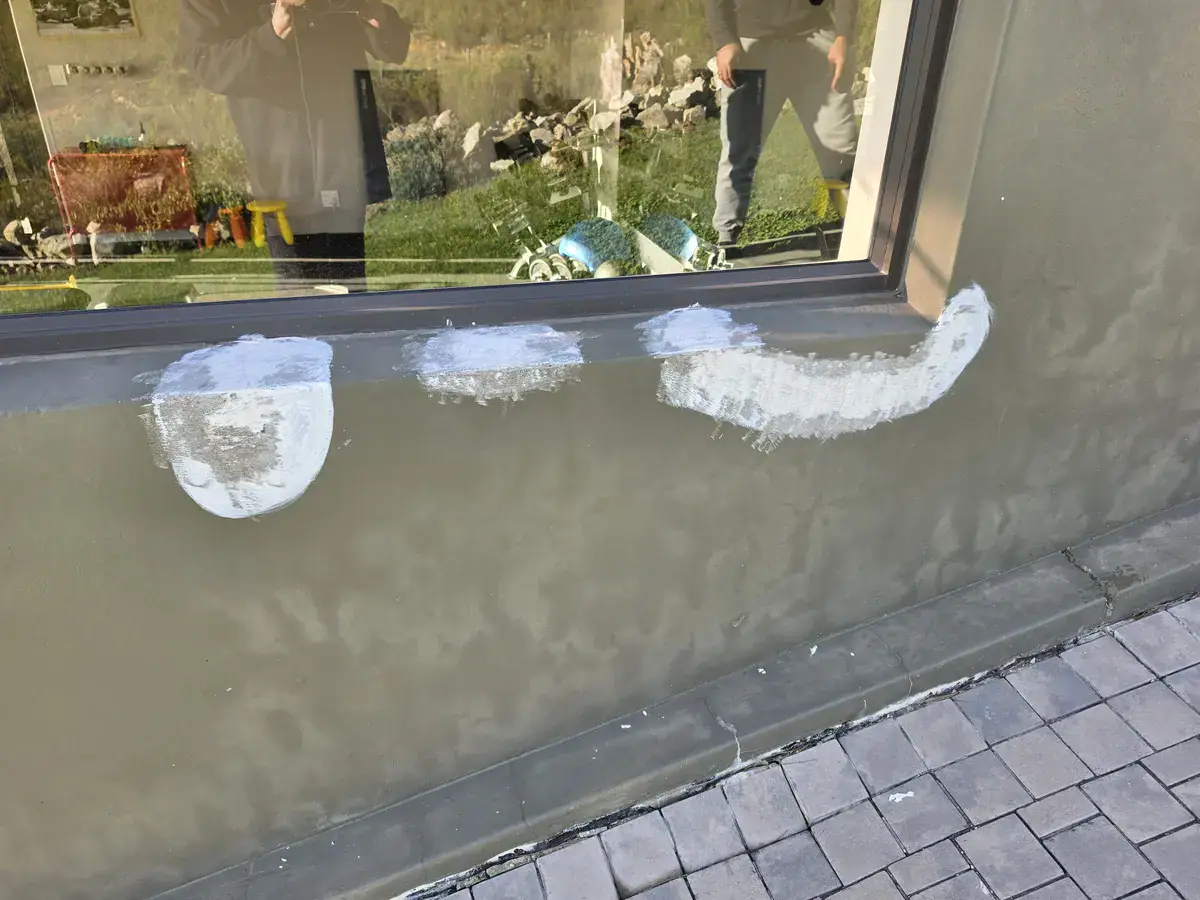
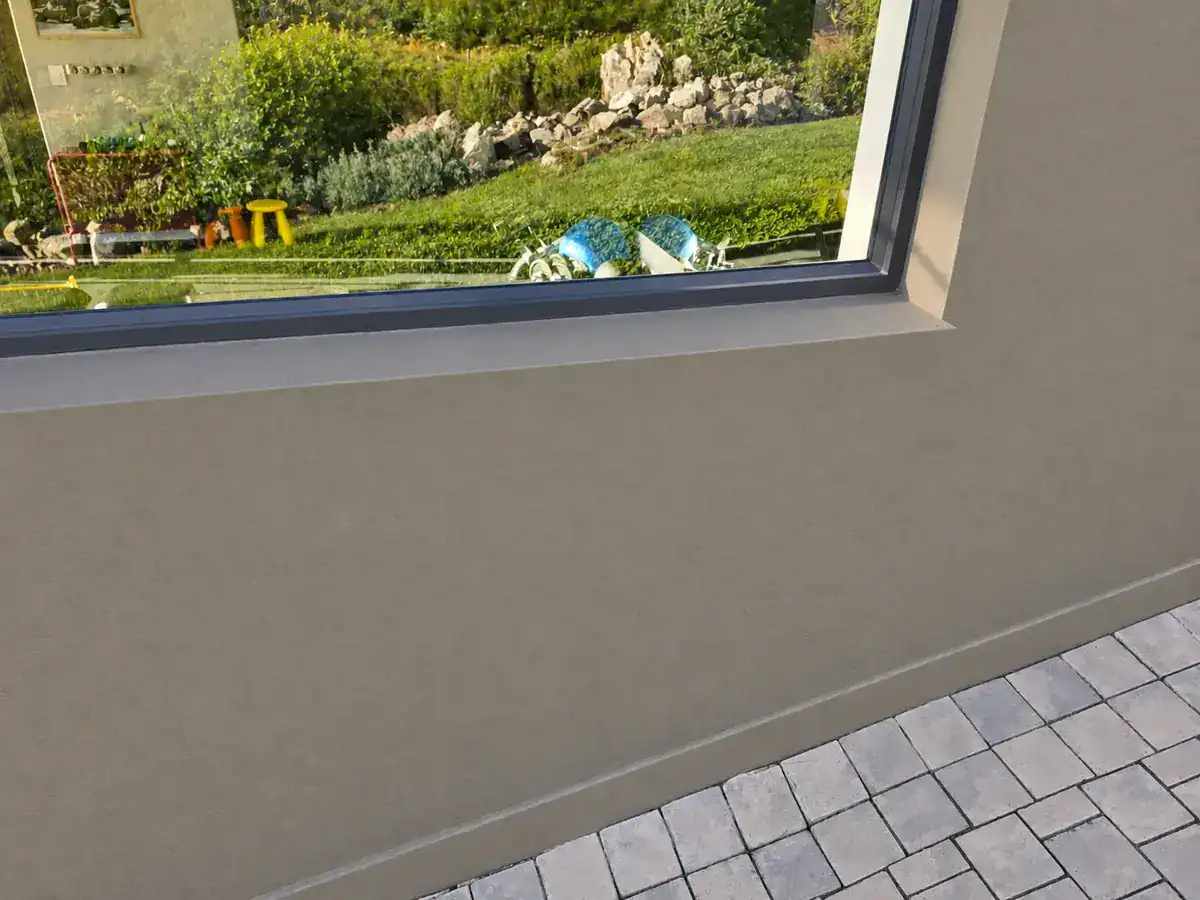
Nuutgevonden showed how several small defects can combine: cracking, failed seals, loose coping areas and unwaterproofed horizontal surfaces can all create routes for water entry.
The appropriate remedy was therefore broader than covering the discolouration with fresh paint.
Paradyskloof Case Study — Hollow Plaster, Cracking and Moisture
The Paradyskloof project is particularly useful because it shows that not every apparent “paint problem” is actually a paint problem.
Inspection identified map cracking, larger cracks, hollow plaster, failing sealants, moisture-related discolouration, ageing waterproofing and deteriorating roof coatings.
Hollow plaster had to be removed back to firmly bonded material before replastering and painting could proceed.
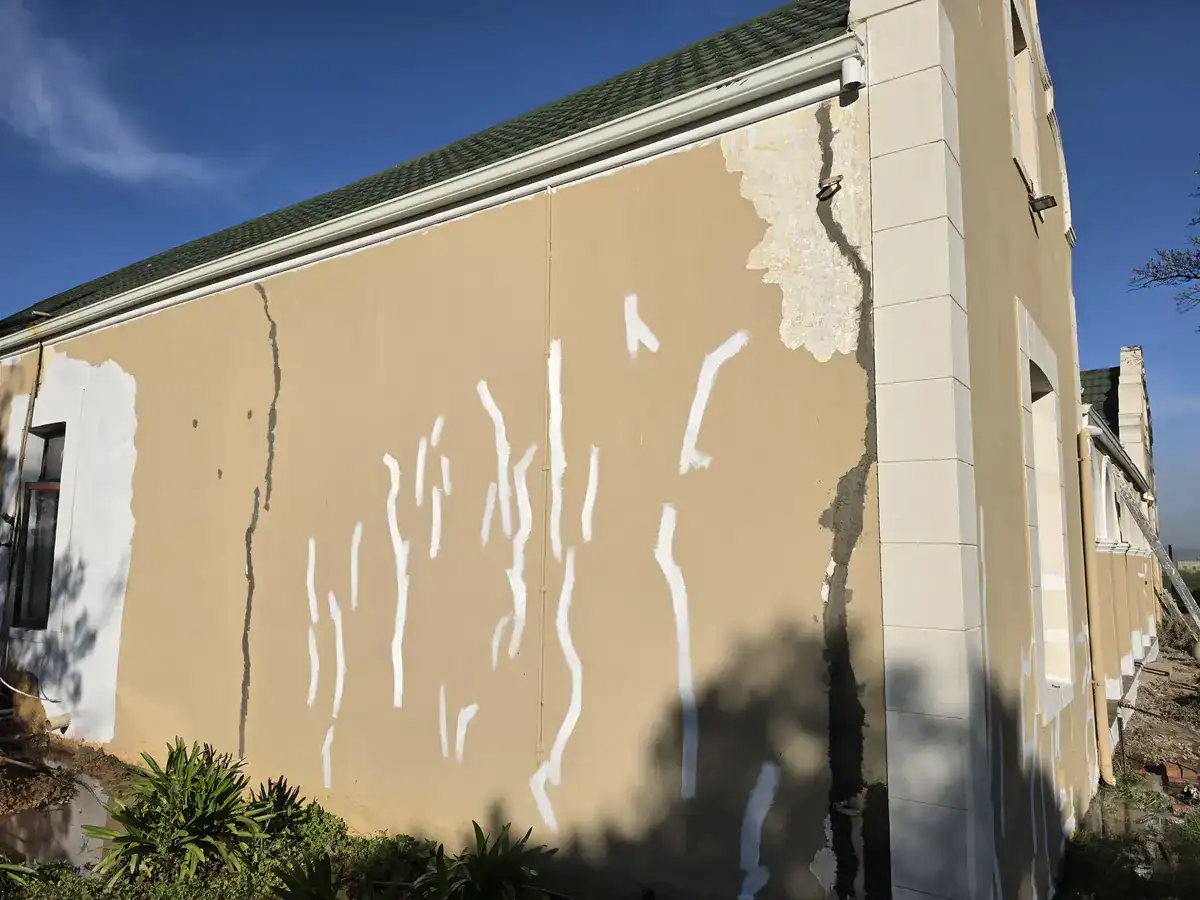
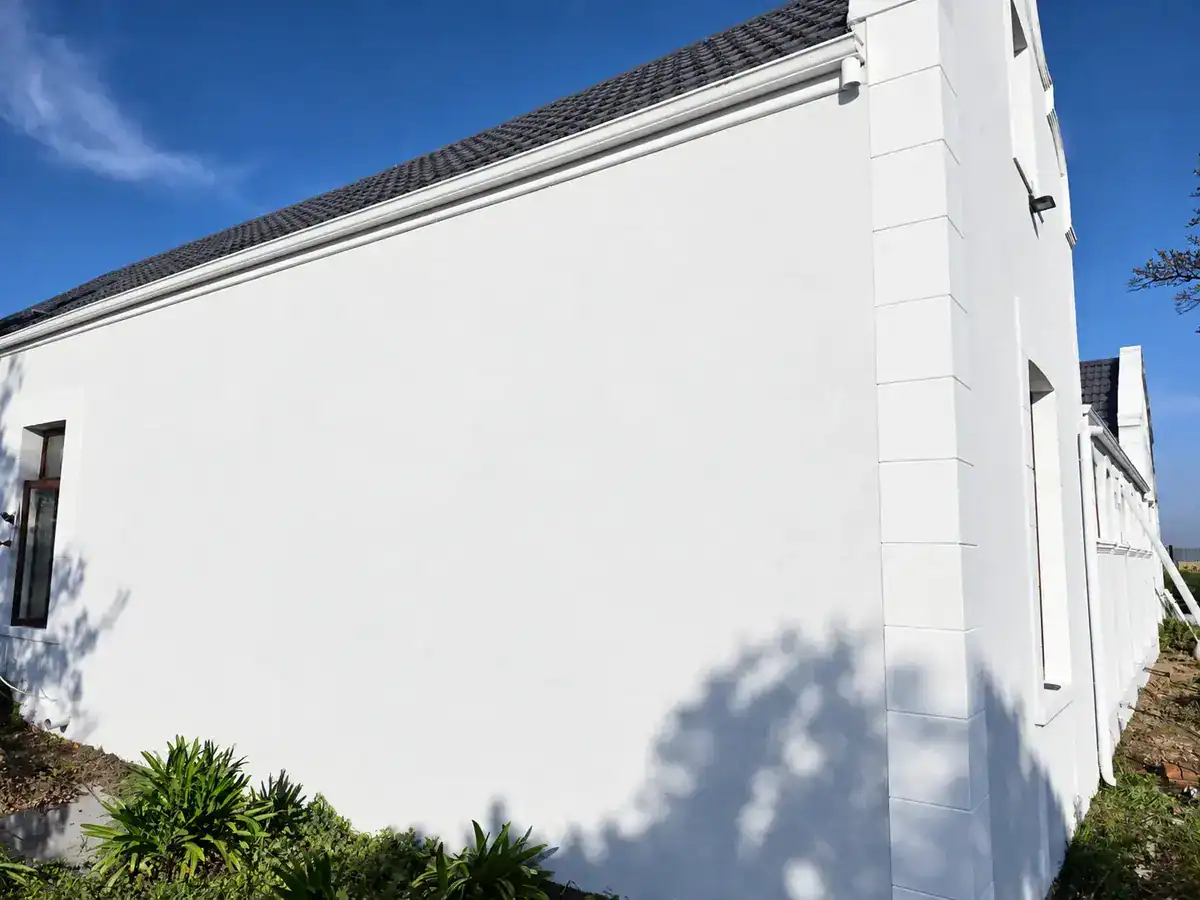
The project also included a tiled roof with chalking and biological growth. See our dedicated Roof Painting Stellenbosch guide for roof preparation, primers and coating systems.
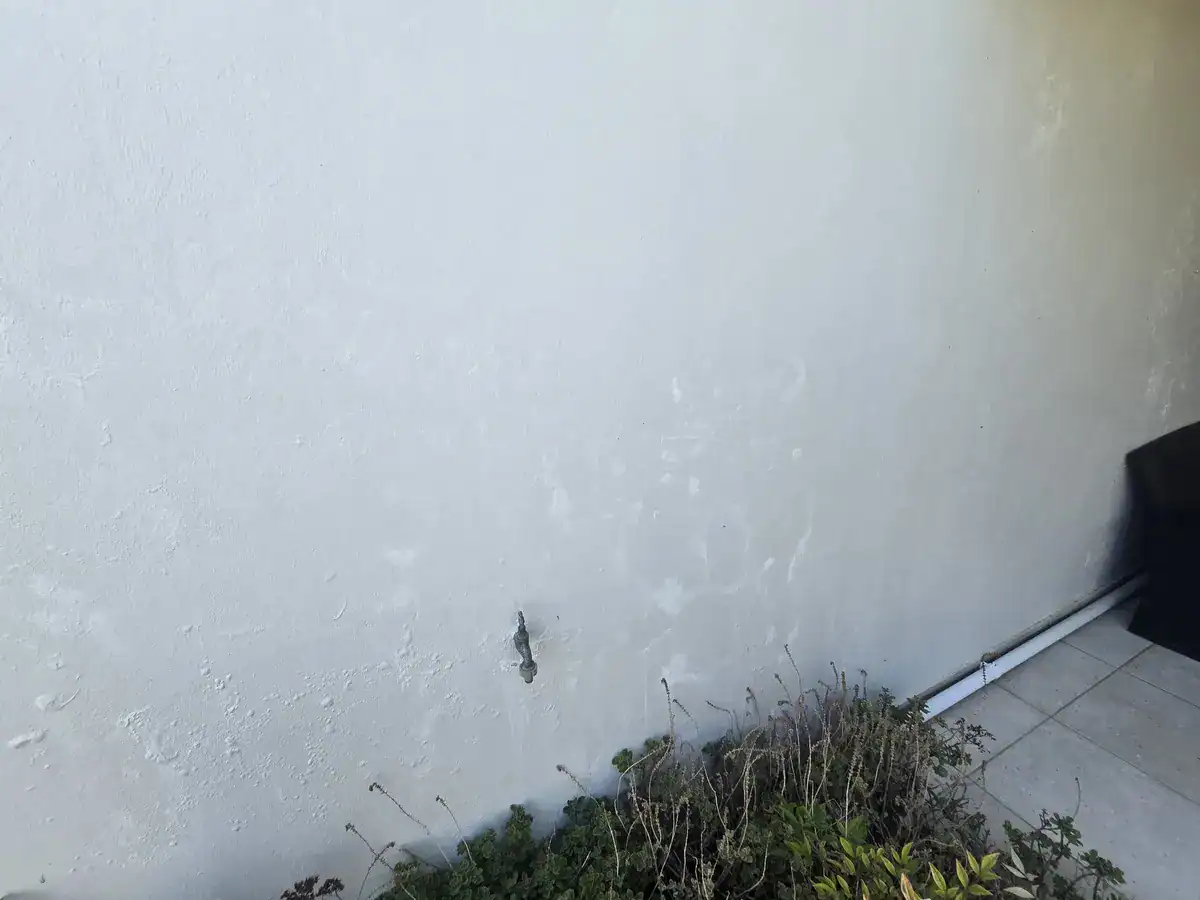
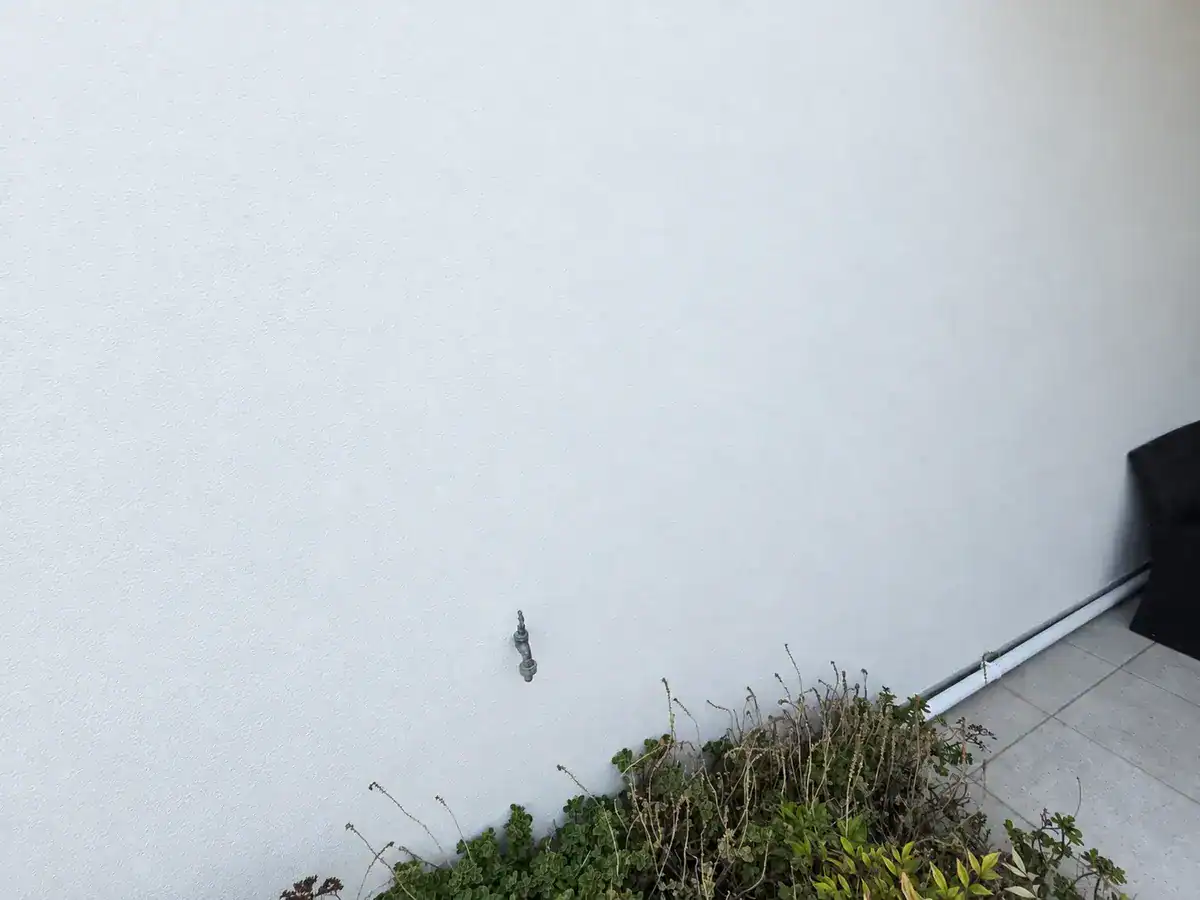
Rozendal Farm Case Study — Bubbling, Chalking and Roof-Coating Failure
Rozendal Farm involved several exterior substrates, including plastered walls, painted timber and corrugated roof sheets.
The inspection recorded relatively high moisture readings in some areas as well as fading, chalking, surface rust, mould and peeling roof coatings.
This illustrates why a single universal preparation method is rarely appropriate across an entire property.
The Correct Remedy Depends on the Failure
There is no single product that solves every case of peeling, bubbling, chalking or damp-related paint failure.
Depending on the diagnosis, the specification may include:
- removing loose and flaking coatings;
- pressure washing or controlled surface cleaning;
- fungal treatment;
- stabilising chalky or powdery substrates;
- repairing cracks;
- removing and replacing hollow plaster;
- replacing deteriorated window or door sealant;
- resealing expansion joints;
- waterproofing parapets, windowsills and wall copings;
- using moisture-tolerant preparation systems on identified damp areas;
- rust treatment and appropriate primers on metal roofs;
- and selecting a final coating compatible with the substrate and exposure.
Why Repainting Too Soon Can Waste Money
Painting can temporarily hide some symptoms.
It cannot permanently repair loose plaster, stop an active water-entry point, restore failed sealant or remove ongoing ground moisture from a boundary wall.
If these defects remain, the new coating can fail again even when a high-quality paint was used.
This is why preparation can have a greater influence on long-term performance than simply choosing a more expensive finishing paint.
The same principle also affects pricing. Our House Painting Cost Stellenbosch guide explains why two similarly sized homes can require very different preparation scopes and therefore very different painting budgets.
Paint Failure Diagnosis vs Normal Wall Preparation
Not every repaint involves failed paint. A sound wall may only need cleaning, minor repairs, sanding and appropriate priming before repainting.
Where paint is already peeling, bubbling, blistering or chalking, however, the cause should first be investigated. Moisture, unstable coatings, cracked plaster, failed sealants, vulnerable horizontal surfaces and incorrect previous preparation can all contribute to repeated failure.
This guide therefore focuses on why the coating failed and how the likely cause should be identified before remedial work begins.
For normal preparation before repainting, see our Wall Preparation Stellenbosch guide.
If the property requires a complete interior, exterior or mixed-surface repaint, visit our Painters Stellenbosch page.
Diagnosis comes first. Preparation follows from the diagnosis.
Paint Problems in Stellenbosch Estates
Estate homes can have the same technical coating failures as any other property, but the repairs and repainting may also need to comply with access procedures, working-hour restrictions, approved exterior colours and other HOA requirements.
Our Painting Homes in Stellenbosch Estates guide uses De Zalze and Nuutgevonden as real examples of how technical preparation and estate compliance work together.
How We Assess a Paint-Failure Problem
A useful paint-failure assessment should start with the building rather than the paint tin.
We look at the visible symptom, substrate, surrounding cracks, moisture, windows and doors, horizontal surfaces, existing sealants, waterproofing, previous coatings and areas exposed to weather.
Moisture readings may be taken where appropriate.
The objective is to identify the most likely cause and prepare a remedial scope that addresses the problem before the final decorative coating is applied.
When Should You Investigate Paint Failure?
It is worth investigating when peeling, bubbling or discolouration keeps returning; when paint fails soon after repainting; when damage appears around windows or parapets; when boundary walls repeatedly deteriorate; or when cracks and damp symptoms occur together.
Early diagnosis can prevent a small maintenance problem from becoming a much larger preparation project.
Related Stellenbosch Painting Resources
- Painters Stellenbosch
- Wall Preparation Stellenbosch
- House Painting Cost Stellenbosch
- Painting Homes in Stellenbosch Estates
- Roof Painting Stellenbosch
- Exterior Painters Cape Town
- Damp Proofing and Waterproofing
Need Help Diagnosing Peeling, Bubbling or Chalking Paint?
If paint is repeatedly failing, the most useful next step is usually an inspection rather than another quick repaint.
We can assess the visible coating failure, surrounding surfaces and likely moisture-entry points before preparing a written scope for the required remedial work and repainting.
Helpful Stellenbosch Painting Guides
Wall Preparation Stellenbosch
Learn how cracks, damaged plaster, damp, loose coatings, chalking and primers should be dealt with before repainting.
House Painting Cost Stellenbosch
See why cracks, moisture, sealants, waterproofing and preparation can change the cost of repainting similar-sized homes.
Painting Stellenbosch Estate Homes
Estate access, colour approvals, site requirements and technical preparation using De Zalze and Nuutgevonden evidence.
Roof Painting Stellenbosch
Understand roof preparation, chalking, biological growth, primers and coating systems for Stellenbosch roofs.
Paint Peeling, Bubbling and Chalking FAQs
Why is paint peeling off my exterior wall?
Peeling usually means the paint has lost adhesion to the layer beneath it. Possible causes include moisture, chalking, loose previous coatings, inadequate preparation, contamination or an unsuitable primer or coating system.
Why does wall paint bubble?
Bubbling or blistering can occur when adhesion fails and the coating lifts away from the substrate. Moisture behind the coating is one possible cause, so cracks, sealants, waterproofing and substrate moisture should be investigated.
What does chalky paint mean?
Chalking is a powdery residue created as an old coating weathers and degrades. Severe chalking should be removed or stabilised as specified before new topcoats are applied.
Can damp cause paint to peel or bubble?
Yes. Moisture moving through or behind a coating can contribute to loss of adhesion, bubbling, peeling, staining and alkali-related deterioration.
Why does paint keep failing around windows?
Deteriorated sealant, cracks around window reveals or water entering around the frame can affect the surrounding wall. The water-entry point should be repaired before repainting the damaged coating.
Can I paint over hollow plaster?
No reliable paint system can restore plaster that has lost its bond to the underlying wall. Loose or hollow plaster should first be removed and rebuilt on a sound substrate.
Why do boundary walls keep peeling?
Boundary walls can be affected by moisture moving from the ground or backfilled side of the wall where there is no effective damp-proof barrier. Paint can improve appearance and protection but cannot permanently stop an ongoing structural source of moisture.
What is alkali attack on paint?
Alkali attack occurs when high alkalinity in cementitious substrates contributes to deterioration of the paint binder and colour. Moisture movement can make the problem more visible through blotchy discolouration or coating degradation.
Should peeling paint simply be scraped and repainted?
Loose paint should be removed, but the reason it failed should also be investigated. If moisture, cracking, failed sealant or unstable plaster caused the failure, those defects should be dealt with before repainting.
Do you inspect paint failure in Stellenbosch?
Yes. Painters Cape Town undertakes painting inspections and quotations in Stellenbosch and can assess visible coating failure, substrate condition, moisture-related symptoms, cracks, seals and waterproofing requirements before preparing a remedial painting scope.

Copyright 2026 , all rights reserved.