Documented Rondebosch Painting Project
Rondebosch Oval Estate Exterior Painting Case Study
A genuine 2026 Rondebosch project where a relatively new premium home already showed widespread steel-coating failure together with moisture-related masonry defects, cracking, failed seals and unprotected horizontal surfaces.
Recorded Protimeter readings ranged from 13.8% to 16.9%. The project required extensive steel preparation, rust treatment, a full HydroEtch primer coat, waterproofing, crack and joint repairs, exterior masonry painting and work inside the property's gym.
Project Evidence
- Private double-storey Rondebosch Oval Estate home.
- Documented 23 March–9 April 2026 project.
- Protimeter readings: 13.8%–16.9%.
- Exterior walls to main building, studio and gym.
- Steel pergolas, posts, rafters and related steelwork.
- Widespread peeling and exposed steel.
- Rust treatment where required.
- Full HydroEtch primer coat to prepared steel.
- Exterior timber-rafter preparation.
- Cracks and failed perimeter seals.
- Expansion-joint sealing.
- Windowsill and horizontal-surface waterproofing.
- Damp and alkali-related preparation.
- Gym interior-wall painting.
- Working foreman: Patrick.
Real Rondebosch Oval Estate Project Evidence
13.8%–16.9% Readings
Measurements were interpreted together with cracks, failed seals, powdering, discolouration and vulnerable horizontal masonry rather than treated as a stand-alone moisture diagnosis.
Major Steel-Coating Failure
Extensive exterior steel showed peeling coating and exposed substrate despite the property being comparatively new.
Full Steel Primer System
After unstable coating and corrosion were prepared, the steel received a full HydroEtch primer coat rather than relying only on small spot repairs.
Waterproofing & Flexible Repairs
Cracks, windowsills, horizontal surfaces, failed window and door sealing and movement joints formed part of the documented preparation.
Multiple Substrates
Steel, plaster, timber and the gym interior required different preparation and finishing systems within one property.
Experienced Employed Team
The documented project was supervised by working foreman Patrick and used the company's employed, Paint Academy-trained painting team.
Exterior and Steel Restoration at Rondebosch Oval Estate
This documented project was completed at a private double-storey home in Rondebosch Oval Estate between 23 March and 9 April 2026.
The property was comparatively new, yet several coating systems were already showing defects that required much more than routine repainting.
The most visually obvious failure affected the substantial exterior steel structure, but the written inspection also recorded moisture-related masonry deterioration, cracks, failed flexible sealing, powdery surfaces and horizontal areas that had not been adequately waterproofed.
Protimeter readings on assessed plastered surfaces ranged from 13.8% to 16.9%.
The Project Was Much More Than Steel Pergolas
The documented scope included:
- exterior walls to the main building;
- studio exterior walls;
- gym exterior walls;
- steel pergolas, posts, rafters and associated steel structures;
- exterior timber rafters;
- gym interior walls;
- pressure cleaning;
- horizontal-surface waterproofing;
- damp-related preparation;
- cracks and damaged plaster;
- flexible joints and perimeter sealing; and
- substrate-specific primers and finishing systems.
That broader scope is important because the steel failure and wall deterioration had completely different causes and could not responsibly be treated as one generic “paint problem”.
The Before Condition — Widespread Failure on Exterior Steel
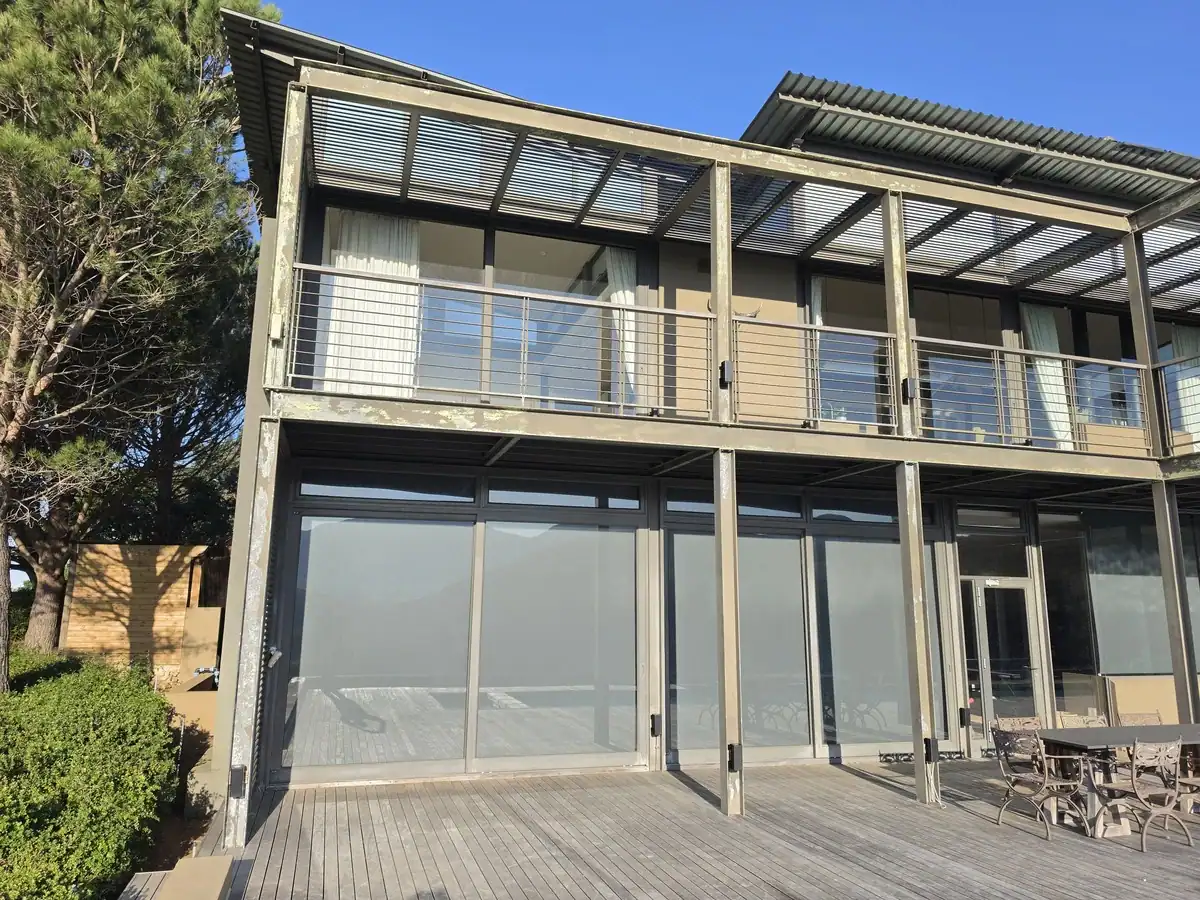
Why a Relatively New Home Can Still Have Serious Steel-Coating Failure
Age alone does not determine whether a paint system is sound.
If steel was insufficiently cleaned, keyed or primed before the original finishing coats were applied, the coating may never have developed reliable adhesion to the underlying metal.
Once that weak bond starts releasing, applying another attractive finishing coat over it simply attaches the new coating to an unstable layer.
The correct approach therefore had to begin below the finish coat.
The Steel Preparation Went Further Than Spot Priming
Loose and flaking coating was removed and hard edges were feather-sanded to achieve a stable transition between remaining sound coating and prepared metal.
Rusted areas received the documented corrosion preparation, including Duram NS1 Rust Converter where required.
The important decision was then to apply a full coat of HydroEtch rust primer across the prepared steelwork.
This produced a consistent primed base rather than attempting to hide widespread adhesion problems with isolated patches of primer.
The Steel Finishing System
After preparation and full priming, the documented specification called for two coats of Dulux Pearlglo Water Based to the relevant steelwork.
The significance is not simply the brand of finish.
The important part of the system was that the defective old coating and rust risk were addressed first.
The Walls Had Their Own, Separate Failure Mechanisms
The steel defects did not explain the masonry problems.
The wall inspection recorded:
- 13.8%–16.9% Protimeter readings;
- cracks on vertical and horizontal masonry;
- failed window and door sealing;
- moisture-related discolouration;
- alkali-related deterioration;
- powdery surfaces;
- unsealed expansion joints; and
- horizontal surfaces requiring waterproof protection.
Those defects required a masonry preparation system separate from the steel specification.
Why Moisture Readings Were Interpreted with the Building Defects
A moisture meter gives information about the tested area. It does not by itself explain where the moisture entered.
At Rondebosch Oval Estate, the readings were considered together with cracks, failed perimeter seals, movement joints and exposed horizontal masonry.
This helped determine where damp-related preparation and waterproof protection were relevant.
Powdery and Alkali-Affected Surfaces
The inspection recorded powdery surfaces and discolouration associated with moisture and alkaline conditions in the masonry.
Where required, Dulux Bonding Liquid formed part of the preparation to penetrate and stabilise suitable powdery areas before the later coating stages.
This is another example of why finishing paint should not be expected to stabilise a defective surface by itself.
Cleaning and Biological Treatment
Exterior surfaces required cleaning before repairs and priming.
High-pressure washing was specified where appropriate, with cleaning by hand in areas where pressure washing was unsuitable.
Biological contamination was treated where present, including treatment inside affected cracking where necessary.
Horizontal Surfaces and Water Entry
Windowsills, parapets and other upward-facing masonry receive rain directly.
A small crack on a horizontal surface can allow considerably more water into the wall than a similar defect on a sheltered vertical façade.
Applicable prepared horizontal areas therefore received the specified Dulux Rainshield waterproofing system.
Hairline, Wider and Map Cracking
The quote differentiated between several crack conditions instead of specifying one filler for everything.
Hairline Cracks
Fine cracks received alkali-resistant sealing and flexible Rainshield preparation where applicable.
Wider Plaster Cracks
Cracks in the documented wider range were opened to a suitable repair profile, cleaned, patched with compatible masonry repair material and protected with the specified flexible waterproof system.
Map Cracking
Areas containing groups of spider-web or map cracking were treated over a broader surface rather than attempting to conceal each crack under ordinary finishing paint.
Windows, Doors, Expansion Joints and Exterior Penetrations
Failed sealing around applicable windows and doors was inspected and deteriorated material removed where necessary.
Flexible polyurethane formed part of the documented resealing system.
Expansion joints were also treated as movement details rather than ordinary plaster cracks.
Exterior wall and light fittings were considered because unsealed penetrations can allow rainwater behind a coating system.
Damp-Related Preparation
Dulux Dampshield formed part of the recorded system on applicable damp-affected cementitious areas.
As always, this should not be interpreted as paint being able to repair an active leak or eliminate a continuing external moisture source.
Exterior Timber Rafters
The property also included exterior timber rafters.
Loose or failing coating was removed, sound areas sanded and feathered, and the timber prepared with the documented compatible undercoat and finishing system.
This timber work was separate from both the steel and plaster preparation.
The Gym Interior Was Included in the Project
The original quotation also included the gym interior walls.
Wall imperfections, cracks and damaged plaster were inspected and repaired where applicable.
Damp-affected areas received the specified preparation before the gym walls were finished in Dulux 100 Low Sheen, selected as a washable low-sheen interior finish.
This detail had largely disappeared from the older Rondebosch web content but forms part of the genuine completed scope.
Main Exterior Wall Finish
After preparation, relevant exterior plastered walls received the documented Dulux Weatherguard Ultra Smooth finishing system.
Again, the topcoat was the final stage after cleaning, crack preparation, moisture treatment, waterproofing and sealing — not the attempted solution to those defects.
Completed Rondebosch Oval Estate Steelwork
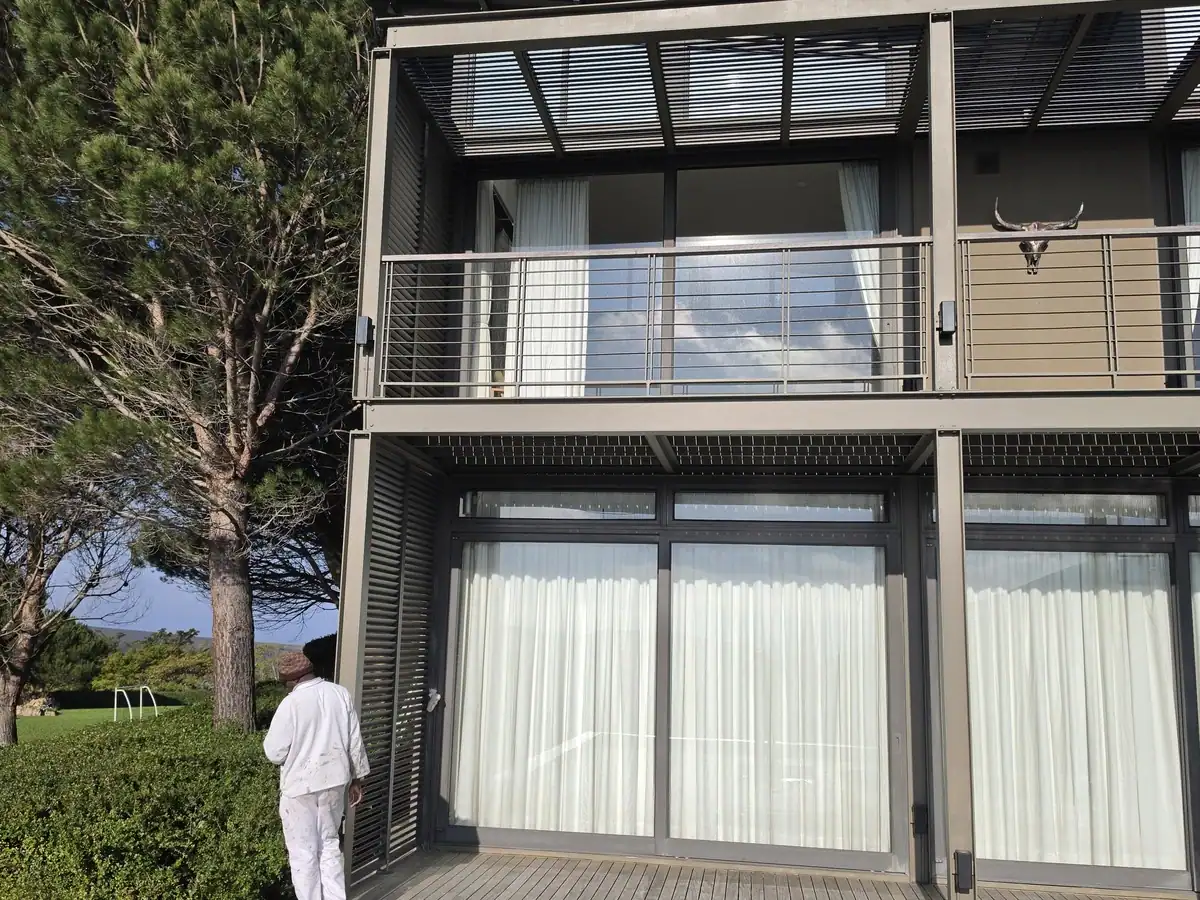
What This Rondebosch Oval Estate Project Demonstrates
This project provides a useful counterpoint to the assumption that only old houses require substantial preparation.
A relatively young premium home can still experience premature failure where the original steel preparation or primer system was inadequate.
It also demonstrates why several visible defects on one property should not be forced into one diagnosis.
The steel had an adhesion and corrosion-protection problem.
The masonry had moisture, cracking, sealing and waterproofing issues.
The timber needed its own preparation system.
The gym required a suitable interior coating system.
Each substrate had to be diagnosed and prepared separately.
Related Rondebosch Painting Services
Return to our Painters Rondebosch page for the wider local service.
Related services include Exterior Painters Cape Town, Interior Painters Cape Town, Damp Proofing Cape Town and Residential Painters Cape Town.
Call 082 374 6862 or visit the Painters Cape Town contact page.
Original Painters Cape Town project photography. Image licensing information.
Helpful Painting Guides
Why Paint Peels, Fades and Cracks
Learn why adhesion failure, moisture, chalking, cracks and inadequate preparation can cause relatively new and older coating systems to fail.
Damp Walls Before Repainting
Understand why cracks, failed seals, waterproofing and other moisture routes should be dealt with before relying on decorative paint.
Planning a Premium Home Repaint
See how preparation, access, protection, timber, metalwork and valuable finishes should be coordinated before repainting begins.
Rondebosch Oval Estate Painting FAQs
When was the Rondebosch Oval Estate project completed?
The documented project was completed between 23 March and 9 April 2026.
What moisture readings were recorded?
Protimeter readings across assessed plastered areas ranged from 13.8% to 16.9%.
What was the most obvious coating failure?
Widespread peeling affected the exterior steel pergolas and associated steelwork, leaving bare metal exposed in numerous areas.
Why can paint fail on relatively new steel?
New steelwork can still suffer premature coating failure when original cleaning, preparation or priming does not create reliable adhesion between the metal and coating system.
Was the steel only spot-primed?
No. After preparation, the documented scope called for a full HydroEtch primer coat across the prepared steelwork.
Was rust treatment required?
Yes. Rust-affected areas were prepared and the documented system included Duram NS1 Rust Converter where required before the full primer system.
Were the walls also moisture-affected?
Yes. The inspection recorded moisture-related discolouration, cracks, failed seals, powdery surfaces and vulnerable horizontal masonry in addition to the steel coating failure.
Were windowsills and parapets waterproofed?
Applicable prepared horizontal surfaces received the specified flexible waterproof preparation because upward-facing masonry can admit rain through small cracks.
Were expansion joints resealed?
Where required, deteriorated movement joints were treated with suitable flexible polyurethane rather than ordinary rigid crack filler.
Was timber included?
Yes. Exterior timber rafters formed part of the documented project and received their own preparation and finishing system.
Was any interior work completed?
Yes. The project included preparation and repainting of the gym interior walls, including damp-related preparation where applicable.
Does this project prove all Rondebosch steel should use the same system?
No. The correct preparation and primer depend on the actual steel condition, existing coating system, corrosion, adhesion and exposure.
Where can I see your complete Rondebosch painting service?
Visit our Painters Rondebosch page.

Copyright 2026 , all rights reserved.