Rozendal Farm • Stellenbosch Winelands
Exterior and Roof Painting at Rozendal Farm, Stellenbosch
A documented May–June 2026 wine-farm and hospitality painting project involving 11.3%–22.8% Protimeter readings, plaster crack repairs, moisture protection, exterior timber preparation and specialist coating of corrugated roof sheets.
The work covered guest-facing buildings where exterior walls, roofs, sash windows, fascia boards and pergola timber had to be prepared as different substrates while the site remained suitable for hospitality use.
Rozendal Farm Project Highlights
- Stellenbosch wine-farm and hospitality property.
- Project period: 4 May–26 June 2026.
- Protimeter readings: 11.3%–22.8%.
- Exterior plastered walls.
- Corrugated roof-sheet preparation and painting.
- Hairline, map and wider plaster cracking.
- Damp-related masonry preparation.
- Horizontal-surface waterproofing.
- Failed sealant at selected junctions.
- Wooden sash windows.
- Fascia boards and pergola posts.
- Biological growth and chalking on roof surfaces.
- HydroEtch roof preparation.
- Dulux Roofguard finishing system.
Documented Stellenbosch Wine-Farm and Roof Painting Evidence
Rozendal Farm provides genuine evidence of a multi-substrate Stellenbosch painting project combining exterior masonry, roof coating, moisture-related preparation, waterproofing, sash-window work and exterior timber maintenance.
11.3%–22.8% Readings
Protimeter readings provided measurable substrate information that was considered together with visible cracking, discolouration and other moisture-related conditions.
Real Roof Painting Project
Corrugated roof sheets were cleaned and prepared before the specified etching primer and two-coat roof finishing system was applied.
Crack-Specific Preparation
Fine map cracking and wider plaster cracks received different repair methods rather than being covered by one generic filler.
Moisture Protection
Damp-affected masonry and vulnerable horizontal surfaces received project-specific preparation before final exterior coatings.
Exterior Timber
Selected sash windows, fascia boards and pergola posts were sanded, feathered, primed and finished as timber rather than treated like masonry.
Hospitality-Sensitive Work
Protection, sequencing and neat site management were important because the buildings form part of an active guest-accommodation property.
Full-Time Employed Painters
The work was completed by Painters Cape Town's employed painting team rather than subcontracted lead-generation contractors.
Preparation Before Coating
Cleaning, fungal treatment, crack repairs, moisture preparation, sealing, timber preparation and roof preparation were addressed before the final coatings.
Rozendal Farm Exterior and Roof Painting Project in Stellenbosch
Painters Cape Town completed this documented Rozendal Farm exterior and roof painting project in Stellenbosch from 4 May to 26 June 2026.
The project differed significantly from an ordinary residential repaint because it involved several guest-facing buildings and multiple exterior substrates within a working wine-farm and hospitality environment.
The scope included exterior plastered walls, corrugated roof sheets, selected wooden sash windows, fascia boards, pergola posts, cracks, vulnerable horizontal surfaces, failed seals and moisture-affected masonry.
Protimeter readings recorded during the project assessment ranged from 11.3% to 22.8%.
Rozendal Farm is an established Stellenbosch farm with country-cottage and other guest accommodation. Its official website describes the property as being at the gateway to the Jonkershoek Valley, surrounded by the Stellenbosch Winelands landscape.
This project now provides direct local evidence supporting our Painters Stellenbosch, Roof Painters Cape Town, Exterior Painters Cape Town and Commercial and Hospitality Painting services.
Rozendal Farm Project Summary
- Location: Rozendal Farm, Stellenbosch.
- Project period: 4 May–26 June 2026.
- Property type: Wine-farm guest accommodation and hospitality buildings.
- Protimeter readings: 11.3% minimum to 22.8% maximum.
- Exterior scope: Plastered walls, cracks, horizontal surfaces and moisture-affected areas.
- Roof scope: Corrugated roof sheets.
- Timber scope: Selected sash windows, fascia boards and pergola posts.
- Additional preparation: Cleaning, biological-growth treatment, waterproofing and flexible sealing.
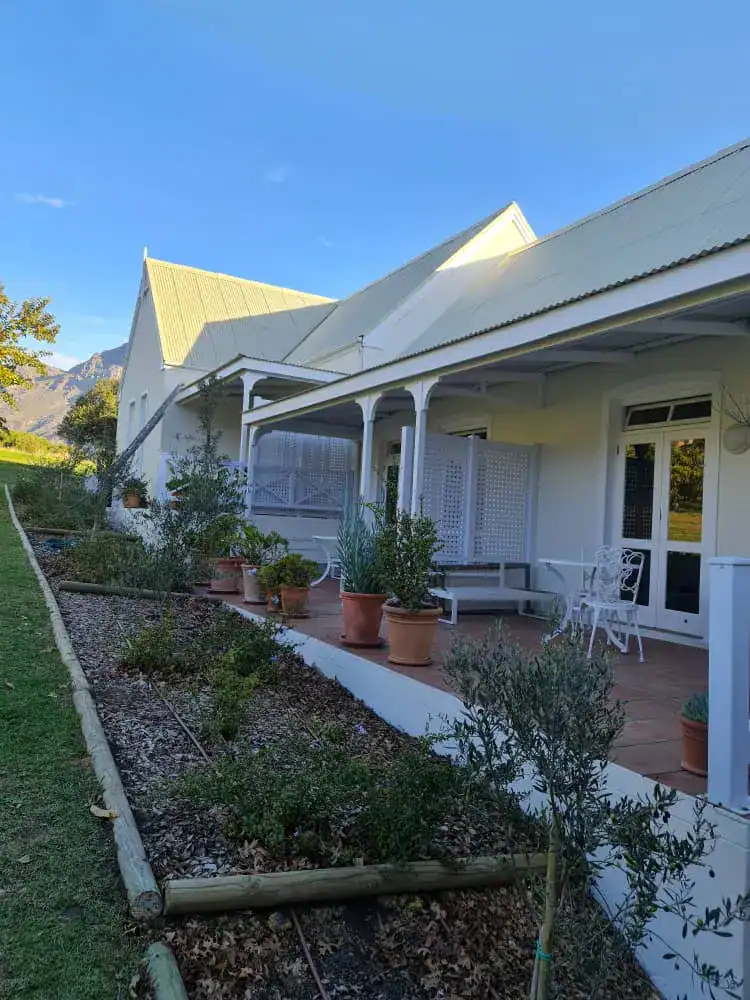
Why a Wine-Farm Painting Project Requires Different Planning
A Stellenbosch wine-farm property can combine accommodation, landscaped surroundings, visitor areas, roofs, plastered buildings, timber windows and public-facing finishes within one site.
Painting therefore involves more than simply selecting a coating system.
Work needs to be sequenced so surfaces can be properly cleaned, prepared and coated while protecting gardens, windows, pathways and completed areas and reducing unnecessary disruption to guests and normal property operations.
This is particularly important on hospitality buildings, where visual presentation and site cleanliness remain important throughout the maintenance project.
11.3%–22.8% Protimeter Readings
Protimeter readings during the assessment ranged from 11.3% to 22.8%.
These relative readings provided additional information about the condition of assessed masonry and were considered together with visible discolouration, coating deterioration, cracks, seals and horizontal surfaces.
The readings should not be interpreted as proving that every defect had the same moisture source.
Moisture meters support an inspection; they do not replace investigation of cracks, wall tops, junctions, drainage, roof details and other possible routes of water movement.
Condition of the Exterior Before Painting
The existing project record identified several different maintenance problems that needed to be addressed before the new coatings were applied.
- Faded and deteriorated exterior wall coatings.
- Powdery or discoloured masonry areas.
- Hairline and map cracking.
- Wider plaster cracks.
- Failed sealant at selected windows, doors and exterior fittings.
- Vulnerable windowsill and parapet-type horizontal surfaces.
- Loose and flaking coatings on selected exterior timber.
- Biological growth and chalking on corrugated roof surfaces.
Cleaning Before Exterior and Roof Painting
Suitable exterior surfaces were pressure cleaned to remove loose material, grime, salts, chalking and contamination.
Sensitive areas were cleaned manually where high-pressure washing was unsuitable.
Fungus-affected areas were treated before coating so that new primers and finishes would not be applied directly over active biological contamination.
Loose and flaking coating material was removed so the new system could bond to a more stable substrate.
Fine Cracks and Map Cracking
Fine map cracking was treated differently from wider plaster defects.
Areas containing fine cracking received the specified flexible waterproof preparation where required.
The objective was not simply to conceal the visible crack network beneath a thicker decorative coating, but to prepare and protect the affected surface before the final finish.
Wider Plaster Crack Repairs
Suitable wider cracks were opened to create an appropriate repair joint and cleaned before compatible masonry repair material was installed.
The repaired areas were finished flush, allowed to dry, sanded and primed before subsequent waterproofing or finish coatings were applied.
Using a different method for wider defects is important because a plaster crack several millimetres wide should not be treated as though it were an isolated hairline crack.
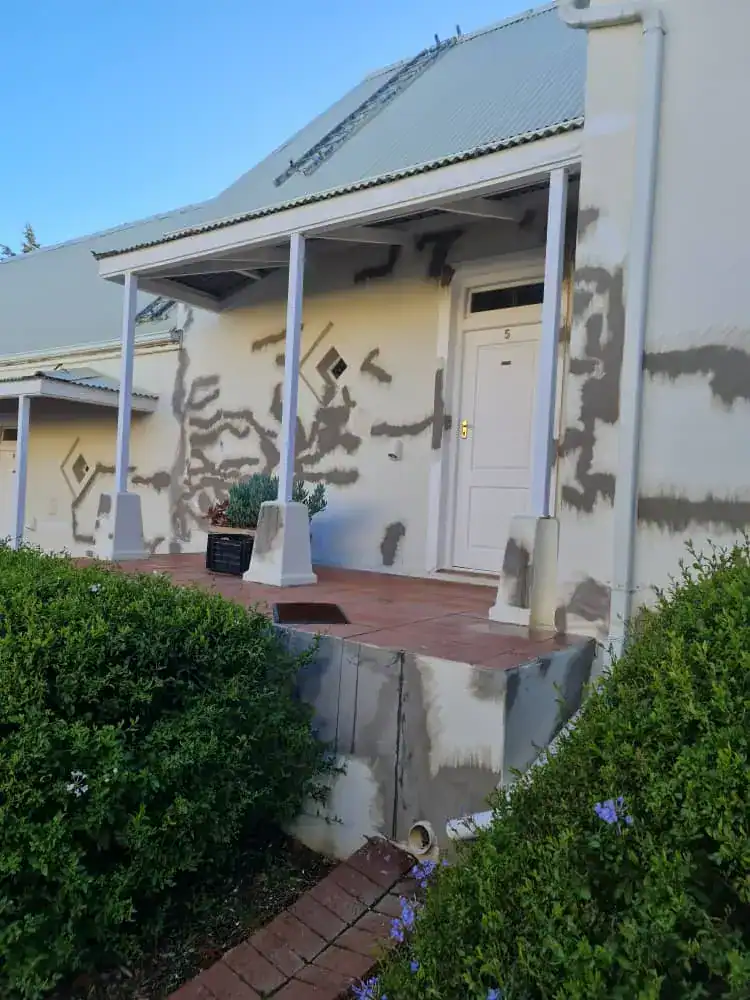
Waterproofing Vulnerable Horizontal Surfaces
Selected windowsills and other vulnerable horizontal masonry details received the specified flexible waterproof coating system.
These surfaces deserve particular attention because rainwater remains on horizontal surfaces longer than on vertical wall faces and can enter through surprisingly fine openings.
The specified Dulux Rainshield system formed part of the preparation on fine cracking and vulnerable horizontal areas.
Damp-Related Wall Preparation
Identified damp-affected cementitious areas received Dulux Dampshield where included in the project specification.
This treatment formed one part of the overall preparation system.
It was not used as a substitute for repairing cracks, failed sealant or other identifiable water-entry details.
Failed Window, Door and Fitting Seals
Deteriorated sealant around selected windows, doors and exterior fittings was removed and replaced with flexible polyurethane sealant where required.
These relatively small junctions can become important because water entering at an opening or wall penetration can move behind the coating before appearing elsewhere on the façade.
Wooden Sash Windows
Selected traditional sash windows formed part of the exterior timber scope.
Loose coating was removed, the timber was sanded to create a suitable key and hard paint edges were feathered.
Bare timber received Dulux Wood Primer, followed by the specified Dulux Universal Undercoat and Dulux Pearlglo Waterbase finishing coats.
This substrate-specific treatment is particularly important on exterior joinery because joints, exposed edges and failed coating areas can allow timber to absorb moisture if maintenance is delayed.
Fascia Boards and Pergola Posts
Selected fascia boards and pergola posts received similar preparation.
Loose and flaking coatings were removed, surfaces were sanded and bare areas were primed before the undercoat and finishing system was applied.
Exterior timber should not be treated as though it were masonry. Its movement, joints, grain and exposed edges require compatible preparation and coatings.
Roof Painters Stellenbosch — A Real Corrugated Roof Project
The Rozendal Farm project provides genuine first-hand evidence of roof painting in Stellenbosch.
The corrugated roof sheets were not simply topcoated over the existing weathered finish.
The roof first required cleaning to remove biological growth, dirt, loose coating material and chalking.
A sound roof-coating system depends on adhesion to the prepared substrate rather than to contamination or deteriorated old paint.
HydroEtch Roof Preparation
After cleaning and preparation, the corrugated roof sheets received the specified HydroEtch primer.
The purpose of the etching stage was to promote adhesion between the prepared metal roof surface and the subsequent protective coating.
The roof was then finished with two coats of Dulux Roofguard.
This sequence is materially different from applying roof paint directly to a chalking or biologically contaminated surface.
Roof Coating Does Not Repair an Active Leak
The Rozendal project documents preparation and coating of corrugated roof sheets.
A roof coating is a protective finish for a suitable, sound and correctly prepared substrate. It should not be represented as a substitute for repairing active leaks, damaged roof components, defective flashings or failed waterproofing details.
Where those defects exist on another Stellenbosch property, they should be identified and addressed separately before the coating system is relied upon.
Exterior Wall Coating System
After cleaning, repairs, moisture-related preparation, waterproofing and sealing had been completed, the exterior plastered walls were specified for two coats of Dulux Weatherguard Ultra Smooth.
The decorative finish was therefore the final part of a broader preparation system rather than the starting point.
Coating Systems Recorded for the Rozendal Farm Project
- Exterior plastered walls: two coats Dulux Weatherguard Ultra Smooth.
- Damp-affected cementitious areas: Dulux Dampshield where identified and specified.
- Fine cracking and vulnerable horizontal surfaces: Dulux Rainshield system.
- Selected exterior timber: Dulux Wood Primer, Dulux Universal Undercoat and Dulux Pearlglo Waterbase.
- Corrugated roof sheets: HydroEtch primer followed by two coats Dulux Roofguard.
- Selected openings and exterior fittings: flexible one-part polyurethane sealant.
The named products are included because they form part of the documented project specification. Their inclusion does not imply endorsement of Painters Cape Town by the manufacturer.
Why Stellenbosch Roof Preparation Matters
Stellenbosch has a Mediterranean climate characterised by warm, dry summers and colder, wetter winters.
Roof and exterior coatings therefore experience a combination of summer heat and UV exposure followed by prolonged seasonal rain.
Weathered roof coatings can chalk, while shaded or damp surfaces may support biological growth. Preparation must address those conditions before the final roof coating is applied.
Hospitality Painting Without Treating the Property Like a Building Site
Rozendal Farm’s buildings form part of an active accommodation environment.
Hospitality painting therefore involves practical considerations beyond coating selection: protecting guest-facing areas, controlling preparation debris, keeping access usable where practical and sequencing work so completed areas remain presentable.
The same principle applies to Stellenbosch guesthouses, wine farms, restaurants and other visitor-facing properties.
What This Rozendal Farm Project Demonstrates
- A Stellenbosch painting project can combine walls, roofs and timber within one specification.
- Protimeter readings should support inspection rather than replace diagnosis.
- Fine cracks and wider plaster defects need different repair methods.
- Horizontal surfaces require additional moisture protection.
- Failed seals can become rainwater-entry points.
- Traditional sash windows require timber-specific preparation.
- Corrugated roof sheets require cleaning and compatible specialist priming before coating.
- Roof paint should not be represented as a repair for active roof defects.
- Hospitality properties require careful phasing and protection as well as good painting.
Rozendal Farm Within Our Stellenbosch Painting Experience
Rozendal provides a very different type of local evidence from our De Zalze exterior painting project.
De Zalze demonstrates high-value estate exterior preparation involving measured moisture, cracks, horizontal waterproofing, fascia boards and Nutec soffits.
Rozendal demonstrates wine-farm and hospitality painting together with real Stellenbosch roof coating, exterior plaster repairs, sash windows and pergola timber.
Both support our main Painters Stellenbosch hub with genuine project-specific evidence.
Related Stellenbosch Painting Services
- Roof Painters Cape Town
- Exterior Painters Cape Town
- Damp Proofing and Waterproofing
- Commercial and Hospitality Painting
- Cape Winelands Painters
Direct Painting Contractor With Employed Teams
Painters Cape Town has 27 years of painting and surface-preparation experience.
Our projects are completed by full-time employed painters with working-foreman supervision rather than subcontracted teams.
We are not a lead-generation company. Clients deal directly with the painting contractor responsible for inspection, quotation, specification, preparation, supervision and completed work.
Request a Stellenbosch Wine-Farm or Roof Painting Quote
If your Stellenbosch home, wine farm, guesthouse or hospitality property requires exterior painting, roof coating, plaster repairs, sash-window painting, damp-related preparation or waterproofing before repainting, the surfaces should first be physically assessed.
Call 082 374 6862 or visit the Painters Cape Town contact page to arrange an inspection and written quotation.
Helpful Stellenbosch Painting Guides
Why Paint Peels, Fades and Cracks
Learn why moisture, UV, chalking, cracks, poor adhesion and insufficient preparation can cause premature exterior coating failure.
Damp Walls and Repainting
Learn why moisture routes, cracks, horizontal surfaces, failed seals and other water-entry details should be assessed before repainting.
Planning a Premium Repaint
See how roofs, timber, windows, gardens, guest-facing areas and different substrates should be planned and protected during substantial painting work.
Rozendal Farm Exterior and Roof Painting FAQs
When was the Rozendal Farm project completed?
The documented project was carried out from 4 May to 26 June 2026 at Rozendal Farm in Stellenbosch.
What type of property was painted?
The project involved wine-farm guest accommodation and hospitality buildings at Rozendal Farm in the Stellenbosch Winelands.
What moisture readings were recorded?
Protimeter readings across assessed areas ranged from 11.3% to 22.8%.
What surfaces were included?
The scope included exterior plastered walls, corrugated roof sheets, selected wooden sash windows, fascia boards, pergola posts, moisture-affected masonry, cracks and vulnerable horizontal surfaces.
What defects were found before painting?
The project record included faded or deteriorated coatings, moisture-related wall conditions, fine and wider cracking, failed seals, vulnerable horizontal surfaces, weathered exterior timber and biological growth and chalking on roof sheets.
Did the Protimeter readings identify the exact source of every moisture problem?
No. The readings supported the physical inspection but still had to be considered together with cracks, seals, horizontal surfaces and other possible water-entry routes.
How were the exterior walls cleaned?
Suitable surfaces were pressure cleaned to remove loose material, grime, salts, chalking and contamination, while sensitive surfaces were cleaned manually where appropriate.
Was fungal growth treated?
Yes. Fungus-affected areas were treated before subsequent preparation and coating.
How were wider plaster cracks repaired?
Suitable wider cracks were opened, cleaned and repaired with compatible masonry repair material before finishing, sanding, priming and subsequent coating.
How were fine cracks treated?
Fine and map-cracked areas received the specified flexible waterproof coating preparation where required.
How were vulnerable windowsills and horizontal surfaces prepared?
Relevant horizontal masonry surfaces received the specified Dulux Rainshield waterproof preparation.
How were damp-affected walls prepared?
Identified damp-affected cementitious areas received Dulux Dampshield where included in the project specification.
How were failed seals treated?
Deteriorated sealant at selected window, door and fitting junctions was removed and replaced with flexible polyurethane sealant where required.
How were the sash windows and exterior timber prepared?
Loose coatings were removed, the timber was sanded and hard paint edges feathered. Bare timber received wood primer before the specified undercoat and water-based enamel finishing system.
How were the corrugated roof sheets prepared?
Biological growth, dirt, chalking and loose coating material were removed before the specified HydroEtch primer was applied.
What roof paint was applied?
The prepared corrugated roof sheets received two coats of Dulux Roofguard after the specified HydroEtch preparation.
Does roof painting repair active leaks?
No. Roof coating protects a suitable, sound and correctly prepared substrate. Active leaks, failed flashings, damaged roof components or defective waterproofing require separate repair.
What paint was applied to the exterior walls?
The prepared exterior plastered walls were specified for two coats of Dulux Weatherguard Ultra Smooth.
Do you paint other wine farms and guesthouses in Stellenbosch?
Yes. Painters Cape Town undertakes suitable exterior, interior, roof and timber painting for wine farms, guest accommodation and other hospitality properties in Stellenbosch.
Do you use subcontracted painters?
No. Painters Cape Town uses full-time employed painters with working-foreman supervision.
How do I request a Stellenbosch roof or exterior painting quotation?
Call 082 374 6862 or visit the Painters Cape Town contact page to arrange a physical inspection and written quotation.

Copyright 2026 , all rights reserved.