De Zalze Winelands Golf Estate • Stellenbosch
Exterior Painting at De Zalze Estate, Stellenbosch
A documented 2026 exterior restoration of a private double-storey De Zalze home involving 16.3%–21.5% moisture readings, peeling and powdery coatings, plaster cracks, failed seals, vulnerable windowsills and deck walls, timber fascia boards and Nutec soffits.
The project demonstrates why premium estate repainting requires moisture diagnosis, defect-specific preparation and careful treatment of different exterior substrates before the final coating system is applied.
De Zalze Project Highlights
- Private double-storey estate home.
- Project period: 23 February–6 March 2026.
- Protimeter readings: 16.3%–21.5%.
- Exterior plastered walls.
- Hairline and wider plaster cracks.
- Windowsill and deck-wall waterproofing.
- Failed window, door and expansion-joint seals.
- Moisture-related coating deterioration.
- UV-related chalking and powdery paint.
- Wooden fascia-board preparation.
- Mould-affected Nutec soffits.
- Flexible joint and penetration sealing.
- No boundary walls formed part of this project.
- Full-time employed painters with foreman supervision.
Documented De Zalze Exterior Painting Evidence
This was not a cosmetic repaint. The inspection identified measurable moisture, coating deterioration, multiple crack types, failed seals, vulnerable horizontal surfaces, timber deterioration and mould-affected Nutec before the new exterior system was applied.
16.3%–21.5% Readings
Protimeter readings provided measurable evidence of elevated moisture conditions and were considered together with visible cracks, failed seals and coating deterioration.
Defect-Specific Crack Repairs
Hairline cracks, wider plaster cracks and movement joints were treated according to their width and movement requirements rather than with one generic filler.
Horizontal Waterproofing
Exposed windowsills and deck-wall surfaces received dedicated waterproof preparation because horizontal details are particularly vulnerable to rainwater entry.
Failed Seals Addressed
Selected deteriorated window, door, expansion-joint and fitting seals were treated as potential water-entry routes before repainting.
Different Substrates
Exterior plaster, timber fascia boards and Nutec soffits each received preparation and coatings appropriate to the substrate.
Preparation Before Finish
Cleaning, scraping, substrate stabilisation, mould treatment, damp-related preparation, crack repair, waterproofing and sealing were completed before final topcoats.
Full-Time Employed Painters
Painters Cape Town uses its own employed painting teams rather than subcontracted painters.
Direct Contractor Accountability
The client dealt directly with the painting contractor responsible for inspection, quotation, preparation, supervision and completed work.
De Zalze Exterior Painting Project in Stellenbosch
This documented De Zalze exterior painting project was completed at a private double-storey home in De Zalze Winelands Golf Estate, Stellenbosch, from 23 February to 6 March 2026.
The owner contacted Painters Cape Town because extensive discolouration, peeling paint and damp-related symptoms had become visible around the exterior of the main building.
A physical inspection showed that the property required substantially more than another decorative coat of paint.
Protimeter readings ranged from 16.3% to 21.5%, while the exterior also displayed powdery coatings, cracking, failed seals, vulnerable horizontal surfaces and deterioration on timber and Nutec elements.
No boundary walls formed part of this particular project.
This project provides genuine local evidence supporting our Painters Stellenbosch, Exterior Painters Cape Town, Damp Proofing Cape Town and Residential Painters Cape Town services.
De Zalze Project Summary
- Location: De Zalze Winelands Golf Estate, Stellenbosch.
- Property: Private double-storey home.
- Project period: 23 February–6 March 2026.
- Protimeter readings: 16.3% minimum to 21.5% maximum.
- Scope: Exterior plastered walls, wooden fascia boards, Nutec soffits, windowsills, deck-wall surfaces, cracks, expansion joints and selected window and door seals.
- Boundary walls: Not included in this project.
Why the De Zalze Exterior Needed More Than a Cosmetic Repaint
The existing paint failure was not limited to normal colour fading.
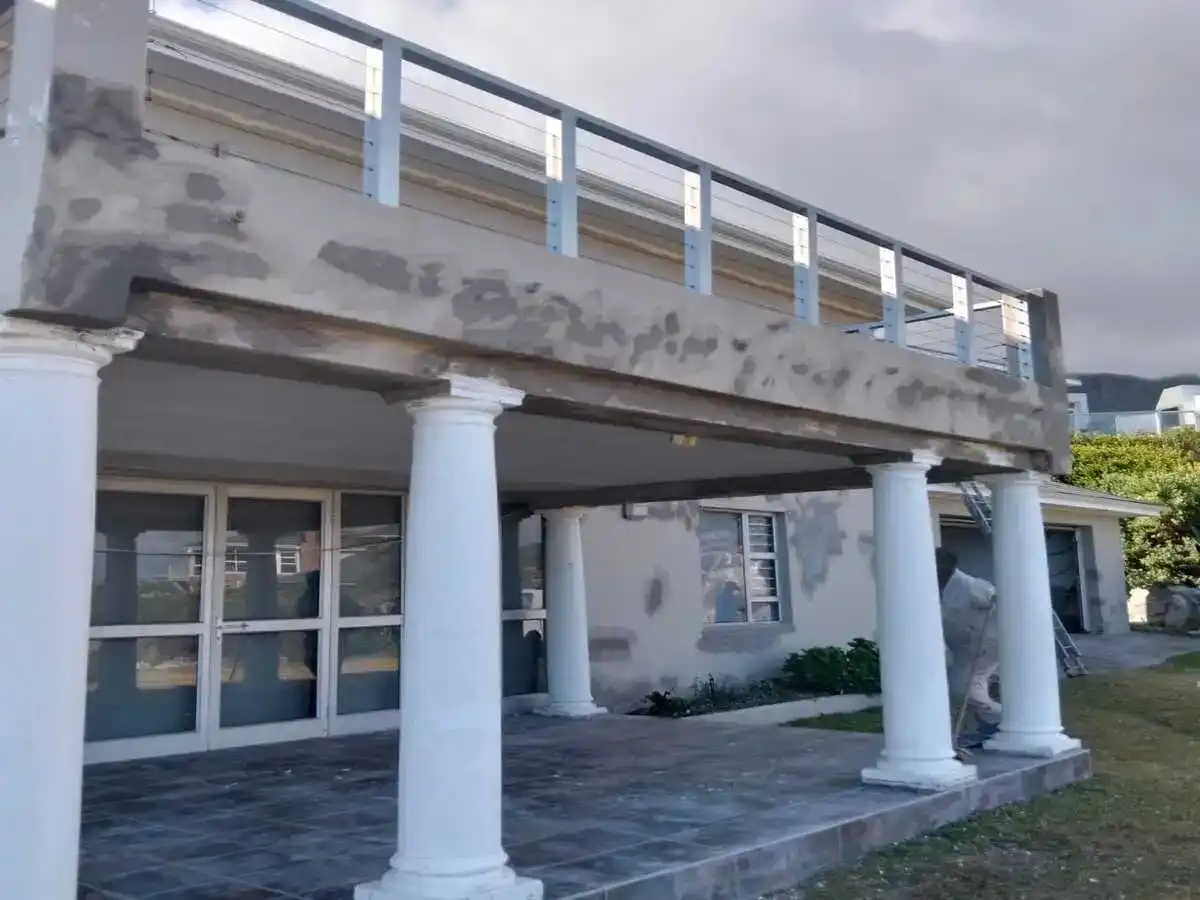
Discolouration, peeling, powdery coating, moisture symptoms, fine and wider cracks, failed seals and vulnerable horizontal surfaces were visible across different parts of the main building.
A new finish coat applied directly over these conditions would still depend on the unstable coating and unresolved water-entry details underneath.
The preparation therefore had to improve the condition of the substrate before the final exterior system was applied.
16.3%–21.5% Protimeter Readings
A Protimeter was used during the site inspection and recorded relative wall readings from 16.3% to 21.5%.
The moisture readings were considered together with the location of visible coating deterioration, cracks, windowsills, deck walls, joints and openings.
A moisture-meter reading alone does not identify the precise route by which water entered every affected wall.
In this project, however, the readings supported the visible evidence that moisture movement was contributing to the coating deterioration and that moisture-related preparation formed part of the required remedial work.
Diagnostic Findings Before Painting
- Discoloured, powdery and peeling exterior coatings.
- Hairline and wider plaster cracks across the façades.
- Fine cracking on exposed windowsills and deck-wall surfaces.
- Insufficient weather protection on selected horizontal surfaces.
- Failed or missing flexible sealant at selected windows and doors.
- Deteriorated expansion-joint sealing.
- Moisture symptoms below vulnerable joints and openings.
- Peeling paint on sections of wooden fascia boards.
- Peeling coating and mould on sections of Nutec soffits.
Wet Winters, Summer UV and Coating Failure
Stellenbosch properties experience an important combination of wet winter conditions and strong summer exposure.
During winter, windowsills, wall tops, joints and other vulnerable horizontal details can remain exposed to rainwater for extended periods.
During hotter, drier months, strong UV exposure contributes to fading and chalking of ageing exterior coatings.
Where moisture enters through small cracks or failed seals and later becomes trapped behind a coating, blistering, discolouration and peeling can become more visible.
Cleaning and Removing Unstable Coatings
Suitable exterior surfaces were high-pressure washed to remove grime, dust, biological contamination and loose coating material.
Loose coatings that remained after cleaning were manually scraped back to a more stable edge.
Preparation is important because even a high-quality topcoat cannot compensate for poor adhesion between a deteriorated old coating and the substrate underneath.
Mould Treatment on the Nutec Soffits
Selected Nutec soffit areas showed mould and unstable coating.
The affected areas received the specified fungicidal treatment before further preparation.
Loose coating material was removed and the substrate prepared before the specified undercoat and finishing system was applied.
Stabilising Powdery Exterior Walls
After cleaning and removal of unstable material, the prepared exterior plastered walls received the specified Dulux Bonding Liquid where required to stabilise powdery or friable surfaces.
This preparation stage creates a more reliable substrate for the subsequent coating build.
Painting over loose chalk without first addressing it can leave the new coating bonded primarily to deteriorated pigment rather than to the wall itself.
Damp-Related Preparation
Identified moisture-affected masonry received the specified Dulux Dampshield preparation.
The moisture-resistant coating formed part of the remedial paint system after visible routes of water entry had been addressed.
It was not treated as a substitute for repairing cracks, failed joints or deteriorated perimeter seals.
Hairline Cracks and Spiderweb Cracking
Fine cracks were not simply covered with the exterior topcoat.
Hairline cracks up to approximately 1 mm received the specified sealing and flexible preparation, including Dulux Rainshield where required.
Areas containing multiple spiderweb cracks received the specified stabilising preparation and flexible waterproof coating build.
Wider Plaster Cracks
Suitable cracks of approximately 1–5 mm required a different repair method.
These defects were opened into appropriate V-shaped joints and cleaned before being repaired with compatible masonry repair material.
The repaired areas were finished flush, sanded and protected with the specified flexible waterproof preparation before repainting.
This distinction matters because a wider plaster defect should not be treated in the same way as an isolated hairline crack.
Expansion Joints Were Treated as Movement Points
Expansion joints are designed to accommodate movement and should not simply be filled with rigid plaster repair material.
Failed joint material within the project scope was removed where required and the relevant joints were resealed with flexible single-pack polyurethane sealant.
The same movement-aware principle applies whenever a joint is expected to accommodate movement rather than behave like static plaster.
Window and Door Perimeter Sealing
Selected deteriorated seals around windows and doors were treated as potential rainwater-entry routes.
Relevant perimeter details were resealed with flexible polyurethane where required.
Exterior fittings and penetrations were also assessed because seemingly small openings can allow water to enter behind the surrounding coating.
Windowsill and Deck-Wall Waterproofing
The exposed horizontal windowsills and deck-wall surfaces showed fine cracking and inadequate weather protection.
These surfaces received two coats of the specified Dulux Rainshield system.
The second coat was applied across the first to improve coverage of the treated surface.
Horizontal masonry deserves separate attention because rainwater can sit on the surface and penetrate through openings that may appear insignificant when viewed from ground level.
Why the Visible Damage Can Appear Below the Water-Entry Point
Several moisture symptoms were concentrated beneath windows, joints and other vulnerable details.
This illustrates an important diagnostic principle: the place where paint fails is not always the exact location where water originally entered.
Water can enter through an upper crack, sill, joint or seal and migrate before appearing as discolouration, bubbling or peeling lower on the wall.
Wooden Fascia-Board Preparation
Loose coating was removed from the affected wooden fascia boards and the surfaces were sanded.
Hard paint edges were feathered to create a more uniform transition between sound coating and exposed timber.
Bare timber received Dulux Wood Primer, followed by the specified Dulux Universal Undercoat and two coats of Dulux Pearlglo Waterbase.
The woodwork therefore received a timber-specific preparation system rather than being treated as though it were plastered masonry.
Nutec Soffit Preparation
The Nutec soffits required a separate system from both the plastered walls and the timber fascia boards.
Mould-affected surfaces were treated and loose coating removed.
Where specified, Dulux Universal Undercoat was used to support adhesion and isolate staining before two coats of Dulux Roofguard were applied to the prepared Nutec surfaces.
Exterior Wall Coating
After washing, stabilisation, damp-related preparation, crack repairs, waterproofing and flexible sealing had been completed, the main exterior walls received two coats of Dulux WallClad.
The final coating was therefore applied over a substantially more stable and consistently prepared surface than the discoloured, cracked and peeling substrate recorded during the initial inspection.
Products Recorded for This Project
- Dulux Bonding Liquid.
- Dulux Dampshield.
- Dulux Rainshield.
- Dulux Alkali Resistant Sealer where specified.
- Masonry patching repair materials.
- Flexible single-pack polyurethane sealant.
- Dulux Wood Primer.
- Dulux Universal Undercoat.
- Dulux Pearlglo Waterbase.
- Dulux Roofguard on prepared Nutec soffits.
- Dulux WallClad on the main exterior walls.
The product names are included because they form part of the documented project preparation and coating system. Their inclusion does not imply manufacturer endorsement of Painters Cape Town or this webpage.
Completed De Zalze Exterior
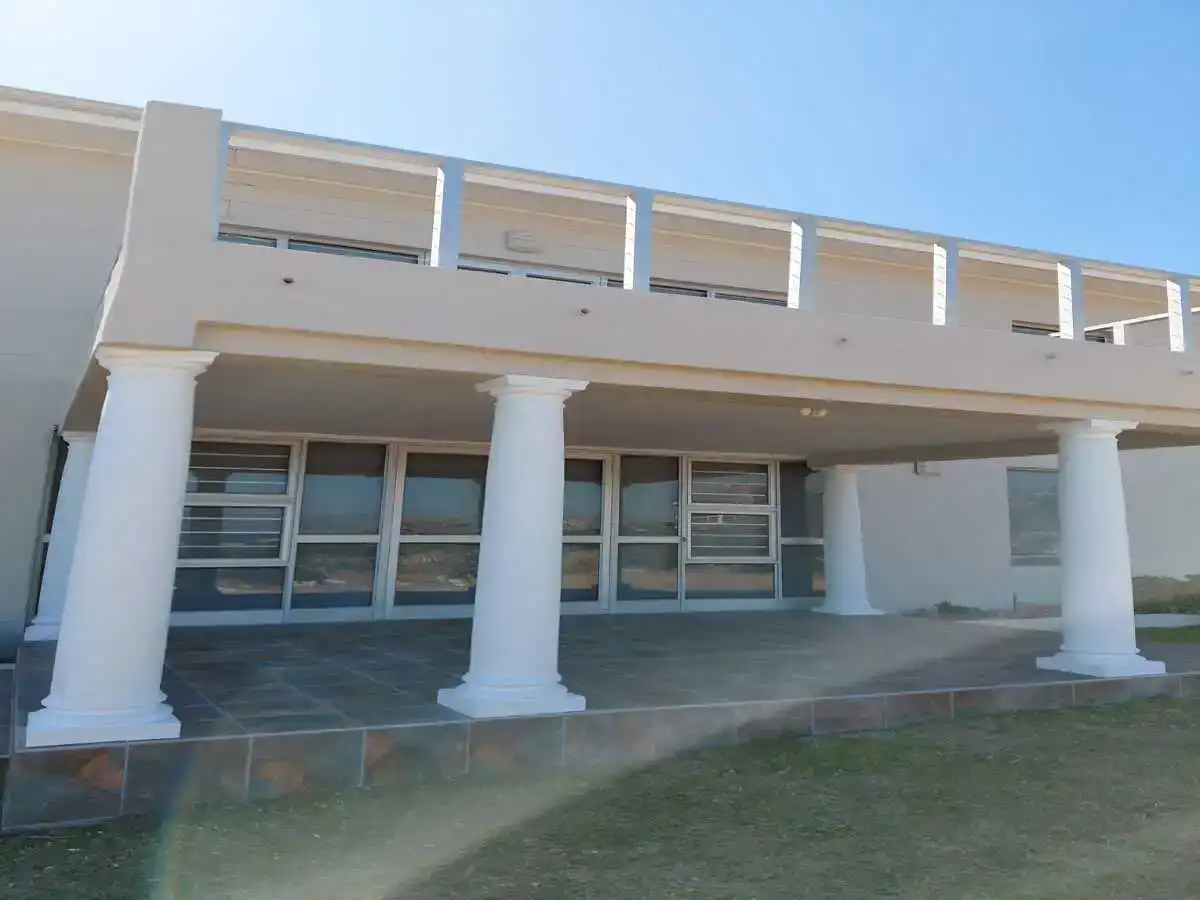
The completed photograph records the property after the specified cleaning, coating removal, moisture-related preparation, crack repairs, waterproofing, sealing, fascia preparation, Nutec preparation and exterior repainting were carried out.
The visible finish is the final stage of the project.
The more important long-term work lies beneath it: stabilising weak coatings, repairing defects according to their type and reducing identifiable routes through which moisture could reach the painted substrate.
No Unlimited Moisture or Crack Guarantee
The supplied project record does not confirm a separate formal manufacturer inspection, registered manufacturer warranty or unlimited coating guarantee for this particular property, and none is claimed here.
Future performance still depends on windowsills, deck walls, expansion joints, window and door seals, exterior fittings and other water-entry details remaining sound.
New structural movement, renewed seal failure, cracking or new water entry can cause coating deterioration to return even after the original project was correctly prepared.
What This De Zalze Project Demonstrates
- Measured moisture should be considered together with visible building defects.
- The visible paint failure may occur below the actual water-entry point.
- Hairline cracks, wider plaster cracks and movement joints require different repairs.
- Windowsills and wall tops deserve dedicated waterproof preparation.
- Failed window and door seals can contribute to moisture entry.
- Powdery coatings need stabilisation before repainting.
- Plaster, timber and Nutec require different coating systems.
- Premium estate painting is preparation-led rather than simply colour-led.
De Zalze Within Our Stellenbosch Painting Service
De Zalze is one of several important estate and high-value residential environments served by our Painters Stellenbosch team.
Our wider Stellenbosch work includes estate homes, established residential properties, wine farms, guest accommodation, heritage-style buildings, roofs, commercial properties and student accommodation.
Stellenbosch also forms part of our Cape Winelands Painters regional service area.
Related services include:
- Exterior Painters Cape Town
- Damp Proofing Cape Town
- Residential Painters Cape Town
- Body Corporate and Estate Painting Cape Town
Preparation-First Painting by a Direct Contractor
Painters Cape Town has 27 years of painting and surface-preparation experience.
Our painting teams are full-time employees rather than subcontracted painters, and projects are supervised by working foremen.
We are not a lead-generation company. Clients deal with the contractor responsible for the inspection, quotation, preparation scope, painting team, supervision and completed work.
Request a De Zalze Painting Assessment
If your De Zalze or Stellenbosch property has peeling paint, powdery coatings, cracking, failed seals, weathered timber or damp-related exterior deterioration, the building should be assessed before another paint system is specified.
Call 082 374 6862 or visit the Painters Cape Town contact page to arrange an inspection and written quotation.
Helpful Stellenbosch Painting Guides
Why Paint Peels, Fades and Cracks
Learn how moisture, UV, chalking, cracks, failed seals and weak preparation can contribute to premature coating failure.
Damp Walls and Repainting
Learn why moisture paths, windowsills, waterproofing defects, cracks, timber and other water-entry details should be assessed before repainting.
Planning a Premium Home Repaint
See why gardens, paving, glazing, detailed finishes, timber and different substrates should be protected and planned before substantial residential painting begins.
De Zalze Exterior Painting FAQs
When was this De Zalze painting project completed?
The documented exterior project was completed from 23 February to 6 March 2026 at a private double-storey home in De Zalze Winelands Golf Estate, Stellenbosch.
What moisture readings were recorded?
Protimeter readings across assessed exterior wall areas ranged from 16.3% to 21.5%.
What surfaces were painted?
The project included exterior plastered walls, wooden fascia boards and Nutec soffits together with preparation of windowsills, deck-wall surfaces, cracks, expansion joints and selected window and door seals.
Were boundary walls included?
No. Boundary walls did not form part of this particular De Zalze project.
What problems were found before painting?
The inspection identified peeling, powdery and discoloured coatings, hairline and wider plaster cracks, failed or missing seals, vulnerable horizontal surfaces, moisture symptoms, peeling fascia paint and mould-affected Nutec soffits.
Did the moisture meter identify the exact source of every damp area?
No. The readings provided useful evidence of the wall condition but were interpreted together with cracks, joints, windowsills, openings and visible coating failure.
Why were windowsills and deck walls waterproofed?
Horizontal masonry receives direct rainfall and can retain water. Fine cracks or inadequate weather protection can allow water into the adjoining wall system.
How were hairline cracks treated?
Fine cracks received the specified sealing and flexible Rainshield preparation rather than simply being covered with the exterior finish coat.
How were wider cracks repaired?
Suitable wider cracks were opened, cleaned and repaired with compatible masonry repair material before finishing, sanding and flexible waterproof preparation.
Why were expansion joints treated differently?
Expansion joints accommodate movement and therefore require flexible detailing instead of rigid plaster repair.
How were failed window and door seals treated?
Relevant failed perimeter seals were removed or prepared as required and resealed with flexible polyurethane where included in the project scope.
How were powdery exterior walls prepared?
After cleaning and removal of unstable material, Dulux Bonding Liquid was used where specified to stabilise the prepared friable substrate before subsequent coatings.
How were damp-affected wall areas prepared?
Identified moisture-affected masonry received the specified Dulux Dampshield preparation after visible water-entry details within the project scope had been addressed.
How were wooden fascia boards prepared?
Loose coating was removed, surfaces were sanded and feathered, bare timber was primed, and the specified undercoat and water-based enamel system was applied.
How were the Nutec soffits prepared?
Mould-affected areas were treated, unstable coating was removed and the specified undercoat and Roofguard finishing system was applied to the prepared Nutec.
Was there a formal manufacturer warranty on this project?
The supplied project record does not confirm a separate formal manufacturer inspection or registered manufacturer warranty for this property, so no such warranty is claimed on this page.
Can future cracks or water entry still occur?
Yes. Future structural movement, sealant deterioration, new cracking or renewed water entry can affect coating performance and require maintenance.
Do you use subcontracted painters?
No. Painters Cape Town uses full-time employed painters with working-foreman supervision.
How do I request a painting quote in De Zalze?
Call 082 374 6862 or visit the Painters Cape Town contact page to arrange a physical inspection and written quotation.

Copyright 2026 , all rights reserved.