Moreson Estate • Brackenfell
Exterior Painting and Moisture Remediation at Moreson Estate, Brackenfell
A documented June 2026 exterior project involving 19%–37% masonry moisture readings, extensive deterioration below a swimming-pool deck, a failed 8 mm walkway joint, cracking, waterproofing and a written Dulux specification.
Painters Cape Town completed a preparation-first remedial system covering moisture-affected masonry, horizontal surfaces, failed seals, expansion joints, Nutec fascia boards and soffits, boundary walls and the exterior façade.
Moreson Estate Project Highlights
- Private home in Moreson Estate, Brackenfell.
- Project period: 1–10 June 2026.
- Relative masonry readings of 19%–37%.
- Written Dulux supplier/warranty specification.
- Extensive deterioration below swimming-pool deck.
- Failed approximately 8 mm walkway-to-wall joint.
- Five drainage holes drilled into the affected slab.
- Vertical and horizontal masonry cracking.
- Failed seals around selected windows and doors.
- Unsealed expansion joints.
- Horizontal waterproofing and damp-related preparation.
- Nutec fascia-board and soffit preparation.
Real Moreson Estate Project Evidence
19%–37% Moisture Readings
Relative masonry readings across the assessed exterior areas ranged from 19% to 37%, supporting the need for detailed moisture-aware preparation rather than a cosmetic repaint.
Dulux Supplier Specification
The project followed a detailed written specification associated with Dulux products, covering preparation, waterproofing, damp-related treatment and the different exterior substrates.
Pool-Deck Moisture Investigation
Extensive staining and coating deterioration below the swimming-pool deck required project-specific investigation and remedial preparation rather than paint alone.
Failed 8 mm Joint
An approximately 8 mm joint between an upper tiled walkway and its side wall had failed, with water entry associated with deterioration below the adjoining deck.
Preparation Before Paint
The work included drainage, substrate repairs, crack preparation, flexible sealing, horizontal waterproofing, fungal treatment, primers and moisture-resistant preparation before finishing coats.
Direct Painting Contractor
Painters Cape Town uses full-time employed painters with working-foreman supervision rather than operating as a lead-generation enquiry website.
Exterior Painting and Moisture Remediation in Moreson Estate, Brackenfell
This documented Moreson Estate exterior painting project involved considerably more than applying another decorative coating to an ageing exterior.
The June 2026 project followed an inspection of widespread moisture-related deterioration affecting the exterior walls, areas below a swimming-pool deck, the adjoining tiled walkway, boundary masonry, horizontal surfaces, movement joints, perimeter seals and Nutec elements.
Relative masonry moisture readings recorded across the assessed exterior areas ranged from 19% to 37%.
Because the moisture patterns and coating deterioration were extensive, the project was prepared according to a detailed written Dulux supplier/warranty specification rather than a generic exterior repainting system.
This real project supports our main Painters Brackenfell page and provides first-hand local evidence for our Exterior Painters Cape Town, Damp Proofing Cape Town and Residential Painters Cape Town services.
Moreson Estate Project Summary
- Location: Moreson Estate, Brackenfell, Cape Town.
- Property type: Private residential estate home.
- Project period: 1–10 June 2026.
- Relative masonry readings: 19% minimum to 37% maximum.
- Main scope: Exterior walls, rear boundary wall, Nutec fascia boards and soffits, moisture treatment below swimming-pool deck, high-pressure cleaning, waterproofing, damp-related preparation and sealing around included joints, fittings, windows and doors.
- Specification: Written Dulux supplier/warranty specification.
- Supervision: Working-foreman supervision with additional site visits.
What the Exterior Inspection Found
The observed defects were not limited to one isolated damp patch.
- Relative masonry readings ranged from 19% to 37%.
- Cracking was present on vertical and horizontal masonry surfaces.
- Windowsills, expansion joints and the rear boundary wall contained cracks.
- Sealant around some windows and doors was deteriorating.
- Widespread exterior discolouration and peeling were present.
- Moisture-related alkali deterioration affected coating areas.
- Horizontal surfaces had not been adequately waterproofed.
- Expansion joints were not adequately sealed.
- Exterior wall and windowsill coatings were weathered.
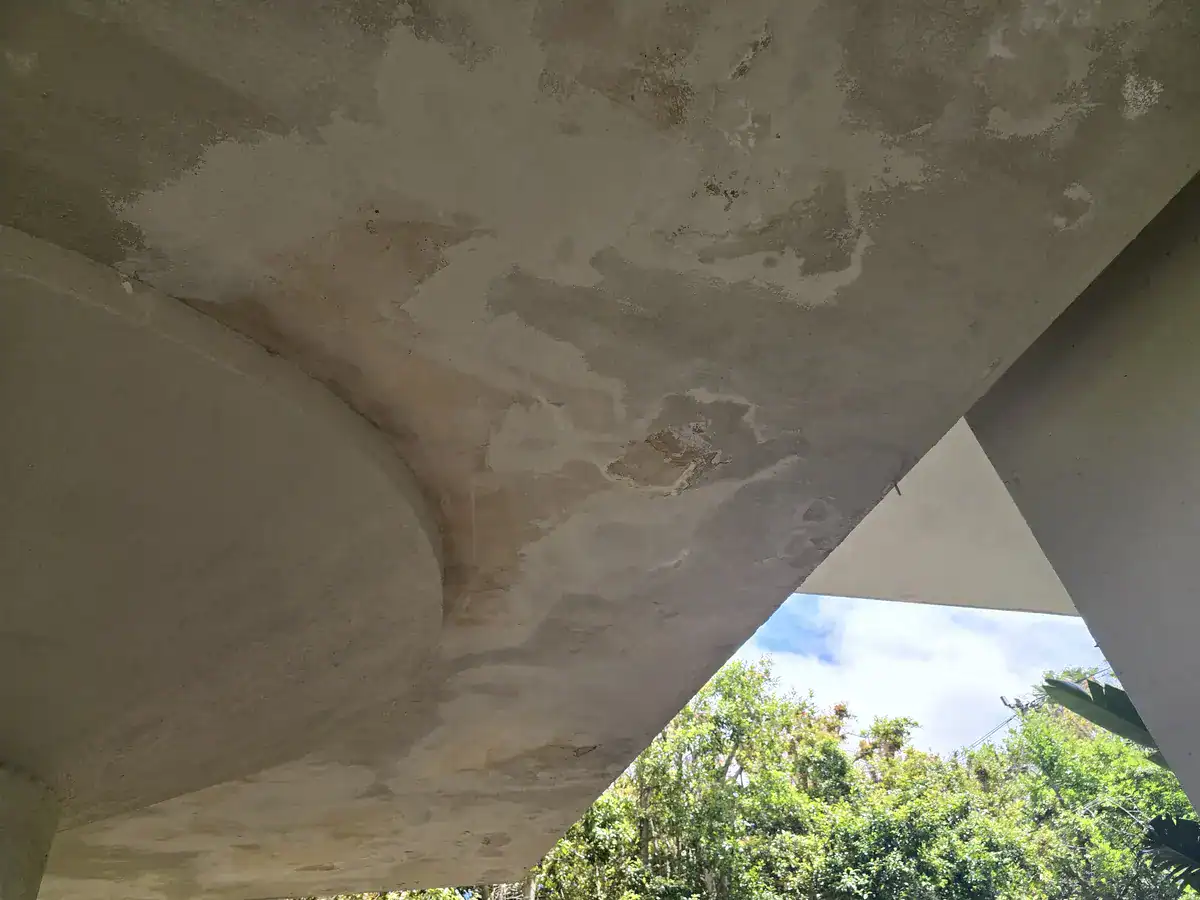
- Extensive staining and deteriorated coating were visible below the deck.
- An approximately 8 mm joint between an upper tiled walkway and side wall had failed.
- Mould was visible below deck areas and on soffits.
Why the 19%–37% Moisture Readings Mattered
The moisture readings provided important evidence that the coating failure needed to be investigated before repainting.
They were not used to claim that every affected surface had the same moisture source.
The readings were considered together with the location of the deterioration, failed seals, cracks, horizontal surfaces, the tiled walkway, pool-deck structure, boundary-wall conditions and other visible water-entry routes.
This distinction matters because successful remedial painting depends on understanding how moisture is reaching a substrate rather than simply identifying that the wall is wet.
The Swimming-Pool and Deck Moisture Problem
One of the most distinctive parts of the Moreson Estate project was the extensive staining and deteriorated coating below the swimming-pool and adjoining deck structure.
A pool contractor had reportedly already sealed the inside of the swimming pool, but the underside of the structure continued to show significant moisture-related deterioration when the painting inspection was carried out.
This demonstrated an important principle: repairing one suspected water source does not necessarily mean all moisture already retained within adjoining masonry or concrete immediately disappears.
The affected structure therefore required further assessment and substrate preparation before repainting.
Failed 8 mm Walkway Joint and Water Entry
The inspection identified an approximately 8 mm wide joint between an upper tiled walkway and the adjoining raised side wall.
The existing sealant had failed.
The inspection associated this failed joint with water entering the slab and visible deterioration below the adjoining deck.
This joint therefore required flexible sealing as part of the remedial preparation rather than being filled as an ordinary plaster crack.
Five Drainage Holes Below the Deck
The written project specification included an unusual but important project-specific remedial step.
Five drainage holes were drilled into the affected slab from below to assist with releasing retained water.
This was not presented as a general solution for swimming-pool decks. It was a response to the particular moisture condition identified at this property.
After this, damaged substrate below the swimming-pool deck was repaired and levelled using the specified masonry patching repair system.
The prepared area then received the specified Dulux Rainshield treatment.
Written Dulux Supplier and Warranty Specification
The quotation states that the inspection observations must be read together with the Dulux Warranty Specification, and the exterior-preparation section is specifically headed as preparation in accordance with that specification.
The project therefore involved a coordinated preparation system rather than simply selecting a Dulux topcoat.
The written specification addressed cleaning, fungal treatment, horizontal waterproofing, damp-related preparation, flexible joint sealing, crack repairs, pool-deck remediation, Nutec preparation and separate finish systems for different substrates.
The project evidence supports supplier involvement and a written supplier/warranty specification. It should not be interpreted as an unlimited guarantee against continuing moisture from defective building conditions or from behind masonry.
Important Moisture-Related Warranty Limitations
The written specification clearly identified areas where continuing moisture could remain outside the practical control of a decorative coating system.
Boundary Walls
The rear boundary masonry did not have an effective damp-proof barrier separating the wall from continuing ground moisture.
Moisture could therefore continue migrating through the masonry from behind or below.
The specified breathable coating system was considered the most appropriate practical treatment for the visible surface, but future moisture-related discolouration, bubbling or peeling caused by continuing damp was excluded from the coating warranty.
Foundation Walls Below Expansion-Joint Level
Moisture-related discolouration was also present below weep-hole and expansion-joint level.
These wall sections were exposed to moisture from the backfilled side where no effective damp-proof barrier was present.
The prepared surfaces received Dulux Dampshield within the specified system, while deterioration caused by continuing rear-face moisture migration remained an identified coating limitation.
Alkali Attack and Moisture-Related Paint Deterioration
The inspection associated some of the widespread exterior discolouration and deterioration with moisture-related alkali attack.
When water travels through cementitious masonry, alkaline salts can move toward the painted face. This can contribute to colour loss, powdering and breakdown of the coating binder.
The specified remedy therefore combined moisture-aware preparation, crack repairs, sealing and waterproofing rather than simply covering the discoloured coating with another decorative layer.
Cleaning Before Exterior Repairs
Exterior walls were high-pressure washed to remove loose and flaking coating, grime, salts and chalky deposits.
Where pressure washing was unsuitable, the specification called for a 1:10 ProGold GP Cleaner solution followed by scrubbing and clean-water rinsing.
A sound coating system relies on a sound surface underneath it. High-quality topcoat cannot compensate for loose paint, chalk or contamination left on the wall.
Fungal Treatment Below Decks and on Soffits
Mould was observed below the deck structure and on soffit areas.
The written specification included a 1:5 ProGold Fungal Wash solution on affected surfaces and inside relevant cracks, with the specified reaction period before further preparation.
Biological contamination should be treated before repainting rather than hidden beneath the new coating.
Waterproofing Windowsills, Parapets and Horizontal Surfaces
Horizontal masonry was treated separately from ordinary vertical wall surfaces because it receives direct rainfall and can hold moisture.
The specification covered parapet tops, windowsills and the top of the boundary wall.
Relevant horizontal areas received two coats of Dulux Rainshield, with the second coat applied perpendicular to the first.
Damp-Related Exterior Preparation
Prepared damp-affected masonry was treated using the specified Dulux Dampshield system.
Where substrate moisture readings fell between 15% and 50%, the specification required an additional spot coat to the affected areas.
Bare prepared areas received the specified two-coat Dampshield procedure with curing time between applications.
Dampshield formed part of the preparation system. It was not treated as a replacement for repairs to active water-entry defects.
Window, Door, Expansion-Joint and Penetration Sealing
Existing seals around included windows, doors and expansion joints were inspected.
Deteriorated material was removed and replaced with flexible single-pack polyurethane sealant where required.
Wall and light-fitting penetrations were also sealed within the scope where necessary to reduce potential water entry.
The failed walkway-to-wall joint formed part of this flexible sealing approach.
Different Cracks Required Different Repair Methods
The written specification distinguished between hairline cracks, spiderweb cracking and wider plaster cracks.
Hairline Cracks
Hairline cracks up to approximately 1 mm were treated with alkali-resistant sealer followed by Dulux Rainshield brushed into the cracks.
Areas containing multiple spiderweb cracks received broader flexible Rainshield treatment after the specified plaster-primer preparation.
Wider Plaster Cracks
Cracks in the approximately 1–5 mm range were opened into suitable V-joints where required, cleaned and filled using the specified masonry patching plaster repair system.
Repaired areas were sanded smooth and protected using Dulux Rainshield over the repaired zone.
Nutec Fascia Boards and Soffits
Nutec fascia boards and soffits formed part of the exterior scope.
Loose and flaking coating was removed and the surfaces were sanded and feathered to produce a sound uniform base.
Bare areas received Dulux Plaster Primer, while stained areas received Universal Undercoat where required to reduce stain bleed-through.
The finishing system specified two coats of Dulux Roofguard.
Exterior Coating Systems Specified
The final system used different coatings according to the substrate and exposure:
- Main-building exterior walls: two coats Dulux Wallguard.
- Rear boundary wall: two coats Dulux Weatherguard Fine Textured.
- Nutec fascia boards and soffits: two coats Dulux Roofguard.
- Horizontal waterproofing and selected repaired areas: Dulux Rainshield.
- Prepared damp-affected masonry: Dulux Dampshield where specified.
- Varnished exterior woodwork: two coats Dulux Woodgard varnish where included.
- Flexible joints and penetrations: single-pack polyurethane sealant where specified.
The named products are included because they formed part of the actual documented specification. Their inclusion does not imply that Dulux endorses Painters Cape Town or this webpage.
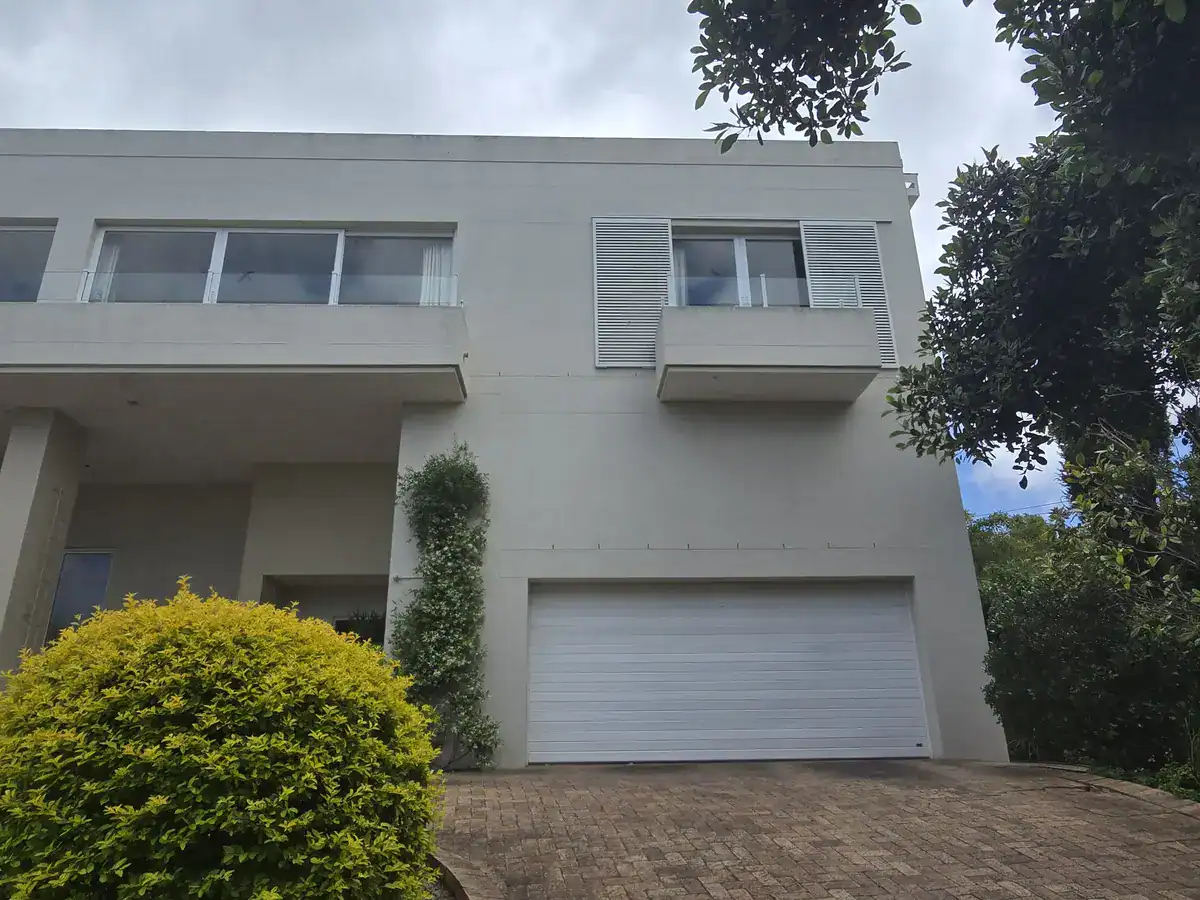
Why the Preparation Photograph Matters
The second project photograph deliberately records the home after major remedial preparation but before the final exterior coating was completed.
The different preparation colours make the repaired substrates visible.
This is valuable project evidence because the most important work in a moisture-related repaint is often hidden once the final decorative colour has been applied.
A final photograph can show appearance. A preparation photograph can demonstrate what was actually done underneath the finish.
What This Brackenfell Project Demonstrates
The Moreson Estate project demonstrates why serious moisture-related coating deterioration cannot be solved by simply applying another exterior paint system.
The work required consideration of:
- 19%–37% relative masonry moisture readings;
- pool and deck moisture patterns;
- retained water within the slab;
- an approximately 8 mm failed walkway joint;
- five project-specific drainage holes;
- vertical and horizontal cracks;
- failed perimeter seals;
- open expansion joints;
- mould contamination;
- horizontal waterproofing;
- boundary-wall and foundation-wall moisture limitations;
- different coating systems for masonry and Nutec substrates;
- a detailed written Dulux supplier/warranty specification.
This kind of first-hand technical evidence is central to how Painters Cape Town approaches diagnostic painting rather than treating every project as a generic repaint.
Moreson Estate and the Brackenfell Painting Cluster
This project now forms one of the two core real-project evidence pages supporting our Painters Brackenfell hub.
The second project is an interior repaint in Protea Heights involving residual moisture after a previously leaking shower had already been repaired. That separate case study will provide a very different interior evidence pathway.
Brackenfell forms part of our Painters Cape Town Northern Suburbs regional hub.
Related Cape Town-wide services include:
- Exterior Painters Cape Town
- Damp Proofing Cape Town
- Residential Painters Cape Town
- Body Corporate and Estate Painting Cape Town
Preparation-First Painting by a Real Cape Town Contractor
Painters Cape Town has 27 years of painting and surface-preparation experience.
Our painters are full-time employed rather than subcontracted, and projects are supervised by working foremen.
We are not a lead-generation company. Clients deal directly with the contractor responsible for the site inspection, quotation, written observations, preparation scope, employed painting team and completed work.
Correct preparation can substantially improve coating performance, but no paint system can permanently prevent deterioration caused by future structural movement, renewed water entry, defective waterproofing or continuing moisture migration from behind masonry.
Request a Painting and Moisture Assessment in Brackenfell
If your Brackenfell property shows peeling paint, damp staining, cracked walls, failed seals, mould, damaged parapets, pool-deck deterioration or recurring coating failure, the surfaces should be assessed before another repainting system is specified.
Call 082 374 6862 or visit the Painters Cape Town contact page to arrange an inspection and written quotation.
Helpful Brackenfell Painting Guides
Why Paint Peels, Fades and Cracks
Learn how moisture, cracking, UV, chalking, weak adhesion and failed building-envelope details can cause exterior coatings to deteriorate.
Damp Walls and Repainting
Learn why moisture sources, failed waterproofing, boundary walls, cracks and continuing water entry must be assessed before repainting.
Planning a Premium Home Repaint
See how preparation, repairs, protection, coating systems and access should be planned before a substantial residential repaint begins.
Moreson Estate Exterior Painting FAQs
When was the Moreson Estate project completed?
The documented exterior moisture-remediation and painting project was carried out from 1 to 10 June 2026 at a private home in Moreson Estate, Brackenfell.
What moisture readings were recorded?
Relative masonry readings across the assessed exterior areas ranged from 19% to 37%.
Was Dulux involved in the project specification?
Yes. The project followed a written Dulux supplier/warranty specification covering the relevant preparation, waterproofing, damp-related treatment and coating systems.
What was happening below the swimming-pool deck?
Extensive staining and deteriorated coatings were visible below the pool and adjoining deck area. The project therefore required further moisture-related investigation and remedial preparation rather than repainting alone.
Why were five drainage holes drilled into the slab?
The project-specific specification required five drainage holes to be drilled from below to assist in releasing retained water within the affected slab. This was a response to the particular condition at this property and is not presented as a general solution for all pool decks.
What was wrong with the tiled walkway joint?
An approximately 8 mm joint between the upper tiled walkway and its raised side wall had failed. The inspection associated the open joint with water entering the slab and deterioration visible below the adjoining deck.
How were damp-affected walls prepared?
The specification included Dulux Pre-Paint Dampshield and Dulux Dampshield on relevant prepared areas, with additional treatment where substrate moisture readings fell within the specified range.
How were horizontal surfaces waterproofed?
Relevant parapets, windowsills and boundary-wall tops received the specified two-coat Dulux Rainshield waterproofing treatment, with the second coat applied perpendicular to the first.
How were failed window and door seals repaired?
Deteriorated sealant within the painting scope was removed and replaced with flexible single-pack polyurethane sealant.
Were all cracks repaired in the same way?
No. Hairline cracks, spiderweb cracking and wider plaster cracks received different preparation according to their size and condition.
Can paint permanently stop moisture entering a boundary wall from the ground?
No. Where moisture continues entering masonry from behind or below without an effective damp-proof barrier, a coating on the visible face cannot permanently stop the moisture movement.
Were there coating warranty limitations?
Yes. The written project specification excluded moisture-related bubbling, discolouration or peeling caused by continuing ground or rear-face moisture in identified boundary and foundation-wall areas.
What coatings were specified?
The documented system included Dulux Wallguard, Dulux Weatherguard Fine Textured, Dulux Rainshield, Dulux Dampshield, Dulux Roofguard and Dulux Woodgard where relevant to the different prepared substrates.
Why is the second project photograph taken before final painting?
The preparation-stage photograph intentionally documents the substrate repairs, crack preparation and remedial work that would otherwise be hidden beneath the final exterior coating.
Do you use subcontracted painting teams?
No. Painters Cape Town uses full-time employed painters with working-foreman supervision.
How do I request a painting quote in Moreson Estate or Brackenfell?
Call 082 374 6862 or visit the Painters Cape Town contact page to arrange a physical inspection and written quotation.

Copyright 2026 , all rights reserved.